Last updated: May 6, 2026
In this article
Opening Your Home to a Fearful Dog
Adopting a fearful dog is one of the most meaningful things you can do as an animal lover. Fearful dogs, sometimes called shut-down dogs or timid rescues, often have the hardest time finding homes. They may cower in the back of their kennel, refuse to make eye contact, or tremble when approached. Potential adopters walk right past them in favor of the tail-wagging, outgoing dog in the next run.
But fearful dogs have enormous capacity for transformation. With patience, consistency, and the right approach, a terrified rescue can blossom into a confident, loving companion. The bond you build with a fearful dog who learns to trust you is unlike anything else in the world of pet ownership.
If you are considering bringing a timid rescue into your life, understanding what to expect and preparing in advance sets both you and your dog up for success. Browse the dogs available through Walk Me Home Rescue to see who might be waiting for someone just like you.
Why Dogs Become Fearful
Understanding the root causes of fear in dogs helps you approach your new companion with empathy and realistic expectations. Fear in dogs is not a character flaw. It is a response shaped by genetics, early experiences, and environment.
Under-Socialization
The most common cause of generalized fear in rescue dogs is lack of socialization during the critical developmental window between 3 and 14 weeks of age. Puppies who are not exposed to a wide variety of people, environments, sounds, and experiences during this period are more likely to be fearful of new things as adults. Many rescue dogs, especially those from hoarding situations, puppy mills, or stray backgrounds, missed this window entirely.
Traumatic Experiences
Dogs who have experienced abuse, neglect, or traumatic events may develop specific fears or generalized anxiety. A dog who was hit may flinch when hands are raised. A dog who was kept in a small cage may panic in enclosed spaces. A dog who lived through a natural disaster may react to storms. These trauma-based fears are real and valid, and they respond to patient, positive-reinforcement-based rehabilitation.
Genetic Predisposition
Some dogs are genetically predisposed to fearfulness. Certain breeds and breed mixes tend to be more sensitive and anxious by nature. This does not mean they cannot improve, but it means that a baseline level of caution may always be part of their personality. Accepting this is important for your own expectations.
Shelter Stress
The shelter environment itself, with its loud noises, unfamiliar smells, constant changes, and lack of routine, can worsen fear in dogs who are already anxious. Many fearful dogs show dramatic improvement simply by moving into a quiet, predictable home environment.
The First Two Weeks: Decompression Protocol
The two-week decompression period is the single most important phase when adopting a fearful dog. During this time, your goal is not training, not socialization, and not adventures. Your goal is to let your dog decompress and begin to feel safe.
The Two-Week Shutdown
This widely recommended approach involves keeping your new dog’s world very small and very predictable:
- One room or area: Set up a quiet room or crate in a low-traffic area of your home. This is your dog’s safe zone. They eat, sleep, and decompress here.
- Minimal interaction: Be present but not pushy. Sit in the room reading a book. Let the dog observe you without being forced to engage. Do not stare at the dog, reach for them, or hover over them.
- Consistent routine: Feed at the same times every day. Take brief, quiet potty breaks on a leash. Return to the safe zone immediately after.
- No visitors: Friends, family, and neighbors can meet the dog later. During decompression, your household members only.
- No forced interactions: Do not pull the dog out from under furniture, pick them up, or corner them for petting. Let every interaction be the dog’s choice.
Why This Works
A fearful dog’s nervous system is in overdrive. Everything is a potential threat. By making the world small and predictable, you give their stress hormones a chance to come down. Cortisol, the primary stress hormone, takes days to weeks to return to baseline levels. Pushing a fearful dog too fast just keeps the cortisol elevated and delays trust-building.
You may feel like you are not doing enough, but doing less is exactly what your fearful dog needs right now.
Building Trust: Practical Techniques
After the initial decompression period, you can begin actively building trust with your fearful dog. This is a gradual process that requires patience measured in weeks and months, not days.
Let the Dog Set the Pace
Every positive interaction should be initiated by the dog. When they voluntarily approach you, calmly toss a treat in their direction (not at them) without making sudden movements. When they sniff your hand, let them and then quietly offer a treat. When they choose to sit near you, simply be still and enjoy the moment.
Treat Trail and Treat Scatter
Scatter small, high-value treats on the floor in your dog’s safe area. This encourages them to explore the space and associates the environment (and your presence) with good things. You can also leave a trail of treats that leads gradually closer to where you are sitting, letting the dog decide how close they want to come.
Hand Feeding
Once your dog is comfortable eating treats tossed near them, try offering food from your hand with your palm flat and your arm extended. Let the dog approach and take the food at their own pace. Hand feeding is one of the most powerful trust-building tools because it creates a direct positive association between your presence and something the dog values.
Calm, Predictable Body Language
- Avoid direct eye contact (perceived as threatening by fearful dogs). Use soft, averted glances instead.
- Turn your body sideways rather than facing the dog head-on.
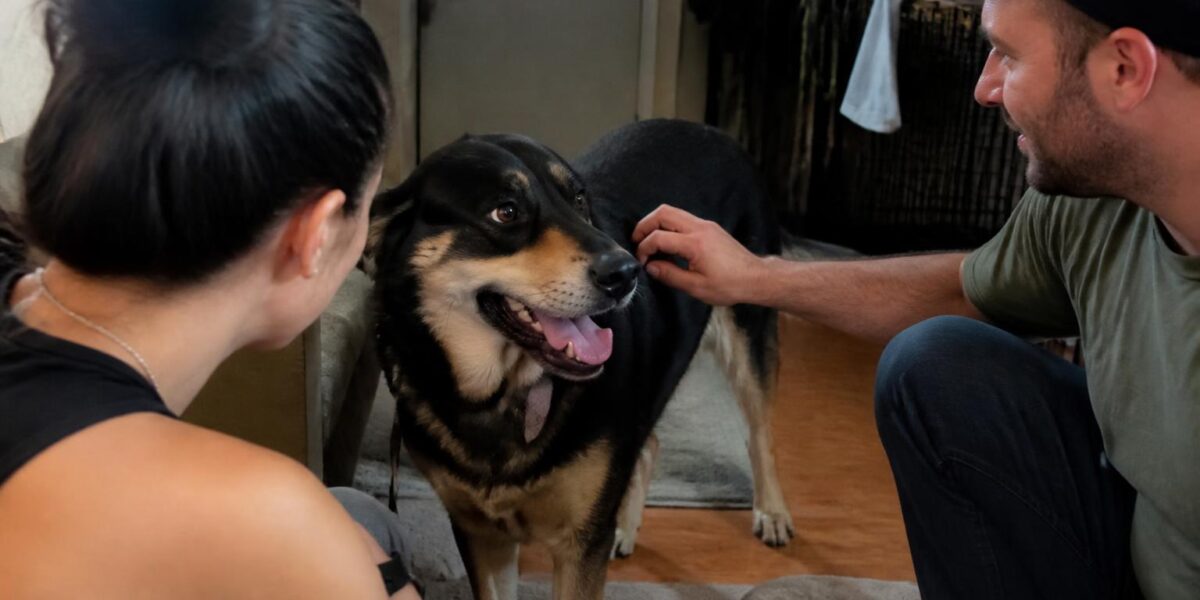
- Get low by sitting or crouching rather than looming over the dog.
- Move slowly and avoid sudden gestures.
- Speak softly or not at all. Many fearful dogs respond better to calm silence than to a stream of reassuring chatter.
The Power of Doing Nothing Together
Simply existing in the same space without asking anything of your dog is profoundly trust-building. Read a book, work on your laptop, watch television. Your dog is learning that you are safe, predictable, and not a threat. This passive approach often achieves more than any active training technique in the early weeks.
Training a Fearful Dog: What Works
Once your dog has decompressed and shows signs of emerging trust (approaching you voluntarily, eating in your presence, relaxing with a loose body posture), you can begin gentle training. Training provides mental stimulation, builds confidence, and strengthens your bond.
Positive Reinforcement Only
Fearful dogs must be trained exclusively with positive reinforcement methods. Corrections, leash pops, verbal reprimands, and aversive tools like prong collars or shock collars will destroy trust and worsen fear. There are no exceptions to this rule with fearful dogs.
Use high-value treats (real meat, cheese, freeze-dried liver) and calm verbal praise. Mark desired behaviors with a soft “yes” or a quiet clicker, followed immediately by a treat.
Start With Easy Wins
Begin with behaviors the dog already offers naturally. If your dog sits when you pick up the treat bag, capture that behavior by marking and rewarding it. If they look at you, mark and reward. These easy wins build the dog’s confidence in the training process itself.
Counter-Conditioning and Desensitization
For specific fears (strangers, loud noises, new environments), a structured counter-conditioning and desensitization (CC/DS) program is the gold standard. This involves exposing the dog to a very mild version of the feared stimulus (for example, a stranger standing 50 feet away) while providing high-value treats. Gradually, over many sessions, the stimulus intensity increases as the dog learns that scary things predict good things.
A certified professional dog trainer (CPDT-KA) or veterinary behaviorist experienced with fearful dogs can design a CC/DS program tailored to your dog’s specific fears.
When to Seek Professional Help
While many fearful dogs improve significantly with patient home-based trust-building, some need professional intervention.
Consider consulting a veterinary behaviorist or certified trainer if:
- Your dog shows no improvement after 4 to 6 weeks of consistent decompression and trust-building
- Fear manifests as aggression (growling, snapping, lunging) toward people or other animals
- Your dog is so shut down that they refuse to eat, drink, or eliminate normally
- Anxiety is so severe that the dog injures themselves (excessive licking, chewing, or escape attempts)
- You feel overwhelmed and unsure how to proceed
A veterinary behaviorist can also evaluate whether anti-anxiety medication might help your dog. Medication is not a failure or a shortcut. For dogs with severe anxiety, medication can lower the baseline stress level enough that behavioral modification techniques become effective. Think of it as creating a window of opportunity for learning.
Common medications prescribed for fearful dogs include fluoxetine (Prozac), sertraline (Zoloft), and trazodone. These are safe, well-studied, and can make a meaningful difference in a fearful dog’s quality of life. Your veterinarian or behaviorist can determine if medication is appropriate for your specific situation.
For more resources on dog care and training, visit our dog care hub.
Realistic Timelines and Expectations
One of the hardest parts of adopting a fearful dog is accepting that progress is not linear. There will be setbacks, plateaus, and breakthrough moments that appear out of nowhere.
Week 1-2: Decompression. Your dog may hide, refuse to eat, or seem completely shut down. This is normal. Do not interpret this as a sign that the adoption was a mistake.
Week 2-4: You may see small signs of emerging comfort: eating in your presence, briefly making eye contact, moving around the safe area more freely, showing curiosity about their surroundings.
Month 1-3: Trust begins to build. Your dog may start approaching you, accepting treats from your hand, and tolerating brief, gentle touch. They may begin to explore beyond their safe zone.
Month 3-6: Many dogs show significant improvement during this period. They may seek affection, play with toys, and settle into household routines. Some dogs who seemed profoundly fearful become lap dogs during this phase.
Month 6-12 and beyond: Continued growth and confidence-building. Some deeply fearful dogs take a full year or more to reach their fullest potential. The journey is worth every moment of patience.
Remember that your fearful dog may never become a social butterfly who greets every stranger with a wagging tail, and that is perfectly okay. A dog who is calm, comfortable, and bonded to their family is a success story, even if they remain cautious around new people or situations.
Ready to change a fearful dog’s life? Visit our dog adoption page to find your next companion.
Frequently Asked Questions
Should I comfort my fearful dog when they are scared?
Yes, you should offer calm, quiet comfort. The outdated belief that comforting a scared dog reinforces fear has been debunked by animal behaviorists. Fear is an emotion, not a behavior, and you cannot reinforce an emotion by providing reassurance. Speak softly, offer a calm presence, and let the dog choose to come to you for comfort. Do not force physical contact on a panicking dog, as this can worsen their fear response.
Can fearful dogs live with children?
It depends on the severity of the fear and the ages of the children. Fearful dogs need a calm, predictable environment, and very young children are often loud, unpredictable, and physically grabby. This can be overwhelming for a fearful dog and potentially unsafe for both the child and the dog. Older children who can understand and follow the rules of interacting with a fearful animal can be wonderful companions. Always supervise interactions between a fearful dog and children of any age.
How do I introduce a fearful dog to visitors?
Give your dog a safe space to retreat to (a separate room or crate) before visitors arrive. Do not force introductions. Let the dog decide if and when they want to approach. Ask visitors to ignore the dog completely, no eye contact, no reaching out, no calling. Scatter high-value treats in the dog’s area so they associate visitors with good things. Over many repetitions, your dog may begin to approach guests on their own terms.
Will my fearful dog ever be normal?
Many fearful dogs make remarkable transformations and become confident, affectionate family members. Some will always retain a degree of caution or sensitivity, and that is their personality, not a failing. The goal is not to create a fearless dog but to help your dog feel safe enough to enjoy life. Most fearful dogs, with time and the right support, absolutely reach that point.
Is it better to adopt a fearful puppy or adult?
Fearful puppies under 14 weeks still have the benefit of a developing brain that is more receptive to socialization, so intervention can be very effective. Fearful adult dogs may take longer to make progress, but adults have established temperaments, so you know what you are working with. Both can make wonderful pets. The right choice depends on your experience level, patience, and lifestyle. If you are new to fearful dogs, working with a trainer from the start is highly recommended regardless of the dog’s age.