Last updated: May 6, 2026
In this article
- Mobility Aids and Pet Adoption Belong Together
- Cane Users: Smaller and Calmer Tends to Win
- Walker Users: Hands-Free Is Your Best Friend
- Crutches Users: Plan for Healing and the Long Run
- Avoiding the Trip Hazard
- Home Layout That Reduces Daily Risk
- Walking Practice Before Adoption Day
- Vet Care, Grooming, and Backup Helpers
- Hands-Free Leashing Done Right
- Specific Cat Setup Tips
- Adult Animals Make This Much Easier
- If a Cat Sounds Right, Trust That Instinct
- The First Two Weeks at Home
- Frequently Asked Questions
Mobility Aids and Pet Adoption Belong Together
Adopting a pet while using a mobility aid like a cane, walker, or crutches is something many people do successfully. Pets bring routine, companionship, and a reason to move during the day, all of which are good for people whose mobility varies. The trick is choosing an animal whose size and energy work with your specific aid and setting up your home so daily care does not become a fall hazard.
This guide focuses on species selection, leashing strategy, home layout, and a few small gear choices that make a noticeable difference. Adapt the suggestions to your own balance, grip, and how often you use the aid. There is no single right answer for every adopter.
Cane Users: Smaller and Calmer Tends to Win
If you walk with a cane, you have one hand committed to the cane at all times. That changes how you handle a leash, hold a bowl, and pick up a pet. A small to medium dog who walks calmly on a loose leash is usually the easiest match. Avoid dogs flagged as pullers or strong-willed walkers, regardless of size, because the cane plus a tug on the leash is a fall waiting to happen.
A calm adult dog of 15 to 35 pounds is a popular range. Big enough to handle a normal leash, small enough that any sudden lunge will not pull you off balance. Cats, of course, sidestep the leash question entirely. A confident adult cat who likes lap time and a few favorite play routines may be the lowest-risk option of all.
Walker Users: Hands-Free Is Your Best Friend
Walkers commit both hands during walking. That makes traditional dog-walking essentially impossible without a workaround. The standard solution is a hands-free waist leash that anchors to your hips, plus a calm, well-trained adult dog who walks at heel without pulling. Even with this setup, walker users often find that smaller, calmer dogs or cats are dramatically easier than a larger, energetic dog.
Many walker users adopt cats for exactly this reason. A cat does not need to be walked, the litter box can be placed at a reachable height with a low-front entry, and a sturdy walker can roll past the cat without incident. Older cats are particularly easy because they tend to nap in predictable spots and rarely race underfoot.
Crutches Users: Plan for Healing and the Long Run
Crutch use can be temporary (after surgery) or long-term. If you are using crutches temporarily and planning to recover, your pet match should still suit your long-term mobility, not the temporary version. Adopt for the future you, not the recovery you. If you are a long-term crutch user, the same principles as walker users mostly apply: hands are committed during walking, so a calm cat or a small, gentle dog with hands-free leashing is the easiest fit.
If you are recovering from a surgery and want a pet to share your healing time, consider whether you have help during the first weeks. Adoption is forever; surgery recovery is a few months. The two timelines do not always align, and a foster-to-adopt arrangement might suit you better than a final commitment on day one.
Avoiding the Trip Hazard
The biggest single risk for any adopter using a mobility aid is the leash or the pet itself becoming a trip hazard. Cats love to weave between feet. Small dogs love to dart between knees. A loose leash trailing on the floor can catch on a cane tip or walker wheel.
A few habits help. Train the pet from day one to wait at thresholds rather than rush. Use a fixed-length leash, not a retractable, so the dog’s distance is always predictable. Keep walkways clear of toys, water bowls, and food dishes. For cats, clip nails regularly and discourage ankle-pouncing play with toys-on-sticks instead of feet-as-targets. None of this is exotic; it is just consistent management.
Home Layout That Reduces Daily Risk
Set up feeding, watering, and toileting zones away from primary walking paths. Bowls go in a corner or against a wall, not in the middle of the kitchen. Litter boxes go in a low-traffic room you reach without crossing main hallways. Leashes and treats live on a hook by the door at hand-height so you grab them without bending.
Raised feeders for dogs and elevated water fountains for cats reduce bending and the bracing that often goes with it. A second water station is good practice in larger homes. For dogs that need stairs to reach a yard, consider a ramp or a temporary potty pad routine if stairs and your aid are a poor combination.
Walking Practice Before Adoption Day
If you are adopting a dog, ask the rescue or foster to practice walking with you before placement. Even a single trial walk in a quiet area tells you whether the dog matches your pace, respects your space, and pays attention to your movement. A foster who can describe how the dog walks on a loose leash, in busy areas, around other dogs, and around scooters or strollers is invaluable.
Build up gradually. The first week of walks should be short, on familiar streets, at quiet times of day. As both you and the dog learn each other’s cadence, you can extend distance and try new routes. If your energy or balance varies day to day, plan for shorter walks on hard days rather than skipping entirely.
Vet Care, Grooming, and Backup Helpers
Choose a vet clinic with easy parking, ramp access, and friendly staff who do not mind helping you carry a carrier or walk a dog from the car to the exam room. Mobile vets, who come to your home, eliminate the transport problem completely and are often only modestly more expensive than office visits. For grooming, mobile groomers and pickup-and-drop services solve the same problem.
Build a backup network before adopting. A neighbor with a key, a family member who can do a vet run, and a paid dog walker for harder days are all reasonable parts of the plan. This is not a sign of being underprepared; it is exactly what every responsible adopter does, regardless of mobility status.
Hands-Free Leashing Done Right
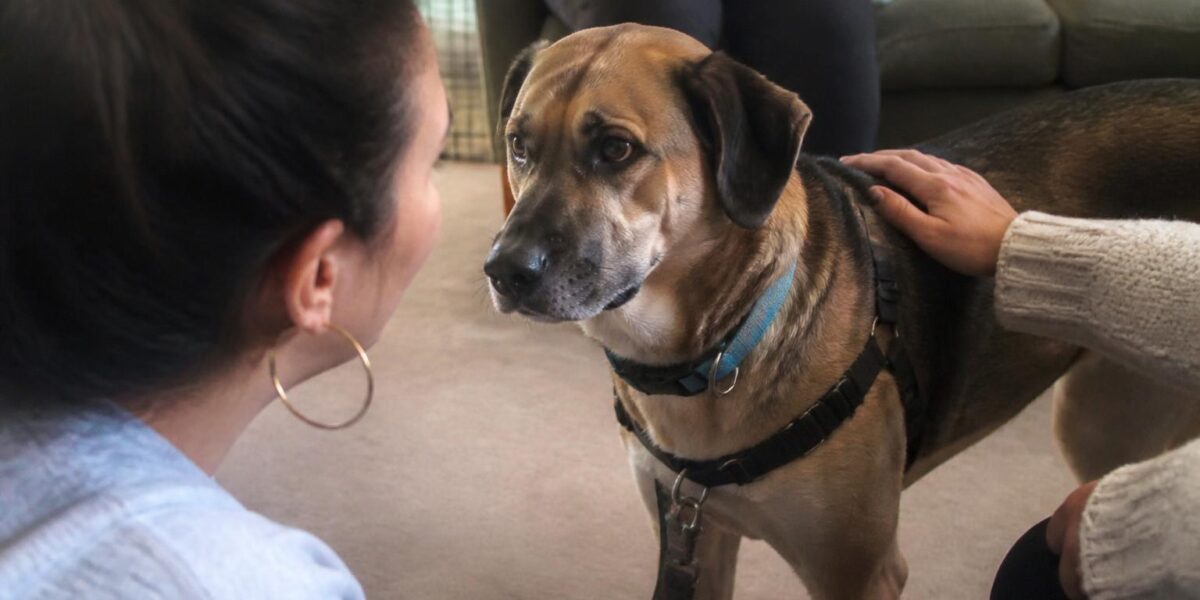
Hands-free leashes are often the difference between an enjoyable walk and an awkward one for cane and walker users. The leash anchors at your waist with a wide padded belt, and the dog walks at your side. Your hands stay on your aid where they belong. Choose a leash with a built-in shock-absorber section so a sudden lunge does not yank you off balance. Practice in your living room before walking outside.
For dogs prone to occasional pulls, layer a head halter or front-clip harness on top of the hands-free setup. A front-clip harness redirects pulling force sideways rather than forward, which is much easier on your balance. A head halter gives you precise directional control if the dog reacts to a squirrel or another dog. Neither tool is a substitute for training, but both reduce risk while training is in progress.
Specific Cat Setup Tips
For cat adopters using a mobility aid, the home setup is largely about reach and predictability. Place food and water bowls along walls, never in the middle of a room. Keep the litter box in a low-traffic spot. Use a low-front-entry box that you can scoop without bending dramatically. A scoop with a long handle saves your back. A litter mat catches stray litter and prevents the tile-track that follows cats around.
Cat trees should be sturdy enough to lean on if you happen to use them for stability. Choose a tree with a wide, heavy base. Avoid wobbly modular setups that could tip if a cat jumps off the top. Place at least one window perch in the room you use most, so the cat hangs out near you rather than disappearing to a distant corner.
Adult Animals Make This Much Easier
Adult animals make almost everything simpler for adopters using mobility aids. Their personality, energy, and training level are already known. An adult cat from a foster home arrives knowing the litter box, comfortable around humans, and usually settled into predictable habits. An adult dog placed past the puppy stage has grown out of the wildest behaviors and is ready to slot into your life.
If you love kittens or puppies, consider whether the puppy chaos and the constant supervision suit your current mobility. Many adopters using aids find that the one-to-three-year-old age band for dogs and adult-cat range for cats hit the right balance of energy and predictability.
If a Cat Sounds Right, Trust That Instinct
Many adopters using mobility aids end up choosing a cat after weighing the options, and that is a perfectly good outcome. Cats walk themselves, toilet themselves, and ask for very little physical management. They give back affection, companionship, entertainment, and a daily routine. The bond is real. If you came into the process thinking dog and you find yourself drawn to cats, that is your good sense talking.
If you have specific dog needs in mind — a walking buddy, a security feel, a specific breed temperament — keep looking and find the right dog. Just go in with eyes open about how the dog will fit alongside your aid, your pace, and your daily life.
The First Two Weeks at Home
Take the first two weeks slowly. The animal is adjusting to your movement, your aid, and your pace. Practice indoor movement together: walking from one room to another with the dog, or simply moving around the apartment with the cat watching. The animal builds a mental map of how you navigate, which reduces accidents on both sides.
For dogs, the first walks should be short and on familiar streets. Use a hands-free leash or a fixed-length leash from day one. Practice loading the dog into a carrier or harness before any actual vet visit. For cats, a single quiet room for three to seven days, then gradual expansion, is the right pace.
Resist the temptation to invite visitors during the first two weeks. The animal needs to learn your specific movement and your specific aid. Once the bond is established, visitors are easy to introduce, and most animals are quickly comfortable around canes, walkers, and crutches when they have time to learn.
Frequently Asked Questions
Will rescues let me adopt if I use a cane or walker?
Yes. Reputable rescues care about the match between adopter and animal, not about your aid. Apply with confidence and explain your plan in detail.
What dog size is safest with a mobility aid?
Smaller, calmer dogs in the 15-to-35-pound range tend to be easiest for cane and walker users. Temperament matters far more than size category, though.
Should I get a pet during surgery recovery?
Match the adoption to your long-term mobility, not your temporary state. If you want company during recovery, fostering is a more flexible commitment than adopting.
How do I prevent trip hazards?
Use a fixed-length leash, train the pet to wait at thresholds, keep walkways clear of bowls and toys, and choose adult animals over young ones who are more prone to underfoot chaos.
Where do I start looking?
Browse all pets available for adoption or visit adult cats if you want a lower-management option. Reach out to rescues with your specific needs.