
Last updated: May 6, 2026
In this article
- How Often Should You Bathe a Dog
- Why Human Shampoo Is Wrong for Dogs
- Choosing the Right Shampoo for Your Dog
- Brushing First, Bathing Second
- The Wash and Rinse Technique
- Drying Without Damaging the Coat
- Bath-Time Ear Care
- Bathing Anxious or Resistant Dogs
- Special Cases: Puppies, Skunks, and Medication Baths
- Adopted Dogs and First Baths
- Frequently Asked Questions
How Often Should You Bathe a Dog
Bathing a dog at home should happen often enough to keep the coat clean and the skin comfortable, but not so often that you strip the natural oils that protect both. For most healthy dogs with normal coats, every four to six weeks is a sensible default. Active outdoor dogs who roll in mud or swim in lakes may need more, and indoor dogs with short clean coats can stretch longer.
Coat type matters as much as schedule. Oily, sebaceous breeds like Cocker Spaniels and Basset Hounds may need bathing every two to three weeks to control odor and skin oils. Double-coated breeds like Huskies, German Shepherds, and Golden Retrievers often only need a true bath one to three times a year if they are brushed regularly, because brushing carries away most surface dirt. Curly-coated breeds like Poodles and Bichons benefit from a bath every two to four weeks because their dense curls trap dander.
The biggest mistake is over-bathing. Bathing too frequently with the wrong product strips the protective lipid layer, leaves the skin dry and itchy, and can actually trigger more shedding and dandruff. If your dog smells bad more than a couple of weeks after a bath, the problem is usually skin disease, ear infection, or anal gland trouble — not a need for more shampooing.
Why Human Shampoo Is Wrong for Dogs
Dog skin and human skin have different acidities. Human skin sits around pH 5.5 (slightly acidic). Dog skin sits closer to pH 7.0 to 7.5 (closer to neutral). Human shampoos are formulated for human skin pH and are too acidic for repeated use on dogs. Over time, human shampoo disrupts the skin barrier and can cause irritation, dryness, and itch.
The same applies to baby shampoo, dish soap, and “natural” castile soap. Baby shampoo is gentler than adult shampoo but still wrong-pH for dogs. Dish soap is occasionally used in oil-spill emergencies (it cuts through grease) but it is too harsh for routine bathing. Castile soap is alkaline enough to dry dog skin out badly.
Use a dog-specific shampoo formulated for canine skin pH. Inexpensive, well-formulated dog shampoos (Earthbath, Burt’s Bees for Dogs, vet-clinic basics) work fine for healthy dogs. Avoid heavy fragrances and tea tree oil at high concentrations — tea tree is toxic to cats at low doses and can cause neurological signs in dogs at high concentrations.
Choosing the Right Shampoo for Your Dog
Once you have ruled out human products, the next decision is which dog shampoo. The right choice depends on whether you are bathing for cleaning, for coat condition, or for a specific skin issue.
General-purpose dog shampoo: Mild surfactants, moderate pH, light fragrance. Works for most healthy dogs.
Hypoallergenic or oatmeal shampoo: For dogs with sensitive skin or mild itch. Soothes inflammation without active medication.
Medicated shampoo (chlorhexidine): For dogs with bacterial skin infections, often prescribed alongside or instead of antibiotics. See our guide on chlorhexidine for dogs.
Antifungal shampoo (ketoconazole or miconazole): For yeast or ringworm infections. See ketoconazole shampoo for dogs for details.
Allergy-support shampoo: For dogs with chronic atopic dermatitis or other skin allergies. Often used weekly during flare-ups under veterinary direction.
If your dog has a chronic skin condition, ask your veterinarian which shampoo is right and how often to use it. Medicated shampoos generally work best when left on the skin for five to ten minutes before rinsing — not just a quick lather and rinse.
Brushing First, Bathing Second
Always brush the coat thoroughly before the bath, never after. Water tightens existing tangles into hard mats that are nearly impossible to comb out once dry. A pre-bath brush removes loose hair, lifts surface dirt, and exposes any skin issues you should know about before getting the dog wet.
For long or dense coats, use the line brushing technique to make sure you are brushing all the way to the skin. A brush that only catches the surface leaves a hidden layer of mats that the bath will set permanently.
Once the coat is brushed and clean of mats, gather everything else you need before getting the dog wet: shampoo, conditioner, ear cleaner, towels, a non-slip mat for the tub, and a treat or two. Trying to track down supplies with a soaking wet dog is how baths turn into chaos.
The Wash and Rinse Technique
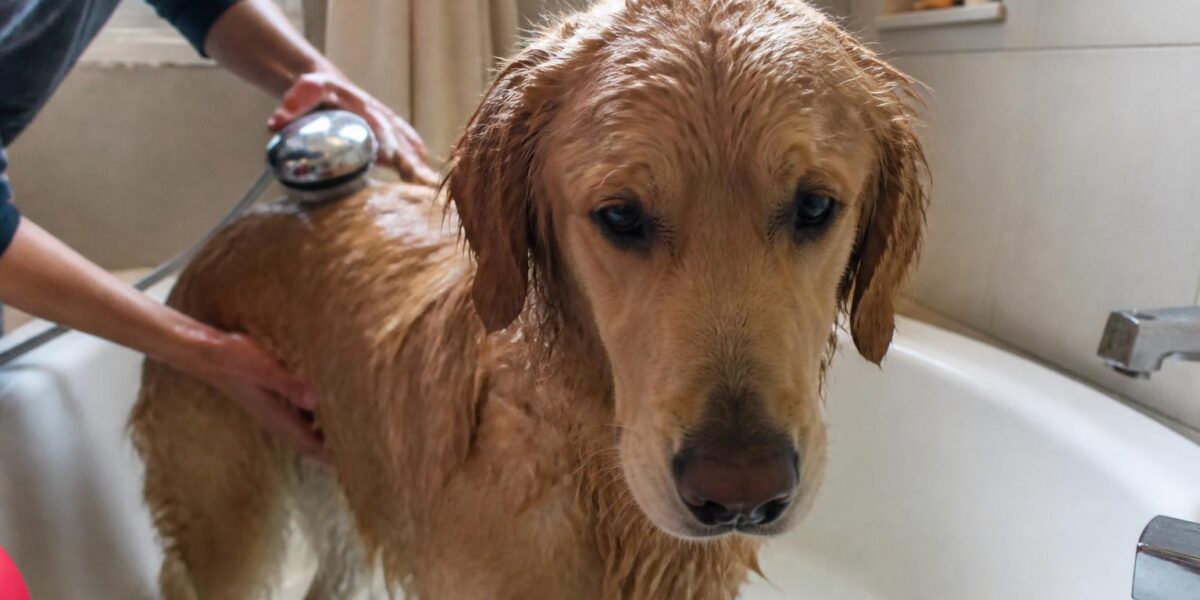
Set up the tub or shower with a non-slip mat. The mat is for safety: a slipping dog panics, and a panicking dog struggles. A bathmat designed for showers works fine, or a folded towel.
Use lukewarm water, never hot. Warm enough that you would be comfortable bathing in it yourself. Wet the dog from neck to tail first, then back up to face. Avoid pouring water directly into the ears (a cotton ball gently placed at the ear opening helps if your dog tolerates it).
Apply diluted shampoo (most concentrate at about 1:5 with water in a separate squeeze bottle for easier coverage). Massage from neck down through the body, legs, belly, and tail. Save the face for last and use a damp washcloth rather than pouring shampoo over the head — soap in the eyes ruins the bath experience for everyone.
Rinse twice. Most dog skin issues from bathing come from shampoo residue, not from the shampoo itself. Rinse until the water runs clear, then rinse again. The coat should feel slightly squeaky between your fingers when you are done. If it still feels slick, keep rinsing.
If you are using conditioner, apply after the shampoo rinse, leave on for one to two minutes, then rinse thoroughly the same way.
Drying Without Damaging the Coat
Squeeze excess water from the coat with your hands before lifting the dog out of the tub. This single step cuts drying time in half. Then towel-dry by pressing rather than rubbing — vigorous rubbing tangles long coats and irritates skin.
For short-coated dogs, towel drying followed by air drying in a warm room is fine. For double-coated, long, or curly breeds, a low-warm setting on a hair dryer or a dedicated dog dryer speeds the process and helps prevent the coat from matting as it dries. Brush as you dry to lift and separate the coat.
Never use a hair dryer on a hot setting. Dog skin burns easily and the noise stresses dogs unaccustomed to it. Introduce the dryer slowly with treats over multiple sessions if your dog is new to it.
Once dry, do a final brush-out to remove any loose hair the bath shifted free, and check the ears, eyes, paws, and rear for anything you missed.
Bath-Time Ear Care
Bath time is a logical moment to clean the ears, since the dog is already wet and contained. Use a vet-approved ear cleaner, never water alone (water trapped in the canal causes infections). Our guide to cleaning dog ears at home walks through technique step by step.
If your dog has visible ear discharge, foul odor, redness, or repeated head-shaking, do not clean the ears at home until your veterinarian has examined them. These signs can indicate ear infections that need diagnosis, and pouring cleaner into an infected ear can make things worse.
For dogs prone to chronic ear issues, your vet may recommend a maintenance product like Epi-Otic after every bath as part of long-term management.
Bathing Anxious or Resistant Dogs
Some dogs hate baths. The first step is to figure out what part of the bath the dog actually fears: the water, the tub surface, the noise, the feeling of being restrained, or being soaped near the face. Treating the right cause helps.
Build positive associations slowly. Feed the dog treats in the dry tub for a week before the next bath. Use a non-slip mat. Keep water lukewarm and at low pressure. Talk in a calm, low voice. Reward calm moments rather than escalating handling.
For dogs with severe bath anxiety, a professional groomer or mobile groomer is often a kinder choice than forcing the issue at home. Forcing a panicking dog through a bath creates lasting fear that gets worse, not better, with each repetition.
Special Cases: Puppies, Skunks, and Medication Baths
Puppies under eight weeks should not be bathed unless absolutely necessary, and only with vet guidance. Their thermoregulation is fragile and dog shampoo formulated for adult coats can be harsh on puppy skin. After eight weeks, gentle introductions to bathing build lifelong tolerance — see our guide to grooming puppies for the first time.
Skunk encounters need a specific recipe. The classic at-home formula is one quart of 3% hydrogen peroxide, one-quarter cup of baking soda, and one teaspoon of dish soap, mixed and applied immediately (it does not store). Standard tomato juice does not actually neutralize the odor.
For dogs being bathed with prescribed medicated shampoos for chronic skin disease, follow the vet’s instructions exactly. Contact time matters more than scrubbing intensity. Most medicated baths require a five- to ten-minute wait between lather and rinse to let the active ingredient work.
Adopted Dogs and First Baths
If you have just adopted a dog, the first home bath is often part of settling in. Wait at least a few days after the dog arrives so the bath is not an immediate stressor on top of moving day. Use a gentle shampoo, keep the experience short and calm, and let the dog have plenty of treats and decompression time afterward.
Many adopted dogs have unknown grooming histories and may be unaccustomed to bathing. Take your time, build trust, and consider a few short pleasant trips to a self-serve dog wash before tackling a full bath at home. For more on adjusting to life with a newly adopted dog, see our dog care blog or browse adoptable dogs on the adopt a dog hub.
Frequently Asked Questions
How often should I bathe my dog?
Most healthy dogs do well with a bath every four to six weeks. Oily breeds like Cocker Spaniels may need more frequent baths; double-coated breeds like Huskies need very few. Over-bathing strips coat oils and can cause dry, itchy skin.
Can I use baby shampoo on my dog?
Not as a regular product. Baby shampoo is formulated for human skin pH (more acidic than dog skin) and disrupts the canine skin barrier with repeated use. Use a dog-specific shampoo instead.
What if my dog’s coat smells bad even after a bath?
Persistent odor after bathing usually means an underlying issue: ear infection, skin infection, dental disease, or anal gland problems. See your veterinarian rather than bathing more often.
Can I use conditioner on my dog?
Yes, dog-specific conditioner helps with long, curly, or dry coats. Apply after the shampoo rinse, leave one to two minutes, and rinse thoroughly. Skip conditioner on short, oily coats that do not need it.
Should I bathe my dog before or after a haircut?
Before. A clean, dry, brushed coat is essential for clean clipper cuts. Bathing first prevents dulling the blades and produces a smoother finish. Read more in our clipper blade numbers guide.
Is it safe to bathe a dog with skin allergies more often?
Sometimes yes, but only with the right product and under vet guidance. Some dogs with chronic atopy benefit from weekly medicated baths during flare-ups. Frequent bathing with a regular shampoo can make skin disease worse.


