Last updated: April 27, 2026
In this article
If you have ever caught yourself staring at a cat that looks like it just stepped out of the jungle, there is a good chance you were looking at a Bengal cat. Sleek, spotted, and brimming with energy, the bengal cat is one of the most visually stunning and behaviorally unique breeds in the domestic cat world. Whether you are a seasoned cat owner or considering your very first feline companion, understanding what life with a bengal cat is really like — day in and day out — will help you decide if this remarkable breed is the right fit for your home.
Quick Facts
| Attribute | Details |
|---|---|
| Origin | United States |
| Size | Medium to Large |
| Weight | 8–15 lbs (females lighter) |
| Lifespan | 12–16 years |
| Coat | Short, dense, soft; spotted or marbled with a glittered sheen |
| Temperament | Active, intelligent, curious, affectionate, vocal |
| Good With | Active families, older children, confident dogs; needs enrichment |
Personality & Temperament
Few cats demand your attention the way a bengal cat does — and most owners would not have it any other way. Bengals are extraordinarily active and athletic. They leap to the tops of bookcases, sprint down hallways at full speed, and treat every shelf and countertop as a personal gymnasium. If you were hoping for a cat content to nap by the window all day, the bengal is not your breed.
At the same time, bengals are deeply social. They form strong bonds with their people and often follow family members from room to room like a curious shadow. They are vocal cats, willing to hold a full conversation if you are patient enough to listen. Many owners describe their bengal as dog-like in their loyalty and desire for interaction.
The bengal cat is also famously mischievous. They figure out how to open cabinets, turn on faucets, and unroll toilet paper with an enthusiasm that is either charming or exhausting depending on your mood. Mental stimulation is not optional — it is a daily requirement. Puzzle feeders, wand toys, and clicker training sessions go a long way toward channeling that remarkable intelligence into something constructive. A bored bengal will find ways to entertain itself, and they are rarely subtle about it.
One trait that consistently surprises new owners is the bengal cat’s fascination with water. Unlike most cats, many bengals actively seek it out — splashing in water bowls, joining their owners in the bathroom, or batting at running taps with undisguised glee.
Appearance
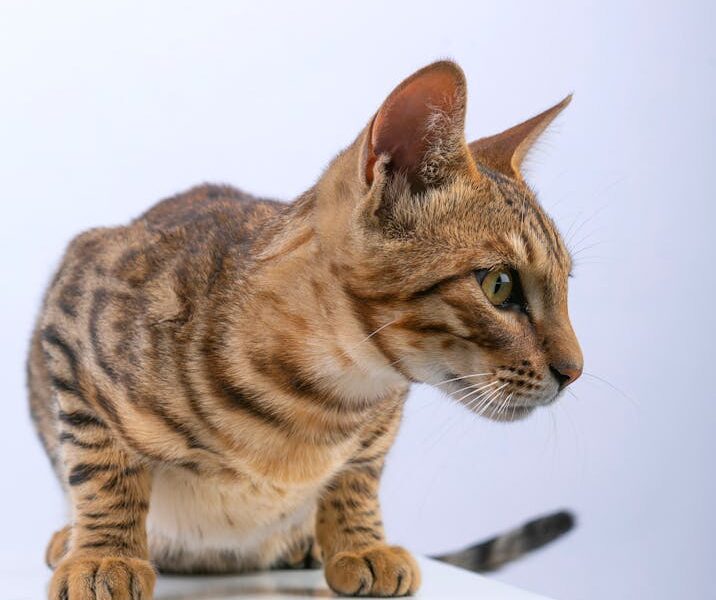
The bengal cat looks like a small leopard that decided domestic life suited it just fine. The most distinctive feature is the coat: a short, incredibly soft pelt covered in bold rosette spots or swirling marble patterns that catch the light in a way no other domestic breed can match. These rosettes — two-toned spots with a darker outline and a lighter interior — are the hallmark of a well-bred bengal and directly echo the markings of wild Asian leopard cats.
Beyond the coat, bengals are built for athleticism. They are muscular and substantial, with long, lean bodies, powerful hindquarters, and a confident, almost rolling gait. Their head is broader and more wedge-shaped than many domestic cats, with high cheekbones and large, forward-facing eyes that range from gold and green to the icy blue found in snow bengals.
Perhaps the most talked-about quality of the bengal coat is its glitter — a natural shimmer caused by translucent hair tips that makes the cat appear to sparkle in sunlight. It is difficult to capture in a photograph and nearly impossible to stop admiring in person. Brown tabby, silver, and snow are the most common color variations, each with its own particular beauty.
Indoor vs. Outdoor
Most responsible bengal cat breeders and rescue organizations recommend keeping bengals as indoor cats. Their high prey drive, bold curiosity, and low road sense make outdoor life genuinely risky. An unsupervised bengal is also a flight risk — they are confident explorers who can cover significant ground quickly.
That said, a bengal kept exclusively indoors needs an environment that genuinely challenges it. Tall cat trees, wall-mounted shelving, and dedicated play sessions are essential rather than optional. Many bengal owners build enclosed outdoor “catios” that provide fresh air and stimulation without the dangers of free roaming. Leash walking is also a realistic option with patient training — and a harness-trained bengal is a remarkable thing to take for a stroll through the neighborhood. For more tips on keeping indoor cats healthy and enriched, visit our cat care blog.
Grooming Needs
One of the few truly low-maintenance aspects of owning a bengal cat is the grooming routine. The short, dense coat sheds minimally compared to longer-haired breeds and requires very little in the way of brushing. A weekly pass with a soft rubber brush or grooming glove is usually enough to keep the coat looking its best and to reduce the amount of hair migrating to your furniture.
Bathing is rarely necessary, though the bengal’s affinity for water means that many tolerate — or actively enjoy — an occasional bath far more willingly than other cats. If you introduce bathing gradually and positively from kittenhood, it can become a straightforward part of the routine.
Ears should be checked weekly for wax buildup or debris and cleaned gently with a cotton ball and a vet-approved cleanser if needed. Nails should be trimmed every two to three weeks, which is especially important in an active indoor cat that spends time on furniture and climbing structures. Daily tooth brushing, or at minimum a dental care treat or water additive, helps prevent the periodontal disease that affects cats of all breeds as they age. Consistent dental care from an early age pays dividends throughout a bengal’s long life.
Health & Common Issues
The bengal cat is generally a hardy breed, and many live well into their mid-teens with proper care. However, there are a handful of health conditions that appear with greater frequency in bengals than in the general cat population, and any prospective owner or adopter should be aware of them.
Hypertrophic cardiomyopathy (HCM) is the most significant concern. It is the most common heart disease in cats overall, but bengals carry a higher genetic predisposition. HCM causes thickening of the heart muscle and can lead to heart failure if undetected. Regular cardiac screening by a veterinarian — ideally including an echocardiogram — is strongly recommended, particularly as the cat ages.
Progressive retinal atrophy (PRA) is an inherited eye condition that causes gradual deterioration of the retina and can eventually lead to blindness. Reputable breeders test for PRA-b, the variant most associated with bengals, but rescue cats may not come with that history. An ophthalmologic exam can identify early signs.
Patellar luxation — the dislocation of the kneecap — is also seen in bengals with some regularity. Mild cases may cause only occasional lameness, while severe cases may require surgical correction. Annual wellness exams that include a physical orthopedic assessment help catch this early.
Are Bengal Cats Good With Kids and Dogs?
A well-socialized bengal cat can be a wonderful companion for children, though the pairing works best with older kids who understand how to interact respectfully with an animal. Bengals are not fragile, and they generally hold their own confidently — but their energy level and assertiveness mean they are not always the most patient companions for very young toddlers who may handle them roughly or unpredictably. Supervised introductions and teaching children how to engage appropriately with cats sets everyone up for a positive relationship.
With dogs, the outcome depends largely on the individual temperament of both animals and the care taken during introductions. Bengals are bold enough that they rarely cower from a dog, which can itself be a source of conflict if the dog is reactive or overly excited. However, many bengals and dogs become genuine companions — particularly when the dog is calm and the household introduction is gradual and positive. A bengal introduced to a respectful dog as a kitten often develops a lifelong friendship with that animal.
What bengals tend to struggle with is being ignored. They want engagement, interaction, and stimulation. A household where everyone is busy and rarely home is a poor fit regardless of other pets or children present.
History & Origin
The story of the bengal cat begins in the early 1960s with a California-based breeder named Jean Mill. Intrigued by the beauty of the Asian leopard cat — a small, spotted wild feline native to South and Southeast Asia — Mill began experimenting with crosses between the wild species and domestic cats. Her goal was not to create a wild cat for the home, but to produce a domestic cat with the striking appearance of a wild animal and the gentle, manageable temperament of a family pet.
Early hybrids were unpredictable, and the project went on hiatus for several years before Mill resumed her work in the 1980s, this time with renewed purpose and more refined breeding practices. She worked to breed successive generations away from the wild ancestry — typically referred to in terms of filial generations, where F4 and beyond are considered fully domestic in temperament — while preserving the dramatic spotted coat.
The International Cat Association (TICA) accepted the bengal cat for registration in 1983 and granted it full championship status in 1991. Since then, the breed has exploded in popularity worldwide and is now one of the most recognized and sought-after cat breeds in existence. Despite the glamour and demand, bengals do end up in rescues and shelters — often because owners underestimated the time and energy the breed requires.
Frequently Asked Questions
Are bengal cats legal to own in all states?
In the United States, ownership laws vary by location. Most states allow bengal cats that are four or more generations removed from wild ancestry (F4 and beyond), which covers the vast majority of bengals available today. However, a small number of states, cities, and counties have restrictions or bans. Hawaii, for example, prohibits bengals entirely. Always check your local ordinances before bringing a bengal home, and ask any breeder or rescue for documentation of the cat’s generational status.
Do bengal cats get along well with other cats?
It depends on the individual cat. Bengals are confident and dominant by nature, which means they may not tolerate a timid or anxious feline housemate particularly well. They generally do best with another active, similarly confident cat that can keep up with their energy and give as good as it gets during play. A slow, scent-based introduction — keeping cats separated and swapping bedding before any face-to-face contact — gives any pairing the best possible start.
How much exercise does a bengal cat need each day?
More than most people expect. A bengal cat needs at minimum one to two dedicated interactive play sessions per day, each lasting fifteen to twenty minutes. On top of that, environmental enrichment — climbing structures, puzzle feeders, rotating toys — should be available around the clock. Without adequate physical and mental outlets, bengals can become destructive, anxious, or excessively vocal. Think of it less like owning a cat and more like sharing your home with a highly intelligent, athletic companion that needs a job.
Can you adopt a bengal cat from a rescue?
Absolutely. While bengals are sometimes thought of as a breeder-only breed, they do turn up in shelters and rescues with some regularity. Many end up relinquished by owners who were not fully prepared for their energy and demands. Adopting a bengal from a rescue means giving a cat a second chance at a home where it is truly understood and appreciated — and that is a genuinely meaningful thing to do.
Adopt a Bengal Cat
If you have read this far and feel more certain than ever that a bengal cat belongs in your life, we encourage you to start your search through adoption. Bengal cats and bengal mixes are available through shelters and rescues more often than many people realize, and the cat you adopt will have just as much personality and beauty as any cat from a breeder — plus the knowledge that you gave a deserving animal a loving home.
Browse adoptable cats near you on our cat adoption page and filter by breed to find bengals and bengal mixes currently waiting for their forever families. You can also explore our cat care blog for guidance on welcoming a new cat into your home, setting up the right environment, and building a happy, enriched life together.
Looking to adopt a Bengal Cat Breed Profile?
Browse Bengal Cat Breed Profile cats and mixes available for adoption from shelters and rescues near you.
Find Bengal Cat Breed Profile Cats for Adoption