
Last updated: April 27, 2026
In this article
English Bulldog Breed Profile
The English Bulldog is one of the most recognizable dog breeds in the world, beloved for its wrinkled face, shuffling gait, and surprisingly gentle nature. Despite a history rooted in the rough sport of bull-baiting, the modern bulldog bears little resemblance to its aggressive working ancestors. Today, the breed is calm, affectionate, and deeply loyal — a devoted companion that thrives in the company of its family. Their stocky build and low-key energy requirements make them equally at home in apartments, suburban houses, and everywhere in between. Bulldogs form strong bonds with their owners and have a reputation for being patient and tolerant, which endears them to households of all compositions. If you have been considering welcoming a bulldog into your life, this profile covers everything you need to know about their temperament, care, health needs, and what to expect as a first-time or experienced bulldog owner.
Quick Facts
| Attribute | Details |
|---|---|
| Breed Group | Non-Sporting |
| Size | Medium |
| Weight | 40–50 lbs (18–23 kg) |
| Height | 14–15 inches at the shoulder |
| Lifespan | 8–10 years |
| Coat | Short, smooth, fine |
| Common Colors | Brindle, white, fawn, red, piebald |
| Shedding Level | Moderate |
| Energy Level | Low |
| Good With Kids | Yes |
| Good With Other Pets | Generally Yes |
| Trainability | Moderate (can be stubborn) |
| Hypoallergenic | No |
Personality and Temperament
The English Bulldog is often described as a study in contradictions. Beneath a formidable exterior lies one of the most gentle and affectionate companion dogs you will encounter. Bulldogs are calm by nature, rarely excitable, and tend to move through life at a measured, unhurried pace. They are not easily rattled by noise or commotion, which makes them particularly well-suited to busy households and unpredictable environments.
Courage is deeply embedded in the bulldog’s character. Historically bred for tenacity and determination, the breed retains a confident, unflinching nature that stops well short of aggression in the well-socialized modern dog. This same resolve, however, can manifest as stubbornness during training, as bulldogs are well known for deciding when they are and are not willing to cooperate. Patience and consistency are essential qualities for any bulldog owner.
Despite their occasional willfulness, bulldogs are genuinely friendly and sociable. They enjoy human company enormously and will often follow their favorite people from room to room seeking closeness. They tend to be good-natured with strangers once introduced, and their loyal, even-keeled disposition makes them a reliable and endearing family companion. The bulldog’s warmth, humor, and steadfast devotion are qualities that owners consistently describe as the heart of the breed.
Appearance
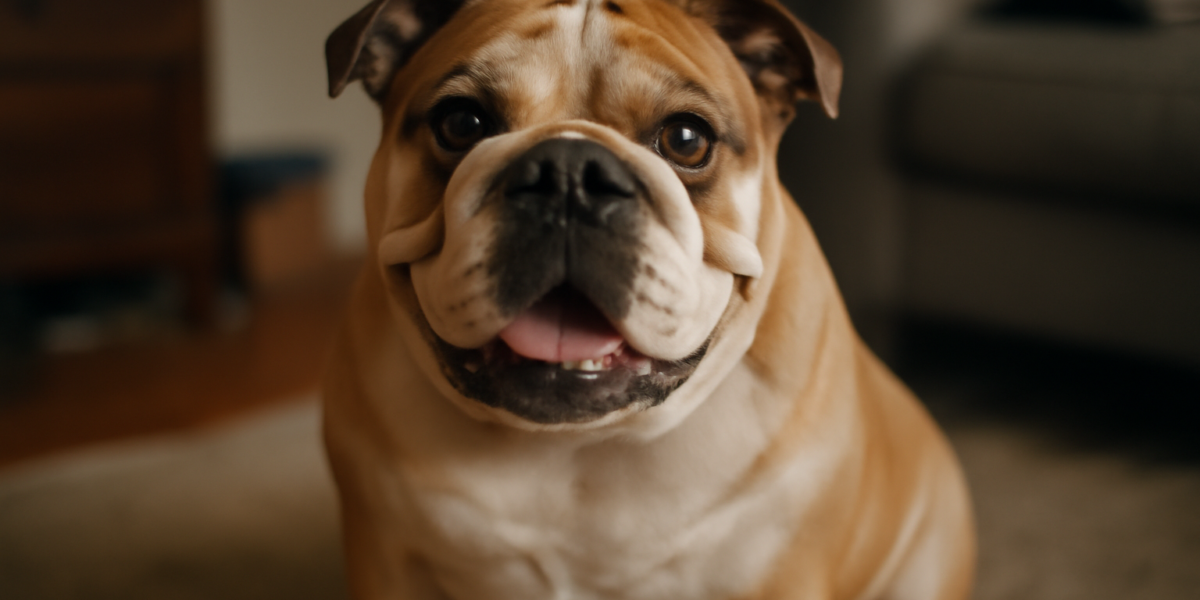
The English Bulldog’s appearance is immediately distinctive. Their broad, flat head is covered in deep wrinkles that fold across the brow and extend down toward the muzzle, giving them a perpetually thoughtful expression. The signature underbite — in which the lower jaw protrudes beyond the upper — is a defining characteristic of the breed standard. Their nose is wide and pushed inward, the result of the brachycephalic skull structure shared with breeds such as the Pug and French Bulldog.
The body is stocky and muscular, set low to the ground on short, sturdy legs. Their chest is broad and rounded, and the skin along the neck and shoulders forms additional loose folds. Despite their compact size, bulldogs carry notable mass and feel heavier than they look. Their short, smooth coat lies flat against the skin and requires minimal brushing to maintain its condition. The tail is naturally short and can be straight or slightly screwed, and is carried low rather than curled over the back. Overall, the bulldog’s silhouette is unmistakable: wide, low, and solidly built.
Exercise Needs
The English Bulldog is one of the lower-energy breeds you will encounter, and their exercise requirements reflect this. Short walks of fifteen to twenty minutes, taken once or twice daily, are generally sufficient to keep a bulldog physically active and mentally engaged. They enjoy brief periods of play and will often initiate interaction with their owners, but they are equally content to spend extended time lounging indoors.
Heat sensitivity is one of the most important considerations for this breed. Because of their brachycephalic anatomy, bulldogs are unable to cool themselves through panting as efficiently as other dogs, which means they can overheat rapidly in warm or humid conditions. Exercise should always be planned during the cooler parts of the day — early morning or evening — particularly in summer. Access to shade, fresh water, and air-conditioned environments is essential during warm months.
Overexertion is a genuine risk with bulldogs, and owners should monitor their dog closely for signs of respiratory distress, such as excessive panting, labored breathing, or a bluish tinge to the tongue or gums. Keeping exercise moderate and weather-appropriate is one of the most effective ways to protect a bulldog’s long-term health. For more guidance on caring for your dog, visit our dog care blog.
Grooming Needs
The English Bulldog’s short, smooth coat is low-maintenance from a brushing standpoint. A soft-bristle brush or grooming mitt used once or twice a week is sufficient to remove loose hair and keep the coat clean. Bulldogs shed moderately year-round, so regular brushing also helps reduce shedding around the home.
The most time-sensitive aspect of bulldog grooming is the care of their facial wrinkles and skin folds. Moisture, food debris, and bacteria can collect within the folds of the face and around the nose rope, leading to skin irritation, odor, and infection if not cleaned consistently. Each fold should be gently wiped with a damp cloth or pet-safe cleaning wipe and dried thoroughly afterward. This should be done at minimum every few days, and daily for dogs prone to fold dermatitis.
Bulldogs with a tail pocket — a small indentation beneath the base of the tail — require the same attention, as this area is equally prone to moisture accumulation and irritation. Ears should be checked weekly and cleaned when needed. Nails should be trimmed every three to four weeks, and regular teeth brushing supports long-term dental health. Bathing every four to six weeks, or when needed, rounds out a manageable but attentive grooming routine.
Health and Common Issues
The English Bulldog is a breed with a well-documented set of health concerns that prospective owners should understand before adopting. Brachycephalic Obstructive Airway Syndrome (BOAS) is among the most common and significant conditions, caused by the breed’s shortened skull, narrow nostrils, and elongated soft palate. Affected dogs may snore, breathe noisily, or struggle with exercise and heat. Surgical correction is available and can significantly improve quality of life.
Cherry eye — the prolapse of the gland of the third eyelid — is another frequently seen condition in bulldogs and is typically addressed surgically. Hip dysplasia, a malformation of the hip joint that can cause pain and reduced mobility, is also prevalent in the breed. Skin infections within the facial folds and tail pocket are common if grooming is inconsistent. Bulldogs are also prone to allergies that can affect the skin and ears.
Reproductive issues deserve specific mention. Due to the breed’s wide heads and narrow hips, the vast majority of bulldog litters are delivered by caesarean section, as natural birth is rarely possible. This contributes to the breed’s higher veterinary costs and reinforces the importance of responsible breeding. Working with a knowledgeable veterinarian and scheduling regular wellness exams is essential for managing the bulldog’s health proactively throughout its life.
Are Bulldogs Good With Kids and Other Pets?
English Bulldogs have a well-earned reputation as family dogs. Their patient, tolerant temperament makes them an excellent match for households with children of various ages. Bulldogs are rarely reactive or aggressive, and they tend to absorb the chaos of family life with good-natured equanimity. Younger children should always be supervised during interactions with any dog, but the bulldog’s steady nature means these interactions are generally positive and safe.
With other dogs, bulldogs are typically sociable and compatible, particularly when raised together or introduced gradually with proper supervision. They do not tend to be dominant or confrontational by nature, though individual personalities vary. Early socialization — exposure to other dogs, people, and environments during puppyhood — helps ensure that a bulldog grows into a confident and well-adjusted companion in a multi-pet home.
Cats and other household pets can coexist comfortably with a bulldog that has been socialized appropriately. As with any breed, introductions should be handled carefully and at the animals’ own pace. On the whole, the bulldog’s calm and friendly disposition makes it one of the more reliably compatible breeds for families with existing pets.
Training Tips
Training an English Bulldog requires a particular combination of patience, creativity, and humor. The breed is intelligent and capable of learning a wide range of commands and behaviors, but their famous stubbornness means they will not always perform on demand. Bulldogs tend to respond to training when they see a clear benefit to themselves, which makes high-value rewards — particularly food — a powerful motivational tool.
Short training sessions of five to ten minutes are far more productive than extended drills. Bulldogs disengage quickly when bored or pressured, and pushing too hard can cause them to shut down entirely. Keeping sessions upbeat, varied, and rewarding maintains their interest and builds a positive association with the training process. Positive reinforcement methods — praise, treats, and play — consistently outperform any form of correction-based training with this breed.
Basic obedience commands, leash manners, and house-training should be introduced early and reinforced consistently. Crate training, introduced gradually and positively, can provide the bulldog with a secure resting space and support the house-training process. Puppy classes offer structured learning combined with socialization, which is beneficial for building a well-rounded adult dog. Consistency from all household members is key, as bulldogs are quick to identify and exploit any inconsistency in the rules.
History and Origin
The English Bulldog’s history stretches back several centuries in England, where the breed was originally developed for the brutal blood sport of bull-baiting. In this practice, dogs were set upon tethered bulls and required to grip the animal’s nose and hold on despite injury. Bulldogs were selectively bred for the fearlessness, tenacity, and physical resilience that this task demanded. The breed’s low center of gravity, powerful jaw, and loose skin were all functional adaptations for the sport.
Bull-baiting was outlawed in England in 1835 under the Cruelty to Animals Act, and the bulldog’s original purpose vanished almost overnight. Rather than disappearing as a breed, however, the bulldog was transformed over the following decades through careful selective breeding. Enthusiasts worked to preserve the breed’s distinctive appearance while breeding away the aggression that had been cultivated for the ring, producing the calm, affectionate companion dogs recognized today.
The bulldog was recognized by the American Kennel Club in 1886 and has remained a consistently popular breed on both sides of the Atlantic. In Britain, the bulldog holds a place of particular cultural significance, serving as an unofficial national symbol of resilience and determination. Today, the breed is prized not for its fighting spirit but for the warmth, loyalty, and steadfast companionship it offers to families around the world.
Frequently Asked Questions About Bulldogs
Do English Bulldogs snore and make a lot of noise?
Yes, snoring and snuffling sounds are entirely normal for the bulldog and are a direct result of their brachycephalic anatomy. Most bulldog owners become accustomed to and even fond of their dog’s distinctive breathing sounds. However, if breathing appears labored, noisy during rest, or accompanied by visible distress, a veterinary evaluation for BOAS is recommended, as medical or surgical intervention can significantly improve a dog’s comfort and quality of life.
How much do English Bulldogs typically cost to maintain?
Bulldogs are generally considered a higher-cost breed to own due to their susceptibility to a range of health conditions. Veterinary expenses for issues such as BOAS, skin infections, cherry eye, and joint problems can be substantial over the course of a dog’s life. Pet insurance is worth considering for this breed. Ongoing costs for quality food, grooming supplies, and routine wellness care should also be factored into any ownership decision.
Can English Bulldogs live in apartments?
Yes. The English Bulldog is one of the breeds best suited to apartment living. Their low exercise requirements, calm temperament, and relatively quiet nature mean they adapt well to smaller spaces. They do not need a yard to be happy, though access to outdoor areas for short walks is important. The primary apartment consideration is temperature control, as bulldogs are highly sensitive to heat and require a reliably cool indoor environment.
Are English Bulldogs good for first-time dog owners?
Bulldogs can be a good match for first-time owners who have thoroughly researched the breed and are prepared for its specific needs. Their calm temperament and moderate exercise requirements are manageable for newcomers to dog ownership. However, first-time owners should be ready for the breed’s stubbornness during training, the commitment required for regular wrinkle and skin fold maintenance, and the possibility of significant veterinary expenses. Going in well-informed makes for a much more positive experience for both owner and dog.
Adopt a Bulldog
If the English Bulldog sounds like the right companion for your home and lifestyle, adoption is a meaningful and rewarding way to welcome one into your life. Bulldogs do enter rescue, often through no fault of their own, and many are waiting for patient, informed families who understand the breed’s needs and are committed to providing attentive, loving care. At Walk Me Home Rescue, we work to ensure that every bulldog in our care is matched with a home that is right for them.
Visit our adopt a dog page to view current listings, learn about our adoption process, and take the first step toward finding your new companion. You can also explore our dog care blog for practical guidance on preparing your home, understanding your new dog’s needs, and supporting them through the transition to life with your family.


