
Last updated: May 6, 2026
In this article
- Why Cat Ear Positions Matter
- Neutral Forward: The Relaxed Cat
- Forward and Erect: Interest and Alertness
- Independent Swiveling Ears
- Sideways “Airplane Ears”
- Pinned Flat Against the Skull
- Backward Without Pinning
- Twitching Ears at Rest
- Ears in Multi-Cat Households
- Ears During Play and Predatory Behavior
- Ears as a Pain Indicator
- Frequently Asked Questions
Why Cat Ear Positions Matter
Cat ear positions are one of the fastest, clearest windows into how a cat is feeling at any given moment. Unlike dogs, whose ear shape varies enormously by breed, most cats share a similar ear architecture — upright, mobile, and capable of rotating nearly 180 degrees thanks to roughly thirty-two muscles per ear. That mobility means ears are constantly broadcasting mood, often before any other body part shifts.
Reading ears well takes practice but pays off quickly. A thirty-second glance at the ears can tell you whether your cat wants attention, wants space, or is on the verge of swatting the well-meaning hand reaching for them. Combined with tail and eye reading, ear position is the cornerstone of fluent feline communication.
This guide walks through the major ear positions, what each one means in context, and how to pair ears with the rest of the cat’s body for an accurate read. For the broader picture, see our companion guide to reading cat body language.
Neutral Forward: The Relaxed Cat
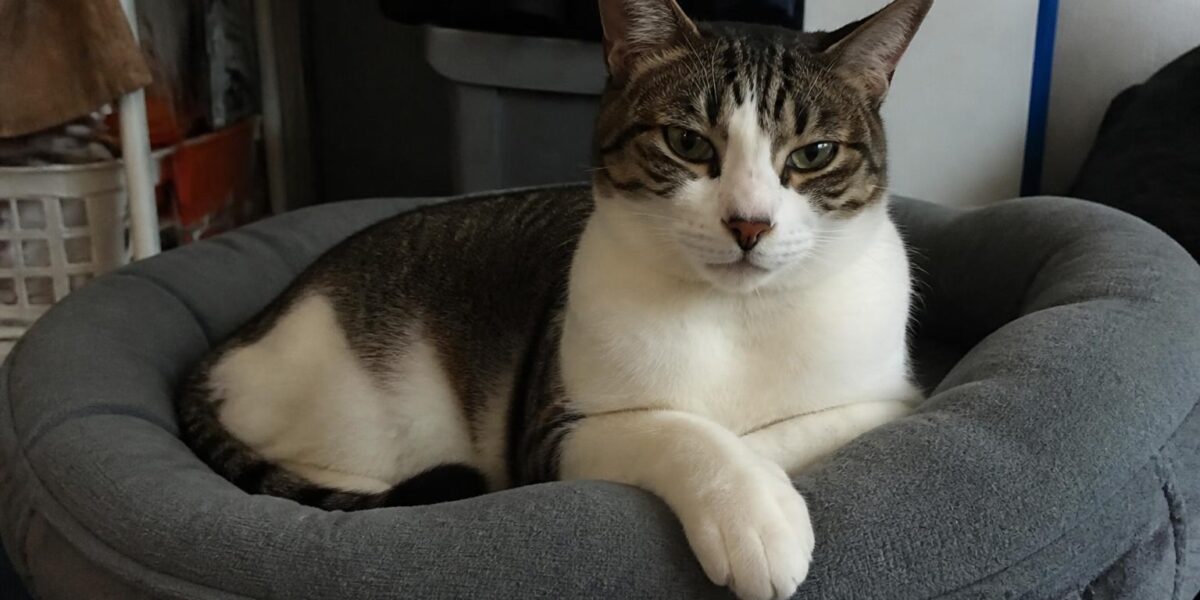
Ears held upright and slightly forward, with the openings facing front, are the cat’s default relaxed position. The cat is alert but not on guard. Combined with soft eyes, slow blinks, and a curled tail, neutral forward ears tell you the cat is comfortable in the room and open to interaction.
This is the position you want during petting, lap time, and social grooming. If your cat keeps their ears in this position throughout the interaction, you are reading the cat correctly and the contact is welcome.
Forward and Erect: Interest and Alertness
When ears push fully forward, slightly higher than the relaxed position, the cat is engaged. They have noticed something — a noise, a movement, a smell — and are gathering information. Whiskers usually fan forward at the same time, and the eyes brighten.
This is the hunting and play position. A cat watching a toy, a bird at the window, or a treat being prepared will hold ears forward and erect. It is positive arousal but still arousal — once the cat is in this state, sudden loud movements can tip them into a startle or pounce.
Independent Swiveling Ears
One of the most distinctive feline traits is the ability to swivel ears independently. A cat can keep one ear forward to track a conversation while pointing the other ear backward to monitor a sound from the hallway. This is a normal, healthy investigation pattern, not a stress signal.
Watch for it during play and rest. A loafed cat with both ears slowly rotating to different sounds is a regulated, attentive cat — not anxious, just paying attention to their environment. The Five Pillars framework from the AAFP and ISFM emphasizes how important the auditory environment is to cats; their ears confirm that point all day long.
Sideways “Airplane Ears”
Ears flattened sideways and slightly back — the so-called “airplane” or “wing” position — are a clear annoyance signal. The cat is irritated, defensive, or warning you that the current interaction has crossed a line. You will see this during overstimulating petting sessions, during disliked handling, and during low-level conflict between housemate cats.
If you see airplane ears during petting, stop. Many bite incidents during “love sessions” begin here. The cat will often follow up with a quick swat or a head-turn-and-bite if the human does not back off. Use the three-second pet rule and let the cat ask for more rather than pressing on.
Pinned Flat Against the Skull
Ears pinned hard and flat against the skull, with the back of the ear visible from the front, are a serious warning. The cat is frightened, defensive, or preparing to attack. Pinned ears almost always pair with dilated pupils, a low or crouched body, a puffed or thrashing tail, and sometimes hissing or growling.
This is not the moment to reach in or try to “comfort” the cat. Add distance, identify the trigger if you can, and give the cat space to settle. Do not stare directly at the cat. Soften your eyes, turn your body slightly away, and let the cat decide when they are ready to engage. For more on this scenario, see our piece on redirected aggression in cats, which describes how a trigger like a window-visiting outdoor cat can produce pinned ears that get redirected onto a housemate or human.
Backward Without Pinning
Ears pulled back gently without being fully pinned can mean mild appeasement, mild anxiety, or focused listening to something behind the cat. Read it together with the rest of the body. A loose-bodied cat with ears slightly back and slow blinks is probably just regulated and listening; a tense-bodied cat with ears slightly back and dilated pupils is uncertain and may escalate.
This soft-back position appears commonly during introductions to new people, new cats, and new environments. Patience, distance, and the option to retreat to a high or hidden spot usually moves the cat back toward neutral within minutes.
Twitching Ears at Rest
Ears that twitch repeatedly while the cat is otherwise still often signal overstimulation, especially during petting. The twitch is small and easy to miss, but it almost always precedes the swat. If you see ear twitches during a pet, your three seconds are up.
Persistent ear twitching outside of social contexts can also signal ear discomfort — mites, infection, foreign material, or pain. If twitching is paired with head shaking, scratching at the ears, or scent changes, schedule a vet check. Cats hide pain well, and ear discomfort is a frequent driver of behavior changes that owners initially misread.
Ears in Multi-Cat Households
Before reading social ears, remember that asymmetric ear positions on a single cat are normal investigation. One ear forward and one back, or one ear flat with one alert, can mean the cat is processing competing information — a new sound on one side and a familiar movement on the other. It resolves once the cat decides which input matters more. Persistent asymmetry across days, however, can be a medical sign. Vestibular issues, ear polyps, hematomas, and nerve injuries all alter ear carriage, and a persistent change is worth a vet visit.
In a multi-cat home, ear position is one of the easiest ways to spot social tension before it escalates. A cat with consistently flicked-back ears when a particular housemate enters the room is telling you the relationship is not as smooth as it looks. Cats often communicate through stares and posture rather than overt fights, and the tension is visible in the ears first.
Add resources, vertical space, and separated key resources (food, water, litter, resting spots) to ease friction. Our companion piece on inter-cat aggression walks through structured reintroductions and environmental fixes when ear-based tension has tipped into open conflict.
Ears During Play and Predatory Behavior
Predatory play has its own ear signature. Forward and slightly out, whiskers fanned, eyes wide, body loaded — the cat is fully engaged with the toy. As the cat gets closer to a pounce, ears may flatten slightly to protect them in case of impact. This is normal hunting behavior and not a sign of distress.
Channel this into structured wand play, food-foraging games, and puzzle feeders. A cat whose predatory motor pattern gets to express itself is a calmer, more regulated housemate. Our guide to predatory behavior in cats covers how to provide outlets that satisfy the hunting drive without targeting your hands or ankles.
Ears as a Pain Indicator
Ears slightly pulled back and held flatter than normal, when the cat is at rest and not facing any obvious trigger, can be an early pain indicator. The Feline Grimace Scale, developed by veterinary researchers, includes ear position as one of five facial action units used to score acute pain in cats. Ears rotated outward and slightly down score higher on the pain scale.
If your cat’s ears have shifted to a different baseline over days or weeks, especially with reduced grooming, hunched posture, or reluctance to jump, schedule a vet visit. Dental disease, arthritis, urinary issues, and abdominal pain all show up in feline body language before they show up anywhere else.
One useful exercise is to take a short video of your cat at rest each month and save it. Months later, compare the videos. Subtle drift in baseline ear carriage, posture, or grooming pattern is much easier to spot in side-by-side comparison than in real time. This kind of longitudinal observation often catches early signs of arthritis or other slow-developing conditions in time to make a meaningful difference. Senior cats benefit particularly from this approach because their physiology changes gradually rather than dramatically.
Frequently Asked Questions
What does it mean when a cat’s ears are flat against the head?
Flat-pinned ears are a serious warning. The cat is frightened, defensive, or preparing to attack. Add distance, avoid direct stares, and let the cat decide when to re-engage rather than reaching in to comfort.
Why does my cat suddenly flick their ears back during petting?
Ear flicks during petting are an early overstimulation signal. The cat is asking you to stop. Use a three-second pet rule and let the cat lean in for more if they want it.
Are independently swiveling ears a sign of stress?
No. Independent ear movement is normal feline investigation. A loafed, relaxed cat tracking different sounds with each ear is healthy and engaged, not anxious.
Can ear position indicate pain in cats?
Yes. The Feline Grimace Scale uses ear position as one of its pain indicators. Ears held flatter or rotated outward at rest, especially with reduced grooming or a hunched posture, can signal pain and warrant a vet check.
What does an “airplane ear” position mean?
Sideways flattened ears — airplane ears — signal annoyance or defensiveness. The cat is asking for the interaction to end. If you see this during petting or handling, stop and add space.
My cat’s ear positions changed suddenly — should I worry?
A persistent change in baseline ear carriage, especially asymmetric, can indicate a medical issue like an ear infection, polyp, or vestibular problem. Schedule a vet appointment if the change lasts more than a day or two.


