
Last updated: May 6, 2026
In this article
- What Cat Slow Blinking Actually Means
- The Research Behind the Cat Kiss
- How to Recognize a Slow Blink
- The Slow Blink in Context
- How to Slow Blink Back at Your Cat
- Building Trust With Shy and New Cats
- The Slow Blink as Part of Cat Body Language
- What Slow Blinking Is Not
- Practicing With Your Cat
- Slow Blinking Across Different Cat Personalities
- Frequently Asked Questions
What Cat Slow Blinking Actually Means
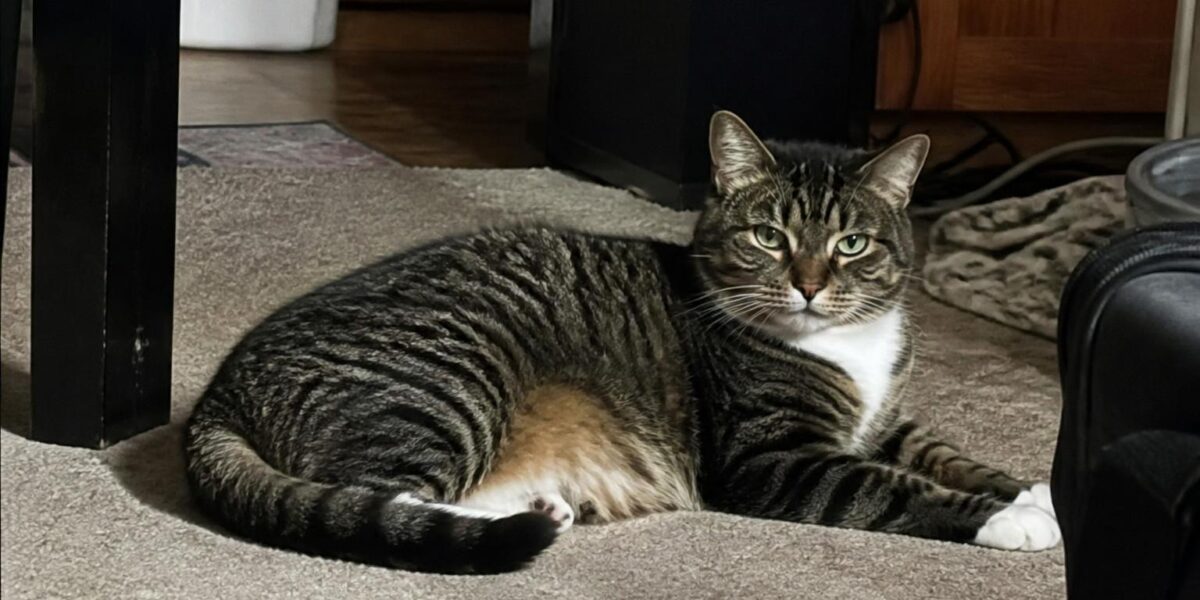
Cat slow blinking is one of the most charming and meaningful behaviors in the feline social vocabulary. The cat looks at you with soft eyes, slowly closes them, and slowly opens them again — sometimes with a half-blink, sometimes with a full closure that lingers for a beat. Cat behavior researchers and behaviorists have nicknamed it “the cat kiss,” and recent science suggests the nickname is actually a fair description of the behavior’s social function.
The slow blink is an affiliative signal — a friendly communication that says, in essence, “I am relaxed in your presence and I am not a threat.” Cats use it with humans they trust and with each other in calm social moments. Returning the slow blink — closing your eyes slowly back at the cat — is one of the most effective ways to build trust with a new or shy cat, and it is something any cat owner can practice.
This guide walks through what the science actually says, how to read the signal in context, and how to use the slow blink in your own relationship with your cat.
The Research Behind the Cat Kiss
A 2020 study by Humphrey, Mancini, and colleagues at the University of Sussex looked specifically at how cats respond to slow-blink interactions with humans. The study involved two experiments. In the first, owners slow-blinked at their own cats and the cats were more likely to slow-blink back compared to a no-interaction baseline. In the second, unfamiliar humans slow-blinked at cats they didn’t know, and the cats were both more likely to approach the human and more likely to slow-blink back.
The researchers concluded that slow blinking acts as a positive emotional communication between cats and humans, with measurable effects on cat behavior. This is one of the few human-cat communication behaviors with formal experimental evidence rather than only anecdotal support.
The behavior also appears in cat-cat communication. Cats in stable affiliative relationships with each other slow blink as part of their social vocabulary, often in calm shared moments. Like many cat behaviors, the human-directed version probably represents the cat extending an existing social signal to include their human family.
How to Recognize a Slow Blink
The slow blink is distinct from regular blinking. The defining features:
- Eyes close gradually rather than snap shut
- Eyes stay closed (or half-closed) for a beat
- Eyes open gradually
- Often paired with soft, rounded eye shape rather than sharp focus
- Body posture is relaxed — sometimes a soft “loaf” or curled position
- Often happens during calm one-on-one moments, not during high-arousal situations
You may see one slow blink or a sequence of two or three. Some cats produce nearly-closed “narrowing” of the eyes that looks like a sleepy squint — this is part of the same family of signals.
Contrast with hard staring: tense face, dilated pupils, body still and oriented toward the target, no blinking. Hard staring is a high-arousal signal and often precedes aggression. The slow blink is the opposite end of the same emotional axis.
The Slow Blink in Context
The slow blink appears in specific contexts in most cats. Knowing these helps you read it accurately.
- Calm shared moments. Cat lounging nearby, you reading or watching TV, eyes meeting briefly.
- Greeting after a separation. Some cats slow-blink as part of welcoming the human home.
- Pre-nap settling. A cat preparing to sleep often slow-blinks at the human before drifting off.
- During gentle petting. Cats receiving a wanted pet often slow-blink rhythmically.
- From a distance. A cat across the room may slow-blink at a person they trust as a kind of long-distance acknowledgment.
You will rarely see a slow blink during play, hunting, or any high-arousal moment. The blink belongs to the cat’s calm social vocabulary, not the active or excited end of the emotional range.
How to Slow Blink Back at Your Cat
Reciprocating the slow blink is one of the easiest, evidence-based ways to communicate friendliness to a cat. The technique is simple but worth practicing.
- Get comfortable in your cat’s line of sight, but at a relaxed distance — across the room is fine
- Soften your face. Don’t stare directly. Let your gaze rest gently on the cat
- Slowly close your eyes — over about one second, not a sharp blink
- Hold the eyes closed for a second or two
- Slowly open them and look slightly to the side, not directly at the cat
- Repeat once or twice, no more
Don’t lean toward the cat, don’t reach out, don’t try to combine the slow blink with verbal coaxing. The signal works best when delivered cleanly without other social pressure.
You can also use the slow blink in greeting a new cat, a rescue cat in their first month, or a cat who has been particularly stressed by something in the household. It is one of the gentlest ways to say hello.
Building Trust With Shy and New Cats
The slow blink is especially useful with cats who are still building trust. Recently adopted rescue cats, semi-feral cats, and cats who are slow to warm up to new humans often respond to the slow blink before they accept any other form of interaction.
Combine the slow blink with these practices:
- Sit on the floor at the cat’s level, sideways rather than facing
- Allow the cat to choose to approach
- Use a soft, low voice if you speak
- Toss a high-value treat in the cat’s direction without making eye contact
- Don’t reach toward the cat — let them come to you
For more on building trust with a new cat, see our first month with a rescue cat guide. The slow blink fits naturally into the patient approach that produces lasting trust.
The Slow Blink as Part of Cat Body Language
The slow blink is one signal in a much larger cat communication system. Reading the whole cat — eyes, ears, tail, posture — gives you the most accurate picture of what the cat is feeling.
- Soft eyes plus slow blink. Strong affiliative signal — calm and trusting.
- Soft eyes plus head bump. Active social greeting.
- Slow blink plus tail wrapping. Cat is relaxed and engaged in your presence.
- Slow blink plus tucked posture. Cat is calm but cautious — building trust.
- Slow blink plus purring. One of the strongest “I am content right now” combinations.
For the broader vocabulary of cat communication, see our reading cat body language guide. The slow blink fits inside the affiliative cluster of signals that includes soft eyes, kneading (see cat kneading meaning), and the upright tail held high in greeting.
What Slow Blinking Is Not
A few clarifications worth making.
- Slow blinking is not a guarantee that the cat wants to be picked up. Many cats who slow-blink from a distance are signaling friendliness from where they are — not requesting handling.
- It is not an obedience signal. Cats don’t slow-blink on command, and they may not return your slow blink every time. The communication is voluntary.
- It is not the same as a sleepy droop. A cat falling asleep mid-interaction is just sleepy. The slow blink is a deliberate, brief social act, often paired with eye contact before the close.
- It is not a sign of vision problems. Squinting from light sensitivity or pain looks different — usually paired with rubbing the face, watery eyes, or other signs. If your cat is squinting in a new way that doesn’t fit the slow-blink pattern, see your vet.
The simplest test is context. Calm, social, low-arousal moment with eye contact and gentle posture? Probably a slow blink. Other signs of stress, pain, or excitement? Read those first.
Practicing With Your Cat
Once you know what to look for, you can build slow blinking into your normal interactions with your cat. Most cats notice and respond within a few days of consistent practice. Some particularly social cats start initiating slow blinks more often. Some shy cats slowly extend their tolerance for human presence with the help of regular slow-blink exchanges.
Use the slow blink as part of:
- Morning greetings
- Coming home from work
- Quiet evenings at home
- Calm moments after feeding
- Sitting nearby a sleeping cat
It is a small, low-effort act with surprisingly real effects on the relationship. Like most cat-human communication, it works best when offered without pressure and received without expectation.
Slow Blinking Across Different Cat Personalities
Cat-to-cat variation in slow blinking is significant. Some cats slow blink frequently and respond every time you blink at them. Others slow blink rarely, even with people they know well. Both ends of the spectrum are normal.
Loose patterns by personality type:
- Confident, social cats. Often slow blink readily, including with new people. May initiate slow blinks rather than waiting for the human to start.
- Reserved, slow-to-warm cats. May slow blink rarely at first and gradually more often as trust builds. The first slow blink from a reserved cat is a meaningful milestone.
- Anxious or fearful cats. Often slow blink only with their most-trusted human, and only in calm contexts. Building up slow blink reciprocity with these cats is a slow, satisfying project.
- Senior cats. Sometimes slow blink more as they mellow with age. Some develop a sleepy half-blink that functions similarly.
- Cats with vision changes. May squint differently. Reading their slow blinks against their normal facial expression matters.
The right approach is the same regardless of personality — offer the slow blink without pressure, accept whatever response comes, and don’t take a non-response personally. The cat’s voluntary participation is what makes the signal meaningful.
Frequently Asked Questions
Is slow blinking really called the cat kiss?
The “cat kiss” nickname is informal but widely used among cat behaviorists and behavior consultants. It captures the affiliative function of the signal accurately — a friendly, low-stakes social communication.
How do I know if my cat is slow blinking at me?
Look for the gradual close, the brief held position, and the gradual reopen, in a calm context. The cat usually has a soft face and relaxed body. Sharp blinks during play or arousal are different — those are just regular blinking.
Will every cat slow blink back at me?
Not always, and not on every try. Some cats slow blink frequently, others rarely. Building the practice over time tends to increase the rate. Don’t expect on-demand responses.
Can I use slow blinking with a feral cat?
Yes — it is one of the safer ways to communicate friendliness across species and across the trust gap. It can take many sessions for a feral cat to soften enough to return the signal, but the practice itself doesn’t require trust to start.
Does slow blinking work with kittens?
Yes, although kittens at high-energy life stages may slow blink less often than adults. As they mature into more settled adult cats, the signal becomes more common.
What if my cat stares hard at me without blinking?
That is closer to a high-arousal signal — interest, alertness, or in some cases warning. Read the rest of the body — tense posture and dilated pupils with a hard stare suggest the cat is over-aroused. Soft body and gentle gaze with the staring may be friendly attention.


