
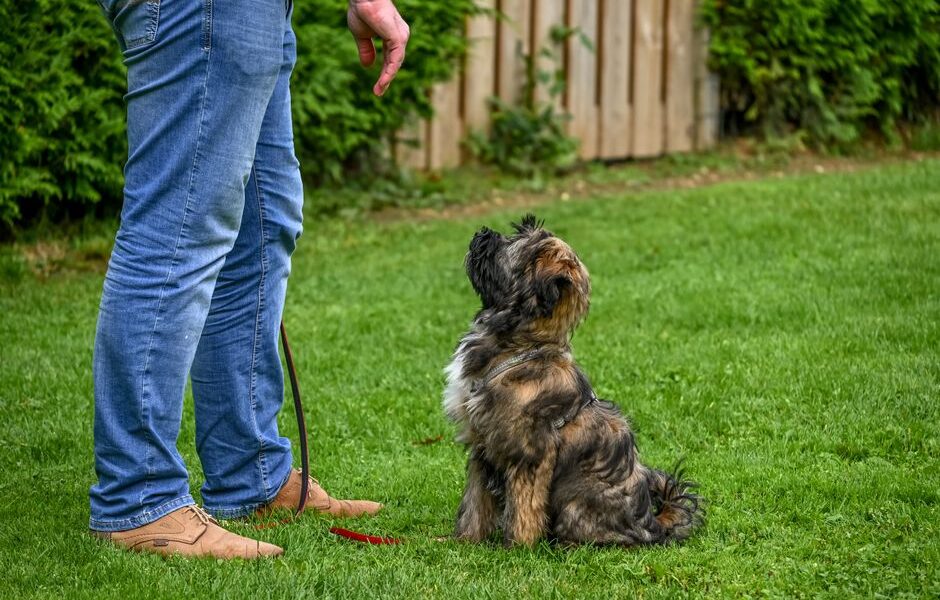
Every explosives, narcotics, or wildlife-detection dog began its career with a single foundational lesson: this specific smell pays. The process of teaching a dog that a particular target odor predicts a reward is called odor imprinting, and it is the bedrock on which all detection work is built. Get the foundation right and the dog will hunt that odor obsessively for years; get it wrong and no amount of advanced training fully repairs it. This article explains how imprinting works, the tools trainers use, and how the final alert is shaped. The biology behind it all is covered in our piece on how detection dogs smell.
In this article
- What Odor Imprinting Actually Means
- The Two Engines: Classical and Operant Conditioning
- Building the Reward and the Marker
- Scent Boxes, Wheels, and Presentation Tools
- Shaping the Final Response
- Building Odor Obedience
- Avoiding Common Foundation Mistakes
- From Foundation to Operational Reliability
- Frequently Asked Questions
What Odor Imprinting Actually Means
Imprinting in the detection sense is not the developmental imprinting of newborn animals; it is the deliberate creation of a strong association between a target odor and a reward. The trainer’s goal is to make the target scent the most interesting thing in the dog’s world, the cue that unlocks the toy or food the dog craves.
Once a dog is reliably imprinted, the odor itself becomes meaningful. The dog learns to actively hunt for it and to perform a trained behavior when it finds the source. The clarity and strength of this initial odor imprinting determines how confident and persistent the dog will be in the field, which is why trainers invest so heavily in getting it clean.
A useful way to think about it is that imprinting installs the dog’s reason to search. A pet dog sniffs because something happens to smell interesting; a detection dog searches because it has learned, deeply and repeatedly, that one specific odor is the key to the reward it most wants. That conviction is what carries the dog through long, fruitless searches where no reward appears for many minutes. Without a strong imprint, the dog’s motivation fades the moment the work gets hard, which in real operations is exactly when reliability matters most.
The Two Engines: Classical and Operant Conditioning
Imprinting combines two forms of learning. Classical (Pavlovian) conditioning builds the emotional, automatic association: odor predicts reward, so the odor itself becomes exciting and motivating. Operant conditioning builds the behavior: the dog learns that performing a specific action at source produces the reward.
In practice these run together. The dog first learns that the smell means good things are coming, then learns what it must do to earn them. Understanding the distinction helps trainers diagnose problems, and it is the same framework underlying all dog training, as explained in our article on operant versus classical conditioning.
Building the Reward and the Marker
Detection training runs on a clear, valuable reward, usually a specific toy or food that the dog works hard for. Before odor is even introduced, many trainers build powerful drive for a tug or ball, so that the eventual payoff is genuinely motivating.
A marker, a clicker or a consistent word, tells the dog the precise instant it did the right thing, bridging the gap between the correct behavior and the reward. Precise timing is everything: mark too late and you reward the wrong thing. The mechanics of clean marking are covered in our guides to marker training for dogs, and the same precision separates good detection foundations from sloppy ones.
Scent Boxes, Wheels, and Presentation Tools
Trainers use specialized equipment to present target odor cleanly during imprinting. Two common tools are:
- Scent boxes — a row of identical containers, one holding target odor and the rest blank, so the dog learns to discriminate the target from neutral controls.
- Scent wheels (carousels) — a rotating array of arms holding odor and blanks, allowing rapid repetitions and easy variation of which position holds the target.
These tools let the trainer control the odor picture precisely, vary the target’s location to prevent pattern-learning, and confirm the dog is responding to scent rather than position. The same care in handling odor sources carries into operational work, as discussed in our article on working dog training aids and pseudo-scent management.
The order in which odor and behavior are introduced varies by program and trainer philosophy. Some prefer to build a powerful trained final response first and then attach it to odor; others introduce odor early and shape the response around it. Both approaches can produce excellent dogs. What they share is a disciplined progression from simple, obvious presentations toward more difficult, realistic hides, never advancing faster than the dog’s understanding allows. Pushing a dog into hard searches before the imprint is solid is one of the most common ways a foundation gets muddied.
Shaping the Final Response
Finding the odor is only half the lesson; the dog must also tell the handler. The trained final response, also called the alert, is shaped during foundation training, and it comes in two broad forms.
A passive response (a sit, down, or freeze at source) is standard for explosives detection, where the dog must not disturb the source. An active response (scratching, barking, or pawing) is more common in narcotics work where digging at a hidden source can be useful. The choice and the careful shaping of that behavior are covered in our article on detection dog alert behaviors. Trainers build the response gradually, marking and rewarding the desired behavior at the odor source until it becomes automatic.
Building Odor Obedience
A well-imprinted dog develops what trainers call odor obedience: a near-compulsion to respond to the trained scent regardless of distractions or location. This is the goal of foundation training, a dog so committed to its odor that it will work past food, novel environments, and competing smells.
Odor obedience is built through hundreds of clean repetitions with high reward value and careful avoidance of confusion. Every time the dog responds to odor and gets paid, the behavior strengthens. Every time it gets rewarded for the wrong thing, the picture muddies. This is why foundation work is slow, deliberate, and unglamorous, and why rushing it creates problems that surface later.
Reward delivery is itself a skill. Where and how the dog receives its reward teaches it where the value lives. If the reward consistently appears at the odor source, the dog learns to drive into source and commit to its final response. If the handler delivers the reward sloppily, away from source or after the dog has already moved off, the dog learns a fuzzier, less reliable picture. Skilled trainers are meticulous about delivering the payoff at exactly the right place and moment, because the dog’s understanding is built one reward at a time.
Avoiding Common Foundation Mistakes
Several errors during imprinting can haunt a detection dog for life. Rewarding off-source teaches the dog to alert near, but not at, the odor. Always hiding the target in the same place teaches location rather than scent. Letting the dog learn handler body language instead of odor creates a cued, unreliable dog.
That last problem connects directly to the importance of blind training and testing, where neither the dog nor the handler knows where the odor is, so the dog cannot be cued. The reasoning is laid out in our article on double-blind testing and the Clever Hans effect. Clean foundations and honest testing go hand in hand.
From Foundation to Operational Reliability
Imprinting is the start of a long process. Once a dog reliably recognizes and responds to its target odor in controlled settings, training expands to proofing the odor against distractions, generalizing across environments, and building systematic search skills. Each layer rests on the foundation laid during imprinting.
A dog with a clean, strong imprint progresses smoothly; a dog with a muddy foundation struggles at every later stage. That is why professional programs treat foundation training as the most important phase of a detection dog’s career, even though it produces none of the dramatic footage that captures public attention. The patient, repetitive work of imprinting is what makes everything that follows possible.
Many programs also imprint dogs on multiple target odors over time, layering each new scent onto the same trained final response. A single dog may learn to recognize several explosive compounds or a range of narcotic odors, alerting the same way for each. This is done carefully, one odor at a time, with each new scent built to the same standard as the first. The dog ends up with a library of target odors and a single, consistent way of announcing any of them, which is far more useful operationally than a dog trained on just one substance.
Throughout this process, record-keeping matters as much as the training itself. Logging which odors a dog has been imprinted on, how it performed, and where any weaknesses appeared lets trainers maintain the dog’s reliability and supports the dog’s credibility if its work is ever scrutinized. Foundation training, done properly, is documented training, not just hours spent at a scent wheel.
Frequently Asked Questions
How long does odor imprinting take?
It varies by dog and program, but basic imprinting on a single odor can take days to a few weeks of consistent sessions. Building reliable odor obedience and adding multiple target odors takes considerably longer, and proofing and generalization continue throughout the dog’s career.
What is the difference between imprinting and proofing?
Imprinting teaches the dog to recognize and respond to a target odor and earn a reward. Proofing comes later and teaches the dog to ignore distracting odors and false cues so it responds only to the true target. Foundation imprinting must be solid before proofing begins.
Why do trainers use scent boxes and wheels?
These tools present target odor alongside blank controls in a controlled way, letting the trainer vary the target’s location, run many clean repetitions, and confirm the dog is responding to scent rather than position. They reduce the risk of the dog learning patterns instead of odor.
What is odor obedience?
Odor obedience is a dog’s near-compulsive drive to respond to its trained odor regardless of distractions or environment. It is the goal of foundation training and is built through hundreds of clean, well-rewarded repetitions.
Can a poor foundation be fixed later?
Some problems can be retrained, but a muddy imprint, such as a dog rewarded off-source or one that learned location instead of scent, often causes persistent reliability issues. This is why programs invest so heavily in getting the foundation clean from the start.


