
Last updated: May 6, 2026
In this article
- Signs Your Dog Has Fleas
- Understanding the Flea Life Cycle
- Treatment Options: Oral Medications
- Treatment Options: Topical Products
- Treatment Options: Flea Collars
- Treating Your Home
- Natural and Home Remedies for Fleas
- How to Give Your Dog a Flea Bath
- Year-Round Flea Prevention Schedule
- Flea Treatment for Puppies
- When to See a Veterinarian
- Frequently Asked Questions
Few things make a dog owner’s stomach drop quite like spotting a flea on their pet. That single tiny insect is never alone — where there is one, there are dozens more hiding in your dog’s coat, your carpets, and your furniture. The good news is that modern dog flea treatment options are effective, widely available, and, when used correctly, can eliminate an infestation within weeks and prevent future ones entirely. This guide walks you through every practical aspect of dealing with fleas, from identifying the problem to building a year-round prevention routine.
Signs Your Dog Has Fleas
Fleas are small, fast, and surprisingly good at hiding, so you may notice the symptoms before you ever see an actual flea. The most obvious sign is persistent scratching, biting, or chewing — particularly around the base of the tail, the belly, the groin, and behind the ears. These are the warm, thin-skinned areas fleas prefer.
Other common signs include:
- Flea dirt: Tiny black or dark brown specks in your dog’s fur. Place a few specks on a damp white paper towel — if they dissolve into a reddish-brown smear, that is digested blood and confirms flea activity.
- Red, irritated skin: Flea bites cause small red bumps. Dogs with flea allergy dermatitis (FAD) will develop intense inflammation, hair loss, and hot spots from even a few bites.
- Hair loss: Particularly around the lower back, tail base, and inner thighs from constant scratching and chewing.
- Restlessness: A heavily infested dog may have trouble settling down, shake their head frequently, or seem generally uncomfortable.
- Pale gums: In severe cases — especially in puppies or small dogs — a heavy flea burden can cause anemia. Pale gums, lethargy, and weakness are signs that warrant an immediate veterinary visit.
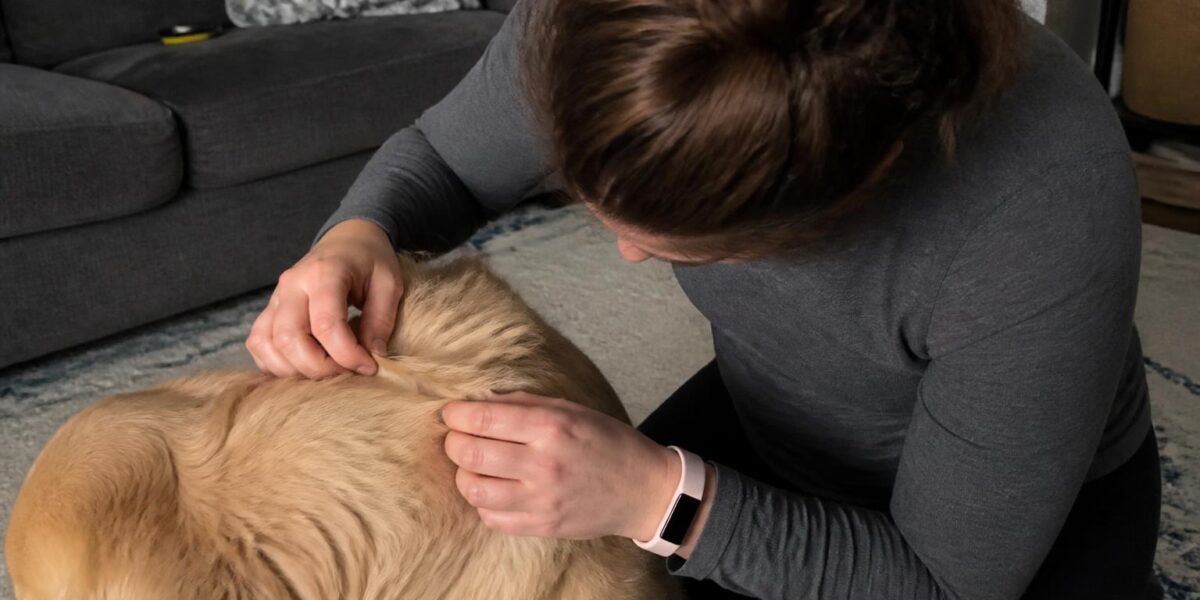
Run a flea comb (a fine-toothed metal comb) through your dog’s coat, concentrating on the neck, back, and tail base. Dip the comb into soapy water after each pass to trap any fleas or debris you collect. This is the fastest hands-on method for confirming an infestation.
Understanding the Flea Life Cycle
Effective dog flea treatment requires understanding why fleas are so persistent. Adult fleas — the ones you see biting your dog — represent only about five percent of the total flea population in your home. The other ninety-five percent exists as eggs, larvae, and pupae scattered throughout your environment.
The life cycle works like this:
- Eggs: A single female flea lays up to 50 eggs per day. These eggs fall off your dog and settle into carpet fibers, bedding, furniture crevices, and floor cracks.
- Larvae: Eggs hatch within 2 to 14 days into tiny, worm-like larvae that feed on organic debris and flea dirt. They avoid light and burrow deep into carpets and upholstery.
- Pupae: Larvae spin cocoons and enter the pupal stage. This is the most resilient phase — pupae can survive for months, even up to a year, protected inside their cocoons. They are resistant to insecticides, vacuuming, and temperature extremes.
- Adults: When pupae detect warmth, vibration, or carbon dioxide (signs of a nearby host), they emerge as adult fleas ready to jump onto your dog and begin feeding within minutes.
This is why a single treatment rarely solves the problem. You need to break the cycle at multiple stages simultaneously — killing adults on your dog while eliminating eggs, larvae, and pupae in your home. Consistency over several weeks is the key.
Treatment Options: Oral Medications
Oral flea treatments are among the most effective options available and are typically prescribed by a veterinarian. They work systemically — the active ingredient enters your dog’s bloodstream, so when a flea bites, it ingests the compound and dies.
Fast-acting oral treatments like those containing nitenpyram begin killing adult fleas within 30 minutes and can eliminate visible fleas within a few hours. These are excellent for knocking down a heavy infestation quickly but do not provide long-term protection.
Monthly oral preventatives containing active ingredients such as afoxolaner, fluralaner, or sarolaner provide 30 to 90 days of continuous protection. They kill adult fleas before they can lay eggs, effectively breaking the reproductive cycle. Many of these products also protect against ticks, which is a significant advantage for dogs who spend time outdoors.
The main benefits of oral medications are that they cannot be washed off, they do not leave residue on furniture, and there is no concern about children or other pets coming into contact with topical chemicals. The main downside is that they require a prescription, and some dogs with certain health conditions may not be good candidates. Always discuss oral flea treatment with your veterinarian before starting.
Treatment Options: Topical Products
Topical flea treatments — often called spot-on treatments — are applied directly to your dog’s skin, usually between the shoulder blades or along the back of the neck. The active ingredient spreads through the oils in the skin and coat to provide full-body protection.
Common active ingredients in topical treatments include fipronil, imidacloprid, selamectin, and permethrin. Most provide 30 days of protection and kill fleas on contact, meaning the flea does not need to bite your dog to be affected. Some formulations also repel fleas and ticks, which oral treatments generally do not.
Topical treatments are widely available both over the counter and by prescription. When applying, part the fur to expose the skin and apply the liquid directly — if the product sits on top of the fur rather than reaching the skin, it will not distribute properly. Avoid bathing your dog for 48 hours before and after application, as water can reduce effectiveness.
One important safety note: permethrin-based products designed for dogs are highly toxic to cats. If you have cats in your household, choose a permethrin-free formula or keep treated dogs separated from cats until the product has fully dried.
Treatment Options: Flea Collars
Modern flea collars have come a long way from the ineffective, strong-smelling versions of decades past. Today’s prescription-grade collars release active ingredients that spread across the skin and coat, providing protection that lasts for several months.
The most effective collars use ingredients like imidacloprid combined with flumethrin, providing up to eight months of continuous flea and tick protection. They are water-resistant and begin working within 24 to 48 hours of being fitted.
Flea collars work best as a preventative measure rather than a treatment for heavy infestations. If your dog already has a significant flea problem, pair the collar with a fast-acting oral or topical treatment to eliminate the existing population while the collar provides ongoing protection. Make sure the collar fits snugly enough that you can slide two fingers between the collar and your dog’s neck — too loose and the active ingredient will not make adequate skin contact.
Treating Your Home
Treating your dog without treating your home is like bailing water from a boat without plugging the leak. Remember: ninety-five percent of the flea population is in your environment, not on your pet. A thorough home treatment plan should include these steps:
Vacuum aggressively. Vacuum all carpets, rugs, upholstered furniture, and hard floors — especially along baseboards, under furniture, and in corners. Vacuuming removes eggs, larvae, and debris they feed on. It also stimulates pupae to emerge from their cocoons, making them vulnerable to insecticides. Vacuum daily for at least two to three weeks during an active infestation, and dispose of the vacuum bag or empty the canister into an outdoor trash bin immediately after each session.
Wash all bedding. Wash your dog’s bedding, blankets, and any removable furniture covers in hot water (at least 140 degrees Fahrenheit) and dry on high heat. The combination of hot water and dryer heat kills fleas at every life stage. Repeat weekly for at least a month.
Use an indoor flea spray or fogger. Choose a product that contains both an adulticide (to kill adult fleas) and an insect growth regulator, or IGR (to prevent eggs and larvae from developing). IGRs are critical because they break the life cycle at the pre-adult stages that make up the majority of the population. Follow the product instructions carefully, remove pets and people during application, and ventilate the area before re-entering.
Treat outdoor areas. If your dog spends time in a yard, treat shaded, moist areas where fleas thrive — under decks, along fence lines, and in areas with leaf litter or tall grass. Yard sprays containing permethrin or nematode-based biological treatments can help reduce outdoor flea populations.
Natural and Home Remedies for Fleas
Some dog owners prefer to start with natural approaches, either as a complement to conventional treatments or for mild cases. While natural remedies are generally less potent than pharmaceutical options, several have legitimate merit.
Diatomaceous earth (food grade). This fine powder made from fossilized algae damages the waxy coating on flea exoskeletons, causing them to dehydrate. Sprinkle food-grade diatomaceous earth lightly on carpets, pet bedding, and furniture. Leave it for 24 to 48 hours, then vacuum thoroughly. Do not apply it directly to your dog’s skin, and avoid inhaling the dust — it can irritate lungs.
Apple cider vinegar spray. Mix equal parts apple cider vinegar and water in a spray bottle and mist your dog’s coat lightly, avoiding the eyes, nose, and any open wounds. The acidic environment is thought to make the coat less attractive to fleas. This is not a flea killer but may serve as a mild deterrent between baths.
Coconut oil. The lauric acid in coconut oil may repel fleas. Rub a small amount through your dog’s coat, focusing on areas fleas favor. It also soothes irritated skin. Be sparing — too much can lead to greasy fur and digestive upset if your dog licks it off excessively.
Rosemary rinse. Steep fresh rosemary in boiling water, let it cool completely, strain the liquid, and pour it over your dog after a bath as a final rinse. Rosemary has mild insect-repellent properties and leaves the coat smelling pleasant.
A word of caution: essential oils such as tea tree, pennyroyal, and eucalyptus are sometimes recommended for flea control, but many essential oils are toxic to dogs (and especially to cats) when applied improperly or ingested. Avoid using concentrated essential oils on your pet without specific guidance from your veterinarian.
How to Give Your Dog a Flea Bath
A flea bath is one of the most immediate ways to reduce a heavy flea load. Here is a step-by-step guide:
- Gather supplies: Flea shampoo (or a gentle dish soap like Dawn, which suffocates fleas on contact), a flea comb, towels, and a cup or handheld sprayer for rinsing.
- Start at the neck: Wet your dog thoroughly with lukewarm water and immediately lather a ring of shampoo around the neck. This prevents fleas from escaping up to the head and ears during the bath.
- Work backward: Apply shampoo from the neck down through the back, belly, legs, tail, and paws. Massage it into the coat and down to the skin. Pay extra attention to the base of the tail, the belly, and the armpits.
- Let it sit: Leave the shampoo on for five to ten minutes (follow the product label). This contact time is necessary for the active ingredients to kill the fleas.
- Rinse thoroughly: Rinse every trace of shampoo from the coat. Residual soap can dry and irritate the skin.
- Comb while damp: While the coat is still wet, use a flea comb to remove dead fleas, flea dirt, and any survivors. Dip the comb in a bowl of soapy water after each pass.
- Dry and inspect: Towel dry your dog or use a blow dryer on a cool setting. Check the ears, between the toes, and under the chin — fleas hide in these spots.
A flea bath kills fleas that are currently on your dog, but it provides no residual protection. Follow the bath with a long-acting preventative — oral, topical, or collar — to keep new fleas from re-infesting your dog. If you are adopting a dog and want to make sure they start off flea-free, check our adoption page for pets that have already received veterinary care including parasite treatment.
Year-Round Flea Prevention Schedule
The most effective flea strategy is prevention, not reaction. Fleas can survive indoors year-round regardless of climate, and in warmer regions they remain active outdoors through every season. Waiting until you see fleas means the population is already established and harder to eliminate.
A solid prevention schedule looks like this:
- Monthly: Administer your chosen flea preventative (oral tablet or topical treatment) on the same date each month. Set a calendar reminder — gaps in coverage are the most common reason preventatives “fail.”
- Weekly: Wash your dog’s bedding in hot water. Quick-check your dog’s coat with a flea comb, particularly after visits to parks, wooded areas, or homes with other animals.
- Seasonally: In spring and summer, increase vigilance. Treat your yard if you live in a flea-prone area. Check for ticks at the same time — many preventatives cover both parasites.
- Annually: Discuss your flea and tick prevention plan with your veterinarian at your dog’s yearly checkup. Product recommendations evolve as new options become available and resistance patterns change.
Consistency is everything. Twelve months of prevention costs less — in money, stress, and your dog’s comfort — than a single serious infestation.
Flea Treatment for Puppies
Puppies need special consideration when it comes to flea treatment. Most prescription and over-the-counter flea products have minimum age and weight requirements — typically eight weeks old and at least two to four pounds, though this varies by product. Using an adult-strength product on a young puppy can cause toxicity, tremors, or worse.
For puppies under eight weeks old, safe options are limited to manual removal with a flea comb and a gentle bath with warm water and a small amount of Dawn dish soap. Be thorough but gentle, and keep the puppy warm during and after the bath — young puppies chill easily.
Once your puppy reaches the appropriate age and weight threshold, your veterinarian can recommend a safe preventative. Many oral and topical products are labeled for puppies eight weeks and older. Starting prevention early is important because puppies are more vulnerable to flea-borne anemia than adult dogs — even a moderate flea burden can be dangerous for a small, growing body.
If you are looking for a puppy or young dog, browsing our dog breeds directory can help you research breeds and find the right fit for your household. Each breed profile includes size expectations that will help you plan appropriate flea prevention from day one.
When to See a Veterinarian
Most flea infestations can be managed at home with the right products and persistence, but certain situations call for professional help:
- Signs of flea allergy dermatitis: If your dog develops severe itching, widespread hair loss, hot spots, or secondary skin infections from flea bites, your vet may need to prescribe anti-inflammatory medication, antibiotics, or medicated shampoos in addition to flea treatment.
- Anemia symptoms: Pale gums, extreme lethargy, rapid breathing, or weakness — especially in puppies, senior dogs, or small breeds — can indicate flea-related blood loss that requires urgent veterinary care.
- Tapeworms: Fleas carry tapeworm larvae. If your dog has had fleas and you notice small, rice-like segments in their stool or around their rear end, they likely have tapeworms and will need a deworming medication from your vet.
- Persistent infestation: If you have been treating your dog and home consistently for four to six weeks and are still seeing live fleas, consult your vet. There may be a resistance issue, a product mismatch, or an environmental source you have not identified.
- Reactions to treatment: Vomiting, excessive drooling, tremors, or skin irritation after applying a flea product warrants a call to your vet or an emergency clinic.
Your veterinarian can also help you choose the right preventative for your dog’s specific needs — age, weight, health conditions, and lifestyle all influence which product is the best fit.
Frequently Asked Questions
How long does it take to get rid of fleas on a dog?
With consistent treatment of both your dog and your home, you can expect to see significant improvement within one to two weeks and full elimination within three to eight weeks. The timeline depends on the severity of the infestation. The pupal stage is the bottleneck — cocoons can shelter developing fleas for weeks, so you may see new adults emerging even after treatment begins. Continue your prevention regimen without gaps to catch these stragglers as they emerge.
Can fleas live on humans?
Dog fleas (Ctenocephalides canis) and cat fleas (Ctenocephalides felis, which actually infest dogs more commonly than cat fleas) can and will bite humans, leaving itchy red welts usually around the ankles and lower legs. However, they do not live on humans long-term — we lack the dense fur they need for shelter and egg-laying. Treating your pets and your home will resolve human flea bites as well.
Can I use a cat flea treatment on my dog?
Never use a cat-specific product on a dog or vice versa without checking with your veterinarian. While some active ingredients overlap, dosages and formulations differ significantly between species. Products containing permethrin, which are common in dog treatments, are potentially fatal to cats. Always use the product designed for your pet’s species and size.
Do fleas die in winter?
Outdoor flea populations decline in freezing temperatures, but fleas living indoors remain active year-round. Heated homes provide the warmth and humidity fleas need to survive and reproduce regardless of the season. This is why veterinarians recommend twelve-month flea prevention even in cold climates.
How often should I bathe my dog for fleas?
During an active infestation, one or two flea baths spaced a week apart can help reduce the adult flea population quickly. After that, switch to a long-acting preventative rather than relying on repeated baths. Over-bathing can strip your dog’s skin of natural oils, leading to dryness, irritation, and a weakened skin barrier — which actually makes flea-related skin problems worse.
Are flea collars safe for dogs?
Prescription-grade flea collars from reputable manufacturers have a strong safety track record when used according to the label. Fit the collar properly, monitor your dog for any signs of skin irritation around the neck, and remove the collar if you notice redness, hair loss, or discomfort in the collar area. Keep the packaging and lot number in case you need to report an adverse reaction to the manufacturer or your veterinarian.


