
In this article
- Know the Rules Before You Go
- Vaccination Requirements
- Watching Your Dog at All Times
- Picking Up After Your Dog
- Reading Play vs. Bullying
- When to Leave the Dog Park
- How to Handle Aggressive Dog Encounters
- Small Dog vs. Large Dog Areas
- Not Bringing Food or Treats to the Dog Park
- Puppies at the Dog Park
- Putting It All Together
- Frequently Asked Questions
Dog Park Etiquette: Rules for a Safe and Fun Visit
Dog parks are one of the greatest perks of living with a dog. They offer open space, off-leash freedom, and the kind of high-energy social interaction that most dogs simply cannot get on a standard leash walk around the block. A well-run dog park gives your dog the chance to sprint, wrestle, sniff, and play in ways that satisfy deep-rooted instincts — and it gives you a chance to meet other dog owners who share your commitment to keeping their pets happy and healthy. But dog parks only work well when everyone follows the same basic rules. One owner who ignores the norms can turn a relaxed afternoon into a stressful or even dangerous situation for every dog and person present.
Good dog park etiquette is not about being overly cautious or policing other people’s behavior. It is about understanding that an off-leash environment requires a higher level of awareness, preparation, and responsibility than a fenced backyard. When every owner does their part — supervising their dog, cleaning up waste, respecting other dogs’ boundaries, and knowing when to intervene — the park stays safe and enjoyable for everyone. This guide covers the essential rules of dog park etiquette so you can make every visit a positive experience for your dog and for the community that shares the space.
Know the Rules Before You Go
Every dog park has posted rules, and they exist for good reason. Before your first visit to any park, take a few minutes to read the signs at the entrance. Most parks will list requirements around vaccinations, leash policies within the gate area, breed or size restrictions, and hours of operation. Some parks prohibit intact males, others have age minimums for dogs, and many have specific rules about children being present inside the off-leash area. Ignoring these rules does not just put your dog at risk — it can result in fines, bans, or confrontations with other park users who take the rules seriously.
Beyond the posted rules, spend some time observing the park during a busy period before bringing your dog for the first time. Watch how the regular dogs interact, notice the flow of traffic through the gates, and get a feel for the general energy level. Some parks skew toward high-energy large breeds and feature a lot of rough-and-tumble wrestling. Others attract a calmer crowd of older dogs and smaller breeds. Knowing the vibe of your local park helps you decide whether it is a good match for your dog’s temperament and play style. If your dog is shy, anxious, or new to off-leash socialization, consider visiting during off-peak hours when fewer dogs are present.
Vaccination Requirements
Bringing an unvaccinated dog to a dog park is one of the most irresponsible things an owner can do. Dog parks are high-contact environments where dogs share water bowls, sniff each other closely, and come into contact with urine, feces, and saliva from dozens of different animals. Diseases like canine parvovirus, distemper, bordetella, and canine influenza spread quickly in these settings, and an unvaccinated dog is both a potential victim and a potential vector.
At a minimum, your dog should be current on the core vaccines — rabies, distemper, parvovirus, and adenovirus — before setting foot in a dog park. Many veterinarians also recommend the bordetella vaccine and the canine influenza vaccine for dogs that regularly visit parks, daycares, or boarding facilities. Keep your dog’s vaccination records up to date and be prepared to show proof if asked. Most parks require it, and even in parks that do not check, you owe it to the other dogs and owners present to ensure your dog is fully protected. If you have recently adopted a dog and are unsure of their vaccination history, schedule a vet visit before introducing them to the park environment.
Watching Your Dog at All Times
The single most important rule of dog park etiquette is also the one most frequently broken: watch your dog at all times. A dog park is not a daycare. It is not a place to drop off your dog while you sit on a bench scrolling through your phone, take a phone call, or chat with other owners with your back turned to the play area. Off-leash dogs can go from relaxed play to a serious conflict in a matter of seconds, and the only thing that prevents minor scuffles from escalating into injuries is an attentive owner who steps in immediately.
Watching your dog means keeping your eyes on them — knowing where they are, who they are interacting with, and what the body language looks like at every moment. It means being close enough to recall your dog if things get tense, and being willing to physically intervene if a recall fails. Dogs pick up on their owners’ engagement. A dog whose owner is nearby and attentive tends to check in more frequently and stay within a manageable range. A dog whose owner is distracted or absent tends to wander farther, push boundaries more aggressively, and escalate situations that a supervised dog would walk away from.
Supervision also means being honest about what you are seeing. If your dog is mounting other dogs, body-slamming smaller dogs, pinning other dogs to the ground, or refusing to disengage when another dog signals that play is over, those are problems that require your immediate intervention — not behaviors to laugh off or ignore because “that is just how he plays.”
Picking Up After Your Dog
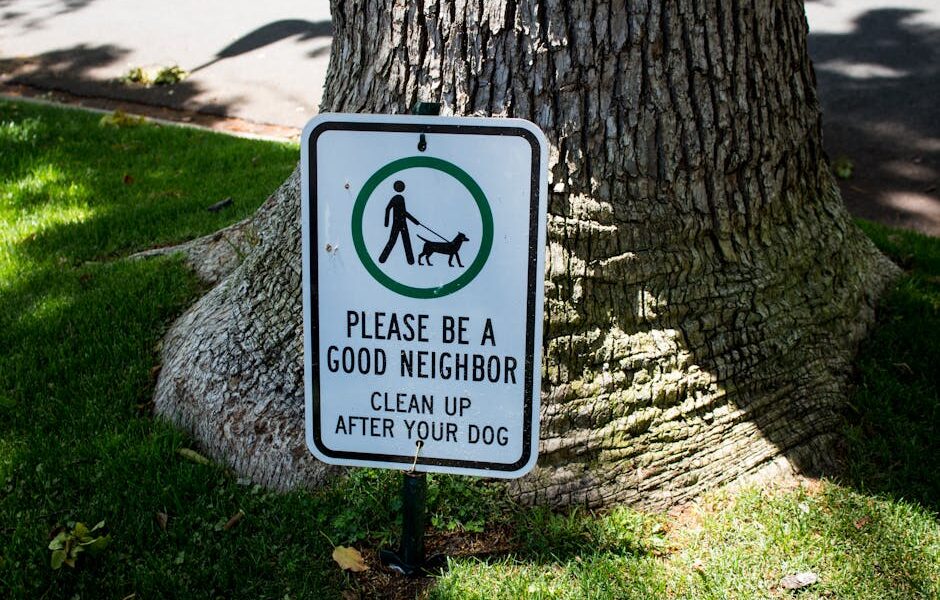
There is no excuse for failing to pick up after your dog at a dog park. None. It does not matter that other owners leave waste behind. It does not matter that the park is large and the pile is in a corner. It does not matter that your dog went three times and you only brought two bags. If your dog defecates, you pick it up immediately, bag it, and dispose of it in the designated receptacle. This is the most basic, non-negotiable element of dog park etiquette.
Dog waste is more than an unpleasant nuisance. It carries parasites including roundworms, hookworms, whipworms, giardia, and coccidia — all of which can be transmitted to other dogs through direct contact or contaminated soil. It also attracts flies, contributes to bacterial contamination of groundwater, and makes the park unusable for dogs and people who step in it. Carry more bags than you think you will need. If you see a pile that someone else left behind, pick that up too. It takes five seconds and it makes the park better for everyone, including your own dog.
Reading Play vs. Bullying
One of the most valuable skills a dog park visitor can develop is the ability to read canine body language well enough to distinguish between healthy play and bullying. They can look remarkably similar at first glance, especially to owners who are not used to watching dogs interact off-leash. The key difference is reciprocity. In healthy play, both dogs are voluntarily engaged. They take turns chasing and being chased, pinning and being pinned, and they frequently pause to shake off, bow, or circle before re-engaging. Their bodies are loose, their mouths are relaxed and open, and they return to each other willingly after brief pauses.
Bullying looks different. One dog is doing all the pursuing while the other is trying to escape. The target dog may tuck their tail, flatten their ears, lower their body, lip-lick repeatedly, yawn, or try to hide behind their owner or under a bench. The bullying dog may fixate on the target, ignore signals to stop, stand over the other dog stiffly, or escalate from mouthing to harder biting. If you are unsure whether your dog is playing or bullying, do a simple consent test: gently restrain your dog for a few seconds and then release them. If the other dog runs back to re-engage, play was mutual. If the other dog moves away or seeks distance, your dog was being too much, and you need to redirect them.
Understanding these signals is part of responsible ownership. If you are considering adding a new dog to your family, our dog breeds directory can help you find breeds with temperaments that match your lifestyle and socialization goals.
When to Leave the Dog Park
Knowing when to leave is just as important as knowing how to behave while you are there. Many dog park incidents happen because an owner stayed too long — past the point where their dog was tired, overstimulated, or no longer having fun. Dogs that have been at the park for an extended period often become cranky, reactive, or resource-guarding in ways they would not exhibit when fresh. A good rule of thumb is to keep visits between 30 minutes and one hour, depending on your dog’s energy level and temperament.
You should also leave immediately if any of the following occur: your dog is showing signs of fear or stress and is not recovering, another dog is repeatedly targeting your dog despite your attempts to redirect, the overall energy in the park has shifted from playful to chaotic, or your dog is becoming overly aroused and is ignoring your recall commands. Leaving is not a sign of failure. It is a sign that you are paying attention and putting your dog’s wellbeing above the convenience of staying. Some of the best dog park visits are short ones — a quick burst of socialization and exercise, followed by a calm walk home before anything goes sideways.
How to Handle Aggressive Dog Encounters
Despite everyone’s best efforts, aggressive encounters happen at dog parks. A dog may redirect frustration, guard a resource, or simply have a lower tolerance for another dog’s play style. What matters is how you respond. The first priority is safety — yours and your dog’s. Do not reach into the middle of a dog fight with your hands or face. Instead, try to break the dogs’ focus by making a loud noise, throwing a jacket or blanket over the aggressor, or using a barrier like a trash can lid or chair to separate them. Many experienced dog park visitors keep a citronella spray on hand for exactly this purpose.
If your dog is the aggressor, leash them immediately and remove them from the park. Apologize to the other owner, exchange contact information if there are injuries, and take responsibility. Do not minimize the incident, blame the other dog, or insist your dog “has never done that before.” If your dog has shown aggression at the park — even once — you need to assess honestly whether the dog park environment is appropriate for them. Some dogs do better with structured playdates in controlled settings rather than the unpredictable free-for-all of a public park. That is not a character flaw in your dog; it is simply a matter of fit.
If another owner’s dog is the aggressor and the owner is unresponsive or dismissive, do not escalate the confrontation. Remove your dog from the situation, document what happened, and report the incident to park management or animal control if warranted. Your job is to protect your dog, not to change another owner’s behavior in the moment.
Small Dog vs. Large Dog Areas
Many dog parks are divided into separate areas for small and large dogs, and these divisions exist for an important reason. Size mismatches in off-leash play are inherently risky. A 70-pound Labrador playing at full speed can injure a 10-pound Chihuahua without any aggressive intent whatsoever — a single body slam, pounce, or even an enthusiastic greeting can fracture a small dog’s leg or cause internal injuries. Predatory drift is also a concern: large dogs with strong prey drives can be triggered by the fast, erratic movement of a small dog in a way that would not happen with a dog of similar size.
If your park has separate areas, use the one that corresponds to your dog’s size. Most parks define “small” as under 25 or 30 pounds, but check the posted guidelines. Do not bring your large dog into the small dog area because they “play gently” or “prefer small dogs.” The risk is simply too high. Similarly, do not bring your small dog into the large dog area because they “think they are a big dog” or “can hold their own.” Confidence in a small dog does not protect them from the physics of a size mismatch. If your park does not have separate areas, be especially vigilant about supervising interactions between dogs of very different sizes, and do not hesitate to intervene or leave if the play gets too rough.
Not Bringing Food or Treats to the Dog Park
It seems counterintuitive — after all, treats are how most of us reinforce good behavior. But bringing food or treats into a dog park is a recipe for conflict. Off-leash dogs have extraordinary noses and zero respect for personal space when food is involved. The moment you pull out a treat bag, every dog in the vicinity will converge on you, and the resulting competition for resources can trigger guarding behavior, snapping, and fights between dogs that were playing peacefully moments earlier.
Beyond the conflict risk, you have no way of knowing which dogs in the park have food allergies, dietary restrictions, or medical conditions that make certain treats dangerous. A well-meaning owner who tosses a training treat to a stranger’s dog could trigger a serious allergic reaction or gastrointestinal episode. Keep treats in your car for the drive home, and use verbal praise, play, and physical affection to reinforce good behavior while inside the park. If your dog’s recall is not reliable without treats, that is a sign they need more training in controlled environments before they are ready for off-leash play at a public park.
Puppies at the Dog Park
Puppies are adorable, and it is natural to want to socialize them as early as possible. But the dog park is not the right place for a very young puppy. Most veterinarians and trainers recommend waiting until a puppy is at least four months old and has completed their core vaccination series before introducing them to a public dog park. Before that point, their immune systems are not fully developed, and the disease risk in a high-traffic environment is simply too high.
Even after the four-month mark, the dog park requires careful management for puppies. Young dogs are still learning how to read social cues, and an overwhelming experience at the park can create lasting fear or anxiety that is far harder to undo than it is to prevent. Start with short visits during quiet times. Stay close to your puppy and be ready to scoop them up if an interaction turns negative. Look for older dogs that are patient and gentle with young dogs — these are your puppy’s best teachers. Avoid the park on busy weekends until your puppy has built confidence and can navigate multi-dog interactions without becoming overwhelmed.
Socialization is about quality, not quantity. A single positive interaction with a calm, well-mannered adult dog teaches your puppy more about canine communication than an hour of chaotic play with a dozen overstimulated strangers. If you are looking to adopt a puppy, plan your socialization strategy before bringing them home so that every new experience builds confidence rather than fear.
Putting It All Together
Dog park etiquette comes down to a handful of principles: prepare before you go, supervise while you are there, clean up after yourself, and leave before things go wrong. None of these rules are complicated. They do not require special training or equipment. They require awareness, responsibility, and a genuine concern for the wellbeing of every dog and person sharing the space. The owners who follow these guidelines are the ones whose dogs have the best experiences — because a well-supervised, well-socialized dog in a clean, respectful environment is a dog that genuinely enjoys the park and comes home tired, happy, and safe.
If you are still searching for the right dog to share your park adventures with, browse our dog breeds directory to explore breeds that match your activity level and lifestyle, or visit our adoption page to find dogs available near you right now.
Frequently Asked Questions
What is the most important rule of dog park etiquette?
The most important rule is to watch your dog at all times. An off-leash environment can shift from calm to chaotic in seconds, and an attentive owner is the single biggest factor in preventing conflicts, injuries, and negative experiences. Supervision means keeping your eyes on your dog, knowing who they are interacting with, and being close enough to intervene immediately if needed.
At what age can I bring my puppy to a dog park?
Most veterinarians recommend waiting until your puppy is at least four months old and has completed their core vaccination series, including rabies, distemper, and parvovirus. Before that age, their immune system is not fully developed, and the disease risk in a public park is too high. Even after four months, start with short visits during quiet hours and supervise closely.
Should I bring treats to the dog park?
No. Bringing food or treats into a dog park creates competition between dogs and can trigger resource guarding, snapping, and fights. You also cannot know which dogs have food allergies or dietary restrictions. Use verbal praise and physical affection to reward your dog inside the park, and save treats for the car ride home.
How long should a dog park visit last?
A typical visit should last between 30 minutes and one hour. Dogs that stay too long often become overtired, overstimulated, or cranky, which increases the risk of reactive behavior and conflicts. Watch your dog’s energy level and leave while they are still having a good time rather than waiting until they are exhausted or stressed.
What should I do if another dog attacks my dog at the park?
Do not reach into the middle of a fight with your hands. Try to break the dogs’ focus using a loud noise, a thrown jacket, or a physical barrier like a chair or trash can lid. Once separated, leash your dog and move away. Exchange contact information with the other owner if there are injuries, and report the incident to park management or animal control if the situation warrants it.
Can I bring my small dog into the large dog area?
It is strongly advised against. Even friendly large dogs can accidentally injure a small dog during normal play due to the size and weight difference. Predatory drift — where a large dog’s prey drive is triggered by a small dog’s fast, erratic movement — is also a real risk. Use the designated small dog area if your park has one.
How do I know if my dog is being bullied at the park?
Signs of bullying include one dog persistently chasing or pinning another while the target dog tries to escape, hides, tucks their tail, flattens their ears, or seeks refuge with their owner. A simple consent test helps: restrain the dog doing the chasing for a few seconds and release. If the other dog moves away rather than coming back to play, the interaction was not mutual, and you should intervene.


