
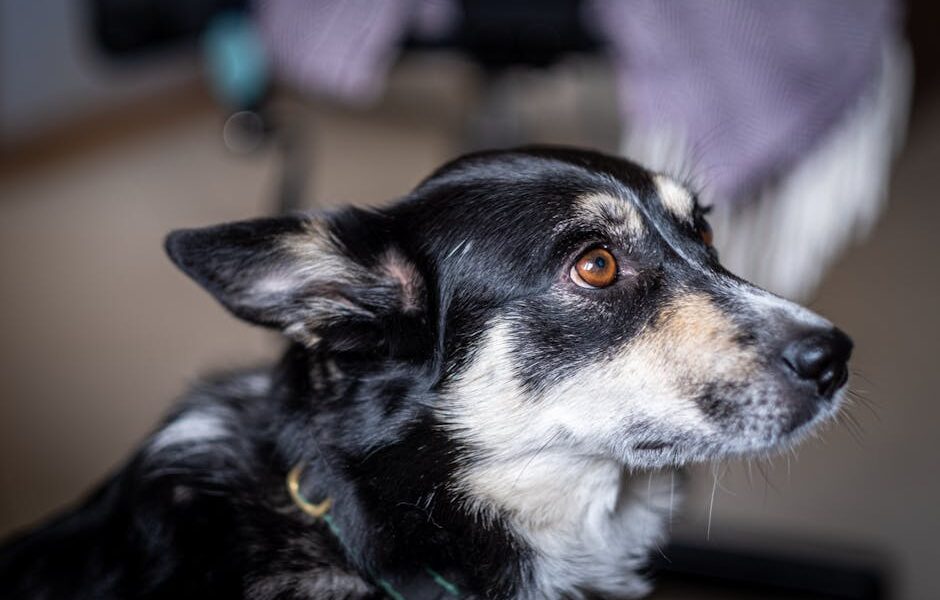
What Separation Anxiety Is
True separation anxiety is a panic disorder, not bad manners or spite. The dog experiences a true fight-or-flight response when alone, often within minutes or even seconds of the owner’s departure. Symptoms include howling, barking, destruction (especially around exit points), self-injury (broken teeth from chewing crates, torn nails from scratching doors), inappropriate elimination in an otherwise house-trained dog, drooling, panting, and inability to settle.
In this article
- What Separation Anxiety Is
- Rule Out Medical Causes First
- Establish a Baseline With Video
- The Management Imperative — No Absence Above Threshold
- Desensitize Pre-Departure Cues First
- The Graduated Absence Protocol
- What About Enrichment During Absence?
- Medication as Adjunct, Not Alternative
- Specialty Credentials for This Case Type
- Troubleshooting
- Adolescent Onset and Rescue Onset Are Real
- When to Call a Professional
- Frequently Asked Questions
This is a clinical anxiety condition with a real neurological basis. The goal of a dog separation anxiety desensitization protocol is to slowly recalibrate the dog’s autonomic response to absence, working at sub-threshold durations and building up over weeks to months. There are no shortcuts that work. Trying to “tough it out” with longer absences makes the condition worse.
Pillar context: dog separation anxiety and dog separation anxiety treatment cover the broader clinical picture. If you are considering adopting a dog with this diagnosis, adopting a dog with separation anxiety walks through the realistic preparation, household setup, and time commitment.
Rule Out Medical Causes First
Several medical conditions mimic or worsen separation distress. A dog with cognitive dysfunction, urinary tract infection, gastrointestinal disease, or pain may eliminate or vocalize while alone for entirely different reasons. Hypothyroidism and Cushing’s disease can present with restlessness and altered behavior. Hearing loss can heighten anxiety because the dog cannot reassure itself with familiar household sounds.
Get a full physical with bloodwork before assuming separation anxiety. If your dog is over seven, request a thyroid panel and a cognitive screening. Cognitive dysfunction overlaps heavily; senior dogs who suddenly cannot tolerate solitude often have brain changes driving the behavior, not pure anxiety.
Establish a Baseline With Video
You cannot train a behavior you cannot see. Set up a phone, tablet, or webcam streaming live so you can watch your dog from outside the house. Most owners overestimate or underestimate distress wildly without video.
Document:
- How quickly distress starts after departure (seconds vs minutes)
- What the first signs look like (pacing, vocalizing, panting)
- Whether the dog ever settles or stays in panic the entire time
- What pre-departure cues seem to trigger early anxiety (keys, shoes, jacket)
That baseline tells you whether you can leave the dog at all during training, or whether you need full management (someone home 24/7 or dog at daycare) while desensitization runs. Most cases require the latter for at least the first weeks of work.
The Management Imperative — No Absence Above Threshold
This is the rule that separates plans that work from plans that fail: during training, the dog cannot be left alone past their tolerance threshold, ever. Every above-threshold absence rehearses the panic pattern and erases days of progress. This is non-negotiable.
That sounds impossible. It is solvable with creativity:
- Doggy daycare on workdays
- Pet sitter or dog walker at midday
- Friend, family, or neighbor on coverage rotation
- Working from home when possible
- Bringing the dog to work where employer allows
- Boarding facility for travel days
Yes, this is logistically demanding. Yes, it is the only way the protocol succeeds. Treatment timelines stretch from 4 to 12+ months for most dogs. Plan for it as you would plan for a child’s illness or a medical leave.
Desensitize Pre-Departure Cues First
Dogs with separation anxiety often start panicking when they see keys, hear the closet open, or watch you put on shoes. These pre-departure cues become conditioned anxiety triggers in their own right. Step one is dismantling them.
For one to two weeks, perform each cue without leaving:
- Pick up keys, walk to kitchen, sit down, put keys back.
- Put on shoes, watch TV in them for 20 minutes, take them off.
- Pick up the bag, set it back down. Repeat dozens of times.
- Open and close the front door multiple times throughout the day with no exit.
Eventually the cues lose meaning. The dog stops orienting when you pick up keys because keys no longer predict departure. Only then does graduated absence work begin.
The Graduated Absence Protocol
This is the core. Most owners try to skip this and fail.
Step 1. Identify your dog’s current departure tolerance via video. For many dogs starting protocol, it is 0 to 5 seconds. Yes, seconds.
Step 2. Pick a duration well below threshold. If 10 seconds triggers panic, start at 3.
Step 3. Walk out the door, close it, count to your target duration, walk back in calmly. Do not greet the dog dramatically. Wait until the dog is neutral, then go about your day.
Step 4. Repeat 3 to 5 reps per session, 1 to 2 sessions per day. Vary duration up and down — 3 seconds, 5 seconds, 2 seconds, 4 seconds. Predictable build-ups create their own anticipation anxiety. Random variation works better.
Step 5. Move up only after a full session where the dog stayed completely calm. Increments are tiny — seconds, not minutes. A typical week might progress from 3 seconds to 8 seconds. After 30 seconds you might progress in 5-second jumps. After 2 minutes, in 30-second jumps. After 10 minutes, in 1-2 minute jumps. After 30 minutes, in 5-minute jumps.
Step 6. Reset to easier duration whenever you see early-warning behaviors on video — even subtle pacing or whining. Sub-threshold means visibly calm.
“No absence too short to count” is the motto. A 30-second successful rep is more valuable than an attempted 30-minute rep that produced panic. Counting and tracking matters. Most owners keep a spreadsheet.
What About Enrichment During Absence?
Frozen Kongs, lick mats, and puzzle feeders can be useful adjuncts in mild cases or after foundational work is established. They are not a fix in moderate-to-severe cases — a dog in full panic will not engage with food. Use enrichment as a sweetener once the dog is already calm at that duration, not as the mechanism that creates calmness. Mental enrichment generally supports lower baseline anxiety, which makes the protocol easier to run.
Daily exercise and mental stimulation matter for baseline arousal management. A dog meeting their physical and cognitive needs starts each session at a lower baseline anxiety level.
Medication as Adjunct, Not Alternative
Many moderate-to-severe separation anxiety cases benefit substantially from medication prescribed by a veterinarian, ideally a DACVB. SSRIs and TCAs reduce baseline anxiety, which expands the window of duration the dog can tolerate without panic. That makes desensitization possible at higher rungs of the protocol.
Medication is not a stand-alone fix. It is a force multiplier on the training plan. Common options your veterinarian may discuss include daily SSRIs like fluoxetine for dogs and tricyclic antidepressants alongside situational anxiolytics. Broader overview: dog anxiety medication. Do not start, stop, or adjust doses without your vet — these medications need careful titration and monitoring, and abrupt discontinuation can trigger withdrawal symptoms in some classes.
Specialty Credentials for This Case Type
Separation anxiety has its own subspecialty within behavior consulting. The Certified Separation Anxiety Trainer (CSAT) credential, developed by Malena DeMartini, certifies trainers in evidence-based remote desensitization protocols. Many CSAT-certified consultants work entirely by video — your dog stays at home and the consultant watches your training sessions live, which preserves the sub-threshold rule beautifully.
Other credentials that handle separation anxiety competently include IAABC CDBCs, CCPDT CBCC-KAs, and CAABs. For severe cases or when medication consideration is needed, a DACVB is the right call. Pillar: pet behaviorist Singapore.
Troubleshooting
Progress stalls at a specific duration. Sticky plateaus around 15-30 minutes are very common. Reset to half that duration, build slowly, mix in random easier reps.
The dog seems fine on video, then destroys things some absences. Look for what was different — barometric pressure, neighborhood noise, family schedule change. Trigger stacking can flip a normally tolerable absence into panic.
Two-week vacation coming and the dog isn’t ready. Boarding with a known person, family member’s house, or in-home pet sitter all preserve the protocol. Do not “test” by leaving for hours — this resets the work.
Dog handles weekday absences but panics on weekends. Pattern recognition — the dog has learned weekdays mean longer absences (you have practiced) and weekends are new. Practice mixed-day absences.
Pre-departure cues are creeping back. Redo the cue desensitization round for two weeks while continuing duration work at a slightly easier rung.
Adolescent Onset and Rescue Onset Are Real
Separation anxiety can emerge during canine adolescence (6 to 18 months) even in dogs that previously seemed fine alone. Hormonal shifts and increased self-awareness during this developmental window can trigger new anxieties. Adolescent regression is real and well documented; do not assume your dog has “always” been anxious because they are showing it now.
Rescue dogs often develop or reveal separation anxiety in the first few months post-adoption as decompression completes. The pattern follows the three-three-three rule — 3 days, 3 weeks, 3 months — with the deeper personality and any anxiety history emerging on that timeline. Some rescues with severe shelter backgrounds carry separation anxiety as a long-term condition; informed adopters can succeed with realistic planning.
When to Call a Professional
Most owners benefit from working with a CSAT, IAABC CDBC, or DACVB from the start. Self-managed protocols can work for mild cases but the time investment and complexity reward expert help. Definitely book a consultant if:
- Self-injury has occurred (broken teeth, torn nails, raw paws).
- Destruction is severe (drywall damaged, doors chewed through).
- The dog cannot tolerate even seconds alone.
- Progress has stalled for over a month at the same duration.
- The household cannot maintain the management rule consistently.
- Other concurrent anxieties (noise phobia, generalized anxiety) complicate the picture.
Related condition: cats experience similar but distinct separation distress patterns, often presenting more subtly through litter box changes, overgrooming, or vocalization rather than the dramatic destruction common in dogs. Multi-pet households dealing with both species need parallel protocols for each.
Frequently Asked Questions
How long does it take to resolve separation anxiety?
Mild cases: 2 to 4 months of dedicated work. Moderate cases: 4 to 8 months. Severe cases: 12+ months and many require ongoing medication. Anyone promising a 30-day fix should be treated with skepticism.
Should I get a second dog to keep my dog company?
Rarely the right call. True separation anxiety is about the bond with the specific person, not about loneliness. A second dog usually does not help and sometimes adds new behavior problems. Diagnose first; do not solve by addition.
Will crating help?
For some dogs yes, for many no, and for a panic-stricken minority crating worsens the response and causes injury. Do not crate-train a separation anxiety dog without consulting a behavior professional first. If crating helps, the dog should be conditioned positively to the crate during home-presence time first.
Is it cruel to leave my dog alone while I work on this?
It would be cruel to leave them in active panic. That is why management — daycare, sitters, family — is mandatory. Treatment proceeds only at sub-threshold durations the dog can handle without distress.
Can a dog “outgrow” separation anxiety?
Spontaneous remission is uncommon. Treated cases improve substantially. Untreated cases typically stay the same or worsen. Active treatment is the realistic path to a calmer dog.


