
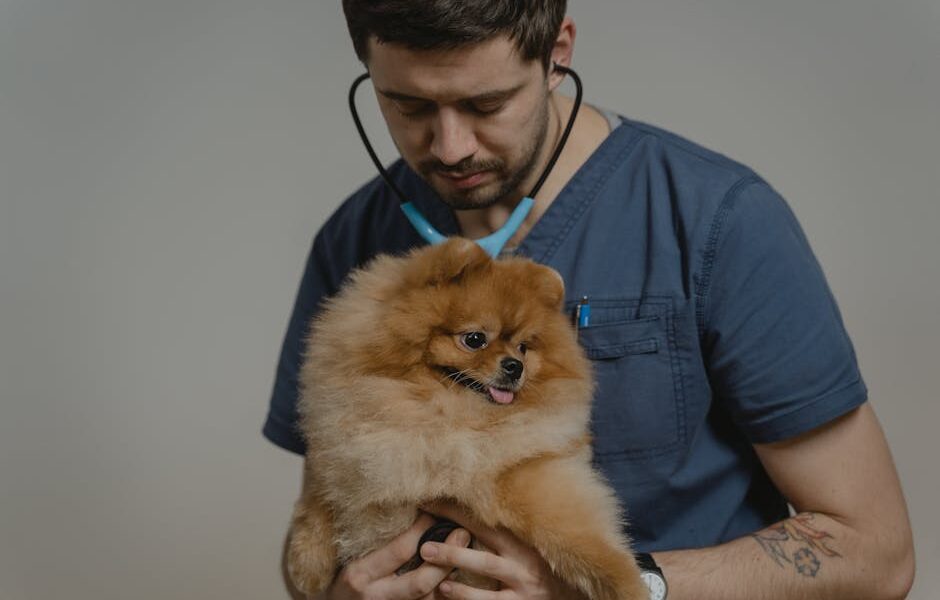
What Fear Free Veterinary Care Actually Means
Fear Free veterinary care is a framework that treats a pet’s emotional well-being as inseparable from physical health during medical visits. The core premise is simple but transformative: a frightened, fighting cat or trembling, panting dog is not just hard to examine — that pet is experiencing real distress that affects diagnostic accuracy, future visit cooperation, and long-term welfare. A pet who associates the carrier, the parking lot, or the lobby with panic eventually arrives already at the top of the stress ladder, and every subsequent visit gets harder.
In this article
- What Fear Free Veterinary Care Actually Means
- Why a Fear Free Approach Changes Outcomes
- Core Principles of the Framework
- The Role of Pre-Visit Pharmaceuticals
- Cooperative Care as the Patient-Side Investment
- Finding a Fear Free Certified Practice
- Honest Limits of the Fear Free Framework
- Preparing for Your First Fear Free Visit
- Frequently Asked Questions
The Fear Free movement was formalized in 2016 by Dr. Marty Becker, a longtime advocate for emotional welfare in veterinary medicine, who founded Fear Free Pets as a registered training and certification organization. Veterinary professionals, trainers, groomers, and boarding facilities can earn Fear Free Certified Professional (FFCP) credentials by completing curricula that cover stress recognition, environmental modification, low-stress restraint, and reward-based handling. Practices can also pursue facility-level certification with documented standards.
You can read more about the program’s current standards directly at fearfreepets.com. Walk Me Home Rescue is not endorsed by Fear Free Pets and does not certify professionals — we are simply describing a framework many rescue adopters find helpful when their newly-adopted pet has clear vet-visit anxiety.
Why a Fear Free Approach Changes Outcomes
When a pet enters the fight-or-flight cascade, the body floods with cortisol and adrenaline. Heart rate climbs, blood pressure rises, and respiratory rate elevates — all of which can mask or distort clinically meaningful findings during a routine exam. A cat whose resting heart rate is 180 beats per minute at home may register 240 at the clinic, making a cardiac murmur grading exercise unreliable. A dog who is hyperventilating from fear may yield a falsely elevated body temperature.
Stress also shapes future behavior. Pets learn fast, and a single traumatic visit can produce predictable anticipation of future stress, sometimes manifesting as carrier avoidance, hiding, refusal to enter the car, or active aggression on subsequent arrival. The Fear Free framework intervenes at every stage of that journey — at home, in transit, in the lobby, in the exam room, and during recovery — to interrupt the learning loop before it consolidates.
The framework also protects veterinary staff. Bites and scratches from a panicking pet are common occupational hazards, and approaches that reduce fear measurably reduce staff injury rates. It is a welfare gain on both sides of the table.
Core Principles of the Framework
Several interlocking principles guide a Fear Free practice. The first is emotional well-being parity — the idea that emotional state is monitored and addressed with the same rigor as temperature, pulse, and respiration. Staff use a Fear-Anxiety-Stress (FAS) scale to score the patient and pause when the score climbs, rather than pushing through.
Environmental modification is the second principle. This includes feline-friendly pheromone diffusers, non-slip surfaces on exam tables, soft incandescent lighting rather than harsh fluorescents, sound dampening to reduce barking carry-through, separated species waiting areas, and the option of an exam-on-the-floor or exam-on-the-lap when appropriate. Many practices keep high-value treats (lick mats, squeeze tubes, freeze-dried liver) in every exam room.
The third principle is low-stress restraint, drawing on the work of Dr. Sophia Yin and the Low Stress Handling University curriculum. Minimal-restraint positions, towel wraps for cats, and chin-rest-style cooperative-care positions replace traditional scruff-and-stretch holds whenever possible. Reward-based handling is layered throughout — food, play, calm vocal tone — to build positive associations.
The Role of Pre-Visit Pharmaceuticals
For many pets, behavior modification alone is not enough on day one. Pre-visit pharmaceuticals (PVPs) administered one to three hours before transport reduce anxiety enough to make a productive visit possible while behavioral work continues in parallel. Common medications include gabapentin (especially for cats), trazodone (especially for dogs), Cerenia for motion-related nausea, and occasionally alprazolam under direct veterinary guidance.
Dosing is always vet-directed by weight, species, condition, and any comorbidities — there is no single right number, and your veterinarian will tailor the protocol over a trial-visit window before committing to a regimen. Some pets need only a single agent; others benefit from a multi-modal protocol with two or three medications stacked. We cover this in depth in our pre-visit pharmaceuticals guide.
It bears repeating: PVPs are tools, not substitutes for cooperative-care training or low-stress handling. They lower the floor of arousal so the pet can engage with positive experiences during the visit. They do not eliminate the need for environmental design or staff training.
Cooperative Care as the Patient-Side Investment
The veterinary team can do everything right and still face a pet who has never learned to participate calmly in handling. That is where cooperative care training enters — the systematic teaching of behaviors like chin-rest, body-target, voluntary blood draw position, and muzzle acceptance that allow the pet to actively participate in medical procedures with consent signals and start/stop cues.
For owners, this is a months-long project, not a weekend workshop. Most cooperative-care fluency builds gradually through short, positive sessions at home. A trainer credentialed by Karen Pryor Academy (KPA-CTP), the Certification Council for Professional Dog Trainers (CCPDT), or the International Association of Animal Behavior Consultants (IAABC) can dramatically accelerate the work and is worth the investment for pets with chronic medical conditions requiring frequent vet visits.
Pets benefit even when training is partial. A dog who has learned just a reliable chin-rest can tolerate an ear exam that previously required two technicians and a muzzle, and that single behavior pays dividends across hundreds of future visits.
Finding a Fear Free Certified Practice
The Fear Free Pets directory at fearfreepets.com lists certified individual professionals and certified practices in your area. Look for the FFCP designation on individual veterinarians and technicians, as well as practice-level Fear Free certification. Many practices also dual-certify with the AAFP’s Cat Friendly Practice program or hold Low Stress Handling credentials.
When you call to schedule, ask whether the practice has FFCP staff, whether they support PVP protocols, and whether they accommodate longer appointment windows for anxious patients. A practice that asks you what works for your pet — what treats are most motivating, what positions are most tolerable, what to avoid — is a strong signal of culture alignment.
If no Fear Free practice exists in your area, you still have options. Housecall veterinary medicine can eliminate transport stress entirely for many wellness and select procedural needs. And any open-minded veterinarian can incorporate Fear Free principles even without formal certification once you bring the conversation to the practice.
Honest Limits of the Fear Free Framework
Fear Free is a powerful first tier, not a universal solution. Severely anxious pets, pets with established trauma histories, and pets presenting in true medical emergencies may still require chemical restraint or general anesthesia to receive safe and effective care. A pet who is medically unstable and refusing handling does not have the luxury of a months-long behavior plan — the priority is stabilization.
For chronically anxious pets whose behavior does not respond to environmental modification plus PVPs plus cooperative-care training, referral to a board-certified veterinary behaviorist (DACVB) is appropriate. These specialists manage psychotropic medication protocols and design behavior modification plans that go well beyond what a general practice can offer. The cost of a behaviorist consultation is non-trivial but can transform the trajectory of a pet’s lifetime of veterinary care.
It is also worth noting that some clinical contexts — surgical procedures, dental work, deep wound debridement — require anesthesia regardless of how Fear Free the practice is. The framework’s contribution there is in pre-anesthetic handling, induction comfort, and recovery quality, not in eliminating the need for sedation itself.
Preparing for Your First Fear Free Visit
Preparation starts at home several days before the appointment. Practice carrier acclimation, mock car rides without a destination, and short trips that end with treats rather than medical procedures. The day of the visit, follow your vet’s PVP timing instructions precisely — gabapentin and trazodone typically need 90 to 180 minutes to reach effective onset.
Bring high-value treats your pet rarely receives elsewhere, a familiar blanket or toy with home scents, and a recent photo or video of your pet relaxed at home so the team has a baseline comparison. If your cat associates the carrier itself with stress, ask about cat carrier training for vet visits well before the appointment.
For newly adopted rescue pets, the first vet visit after adoption is especially worth scheduling at a Fear Free practice when possible. Setting the trajectory right at visit one prevents a lifetime of avoidable distress and creates a productive partnership between you, your pet, and the veterinary team.
Frequently Asked Questions
Is Fear Free certification just a marketing label?
No — FFCP certification requires completion of structured curricula, passing assessments, and continuing education. Practice-level certification involves documented facility standards and team training. Like any credential, the value depends on how the practice implements what they have learned, so visiting and asking specific questions still matters.
Will Fear Free care cost more than a regular vet visit?
Sometimes. Longer appointment slots, specialized environmental setup, and additional staff training translate into modestly higher fees at some practices. Many adopters find the trade-off worthwhile given the welfare gain and the reduction in repeat-visit failures.
My dog is reactive to other dogs in the lobby. Can Fear Free help?
Yes. Most Fear Free practices offer exam-room-direct entry, car-side check-in, or separated waiting areas to avoid lobby triggers. Call ahead and explain — they will almost always accommodate.
Can puppies and kittens benefit from Fear Free care?
Especially so. The puppy first vet visit sets behavioral templates that last a lifetime. Fear Free puppy and kitten visits build positive associations during the critical socialization window, paying dividends for the next decade-plus.
What if my regular vet is not Fear Free certified but I want this approach?
Many veterinarians are open to incorporating Fear Free principles even without formal certification. Bring up specific requests — PVP protocols, longer appointments, treat-based handling, exam-on-the-floor — and most teams will collaborate. Strong client-veterinarian communication often matters more than the label itself.


