
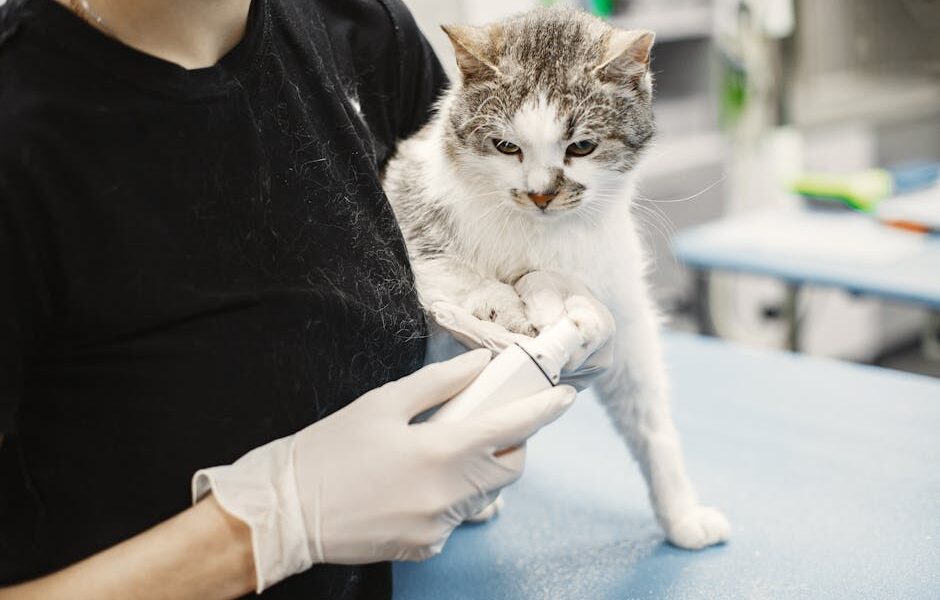
Feline diabetes mellitus is one of the most rewarding chronic conditions to manage at home because the outcomes are good, the tools have improved dramatically in the last decade, and remission (a real, durable resolution of the need for insulin) is achievable in a meaningful fraction of newly diagnosed cats. The AAFP and the International Society of Feline Medicine (ISFM) jointly publish a consensus statement on feline diabetes that anchors current practice. This article walks the home management framework. We deliberately do not publish insulin unit dosing or methimazole-style numbers; all dosing belongs in the exam room with your AAFP-credentialed or ACVIM-credentialed prescriber.
In this article
- What feline diabetes is
- Diagnosis
- Insulin: types and selection
- The diet half of the equation
- The first month: dose titration
- Injection technique: the practical details
- Home monitoring: glucose curves and continuous glucose monitors
- Remission: a realistic goal
- Hypoglycemia: the most important owner education topic
- Common medication mistakes to avoid
- Diabetic ketoacidosis: the diagnostic crisis
- Long-term lifetime cost
- Adoption framing
- Frequently asked questions
What feline diabetes is
Most feline diabetes is type 2 (insulin resistance with relative insulin deficiency, often on a background of obesity and possibly chronic pancreatitis-mediated islet damage). The classic clinical picture is polyuria, polydipsia (increased thirst and urination), polyphagia (increased appetite) often with weight loss despite eating well, and sometimes weakness in the hind limbs (diabetic neuropathy, manifesting as plantigrade stance). A handful of cats present in diabetic ketoacidosis, which is an emergency.
Diagnosis
Diagnostic confirmation requires persistent hyperglycemia plus consistent clinical signs. Cats develop stress hyperglycemia readily at the vet, so a single elevated glucose is not diagnostic. Fructosamine (which reflects average blood glucose over the prior two to three weeks) cuts through the stress-hyperglycemia confound. Urinalysis identifies glucosuria and screens for ketones; both are diagnostic in the right clinical context. Concurrent screening for hyperthyroidism, CKD, urinary tract infection, and pancreatitis is standard.
Insulin: types and selection
Several insulin formulations are used in cats; selection is by your prescribing veterinarian based on availability, cost, and the cat. The current ISFM consensus favors long-acting insulin analogs as first-line: glargine (Lantus, Sanofi) and detemir (Levemir, Novo Nordisk) are widely used and have a track record of supporting remission. ProZinc (protamine zinc insulin, Boehringer Ingelheim) is FDA-labeled for feline diabetes and is a workhorse intermediate-acting option. Vetsulin (porcine zinc insulin, Merck) is shorter-acting; it is used in some cats but less commonly than the long-acting analogs in current practice. Glargine pens are not interchangeable across products; the prescribing vet will specify type, syringe (U-40 vs U-100), and storage. Never substitute one for another at the pharmacy.
The diet half of the equation
Diet is at least as important as insulin in feline diabetes management. The standard is a low-carbohydrate, high-protein diet (Royal Canin Glycobalance, Hill’s Prescription Diet m/d, Purina DM). Canned formulations are typically lower in carbohydrate than dry. Diet alone, without insulin, will not control most newly diagnosed diabetic cats, but diet plus appropriate insulin is what drives remission rates upward. Free-feeding is generally discouraged in favor of two measured meals timed with insulin injections, although individual practices vary. Weight management is integral; most diabetic cats are overweight at diagnosis, and gradual weight loss to a healthy body condition score improves insulin sensitivity.
The first month: dose titration
Feline insulin therapy starts at a conservative dose and is titrated upward based on glucose response over the first weeks. The prescribing vet decides the starting amount and the rate of titration based on the cat, the insulin product, and the body condition. Owners give injections, typically subcutaneously in the loose skin behind the shoulder blades, twice daily at consistent times paired with meals. Injection technique is taught hands-on at the diagnostic visit; insulin pens make this easier than vial-and-syringe for many owners. See insulin management for new pet adopters.
Injection technique: the practical details
The practical mechanics of giving insulin matter for both safety and efficacy. Most feline insulin injections go into the loose subcutaneous skin behind the shoulder blades or along the lateral flank, with a small-gauge needle (typically 29 to 31 gauge). Rotating injection sites within that broader region prevents local skin reactions and ensures consistent absorption; using the same exact spot daily can produce hardening and altered insulin uptake. Insulin is gently rolled (never shaken) before drawing up to suspend the active ingredient evenly. Air bubbles in the syringe are tapped out before injection so the dose is accurate. Insulin is stored refrigerated; chronic freezing or chronic heat exposure denatures the protein and renders it ineffective. Used syringes and needles go into a sharps container, available at most pharmacies. Pen-style insulin delivery, where available, simplifies dose dialing and reduces syringe-handling errors substantially.
Home monitoring: glucose curves and continuous glucose monitors
Two approaches dominate modern home monitoring. The traditional method is intermittent home glucose curves using a marginal-ear-vein blood drop and a glucometer calibrated for veterinary use (AlphaTRAK 2 or 3). The cat is lanced gently at the ear margin, a drop of blood applied to the test strip, and readings taken every two hours through a 10 to 12 hour curve. The newer and increasingly standard approach is the FreeStyle Libre 2 or 3 continuous glucose monitor (Abbott). The sensor is a small disk applied to the lateral neck or flank, lasts about 14 days, and transmits glucose readings to a smartphone every minute. It is off-label in cats but widely used in current AAFP-credentialed and ACVIM-credentialed practice. Sensor cost is roughly USD 70 to 90 per 14-day sensor; ongoing cost is real but the data quality is transformative. Many cats tolerate it well; some pull it off.
Remission: a realistic goal
Roughly 40 to 60 percent of cats diagnosed early, started promptly on a low-carb diet plus an appropriate long-acting insulin, and monitored closely, achieve diabetic remission within the first three to six months. Remission means insulin can be safely discontinued with persistent normal glucose regulation, often for years. Recurrence happens and ongoing monitoring (periodic fructosamine, attention to weight and clinical signs) is appropriate. See cat diabetes remission for the dedicated overview and continuous glucose monitor for diabetic cats for the CGM-specific picture.
Hypoglycemia: the most important owner education topic
Insulin overdose, missed meal, or unexpected stress can cause hypoglycemia, which is an emergency. Signs include weakness, wobbliness, dilated pupils, disorientation, seizures, and collapse. Every diabetic cat home needs corn syrup or honey on hand. At first hypoglycemia signs, the owner rubs a small amount on the cat’s gums and proceeds immediately to the AAFP-credentialed emergency clinic. Pre-identify the emergency clinic before you need it. Owner education on hypoglycemia is non-negotiable at diagnosis. See cat hypoglycemia.
Common medication mistakes to avoid
A few avoidable errors come up regularly enough to warrant explicit mention. Switching insulin types without veterinary supervision: glargine and detemir are not interchangeable with vetsulin or ProZinc, and substituting one for another at the pharmacy without dose recalculation can cause profound hypoglycemia or hyperglycemia. Using the wrong syringe: U-100 insulin requires U-100 syringes; U-40 insulin (vetsulin in some markets) requires U-40 syringes. Using a U-100 syringe with U-40 insulin under-doses by 60 percent; the reverse over-doses dramatically. Giving the dose without confirming the meal: a cat that did not eat before injection time may go hypoglycemic. The standard guidance is to skip or reduce the dose in a non-eating diabetic cat and consult the prescribing vet within hours, not days. Doubling up on a missed dose: a missed injection is generally not made up; the next scheduled injection happens at the next scheduled time. These rules sound simple in writing and matter enormously in practice.
Diabetic ketoacidosis: the diagnostic crisis
A subset of cats present at diagnosis already in ketoacidosis: severe dehydration, vomiting, weakness, ketotic breath, often hypothermia, sometimes collapse. This is a hospitalization-and-intensive-care scenario, not a home-start case. After stabilization, the cat transitions to home insulin management on the standard framework.
Long-term lifetime cost
Honest cost framing: monthly insulin plus syringes or pen needles plus prescription diet typically runs USD 60 to 200 per month, with significant variation by insulin type, region, and prescription source. CGM sensors add USD 150 to 200 per month when used continuously, less if used periodically. Bloodwork, vet recheck visits, and occasional emergency visits add to the total. See diabetes lifetime management cost. CareCredit, Scratchpay, and pet-specific grant programs (The Pet Fund, RedRover Relief) can help in tight cases.
Adoption framing
Diabetic cats are highly adoptable to motivated, organized adopters. Twice-daily injections become routine quickly, and the cats themselves are often calm, easy patients once stabilized. Disclosure of remission status, current insulin type, diet, and monitoring method is essential. See adopting a cat with diabetes.
Frequently asked questions
Can I manage feline diabetes without insulin?
Almost never at diagnosis. Diet-only management does not control most newly diagnosed cats. The path to remission goes through diet plus appropriate insulin, and some cats then graduate off insulin.
What insulin should my cat be on?
That is your prescribing vet’s call based on the cat, the budget, and availability. Long-acting analogs (glargine, detemir) and ProZinc are the most common current choices for feline diabetes.
Is the FreeStyle Libre safe for cats?
It is off-label but widely used. Most cats tolerate it well. It is not a magic bullet but it dramatically improves data quality compared to intermittent ear-prick checks.
Will my cat go into remission?
Roughly 40 to 60 percent of newly diagnosed cats, especially when caught early and managed aggressively with diet plus appropriate insulin, achieve remission. Older cats, cats with concurrent disease, and cats diagnosed late are less likely.
How do I give an injection to a cat who hates needles?
Most cats tolerate the actual injection well because the needles are tiny and the technique is fast. Acclimation, paired with a high-value treat at injection time, makes most cats indifferent or actively interested in the routine within a week or two.


