
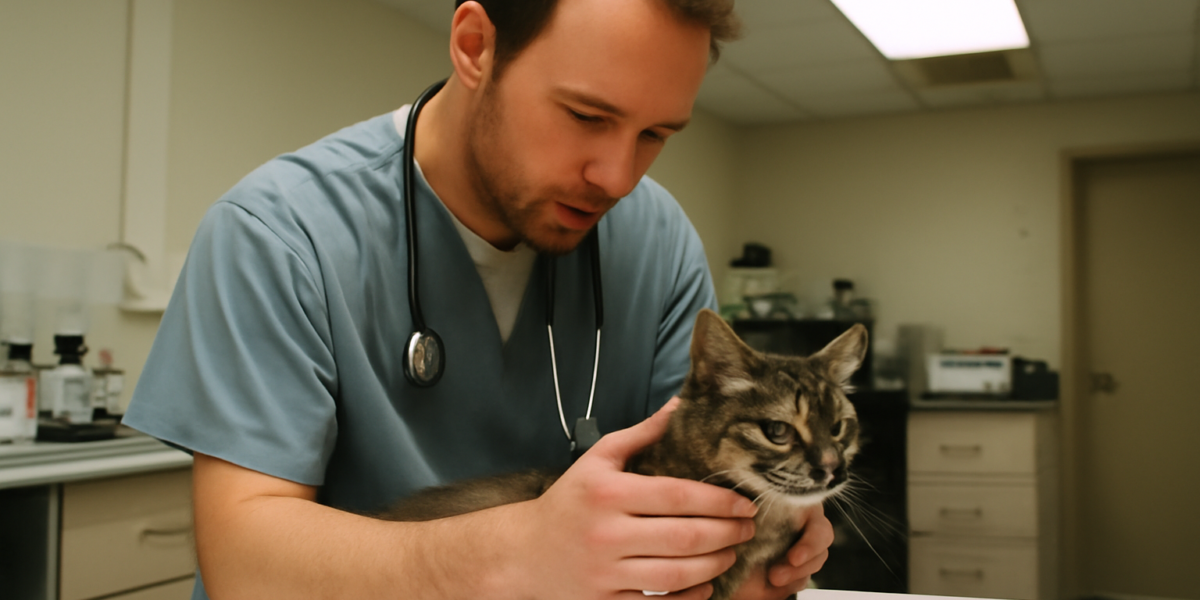
Two viral diseases — feline leukemia virus (FeLV) and feline immunodeficiency virus (FIV) — affect a meaningful percentage of cats and shape lifelong management. FeLV and FIV testing for cats is a core recommendation from the American Association of Feline Practitioners (AAFP) at adoption and after exposure to outdoor or unknown-status cats. Knowing your cat’s status matters for vaccination decisions, multi-cat household planning, and lifelong wellness care.
In this article
- What FeLV and FIV Are
- When to Test
- How the Snap Test Works
- Confirmation Testing
- What a FeLV-Positive Diagnosis Means
- What a FIV-Positive Diagnosis Means
- Vaccine Considerations
- Multi-Cat Household Decisions
- Cost Considerations
- Adopting a FeLV or FIV-Positive Cat
- Stress Reduction and Quality of Life
- Frequently Asked Questions
This guide covers when to test, how the tests work, what positive results actually mean, and how to manage positive cats for the best possible outcomes. For broader yearly care, see our adult cat wellness checklist.
What FeLV and FIV Are
Both viruses target the immune system but differ significantly in transmission, progression, and prognosis.
Feline leukemia virus (FeLV) is a retrovirus transmitted through prolonged close contact — mutual grooming, shared food/water bowls, and bite wounds. Mother cats can transmit to kittens in utero or through milk. The virus causes immunosuppression, anemia, and certain cancers (especially lymphoma). FeLV-positive cats have shortened lifespans on average, but quality of life can be excellent with attentive care.
Feline immunodeficiency virus (FIV) is also a retrovirus but transmits primarily through deep bite wounds — making intact outdoor male cats with territorial fights the highest-risk group. Casual contact (grooming, shared bowls) is much less efficient at transmission than for FeLV. FIV causes gradual immunosuppression but many FIV-positive cats live normal lifespans with appropriate indoor management and routine veterinary care.
When to Test
AAFP recommends testing in these situations:
- At adoption — every new cat, regardless of source, should be tested before introduction to other cats
- After potential exposure — if your cat fought with or was bitten by an unknown cat, retest at least 60 days later
- Sick cats — any cat presenting with unexplained illness, especially anemia, recurrent infections, or oral disease
- Before vaccination — FeLV vaccination should be preceded by a negative test (vaccinating an infected cat doesn’t help)
- Periodically for at-risk cats — outdoor or indoor-outdoor cats benefit from periodic retesting
- Before introducing a new cat to an existing household
If you adopted from a shelter, ask whether testing was done and request the results in writing. Reputable shelters test before adoption; some smaller rescues rely on the adopter to follow up.
How the Snap Test Works
The standard in-clinic test is a snap-style ELISA that detects:
- FeLV p27 antigen — viral protein produced by infected cells
- FIV antibodies — the cat’s immune response to the virus
The test takes a small blood sample (a few drops) and provides results in 10 to 15 minutes. Combined FeLV/FIV snap tests are common.
Important interpretive considerations:
- FIV antibody-positive kittens under 6 months may have maternal antibodies from an infected mother without being infected themselves. Retest after 6 months to confirm.
- Cats vaccinated against FIV may test antibody-positive even though the FIV vaccine is no longer available in the U.S. — an older vaccinated cat could test positive without being infected.
- FeLV antigen-positive cats may be in early infection, persistent infection, or rare regressive infection. Confirmation testing helps clarify.
Confirmation Testing
A positive snap test should generally be confirmed before drawing conclusions. Confirmation options:
- IFA (immunofluorescent antibody) test — sent to a reference lab; confirms FeLV antigen in white blood cells, indicating bone marrow infection
- PCR (polymerase chain reaction) — detects viral DNA/RNA; can identify regressive infections that snap tests miss
- Repeat snap testing in 30 to 60 days — distinguishes transient infections (some cats clear FeLV) from persistent ones
For FIV, confirmation may include Western blot or PCR. Don’t act on a single positive snap test — confirm before assuming the cat is infected, especially if the result is unexpected.
What a FeLV-Positive Diagnosis Means
FeLV-positive cats fall into several categories:
- Progressive infection — persistent viremia, bone marrow involvement; shortened lifespan with risk of cancer, anemia, and immunosuppression
- Regressive infection — initial infection cleared from blood but virus integrated into cells; can reactivate under stress
- Abortive infection — cat mounts immune response and clears virus completely (uncommon but possible)
Average lifespan estimates for FeLV-positive cats vary by source and study, but quality of life can be excellent for years with attentive care:
- Indoor-only living to prevent exposure to other infectious diseases
- Twice-yearly vet exams with bloodwork
- Aggressive treatment of secondary infections
- Excellent nutrition and stress management
- Avoidance of immunosuppressive medications when possible
- No multi-cat households unless other cats are also FeLV-positive (or are vaccinated and the household is monitored)
What a FIV-Positive Diagnosis Means
FIV-positive cats can often live normal lifespans, especially with good husbandry. The virus causes gradual immunosuppression over years, not the acute disease many people expect.
Key management points:
- Indoor-only living — protects the cat from secondary infections and prevents spreading to other cats
- Spay/neuter — reduces fighting and territorial behavior that spreads FIV
- Twice-yearly vet exams with bloodwork as the cat ages
- Prompt treatment of any infection — dental disease, skin infections, respiratory infections all warrant earlier intervention than in FIV-negative cats
- Excellent dental care — FIV-positive cats often have severe dental disease requiring more frequent professional cleanings (see our adult cat dental care guide)
- Multi-cat households — FIV-positive and FIV-negative cats can coexist if they get along (no fighting); transmission via casual contact is inefficient
Many FIV-positive cats live to typical feline lifespans with thoughtful care.
Vaccine Considerations
FeLV vaccination is recommended for at-risk cats per AAFP:
- All kittens as part of the core kitten series
- Adult outdoor or indoor-outdoor cats
- Adult cats living with FeLV-positive housemates
- Multi-cat households with new arrivals of unknown status
FeLV vaccination should always be preceded by a negative test. Indoor-only adult cats with FeLV-negative housemates do not need ongoing FeLV vaccination after the kitten series. See our adult cat vaccination schedule guide for details.
The FIV vaccine that previously existed in the U.S. has been discontinued due to interference with antibody testing and questionable efficacy.
Multi-Cat Household Decisions
If a new cat tests positive for FeLV or FIV, the household decision becomes complex.
FeLV-positive newcomer:
- Existing FeLV-negative cats are at meaningful risk of transmission via shared bowls, mutual grooming, and casual contact
- Vaccinated FeLV-negative cats have some protection but vaccination is not 100% effective
- Many veterinarians recommend keeping FeLV-positive cats in households with only other FeLV-positive cats, or providing strict separation
FIV-positive newcomer:
- Casual contact transmission is inefficient — many FIV-positive and FIV-negative cats live together without transmission
- The risk lies in fighting; if cats get along peacefully, mixed households work
- Spaying/neutering both cats and ensuring no fighting reduces risk further
These are individual decisions to make with your vet based on the specific cats involved.
Cost Considerations
Snap testing is typically modest in cost — often included in adoption packages or new-cat exam packages. Confirmation testing (IFA, PCR) costs more and is sent to outside labs.
Lifetime care costs for FeLV/FIV-positive cats can be higher due to more frequent vet visits, treatment of secondary infections, and dental care needs. Pet insurance taken out before diagnosis (FeLV/FIV are pre-existing conditions if discovered before policy start) can help.
Adopting a FeLV or FIV-Positive Cat
Many shelters and rescues have FeLV or FIV-positive cats waiting longer than negative cats for adoption. These cats can make wonderful companions for the right homes — particularly homes with no other cats, or homes already housing positive cats of the same status.
Before adopting:
- Confirm the diagnosis was made on confirmed (not just snap) testing
- Ask about the cat’s current health status and any active treatment
- Plan for indoor-only living to protect the cat from secondary infections (FeLV especially) and prevent transmission
- Budget for twice-yearly vet exams with bloodwork
- Establish care with a vet experienced in retrovirus management
- Consider pet insurance taken out before any active illness develops
FIV-positive cats often integrate into homes with FIV-negative cats successfully if all cats get along peacefully. FeLV-positive cats are best in single-cat or all-positive households. The cats themselves often live many quality years with thoughtful care.
Stress Reduction and Quality of Life
For both FeLV and FIV-positive cats, stress reduction matters more than for typical cats — stress can suppress immunity further and reactivate viral activity. Practical interventions:
- Stable household routines (predictable feeding, play, and sleep schedules)
- Multiple resting and hiding spots
- Pheromone diffusers (Feliway) in main living areas
- Avoid introducing new pets without significant planning and gradual transition
- Excellent dental care to prevent oral bacteria from triggering systemic issues
- Prompt treatment of any illness — don’t “wait and see” with retrovirus-positive cats
Many positive cats live full, happy lives well into senior years with this kind of attentive care.
Frequently Asked Questions
When should I test my new cat?
Test at adoption, before introducing to other cats and before any FeLV vaccination. Retest after 60 days if there was potential exposure or the initial test was during early infection window.
Can FeLV-positive cats live normal lives?
FeLV-positive cats have shortened average lifespans but can have excellent quality of life for years with attentive indoor-only management, twice-yearly vet exams, and prompt treatment of secondary issues.
Are FIV-positive cats contagious to other cats?
FIV transmission requires deep bite wounds in most cases. Casual contact (grooming, shared bowls) rarely transmits. FIV-positive and FIV-negative cats often coexist peacefully without transmission.
Are FeLV or FIV contagious to humans?
No. Both viruses are species-specific to cats. Humans cannot contract FeLV or FIV.
Should I vaccinate my indoor cat against FeLV?
Indoor-only adult cats with FeLV-negative housemates generally don’t need ongoing FeLV vaccination after the kitten series. Outdoor, indoor-outdoor, or multi-cat-with-unknown-arrivals cats benefit from continued vaccination.
What if my cat tests positive but seems healthy?
Confirm the result with a follow-up test (IFA or PCR). Many positive cats remain healthy for years with proper management. Shift to twice-yearly vet exams, indoor living, and prompt treatment of any illness.


