
Last updated: May 17, 2026
In this article
- Why Heartworm Treatment Is Necessary
- Doxycycline and Prednisone Pre-Treatment
- The Melarsomine Protocol: Immiticide Injections
- Exercise Restriction: Why It Is Critical
- Timeline: Months of Treatment
- Slow Kill vs Fast Kill: The Debate
- Pain Management During Treatment
- Complications: Pulmonary Embolism and Other Risks
- Cost of Heartworm Treatment
- Post-Treatment Monitoring
- Prevention After Cure
- Frequently Asked Questions
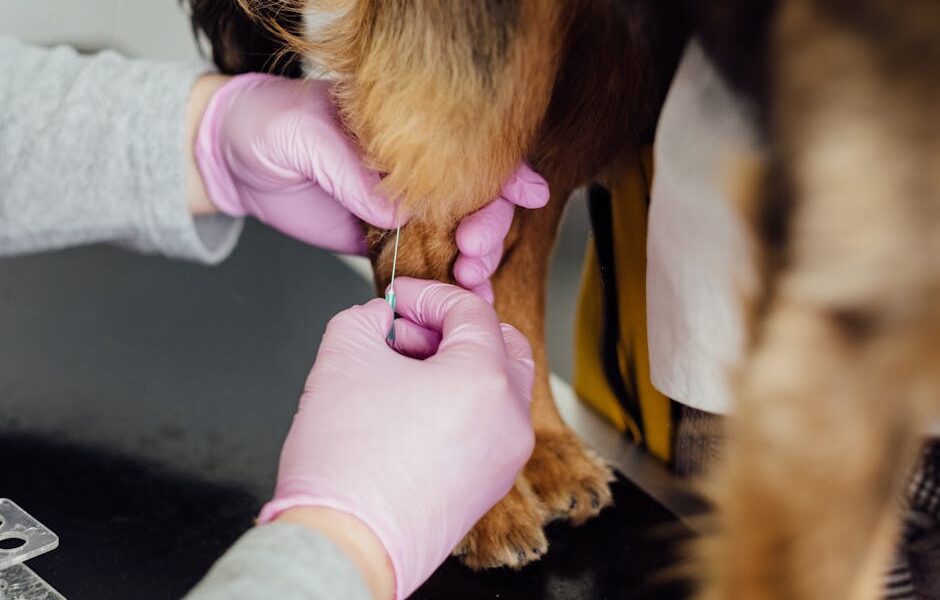
A positive heartworm test is one of the most frightening results a dog owner can receive. The good news is that heartworm treatment for dogs has a high success rate when it is administered properly and the dog’s activity is carefully managed throughout the process. The difficult news is that the treatment itself is lengthy, physically demanding on the dog, and requires patience and discipline from everyone in the household. Understanding the full scope of what heartworm treatment involves — from the pre-treatment medications to the final clearance test months later — will help you make the best decisions for your dog and navigate the process with confidence.
Why Heartworm Treatment Is Necessary
Heartworm disease is caused by Dirofilaria immitis, a parasitic roundworm transmitted through mosquito bites. Once inside a dog’s body, immature heartworms travel through the bloodstream and eventually take up residence in the pulmonary arteries and, in advanced cases, the heart itself. Left untreated, adult heartworms can grow up to twelve inches long and live for five to seven years. A single dog can harbor dozens or even hundreds of worms.
The damage is cumulative and progressive. As the worm burden grows, the worms cause inflammation and thickening of the pulmonary arteries, restrict blood flow, and force the heart to work harder to pump blood through increasingly narrowed vessels. Over time, this leads to congestive heart failure, lung disease, organ damage, and death. Dogs that appear asymptomatic in the early stages of infection are still experiencing internal damage. The longer treatment is delayed, the more difficult and dangerous the recovery becomes.
This is not a condition that resolves on its own. Without intervention, heartworm disease is fatal. The purpose of treatment is to eliminate the adult worms, allow the body to reabsorb the dead worms safely, and halt the progression of cardiovascular damage before it becomes irreversible.
Doxycycline and Prednisone Pre-Treatment
Before any injections are given, most veterinarians begin heartworm treatment for dogs with a pre-treatment phase that typically lasts thirty to sixty days. This phase serves several important purposes and involves two key medications.
Doxycycline is an antibiotic that targets Wolbachia, a bacterium that lives symbiotically inside heartworms. Wolbachia is essential to heartworm survival and reproduction, and killing it weakens the worms before the main treatment begins. Research has shown that dogs pre-treated with doxycycline experience fewer complications during the worm-killing phase because the worms are already compromised. The standard protocol calls for doxycycline twice daily for four weeks, though some veterinarians extend this period. Doxycycline also reduces the inflammatory response that occurs when worms die, which is a significant benefit.
Prednisone, a corticosteroid, is often prescribed alongside or following doxycycline to reduce inflammation in the pulmonary arteries. The inflammation caused by living heartworms — and later by dying ones — is one of the primary sources of danger during treatment. Prednisone helps control this inflammatory cascade and reduces the risk of severe pulmonary reactions. Your veterinarian will taper the dose over time rather than stopping it abruptly.
During this pre-treatment period, the dog is also started on a monthly heartworm preventive. This may seem counterintuitive since the dog already has heartworms, but the preventive kills any immature larvae (microfilariae) circulating in the bloodstream and prevents new infections from establishing. It does not affect the adult worms, which is why the injection protocol is still necessary.
The Melarsomine Protocol: Immiticide Injections
The core of heartworm treatment for dogs is melarsomine dihydrochloride, sold under the brand name Immiticide (or its newer formulation, Diroban). This is an arsenical compound — yes, it contains arsenic — and it is currently the only FDA-approved drug for killing adult heartworms in dogs. It is administered by deep intramuscular injection into the lumbar (lower back) muscles.
The American Heartworm Society recommends a three-injection protocol, sometimes called the “split-dose” or “three-dose” method:
- First injection: A single dose of melarsomine is administered on Day 1 of the adulticide phase
- Rest period: The dog rests for thirty days while the first injection kills a portion of the adult worms
- Second and third injections: Two additional doses are given twenty-four hours apart, approximately sixty days after the first injection
This staggered approach is deliberate. By killing the worms in stages rather than all at once, the three-dose protocol reduces the risk of a massive die-off overwhelming the dog’s cardiovascular system. The first injection weakens and kills a percentage of the worms. The month-long rest period gives the body time to begin reabsorbing dead worm material. Then the final two injections, given in quick succession, finish off the remaining worms.
The injections themselves are painful. Melarsomine is irritating to muscle tissue, and dogs typically experience significant soreness at the injection site for several days. Your veterinarian will usually administer the injection while the dog is lightly sedated or under local anesthesia, and pain medication will be sent home. Some dogs develop a hard, swollen lump at the injection site that can take weeks to fully resolve.
Exercise Restriction: Why It Is Critical
If there is one aspect of heartworm treatment for dogs that owners struggle with the most, it is the strict exercise restriction that must be maintained throughout the treatment period and for several weeks afterward. This is not a suggestion. It is arguably the most important factor in determining whether a dog survives treatment without life-threatening complications.
Here is why it matters so much. When adult heartworms die, they do not simply dissolve and disappear. The dead worms break apart into fragments that are carried by the bloodstream into the smaller branches of the pulmonary arteries, where they lodge and are gradually reabsorbed by the body over weeks and months. This is a normal and expected part of the process. However, the body can only handle a certain volume of dead worm material at a time.
Physical activity increases heart rate and blood flow. Increased blood flow pushes more dead worm fragments through the pulmonary arteries at a faster rate and in larger quantities. If too much debris moves through too quickly, it can obstruct blood flow to the lungs — a condition called pulmonary thromboembolism. This is the most dangerous complication of heartworm treatment and it can be fatal.
Exercise restriction means:
- No running, jumping, or rough play — not even brief bursts
- Leash walks only, and only for bathroom purposes — short, slow, and calm
- Crate rest or confinement to a small room when unsupervised
- No stairs if they can be avoided
- No excitement — limit visitors, keep the household calm, and avoid situations that cause the dog to become aroused or agitated
This restriction typically begins when the first melarsomine injection is given and continues for six to eight weeks after the final injection — a total of roughly four months of severely limited activity. For active, high-energy dogs, this is incredibly difficult. Many veterinarians prescribe mild sedatives to help keep dogs calm during this period. It is exhausting for owners, but it saves lives.
Timeline: Months of Treatment
From diagnosis to final clearance, the full heartworm treatment for dogs timeline spans approximately six to nine months. Here is a general outline of what to expect:
- Weeks 1 through 4: Doxycycline twice daily to weaken heartworms by killing Wolbachia bacteria. Monthly heartworm preventive started. Prednisone as needed for inflammation
- Week 4 through 8: Doxycycline may continue. Prednisone tapered. Dog remains on heartworm preventive
- Day 60 (approximately): First melarsomine injection. Strict exercise restriction begins. Pain management for injection-site soreness
- Day 60 through 90: Rest period. Body begins reabsorbing dead worms from the first injection
- Day 90: Second melarsomine injection
- Day 91: Third melarsomine injection (twenty-four hours after the second)
- Day 91 through 150: Continued strict exercise restriction for six to eight weeks while the body clears the remaining dead worms
- Month 5 through 6: Gradual, very slow return to normal activity levels under veterinary guidance
- Month 9 (approximately): Follow-up heartworm antigen test to confirm the infection has been cleared
Every dog’s timeline may vary slightly depending on the severity of infection, overall health, and how well they tolerate treatment. Some veterinarians adjust the schedule based on individual circumstances. The important thing is that none of these steps should be rushed.
Slow Kill vs Fast Kill: The Debate
The protocol described above — pre-treatment with doxycycline followed by melarsomine injections — is considered the “fast kill” method and is recommended by the American Heartworm Society as the gold standard. But you may hear about an alternative approach called the “slow kill” method, and it is worth understanding why the veterinary community has largely moved away from it.
The slow kill method involves giving the dog a monthly heartworm preventive (typically ivermectin-based) and simply waiting for the adult worms to die of natural causes over their five-to-seven-year lifespan. The logic is that the preventive kills incoming larvae and prevents new infections, and the existing adults will eventually die on their own.
The problems with this approach are significant:
- Continued damage: While you wait years for the worms to die naturally, they continue causing progressive damage to the pulmonary arteries, lungs, and heart. The organ damage is cumulative and often irreversible
- Extended exercise restriction: In theory, the dog should remain on exercise restriction for the entire period that live worms are present — potentially years. In practice, this is nearly impossible to maintain
- Risk of resistance: Long-term use of preventives against an existing heartworm population may contribute to the development of drug-resistant heartworm strains, which is a growing concern in veterinary medicine
- Unpredictable worm death: Worms do not die on a predictable schedule. They may die in clusters, creating the same embolism risk as the fast kill method but without the controlled conditions and veterinary monitoring
- No true clearance timeline: There is no definitive endpoint. Antigen tests may remain positive for years, leaving owners and veterinarians uncertain about the dog’s status
The fast kill method with melarsomine, while more expensive upfront and more intensive in the short term, eliminates the worms in a controlled, monitored fashion within months rather than years. The total period of cardiovascular damage is shorter, the exercise restriction has a defined end point, and the outcomes are statistically better.
There are situations where the slow kill approach may be the only option — for example, in dogs with severe concurrent disease that makes them poor candidates for melarsomine injections, or in cases where the cost of treatment is genuinely prohibitive. But whenever the fast kill protocol is feasible, it is the preferred choice. Many rescue organizations, including those listed on our adoption page, invest in the fast kill protocol for heartworm-positive dogs in their care because they know it gives the dog the best chance at a full, healthy life.
Pain Management During Treatment
Heartworm treatment is uncomfortable for dogs, and managing their pain is an essential part of responsible care throughout the process. The melarsomine injections cause the most acute discomfort, but the overall treatment period can involve various sources of pain and malaise.
At the injection site, dogs commonly experience swelling, heat, and tenderness that can last from a few days to a couple of weeks. Some dogs are reluctant to walk, sit, or lie down in certain positions because of the soreness in their lower back. Your veterinarian will typically prescribe a non-steroidal anti-inflammatory drug (NSAID) or another pain medication to use for the first several days after each injection. Tramadol is commonly used in these cases. Cold compresses applied gently to the injection area can also provide relief.
Beyond the injection-site pain, dogs undergoing heartworm treatment may experience general lethargy, decreased appetite, coughing, and low-grade fever as their bodies process the dying worms. These symptoms are expected but should be reported to your veterinarian if they become severe or persist longer than a few days. A cough that worsens significantly or is accompanied by difficulty breathing warrants immediate veterinary attention, as it could indicate a pulmonary complication.
Complications: Pulmonary Embolism and Other Risks
The most serious complication of heartworm treatment for dogs is pulmonary thromboembolism — the obstruction of blood vessels in the lungs by fragments of dead heartworms. Every dog undergoing treatment will experience some degree of this, because dead worm material must pass through the pulmonary vessels to be reabsorbed. In most cases, the body manages this process without crisis. But when the volume of debris is too large, or when increased physical activity drives fragments into the vessels too quickly, the results can be life-threatening.
Signs of a serious pulmonary embolism include:
- Sudden onset of labored or rapid breathing
- Persistent, worsening cough — sometimes with blood
- Pale or bluish gums
- Extreme lethargy or collapse
- Refusal to eat or drink
- Fever above 104 degrees Fahrenheit
If you observe any of these signs during the treatment period, contact your veterinarian or an emergency veterinary hospital immediately. Pulmonary embolism is treated with supportive care — oxygen therapy, IV fluids, anti-inflammatory drugs, and strict cage rest — and most dogs recover if the condition is caught early.
Other potential complications include allergic reactions to the dying worms, abscess formation at the injection site, liver or kidney stress from the arsenical compound, and reactions to the microfilariae die-off when preventive medication kills circulating larvae. Dogs with a heavy worm burden or advanced disease are at higher risk for all of these complications, which is another reason not to delay treatment once a positive diagnosis is confirmed.
Cost of Heartworm Treatment
One of the harsh realities of heartworm treatment is its cost. The full protocol — including diagnostics, pre-treatment medications, melarsomine injections, pain management, follow-up testing, and any complications that arise — typically ranges from $1,000 to $3,000 or more, depending on the size of the dog, the severity of the infection, and the geographic region.
A rough breakdown of typical costs:
- Initial diagnostics (heartworm test, bloodwork, chest X-rays): $200 to $500
- Pre-treatment medications (doxycycline, prednisone, heartworm preventive): $100 to $300
- Melarsomine injections (three-dose protocol): $500 to $1,500
- Pain medications and sedatives: $50 to $150
- Follow-up testing and monitoring: $100 to $300
- Hospitalization if complications arise: $500 to $2,000 or more
For comparison, a year of heartworm prevention costs roughly $50 to $150 depending on the product and the dog’s size. Over a dog’s lifetime, prevention is dramatically less expensive than treatment — and it avoids the suffering, risk, and extended recovery that treatment demands. Some breeds are at particular risk due to their activity levels and outdoor exposure, so understanding your dog’s needs is important. Our dog breeds directory can help you learn more about the breeds that may benefit most from consistent preventive care.
Post-Treatment Monitoring
After the final melarsomine injection and the completion of the exercise restriction period, the work is not quite finished. Post-treatment monitoring is necessary to confirm that all adult heartworms have been eliminated and that the dog’s cardiovascular system is recovering.
The standard recommendation is to perform a heartworm antigen test approximately six to nine months after the last melarsomine injection. It takes this long because the antigen detected by the test is produced by adult female heartworms, and even after the worms are dead, residual antigen can persist in the bloodstream for several months. Testing too early may produce a false positive, creating unnecessary concern.
If the antigen test comes back negative, the treatment has been successful. If it remains positive, your veterinarian will evaluate whether residual antigen is still clearing or whether live worms may still be present, which would require additional treatment.
During the months between the end of active treatment and the clearance test, the dog should continue taking monthly heartworm preventive without interruption. This protects against reinfection while the status of the original infection is being confirmed. Your veterinarian may also recommend periodic chest X-rays to monitor the condition of the pulmonary arteries and assess whether the inflammation and damage from the infection are resolving.
Prevention After Cure
A dog that has been successfully treated for heartworm disease can absolutely be reinfected. Treatment does not confer any immunity. In fact, dogs that have already had heartworms may be more vulnerable to complications from a second infection because of the residual damage to their pulmonary arteries and heart from the first round.
After your dog has been cleared, maintaining year-round heartworm prevention is non-negotiable. This means a monthly oral, topical, or injectable preventive administered every single month, regardless of season or geographic location. Mosquitoes are unpredictable, and even a single missed dose creates a window for infection.
The most common heartworm preventives include:
- Monthly oral preventives: Ivermectin-based (Heartgard), milbemycin-based (Interceptor, Sentinel), or moxidectin-based options
- Monthly topical preventives: Products like Revolution (selamectin) or Advantage Multi (moxidectin)
- Injectable preventive: ProHeart 6 or ProHeart 12 (moxidectin), administered by your veterinarian every six or twelve months
An annual heartworm test is also recommended even for dogs on consistent prevention. No preventive is 100 percent effective, and early detection of a new infection means earlier, safer treatment. Your veterinarian can help you choose the right preventive product based on your dog’s size, health history, and lifestyle.
If you are considering adopting a dog that has been treated for heartworm disease, know that these dogs can go on to live completely normal, full lives. Many rescue organizations cover the cost of heartworm treatment before placing a dog for adoption, and a dog that has been through treatment and recovered is not a damaged dog — they are a dog that has already overcome something difficult and is ready for a fresh start.
Frequently Asked Questions
How long does heartworm treatment take from start to finish?
The full heartworm treatment process typically takes six to nine months from diagnosis to final clearance testing. This includes one to two months of pre-treatment with doxycycline, the melarsomine injection series spanning about two months, six to eight weeks of strict exercise restriction after the final injection, and then a waiting period before the clearance antigen test is performed at the six-to-nine-month mark.
Can a dog die from heartworm treatment?
While serious complications can occur, death during heartworm treatment is uncommon when the protocol is followed correctly and exercise restriction is strictly maintained. The greatest risk comes from pulmonary thromboembolism caused by dead worm fragments. Dogs with heavy worm burdens or advanced heart disease are at higher risk, which is why veterinarians assess the severity of infection before beginning treatment and may adjust the approach accordingly.
Is the slow kill method ever recommended?
The American Heartworm Society does not recommend the slow kill method as a first-line treatment. It may be considered in rare cases where a dog cannot safely tolerate melarsomine injections due to severe concurrent illness, extreme age, or other medical contraindications. In all other situations, the three-dose melarsomine protocol is the recommended standard of care because it eliminates the worms faster, limits ongoing organ damage, and produces better long-term outcomes.
How much does heartworm treatment cost?
The total cost of heartworm treatment typically ranges from $1,000 to $3,000 or more, depending on the dog’s size, the severity of infection, your geographic location, and whether any complications arise during treatment. This includes diagnostics, pre-treatment medications, three melarsomine injections, pain management, and follow-up testing. By comparison, annual heartworm prevention costs $50 to $150.
Can heartworm disease come back after treatment?
Yes. Successful heartworm treatment does not provide any immunity against future infection. A dog can be reinfected through a single mosquito bite at any time. This is why year-round heartworm prevention and annual testing are essential for every dog, including those that have been previously treated and cleared. Prevention is far safer, easier, and less expensive than going through treatment a second time.
What happens if my dog exercises during heartworm treatment?
Physical activity during heartworm treatment increases heart rate and blood flow, which pushes dead worm fragments through the pulmonary arteries more rapidly and in larger quantities. This dramatically increases the risk of pulmonary thromboembolism — a potentially fatal blockage of blood vessels in the lungs. Even brief periods of vigorous activity can trigger a crisis. Strict exercise restriction is the single most important factor in preventing life-threatening complications during treatment.


