
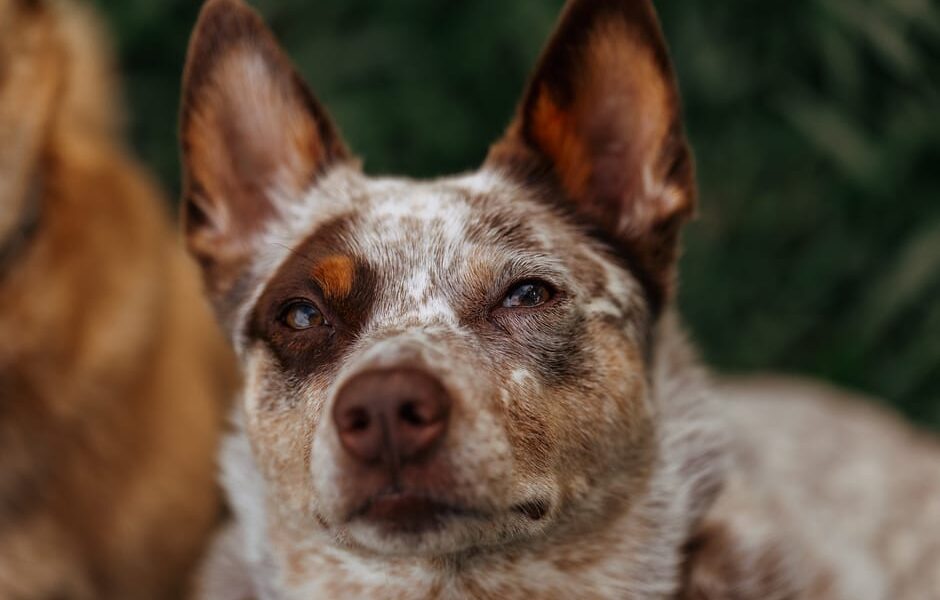
If you watch two well-trained stock dogs work the same flock, you may notice one crouching low and locking a hypnotic stare onto the sheep while the other trots upright, head high, moving stock with body presence instead of a piercing gaze. Both are working correctly. The difference lies in herding eye styles—the spectrum from the intense “strong-eyed” dog to the relaxed “loose-eyed” or “upright” worker. This distinction shapes which breeds suit which stock, how a dog applies pressure, and what kind of handling it needs.
In this article
Understanding eye helps you read a working dog accurately and appreciate why a Border Collie and an Australian Cattle Dog approach the same job so differently. This is a conceptual guide, not training instruction; developing or managing a dog’s eye on real stock belongs with a qualified herding clinician.
What “Eye” Means in a Herding Dog
“Eye” describes the dog’s use of its gaze and posture to control stock. It is part of the arrested predatory sequence—the stalk and stare a wolf uses before a chase—channeled into livestock work. A dog with strong eye fixes intensely on the animals, often crouching, and uses that visual pressure to move and hold them. A loose-eyed dog uses far less stare, relying instead on movement, body position, and upright presence.
Among the major herding eye styles, the strong-eyed dog is exemplified by the Border Collie, while loose-eyed, upright dogs include the Australian Kelpie, the Australian Cattle Dog, and many German tending breeds. The American Herding Breed Association and the American Kennel Club Herding Program both accommodate these contrasting working methods in their tests and courses.
Eye is best understood as one of several tools a dog uses to apply pressure on stock. Pressure is simply the perceived threat the dog projects—stock move away from it. A strong-eyed dog concentrates that pressure through a fixed, predatory stare; a loose-eyed dog spreads it through movement and upright body language. Both achieve the same end—controlled movement of stock—by different means, and both are heritable working traits shaped by generations of selection for particular jobs and landscapes.
The Strong-Eyed Dog
A strong-eyed dog applies pressure with a low, stalking posture and an unwavering stare. This intensity gives remarkable precision—the dog can hold a single sheep, ease a flock through a gate, or freeze stock in place with sheer focus. The Border Collie’s “clap” (dropping to the ground while keeping the stare locked) is the classic image of strong eye, and it is central to the high-precision sheepdog trials run under the United States Border Collie Handlers’ Association.
The strengths are control and finesse. The risks are “sticky eye,” where a dog becomes so locked onto stock that it stalls and will not move, and over-intensity that unsettles flighty animals or stresses the dog itself. Strong-eyed dogs are typically extremely sensitive to pressure and reward thoughtful, quiet handling. The Border Collie’s temperament and working background are detailed in our Border Collie breed profile.
Handlers of strong-eyed dogs learn to manage that intensity rather than fight it. A dog locked too hard on its stock may need to be moved off the eye with a flank or a stop, breaking the fixation so it can think again. Done well, the strong eye becomes a precision instrument; done poorly, it can spiral into obsession that exhausts both dog and stock. This same intensity is why strong-eyed dogs need such careful handling—and why their drive can become a problem in pet homes with no work to absorb it.
The Loose-Eyed and Upright Dog
A loose-eyed, upright dog works with its head up and body squarely facing the stock, moving them with presence and motion rather than a fixed stare. These dogs tend to be free-moving, bold, and well-suited to large numbers of stock, long days, and animals that need a confident pusher rather than a hypnotic controller.
The Australian Kelpie is a prime example, famous for running across the backs of packed sheep in a yard and for tireless work in heat. Australian Cattle Dogs likewise work upright, using force and body to move heavy, stubborn cattle. Their backgrounds are covered in our Australian Kelpie breed profile and our guide to cattle working dogs, heelers, and drovers.
The strengths of the upright style are stamina, boldness, and effectiveness on large mobs and tough stock. The trade-off is less of the surgical precision a strong-eyed dog brings to delicate, close work with light sheep.
Upright dogs also tend to be more resilient to repetitive, all-day work because they are not pouring out the intense mental energy that strong eye demands. A Kelpie can work a yard full of sheep for hours in heat, “backing” across packed mobs and pushing relentlessly, in conditions that might overwhelm a high-intensity strong-eyed dog. This durability is exactly why the upright style dominates large commercial operations and tough rangeland in Australia and the western United States.
Eye Is a Spectrum, Not Two Boxes
Most dogs fall somewhere along a continuum rather than at the extremes. “Medium eye” describes a dog that shows useful focus without becoming sticky, and many handlers consider this an ideal balance for all-around farm work. Within any breed you will find variation, and working lines often differ markedly from show or pet lines in the amount and quality of eye they carry.
It also matters that eye interacts with the broader herding styles. A strong-eyed gatherer and a loose-eyed driver are doing different jobs with different tools; we map those out in our companion piece on herding styles—gathering, driving, and tending. Eye is one dimension of working method, not the whole picture.
Power is another dimension worth separating from eye. “Power” is the dog’s ability to make stock respect and move off it, especially heavy or challenging animals. A dog can have strong eye but little power, or modest eye and tremendous power. The most prized working dogs combine appropriate eye for the stock with enough power to back it up—reading the animals precisely and being able to move them when it counts.
Matching Herding Eye Styles to Stock
The best eye style depends on what you work. Among the herding eye styles, here is a practical mapping:
- Light, flighty sheep: a strong- to medium-eyed dog that controls without overwhelming.
- Heavy or stubborn cattle: a loose-eyed, upright dog with force and presence.
- Large mobs in yards and races: a bold upright dog with stamina, like a Kelpie.
- Ducks and light poultry: a soft, low-pressure approach, discussed in our guide to poultry and duck herding dogs.
Stock temperament varies by individual animal and even by season, so versatile dogs that can modulate their intensity are especially prized.
How Eye Affects Training and Handling
A dog’s eye shapes how it should be trained and handled. Strong-eyed dogs are usually highly sensitive—a sharp word or too much pressure from the handler can shut them down or send them over threshold. They reward quiet, patient, precise handling and small corrections. Pushing a strong-eyed dog hard often backfires, because the same sensitivity that gives it finesse on stock makes it reactive to handler pressure.
Loose-eyed, upright dogs typically take more pressure and need clearer, firmer direction to keep them organized, since they are not naturally inclined to pause and read stock as intently. They can be bold to the point of pushy, so they benefit from structure that channels their forwardness into controlled work rather than frantic motion. Neither type is harder overall; they simply ask different things of the handler.
This is also why matching a handler to a dog matters as much as matching a dog to stock. A quiet, precise handler may struggle to motivate a pushy upright dog, while a forceful handler may overwhelm a sensitive strong-eyed one. Honest self-awareness about your own style helps you choose a dog you can actually bring along, and it is a key reason novices benefit from an experienced instructor who can read the partnership.
Why This Matters Beyond the Farm
Eye is not just a working trait—it shows up in pet homes too. A strong-eyed Border Collie with no stock may fixate on joggers, cars, bicycles, children, or the flicker of a laser Pointer, sometimes to an obsessive degree. An upright, high-drive Cattle Dog or Kelpie may channel that boldness into heel-nipping and relentless motion. Recognizing the trait helps owners understand the behavior and redirect it constructively.
The flip side is that a strong-eyed dog’s fixation can be redirected into rewarding structured activities—from advanced obedience to scent work to ball-herding sports—that give the brain the focus it craves. An upright dog’s drive responds well to vigorous, varied physical and mental work. Understanding which kind of intensity you are living with is the first step to managing it kindly and effectively.
Herding breeds end up in rescue in large numbers, frequently because owners underestimated this intensity. For the right experienced adopter, that drive becomes a gift rather than a problem. Our guide to keeping a herding-breed pet without stock walks through managing eye, chase, and fixation in everyday life—essential reading before bringing one home. Capable, eye-y dogs wait in breed rescue right now, ready for the home that understands them.
Frequently Asked Questions
What is the difference between strong eye and loose eye?
Strong eye means a dog uses an intense, fixed stare and a crouching posture to control stock, like a Border Collie. Loose eye means a dog works upright with less stare, moving stock through body presence and motion, like a Kelpie or Cattle Dog.
Is one herding eye style better than the other?
Neither is better overall; each suits different work. Strong eye gives precision for light, delicate stock, while loose-eyed, upright dogs offer stamina and force for large mobs and tough cattle. The right choice depends on your stock and your job.
What is “sticky eye”?
Sticky eye is when a strong-eyed dog becomes so locked onto stock that it freezes and will not move on command. It is a fault to manage through training with a qualified instructor, not something to encourage.
Do Australian Cattle Dogs have eye?
Australian Cattle Dogs are generally loose-eyed, upright workers. They rely on bold body presence and force—including the heel-bite on cattle—rather than the hypnotic stare typical of strong-eyed Border Collies.
Does eye affect how a herding dog behaves as a pet?
Yes. A strong-eyed dog may fixate intensely on movement like cars, joggers, or laser pointers, while upright dogs may channel drive into nipping and constant motion. Understanding eye helps owners provide the right outlets and management.


