
Last updated: May 6, 2026
In this article
- Why Dogs Jump on People
- The Attention Problem: Why Jumping Gets Worse
- Training the Sit Greeting: A Step-by-Step Approach
- Consistency With Visitors: The Make-or-Break Factor
- Managing Excitement: Exercise, Enrichment, and Calm Protocols
- Puppies vs. Adult Dogs: Different Stages, Same Principles
- Common Mistakes That Keep Dogs Jumping
Your dog hurls themselves at every person who walks through the front door. Muddy paw prints streak across shirts, small children get knocked over, and guests start bracing for impact the moment they step inside. If this sounds familiar, you are not alone. Jumping is one of the most common behavior complaints among dog owners — and one of the most fixable. Understanding how to stop dog from jumping starts with understanding why they do it in the first place, and then building habits that reward the behavior you actually want to see.
Why Dogs Jump on People
Dogs do not jump to be rude. In the canine world, face-to-face greeting is the norm. Puppies lick their mother’s muzzle as a greeting ritual, and when your dog leaps toward your face they are doing the only version of “hello” that feels natural to them. Jumping is a social behavior — an expression of excitement and a desire for connection.
The trouble is that while the impulse is normal, the consequences are not acceptable in a human household. A 70-pound Labrador slamming into your elderly neighbor is a real safety risk, and even a small dog jumping on a toddler can cause injury. The goal is not to suppress your dog’s friendliness — it is to redirect it into a greeting that works for everyone. If you are still deciding on the right breed for your lifestyle, our dog breeds directory includes temperament details that can help you find a naturally calmer companion.
The Attention Problem: Why Jumping Gets Worse
Here is the uncomfortable truth: most people accidentally train their dog to jump. Every time someone pushes the dog down, says “no, no, no” in an animated voice, or even makes eye contact during a jump, they are giving the dog exactly what it wanted — attention. To a dog, negative attention is still attention. Being pushed is still being touched. The jump worked.
Dogs repeat behaviors that produce results. If jumping reliably generates eye contact, physical contact, and vocal engagement, the dog has every reason to jump harder. This is why yelling or kneeing them in the chest almost never works — you are still participating in the interaction, and participation is the reward. The solution is to make jumping produce nothing and make an alternative behavior produce everything the dog wants.
Training the Sit Greeting: A Step-by-Step Approach
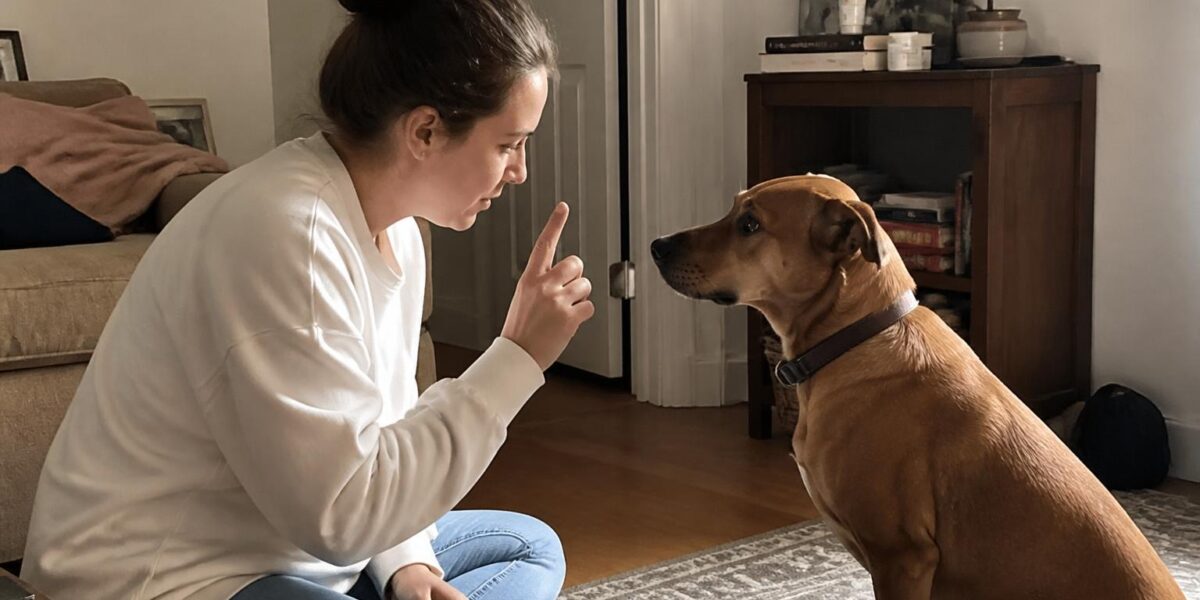
The most effective replacement for jumping is a solid sit. A dog cannot sit and jump at the same time. If sitting becomes the reliable way to earn attention, petting, and treats, the dog will choose sitting because it works better. Here is how to train it.
Step 1: Teach a reliable sit in calm environments first. Before you can expect your dog to sit at the front door with guests arriving, they need to be able to sit on cue in the kitchen with no distractions. Use a treat to lure the dog’s nose upward until their rear end touches the floor, mark the moment with “yes” or a clicker, and reward. Practice until the sit is fast and automatic.
Step 2: Add the greeting context gradually. Have a family member leave the house, wait 30 seconds, and come back inside. The moment the door opens, ask the dog to sit. If they sit, the returning person offers calm praise and a treat. If they jump, the person immediately turns around, walks back outside, and closes the door. Wait ten seconds and try again. The message is clear: jumping makes the person disappear, and sitting makes them stay.
Step 3: Increase difficulty in small increments. Once your dog can hold a sit while a family member re-enters calmly, start adding variables. Have the person enter with more energy. Ring the doorbell first. Use different family members. Each small increase in difficulty should be followed by successful repetitions before moving to the next level.
Step 4: Practice with less familiar people. Ask a friend to help. Coach them on the protocol before they arrive: if the dog sits, they can greet and pet. If the dog jumps, they turn away silently. New people are inherently more exciting than family, so expect some regression. That is normal. Keep sessions short — five minutes is plenty — and end on a success.
Step 5: Generalize to different locations. Practice sit greetings on walks, at the park, and outside stores. A behavior that only works in your living room is not truly learned. The dog needs to understand that sit-to-greet is the rule everywhere, not just at home.
Consistency With Visitors: The Make-or-Break Factor
The biggest reason dogs keep jumping is inconsistency. You spend two weeks training a beautiful sit greeting, and then your neighbor comes over and lets the dog jump all over her because “oh, I don’t mind!” One successful jump undoes days of practice. The dog learns that the rules depend on who is at the door, and they will test every new person to find out.
You need to manage the environment until the training is solid. This means briefing every visitor before they enter. A simple, polite request works: “We are working on teaching him not to jump — would you mind waiting until he sits before petting him?” Most people are happy to help once they understand why you are asking.
For visitors who refuse to cooperate or for situations where you cannot control the greeting, use management tools. Keep your dog on a leash when you answer the door. Use a baby gate to create a buffer zone. Put the dog in another room until the initial excitement passes, then bring them out on leash for a controlled greeting. Management is not a failure — it is responsible training. It prevents the dog from practicing the wrong behavior while you are still building the right one.
If you are considering adopting a dog and want to start these habits from day one, our adoption page can help you find a dog that fits your household.
Managing Excitement: Exercise, Enrichment, and Calm Protocols
A dog that is bursting with pent-up energy will always struggle with impulse control. If your dog’s entire day consists of sleeping on the couch until someone comes home, they are going to explode with excitement at the first sign of social interaction. You cannot train calm greetings into a dog that has no outlet for their energy.
Make sure your dog is getting adequate physical exercise for their breed and age. A 30-minute walk before guests arrive can make the difference between a manageable training session and chaos. Mental enrichment matters too — puzzle feeders, sniff walks, training games, and chew toys all help take the edge off.
Consider teaching a “place” command too. Reward the dog for lying on a specific mat or bed and staying there calmly. Over time, this becomes a default behavior when guests arrive: the dog goes to their place, lies down, and waits to be released for a greeting. It gives the dog a clear job instead of orbiting the front door in a frenzy.
Calm arrivals from family members help too. If you come home and immediately engage with the dog in a high-pitched, excited voice, you are conditioning them to associate arrivals with peak arousal. Try coming in quietly, setting down your things, and waiting a minute before acknowledging the dog. It feels counterintuitive, but it teaches the dog that calm behavior is what starts the interaction.
Puppies vs. Adult Dogs: Different Stages, Same Principles
The fundamentals are the same whether you are working with an eight-week-old puppy or a five-year-old dog, but the timeline and expectations differ.
Puppies are easier in some ways because they have not had years to practice jumping. The challenge is that jumping is adorable when they are small, so people let it slide. A 10-pound puppy standing on their hind legs is charming. That same dog at 60 pounds is a problem. Start early — teach the sit greeting from the first day you bring the puppy home. Crouch down so they can greet your face without needing to jump. Keep sessions to two or three minutes and be patient. A four-month-old puppy who sits for two seconds before breaking is doing great.
Adult dogs have longer attention spans but may have been jumping successfully for years, which means the behavior is deeply practiced. Expect four to eight weeks of consistent work before you see reliable improvement, and be prepared for setbacks during periods of high excitement. One thing that works particularly well with adult dogs is teaching an incompatible behavior. “Go get your toy” is a useful redirect — a dog carrying a ball in their mouth is less likely to jump. Over time, many dogs will start grabbing a toy on their own when they hear the doorbell.
Common Mistakes That Keep Dogs Jumping
Even well-intentioned owners make errors that slow down or reverse progress. Here are the most frequent ones.
Pushing the dog off with your hands. This feels instinctive but reads as play to most dogs. Pushing involves physical contact, and physical contact is rewarding. Turn away and cross your arms instead.
Saying “down” when you mean “off.” If your dog knows “down” as “lie down,” using the same word for “stop jumping” creates confusion. Use “off” for jumping and keep “down” for the lie-down position, or simply say nothing at all and let the withdrawal of attention do the teaching.
Only training in easy situations. If you only practice sit greetings with family members, the dog will not generalize to strangers. You need to systematically increase the difficulty by introducing new people, new locations, and higher levels of excitement.
Punishing after the fact. If you come home to find your guest flustered and your dog wild, scolding the dog minutes later accomplishes nothing. Dogs connect consequences to the behavior happening in that moment, not to something that happened earlier. Focus on setting up the next greeting for success rather than correcting the last one.
Giving up too soon. Behavior change is not linear. Your dog will have great days and terrible days. A setback does not mean the training has failed — it means the dog encountered a situation that exceeded their current skill level. Go back to an easier step, rebuild confidence, and progress again.
Allowing some people to be jumped on. If your dog learns that jumping works with certain people, they will keep testing. The rule needs to be universal: four paws on the floor or a sit earns attention, jumping earns nothing.
How long does it take to stop a dog from jumping?
Most dogs show noticeable improvement within two to four weeks of consistent training. A fully reliable sit greeting — one that holds even in high-excitement situations with strangers — typically takes six to twelve weeks. Dogs that have been jumping for years may take longer, and puppies may learn faster but need more time to mature into consistent behavior. The single biggest factor in speed is consistency: every person who interacts with the dog needs to follow the same rules.
Should I use a knee to stop my dog from jumping?
No. The old advice to knee a jumping dog in the chest is outdated and counterproductive. It can cause physical injury, especially to smaller dogs, and it often increases anxiety without teaching the dog what to do instead. Positive reinforcement — rewarding the sit, withdrawing attention for the jump — is more effective and does not damage your relationship with your dog.
Why does my dog only jump on certain people?
Dogs are excellent at reading patterns. If certain people respond to jumping with excitement or animated reactions, the dog learns that those people are “jumpable.” This is actually a sign that your dog understands the rules — they are just applying them selectively. The fix is getting everyone on the same page.
Can I stop an older dog from jumping?
Yes. The process may take longer than with a puppy because you are replacing an established behavior, but the same positive-reinforcement principles apply. Older dogs often have better focus and impulse control, which works in your favor once they understand what earns the reward.
What if my dog jumps on strangers during walks?
Keep your dog on a leash in public until their greeting manners are reliable. When you see someone approaching, ask your dog to sit before the person reaches you. If the dog holds the sit, allow a brief greeting. If they jump, calmly walk them away. Over time, the dog learns that calmness creates access to the thing they want.
Is jumping a sign of dominance?
No. The dominance theory of dog behavior has been largely discredited by modern animal behaviorists. Jumping is about excitement, social greeting, and learned behavior — not status or control. Treat it as a normal dog behavior that needs to be redirected into something more appropriate for life with humans.
Jumping is one of those problems that feels overwhelming in the moment but responds well to patient, consistent training. Your dog is not being bad — they are being a dog, and they need you to show them a better way to say hello. Start with a solid sit, control the environment, get everyone in the household on the same page, and give it time. The payoff is a dog who greets every person politely, which makes life better for the dog, for you, and for every guest who walks through your door. Browse our dog breeds directory to learn more about specific breed temperaments, or visit our adoption page to find a dog ready for their forever home.


