
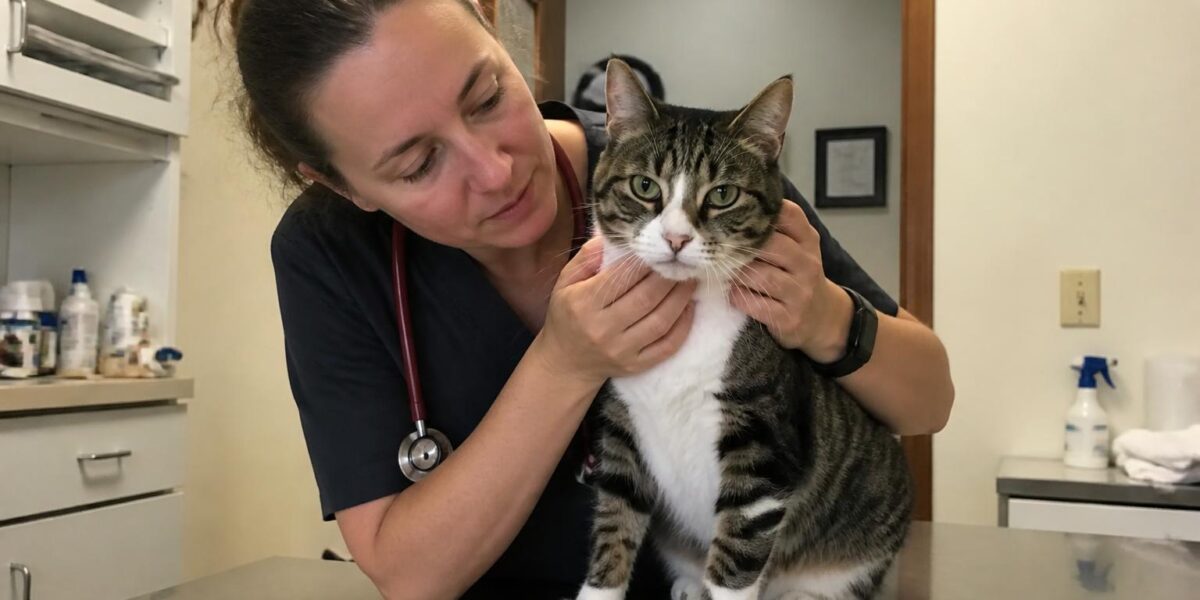
Why Intestinal Lymphoma Is the Cat-Cancer You Should Know About
Intestinal lymphoma is the most common form of lymphoma in cats and one of the most common cancers in cats overall. It targets the lymphoid tissue scattered throughout the small and large intestine, the mesenteric lymph nodes, and sometimes the stomach and other abdominal organs. Older cats are most commonly affected, often in their second decade of life. Unlike the historical association with feline leukemia virus (FeLV) seen in younger cats with mediastinal lymphoma, modern intestinal lymphoma is overwhelmingly seen in FeLV-negative older cats.
In this article
- Why Intestinal Lymphoma Is the Cat-Cancer You Should Know About
- Small-Cell vs Large-Cell — The Critical Distinction
- Warning Signs Owners Notice First
- The Diagnostic Workup Step by Step
- Why Vitamin B12 Comes Up So Often
- Treatment of Small-Cell Intestinal Lymphoma
- Treatment of Large-Cell Intestinal Lymphoma
- Prognosis Without Inventing Numbers
- Quality-of-Life and Pain Care
- Cost, Insurance, and Specialist Referral
- Frequently Asked Questions
The good news is that intestinal lymphoma in cats actually has two faces. The low-grade, small-cell form often behaves like a chronic, manageable illness for years. The high-grade, large-cell form is much more aggressive but still treatable. Understanding which form your cat has is the most important conversation you will have with your oncologist, because the treatments and prognoses are dramatically different.
Small-Cell vs Large-Cell — The Critical Distinction
Pathologists divide intestinal lymphoma into two grades based on the size of the tumor cells. Small-cell (also called low-grade or lymphocytic) lymphoma is the slow, smoldering form. Large-cell (high-grade or lymphoblastic) lymphoma is the aggressive, rapidly progressive form. The cellular biology is completely different despite similar locations, and the treatment plans diverge sharply.
Small-cell intestinal lymphoma often looks and behaves much like chronic enteropathy or inflammatory bowel disease for months or even years before being recognized. Large-cell lymphoma announces itself with rapid weight loss, vomiting, and visible abdominal masses. Treatment of small-cell disease typically uses oral medications given chronically at home with relatively mild side effects. Large-cell disease requires injectable multi-agent chemotherapy at specialty centers. We cover each subtype in dedicated companion articles on small cell lymphoma in cats and large cell lymphoma in cats.
Warning Signs Owners Notice First
The most common early signs of intestinal lymphoma are weight loss, decreased appetite, intermittent vomiting, and changes in stool. These are also the signs of chronic kidney disease, hyperthyroidism, pancreatitis, and inflammatory bowel disease — which is why diagnosis often takes time and several rounds of workup. The symptoms blur into the broader category of “the senior cat who is eating less and losing weight.”
Owners may notice a thinning along the spine and pelvis, a coat that looks duller, episodes of soft stool or diarrhea, and occasional vomiting that gradually becomes more frequent. In large-cell disease the timeline is compressed — weeks rather than months — and a palpable abdominal mass or thickened intestinal loops may be detectable on routine exam. In small-cell disease the timeline is gradual, sometimes spread across many months, and physical exam findings can be subtle.
Any older cat losing weight steadily despite an apparently normal appetite needs a workup, full stop.
The Diagnostic Workup Step by Step
Diagnosis follows a logical progression. The starting point is a complete history and physical exam, including careful palpation of the abdomen and assessment of body condition. Initial blood work includes a complete blood count, chemistry panel, total thyroxine (T4), urinalysis, and FeLV/FIV testing. A serum cobalamin (B12) and folate measurement is often added because vitamin B12 deficiency is extremely common in feline lymphoma and supplementation is part of treatment.
Abdominal ultrasound is the imaging workhorse. It reveals thickening of intestinal walls, loss of normal layering, mesenteric lymph node enlargement, and any abdominal mass. Ultrasound-guided fine needle aspirates of enlarged lymph nodes can sometimes provide an immediate cytologic diagnosis, particularly for large-cell disease. For small-cell disease, where the lymphocytes look fairly normal cytologically, full-thickness biopsy obtained either surgically or via endoscopy is often required for definitive diagnosis. PARR (PCR for antigen receptor rearrangement) testing on biopsy samples helps distinguish lymphoma from severe inflammatory bowel disease in difficult cases.
For broader feline cancer staging context, see our overview of cancer in cats.
Why Vitamin B12 Comes Up So Often
Cats with intestinal lymphoma — especially small-cell disease in the distal small intestine — frequently have severe vitamin B12 (cobalamin) deficiency because B12 is absorbed in the ileum and lymphoma damages absorption. Low B12 makes cats feel terrible: anorexia, weight loss, lethargy. Supplementation with subcutaneous injectable B12 weekly for several weeks, then less frequently, is part of standard treatment for many cats and often produces noticeable improvement in appetite and energy independent of any cancer-directed therapy.
Folate may also be measured at the same time; abnormal folate levels can suggest the location of the intestinal disease. These simple, inexpensive tests should be on every workup for an older cat with weight loss.
Treatment of Small-Cell Intestinal Lymphoma
Small-cell intestinal lymphoma is most commonly treated with the combination of oral chlorambucil (a chemotherapy tablet given on a defined schedule) and oral prednisolone. This is given at home, with periodic blood work to monitor for bone marrow suppression. Many cats tolerate this protocol well — major side effects are uncommon — and remissions lasting many months to multiple years are achievable.
The treatment is not a cure but is genuinely a long-term management strategy. Owners report substantial improvement in appetite, weight, and energy within weeks of starting therapy. Most cats can continue treatment for months or years, with periodic adjustments by the oncologist. Vitamin B12 supplementation, antiemetics, and appetite stimulants such as mirtazapine are used as adjuncts. Our dedicated small cell lymphoma in cats article covers protocol detail.
Treatment of Large-Cell Intestinal Lymphoma
Large-cell intestinal lymphoma requires more aggressive treatment. Multi-agent injectable chemotherapy, typically using a CHOP-based protocol (cyclophosphamide, doxorubicin, vincristine, and prednisolone), is the standard of care for fit cats. Treatment is delivered at a specialty hospital weekly or biweekly for an induction phase, followed by a maintenance phase. Cats generally tolerate chemotherapy better than human family members expect; major hair loss is uncommon, and most cats keep eating and grooming throughout.
For cats with large abdominal masses causing obstruction, surgery to remove the mass is sometimes performed before chemotherapy begins. Decisions about surgery, protocol choice, and supportive care should be directed by a board-certified veterinary oncologist (ACVIM-Oncology). Our large cell lymphoma in cats article covers protocol detail.
Our broader cat lymphoma treatment article and overview of lymphoma in cats provide additional context.
Prognosis Without Inventing Numbers
Prognosis depends most strongly on which form is present. Small-cell intestinal lymphoma has a generally encouraging outlook with treatment; many cats achieve remission and live well for many months to multiple years. Large-cell intestinal lymphoma has a more guarded prognosis, although a meaningful proportion of cats achieve durable remissions with multi-agent chemotherapy. Cats who do not receive treatment for either form have a much shorter timeline.
Within each grade, important prognostic variables include the cat’s overall health going into treatment, response to the first cycle of therapy, anatomic location of disease, and the presence of any complications such as obstruction, perforation, or paraneoplastic conditions. Your oncologist will have the actual data on your cat and can give you the most honest prognostic conversation.
Quality-of-Life and Pain Care
Comfort care travels alongside cancer treatment from day one. Anti-nausea medications such as maropitant, appetite stimulants such as mirtazapine, B12 supplementation, fluid support if dehydration develops, and pain management with gabapentin as needed are standard adjuncts. Cats with significant abdominal pain may benefit from short courses of opioid analgesia.
For cats whose disease eventually progresses despite treatment, hospice care focused on hydration, nutrition, comfort, and quiet quality time at home is a valid and loving path. The ASPCA Pet Loss hotline at 877-474-3310 supports families navigating those decisions, and your oncologist can connect you with a hospice-focused veterinarian.
Cost, Insurance, and Specialist Referral
Treatment costs vary widely. Small-cell lymphoma protocols are typically modest (chlorambucil tablets and prednisolone, plus monitoring blood work) — affordable for most families. Large-cell protocols at specialty hospitals are significant, often several thousand dollars across the induction and maintenance phases. Diagnostic workup including ultrasound, biopsy, and pathology adds another thousand or more. Pet insurance, if purchased before symptoms appear, can cover a substantial portion. Ask your primary vet about local cost ranges and explore the veterinary specialist cost breakdown resource.
Treatment decisions for large-cell disease are best directed by a board-certified veterinary oncologist (ACVIM-Oncology). Small-cell disease is sometimes managed in general practice with periodic oncology consultation. Either way, ask for a referral early in the process.
Frequently Asked Questions
Is intestinal lymphoma in cats curable?
Cure is uncommon, but durable remissions are very achievable, especially in small-cell disease. Treatment is best framed as long-term management of a chronic illness rather than as a curative intervention.
What is the difference between IBD and intestinal lymphoma?
Inflammatory bowel disease and small-cell intestinal lymphoma can look similar on routine workup and even on biopsy. PARR (PCR clonality testing) on biopsy samples is often needed to distinguish them. The two conditions sit on a spectrum, and IBD can sometimes progress to lymphoma over years.
Will my cat need surgery?
Most cats with intestinal lymphoma do not need surgery; chemotherapy is the primary treatment. Surgery is reserved for cats with large obstructing masses, perforation, or focal disease that is technically resectable. Your oncologist will guide that decision.
How quickly should we start treatment after diagnosis?
For small-cell disease, treatment can usually start within a week of diagnosis. For large-cell disease, faster initiation is preferred because the tumor is rapidly progressive. Coordinate with your oncologist; most specialty hospitals can fit new patients within a few days for high-grade disease.
Can I afford treatment if I do not have pet insurance?
Small-cell protocols are within reach of most families. Large-cell protocols at specialty hospitals are a significant investment. Talk openly with your oncologist about budget; modified protocols, single-agent chemotherapy, and palliative options exist for families who cannot pursue full multi-agent treatment.


