
Two Opposite Jobs Around the Same Animals
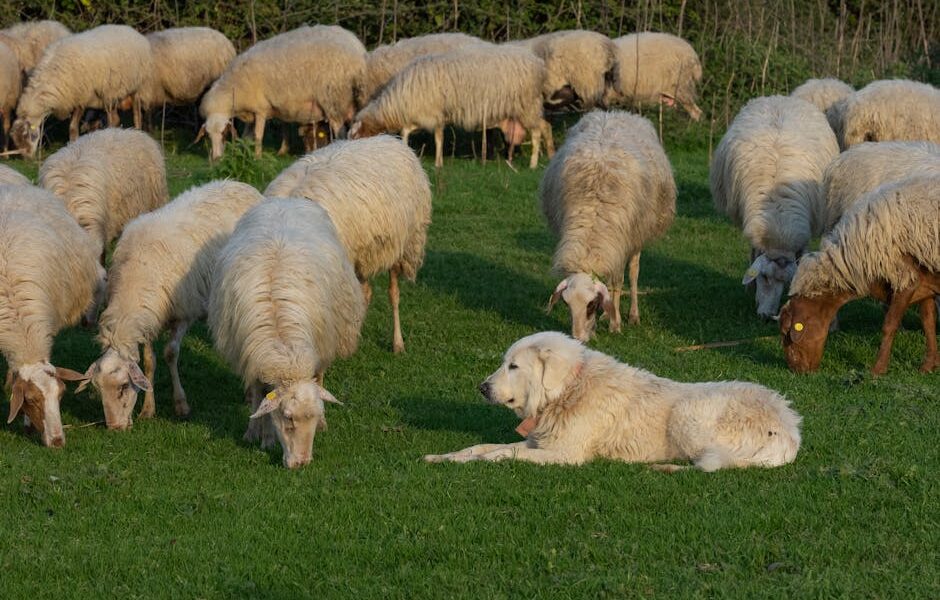
The LGD vs herding dog question confuses a lot of newcomers, because both kinds of dog work with livestock and both are loosely called “farm dogs.” But they do nearly opposite jobs, and they are built from nearly opposite instincts. A livestock guardian dog protects animals by living among them as a calm, trusted member of the group. A herding dog moves animals by harnessing controlled predatory behavior to push, gather, and direct them at a handler’s command.
In this article
- Two Opposite Jobs Around the Same Animals
- Guardian Instinct: Predatory Behavior Suppressed
- Herding Instinct: Predatory Behavior Controlled
- LGD vs Herding Dog: Why They Are Never the Same Dog
- Physical and Behavioral Contrasts at a Glance
- Choosing the Right Dog for Your Needs
- The Adoption Angle for Both Types
- Frequently Asked Questions
Understanding this contrast is more than trivia. Choosing the wrong type for your needs, or worse, expecting one dog to do both jobs, leads to failure, frustration, and sometimes injured stock. The foundational behavioral research of Raymond Coppinger framed guardians and herders as expressions of different ends of the canine predatory sequence, and that framework still explains why the two roles rarely overlap.
Guardian Instinct: Predatory Behavior Suppressed
A guardian’s value comes from what it does not do. The chasing, gripping, and killing impulses of the predatory sequence are suppressed, leaving a dog that can lie among lambs without triggering a chase. This is the behavioral signature explored in detail in our livestock guardian dog working role overview: trustworthiness, attentiveness, and protectiveness, with prey drive turned way down.
Guardians are also independent decision-makers. Because they must judge threats and respond on their own, often at night and over large areas, they are bred to think for themselves rather than to take constant direction. They bond to the stock first, mature slowly, and may ignore a handler when their own assessment differs.
This independence is sometimes mistaken for stupidity by people used to biddable breeds. It is nothing of the sort. A guardian making its own call about whether a distant shape is a threat is exercising exactly the judgment it was bred for. The trait is essential because no shepherd can stand watch over a flock around the clock; the dog must be trusted to decide and act alone. What looks like stubbornness in a pet context is, in the working context, the entire point.
Herding Instinct: Predatory Behavior Controlled
A herding dog is the mirror image. Its work depends on an active, intense version of the predatory sequence, the eye, the stalk, the chase, but stopped short of the grip and kill. The dog uses this controlled prey drive to apply pressure that moves stock where the handler wants. Far from being suppressed, the impulse is amplified and then shaped through extensive training.
Herding dogs are also handler-focused and highly biddable, responsive to whistles, commands, and direction in real time. Where a guardian works autonomously, a herder works as a precise extension of the handler. That biddability and trainability are exactly why these breeds make demanding pets without an outlet, an issue covered in our guide to keeping a herding-breed pet without stock.
LGD vs Herding Dog: Why They Are Never the Same Dog
The reason the LGD vs herding dog distinction is so absolute comes down to that suppressed-versus-controlled prey drive. A dog cannot be both deeply trustworthy among stock (prey drive off) and a driven mover of stock (prey drive on) at the same time. Asking a guardian to herd undermines the trust that makes it safe with animals; asking a herder to guard pits its chase instinct directly against the job.
This is why you will essentially never find one dog doing both roles well on a working operation. They are separate animals with separate breeding, separate temperaments, and separate upbringings. If you have a mixed need, you keep both kinds of dog, not one dog stretched across both jobs.
The upbringing difference is as important as the breeding. A guardian is raised among stock so it bonds to them and learns to leave them alone, while a herding dog is raised with a handler and introduced to stock as something to work, under careful direction. Even if you somehow had a dog with both temperamental tendencies, you could not raise it for both jobs at once, because the rearing that produces a trustworthy guardian is the opposite of the rearing that produces a keen herder. The two developmental paths simply cannot be combined.
There is also a safety dimension. A herding dog turned loose with sheep it is not actively working may stress, injure, or even kill them by chasing, while a guardian asked to gather a flock will at best mill around uselessly and at worst confuse the animals. Putting either dog in the other’s role is not just ineffective; it can be dangerous to the stock. Respecting the division of labor protects the animals as much as it makes practical sense.
Physical and Behavioral Contrasts at a Glance
The two types also tend to differ physically and temperamentally in ways that match their work:
- Size: Guardians are typically large to giant, built to face predators; herders are usually medium-sized and agile, built for speed and endurance.
- Energy style: Guardians conserve energy and patrol calmly; herders are high-octane athletes that need intense daily work.
- Trainability: Guardians are independent and slow to mature; herders are quick learners eager for direction.
- Bond: Guardians bond to stock; herders bond to their handler.
- Response to threat: Guardians confront and deter; herders generally do not engage predators.
These differences explain why a herding dog left alone with sheep may chase and stress them, while a guardian asked to gather a flock simply will not have the drive to do it.
Choosing the Right Dog for Your Needs
Deciding between the types starts with your actual problem. If predators are killing your stock, you need a guardian. If you struggle to move, gather, sort, or pen animals, you need a herding dog. Many operations need both, and they work side by side: the guardian keeps the flock safe around the clock while the herder helps the handler manage daily movement.
If a guardian is the answer, our guide to choosing a livestock guardian dog breed matches breed traits to climate, terrain, and predator load. The key is to define the job first and then select the dog built for it, rather than buying a breed for its looks and hoping it fits the work.
The Adoption Angle for Both Types
Both guardians and herders frequently end up in rescue when owners underestimate their needs. A herding breed without a job becomes a frustrated, sometimes destructive dog; a guardian without land or a flock can become a roaming barker. For the right adopter, though, either type can be a remarkable companion, and rescue is full of capable dogs needing the right match.
Herding breeds in particular flood shelters, and rescues like those facilitating an adoption of a rescue Border Collie work to place these intense dogs with people prepared for them. Choosing the correct type for your lifestyle, and adopting where you can, prevents the mismatches that fill rescues in the first place.
The mismatch problem is especially acute precisely because of the differences this article describes. People drawn to a guardian’s calm, majestic presence sometimes do not realize they are signing up for an independent, barking, roaming animal that needs land and a flock. People charmed by a herding breed’s intelligence and athleticism sometimes do not grasp the relentless drive and stimulation needs that come with it. In both cases, the dog’s working nature, the very thing that makes it special, becomes the reason it is surrendered when the home cannot meet it.
The takeaway is simple but easy to forget: define the job before you choose the dog. If you need protection from predators, you want a guardian. If you need help moving and managing stock, you want a herder. If you need neither but love one of these breeds, be brutally honest about whether you can provide the outlets it requires. Getting this right at the outset is the kindest thing you can do for the dog and the surest way to keep capable working animals out of the rescue pipeline.
Frequently Asked Questions
Can one dog both guard and herd livestock?
Essentially no. Guarding requires suppressed prey drive while herding requires controlled prey drive, and these are opposing instincts. A single dog cannot reliably do both jobs, which is why working operations keep the two types separately.
Is a guardian dog or a herding dog easier to train?
Herding dogs are far more biddable and quicker to learn, since they are bred to take direction. Guardians are independent thinkers that mature slowly and may ignore commands when they judge a situation differently.
Which is bigger, an LGD or a herding dog?
Guardians are typically large to giant breeds built to deter predators, while herding dogs are usually medium-sized and agile for speed and stamina. The size difference reflects their very different jobs.
Will a herding dog protect my sheep from coyotes?
No. Herding dogs are not bred to confront predators and should not be expected to defend stock. If predation is your concern, you need a livestock guardian dog, not a herder.
Do I need both a guardian and a herding dog?
Many operations do. The guardian keeps the flock safe from predators around the clock while the herding dog helps move and manage the animals. They complement each other rather than overlapping.


