
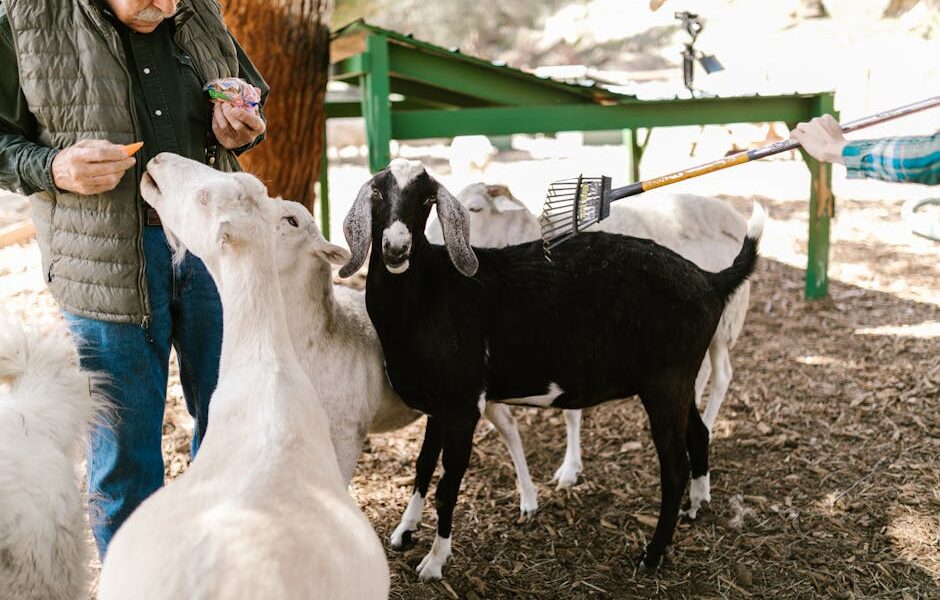
Walk onto any backyard homestead and you will find the same animals filling two very different roles. One keeper names every hen and would never dream of eating one; the next raises the same breed for eggs and meat and culls without sentiment. The livestock vs pet welfare tension sits at the heart of modern homesteading, and it deserves an honest, non-judgmental conversation rather than easy moralizing. Both framings are legitimate. What matters is that animals in either role receive care that meets a real welfare baseline, and that keepers think clearly about the commitments they are making.
In this article
- Two Honest Framings, Not a Right and a Wrong
- Why the Livestock vs Pet Welfare Tension Surfaces in the Backyard
- The Five Freedoms: A Baseline Both Framings Must Meet
- Where the Framings Genuinely Diverge
- The End-of-Lay Question
- What the Welfare Baseline Looks Like in Practice
- The Humane Standard for Hard Decisions
- Making Peace With Your Own Ethic
- When Your Situation Changes
- Frequently Asked Questions
This article explores how the production framing and the companion framing differ, where they overlap, and the welfare standard that both must meet. It is a discussion of ethics and care, not a verdict on anyone’s choices, and it is general guidance rather than veterinary advice.
Two Honest Framings, Not a Right and a Wrong
People keep backyard animals for genuinely different reasons, and those reasons shape every decision that follows. The two dominant framings are:
- The companion framing. Animals are family members. They are named, kept for their whole natural lives, given veterinary care for individual illnesses, and not slaughtered or culled for productivity.
- The production framing. Animals are valued for what they produce: eggs, meat, milk, fiber, or breeding stock. Decisions like culling, slaughter, and end-of-lay rehoming are accepted parts of responsible management.
Most backyard keepers actually live somewhere on a spectrum between these poles, and many shift over time. The point is not to declare one framing superior but to be honest with yourself about which one you hold, because that honesty determines whether you are prepared for the decisions ahead. The same animal, the same care needs, two different life arcs.
Why the Livestock vs Pet Welfare Tension Surfaces in the Backyard
This tension is sharper in the backyard than on a commercial farm precisely because the two roles collide in one small space. A family may start with hens as pets, then face the reality that productive laying slows after a couple of years while the birds may live for the better part of a decade. Suddenly the “pet” framing carries a long-term care commitment that some keepers did not anticipate.
Conversely, someone who set out to raise production animals may find themselves attached to a particular animal and struggling with a culling decision they once thought would be simple. There is no shame in either experience. The trouble arises only when keepers avoid thinking about it until a hard choice is forced on them. Our honest look at the backyard chicken as pet versus livestock framing digs into exactly this collision and is essential reading for anyone keeping hens.
The Five Freedoms: A Baseline Both Framings Must Meet
Whatever your framing, there is a welfare floor that no responsible keeper should fall below. The most widely cited articulation is the Five Freedoms, a framework originally developed for farm-animal welfare and now applied broadly. Every animal under your care, pet or production, deserves:
- Freedom from hunger and thirst through ready access to fresh water and a proper diet.
- Freedom from discomfort through appropriate shelter and a comfortable resting area.
- Freedom from pain, injury, and disease through prevention and prompt treatment.
- Freedom to express normal behavior through adequate space, facilities, and the company of the animal’s own kind.
- Freedom from fear and distress through conditions and handling that avoid mental suffering.
The companion framing and the production framing diverge on questions like lifespan and slaughter, but they converge here. A production hen and a pet hen both deserve clean water, shelter, freedom from pain, room to dust-bathe and forage, and humane handling. Our deeper guide to the welfare standards based on the Five Freedoms explores how to apply this framework to animals that occupy that hazy space between pet and livestock.
Where the Framings Genuinely Diverge
Honesty requires naming the real differences, not papering over them. The production framing accepts practices the companion framing does not:
- Culling and slaughter. Production keepers may slaughter for meat or cull animals that are sick, surplus, or no longer productive. Done with proper, humane methods, this is a legitimate part of animal agriculture.
- End-of-lay decisions. When hens stop laying, production keepers may rehome or cull, while companion keepers commit to caring for the bird through retirement.
- Individual versus flock veterinary care. Companion keepers may spend on individual surgeries or treatments that production keepers would not, weighing the cost against the animal’s role.
None of this is a moral failing on either side, provided the welfare baseline is met and any slaughter is genuinely humane. The unethical territory is neglect, suffering, and abandonment, not the legitimate choice between a companion and a production model. Framing the question as livestock vs pet welfare clarifies that the disagreement is about an animal’s life arc, not about whether it deserves good care, because in both models it absolutely does.
It is also worth noting how often the two framings coexist within a single household. A family might keep a small flock of laying hens as production animals while treating one favorite as an unmistakable pet. There is nothing inconsistent about this; it simply means the welfare baseline applies to every bird, and the keeper has thought honestly about which animals occupy which role. The livestock vs pet welfare conversation becomes much easier once you accept that the same person can hold both framings at once and care responsibly within each.
The End-of-Lay Question
Nowhere does the livestock vs pet welfare tension bite harder than at the end of a hen’s laying life. Hens lay productively for roughly two to three years but can live eight to ten, which means the majority of a hen’s life may be unproductive. This forces a decision that every keeper should anticipate before the first chick arrives, not after.
There is no single correct answer. Some keepers retire hens as pets and even provide hospice-style care; others rehome to homes that will keep them as pets; others cull humanely. What unites the responsible versions of all three is that they are planned, humane, and honest. Our dedicated guide to end-of-lay hens and aging flock decisions walks through each path so you can decide deliberately rather than in a panic.
What the Welfare Baseline Looks Like in Practice
The Five Freedoms can sound abstract, so it helps to translate them into the everyday realities of a backyard. For a flock of hens, meeting the baseline means clean water and balanced feed, a dry draft-free coop with room to move, protection from predators and disease, space to dust-bathe, forage, and perch, and handling that does not terrify them. For a goat or sheep, it means companionship of its own kind, appropriate forage and species-specific minerals, sound hooves, parasite monitoring, and shelter. For a pig, it means room to root, a diet that prevents the obesity epidemic, and mental stimulation.
Notice that none of these requirements depends on whether the animal is a pet or production. A production hen and a beloved pet hen both need the same coop, the same clean water, and the same freedom from pain. This is the practical heart of the livestock vs pet welfare conversation: the daily care is largely identical, and the framings diverge only at the questions of lifespan and end-of-life. Keepers who internalize this stop seeing the two framings as opposites and start seeing a shared floor with different ceilings.
The Humane Standard for Hard Decisions
When the production framing leads to slaughter or culling, welfare does not stop applying; it applies to the moment itself. A humane death is swift, causes minimal fear and pain, and uses a method appropriate to the species, carried out by someone competent. The welfare failure is not the decision to cull but a botched, stressful, or incompetent one. Production keepers who take this seriously learn proper technique from extension resources or experienced mentors before they need it, and treat the responsibility with the gravity it deserves.
Companion keepers face a parallel obligation at the other end. Choosing to keep an animal for its whole life means committing to age-related veterinary care and, eventually, to humane euthanasia when quality of life cannot be maintained. Avoiding that decision out of squeamishness, and letting an animal suffer, is its own welfare failure. In both framings, then, the same principle holds: the animal is owed a death as humane as its life, and refusing to plan for that moment is where real harm occurs.
Making Peace With Your Own Ethic
The healthiest backyard keepers are not those who pick the “correct” framing but those who choose consciously and care consistently. Ask yourself honest questions before you acquire animals. Will I keep this hen after she stops laying? Am I prepared to cull humanely if needed, and do I know how? Can I afford individual veterinary care, and would I pursue it? Am I keeping this animal for companionship, for production, or both?
Answering these in advance prevents the most common welfare failures, which almost always stem from a keeper being unprepared for a decision rather than from the framing itself. Clarity is kindness, both to you and to your animals.
When Your Situation Changes
Life shifts. Keepers move, lose income, develop health problems, or simply discover that homesteading is more than they bargained for. When you can no longer provide for animals in either framing, the responsible path is planned rehoming, never abandonment or release. Farm-animal sanctuaries and rescue networks exist precisely for these moments, and choosing one of them honors the welfare baseline even as your own circumstances change. Our overview of sanctuary versus adoption rescue explains how these organizations work and which fits a given situation, and it is worth knowing they exist before you ever need them.
Thinking about welfare as a baseline rather than a fixed identity makes the whole endeavor more humane. Whether your animals are pets, production, or both, the question is always the same: are their needs being met today, and do I have a responsible plan for tomorrow?
Frequently Asked Questions
Is it wrong to keep backyard chickens for meat instead of as pets?
No. Raising animals for meat is a legitimate, long-established framing, provided their welfare needs are met throughout life and any slaughter is genuinely humane. The ethical line is not pet versus production but care versus neglect. Both framings are valid when the welfare baseline is honored.
What are the Five Freedoms?
The Five Freedoms are a welfare framework stating that animals should be free from hunger and thirst, from discomfort, from pain, injury and disease, free to express normal behavior, and free from fear and distress. They set a baseline that applies to both pet and production animals.
Why do people get attached to “livestock” animals?
Because animals are individuals with personalities, and proximity breeds attachment. Many keepers who start with a production mindset find themselves bonding with particular animals. This is normal and not a problem, as long as you remain honest about your framing and prepared for the decisions it entails.
What happens when a hen stops laying?
That depends on your framing. Companion keepers retire hens as pets, sometimes for years, while production keepers may rehome or cull humanely. All responsible paths are planned and humane. Decide your approach before acquiring birds, since hens live far longer than they lay.
What should I do if I can no longer care for my animals?
Plan for responsible rehoming, never abandonment or release. Farm-animal sanctuaries and rescue networks take surrendered poultry and livestock. Reaching out to them when your circumstances change upholds the welfare baseline your animals are owed, regardless of whether you kept them as pets or production.
Does the welfare baseline differ for pet and production animals?
No. The daily care, clean water, balanced feed, shelter, freedom from pain, room to express natural behavior, and humane handling, is largely identical whether a hen is a pet or a production animal. The framings diverge only on lifespan and end-of-life decisions. The Five Freedoms set a floor that every animal in your care deserves regardless of its role.
Is culling itself a welfare failure?
Not when done humanely. In the production framing, culling and slaughter are legitimate, and welfare applies to how the act is carried out: swiftly, with minimal fear and pain, using a method appropriate to the species by someone competent. The failure is a botched or stressful death, not the decision itself, just as letting a pet animal suffer rather than choosing humane euthanasia is a failure in the companion framing.


