
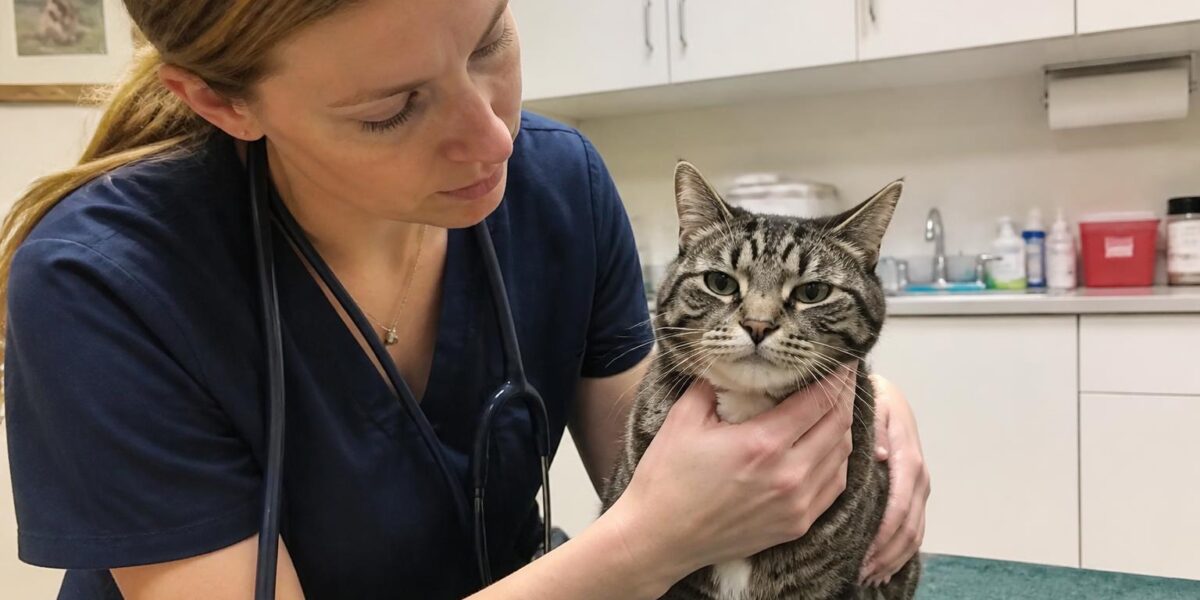
What Oral Melanoma in Cats Actually Is
Oral melanoma in cats is a malignant tumor that arises from melanocytes — the pigment-producing cells normally found in skin and mucous membranes — when those cells transform and proliferate inside the mouth. The disease is well known in dogs, where it is the most common oral malignancy, but in cats melanoma is genuinely rare and most feline oral tumors are squamous cell carcinomas instead. When melanoma does occur in a cat’s mouth, it is biologically aggressive, locally destructive, and tends to spread to regional lymph nodes and lungs earlier than its appearance suggests.
In this article
- What Oral Melanoma in Cats Actually Is
- Why Oral Melanoma Develops in Cats
- Symptoms You Might Notice at Home
- How Veterinarians Confirm the Diagnosis
- Treatment Options Your Vet Will Discuss
- Prognosis Framing and Quality of Life
- How Feline Oral Melanoma Differs From the Canine Form
- The Cost and Logistics Reality
- Living With a Cat Diagnosed With Oral Melanoma
- Frequently Asked Questions
The lesion can be heavily pigmented (jet black or dark brown) or partly to fully amelanotic (pink, red, gray, or flesh-colored), which complicates owner recognition because not every cat oral mass that is “not black” is benign. Lesions appear most often on the gingiva, the sublingual region under the tongue, the maxillary or mandibular oral mucosa, and occasionally on the lip margin or hard palate. Because cats hide oral pain skillfully, by the time owners notice the mass it has often been growing for weeks or months.
Why Oral Melanoma Develops in Cats
The exact cause of feline oral melanoma is unknown. Unlike squamous cell carcinoma in cats on the ear tips and nose — where ultraviolet light is the main driver — intraoral melanoma is not a sun-driven cancer. Genetic factors, chronic local inflammation, and currently uncharacterized molecular drivers (BRAF and other oncogene pathways are studied in human and canine melanoma and are still being investigated in feline tumors) appear to be more important. There is no proven flea-collar, tobacco-smoke, or canned-food link specific to feline oral melanoma the way some have been suggested for feline oral squamous cell carcinoma.
Older cats are over-represented; most feline oral melanomas are diagnosed in cats over ten years old. There is no strong sex predilection, and breed predispositions are not well established because the case numbers are small worldwide. Because the disease is rare, most feline-medicine veterinarians will see only a handful of cases over a long career, which is why early biopsy of any oral mass and prompt referral to a board-certified ACVIM oncology specialist matter.
Symptoms You Might Notice at Home
The earliest signs are usually subtle. An owner may notice a faint pigmented spot on the gum during a tooth-brushing session, a tiny lump under the tongue when the cat yawns, or a slight change in chewing behavior. As the tumor grows, more obvious signs appear:
- A visible mass — pigmented or not — on the gum, palate, or under the tongue
- Bleeding from the mouth, sometimes only as a faint blood-tinged saliva stain on bedding
- Drooling, often more from one side of the mouth
- Foul breath out of proportion to the cat’s dental disease
- Difficulty eating, food dropping from the mouth, preference for soft foods
- Weight loss as eating becomes uncomfortable
- Facial swelling or asymmetry as the mass invades local bone
- Loose or shifting teeth in the affected jaw segment
- Pawing at the face or rubbing the jaw against furniture
Companion guides on cat drooling causes and cat bad breath causes walk through the differentials owners typically encounter before a definitive diagnosis is made. Persistent or worsening drooling and halitosis in a senior cat always deserves an oral exam.
How Veterinarians Confirm the Diagnosis
Diagnosis follows the standard veterinary oncology workflow: history, physical exam under sedation or anesthesia for a thorough oral exam, regional lymph node palpation and aspirate, dental radiographs to assess bone involvement, full bloodwork and urinalysis, and three-view thoracic radiographs (chest x-rays) to look for lung metastasis. CT of the head is increasingly used at referral centers because it shows bone invasion and the depth of soft-tissue involvement far better than radiographs alone, which directly affects whether surgery has a realistic chance of clean margins.
The definitive test is histopathology of an incisional biopsy. Cytology of a fine-needle aspirate from the mass and from the regional lymph node provides preliminary information but biopsy with full architecture and immunohistochemistry (Melan-A, S-100, PNL2 markers) is needed to confirm melanoma and to grade it. Amelanotic melanoma is the diagnostic trap — pathologists rely on immunohistochemistry to identify pigment-poor tumors that look on routine staining like undifferentiated sarcoma or carcinoma. Staging is completed before treatment decisions are finalized.
Treatment Options Your Vet Will Discuss
Treatment planning for feline oral melanoma is a multimodal conversation with a board-certified ACVIM oncologist or a board-certified ACVS surgical oncologist. Surgery is the cornerstone when the tumor is resectable. For mandibular tumors, mandibulectomy (partial or total removal of the affected jaw segment) gives the best chance of local control. For maxillary tumors, maxillectomy is the surgical option. Sublingual tumors are notoriously difficult to resect because of the proximity to the tongue base and major vessels. Most cats adapt remarkably well to even radical jaw surgery, though the post-operative learning curve for eating takes weeks.
Radiation therapy is offered for tumors that cannot be completely resected, for residual microscopic disease after surgery, or for palliation of pain and bleeding in advanced cases. Coarse-fraction palliative protocols are most commonly used in cats. Chemotherapy plays an adjuvant role to address micrometastatic disease — carboplatin is the most-studied agent in feline oral melanoma, used at vet-determined intervals; specific protocol details are individualized to your cat. The ONCEPT melanoma vaccine, an immunotherapy DNA vaccine licensed for canine oral melanoma, has been used off-label in cats with limited published data; efficacy in cats is uncertain and should be discussed honestly with your oncologist.
Prognosis Framing and Quality of Life
Prognosis for feline oral melanoma is honestly described as guarded to poor. The disease is biologically aggressive, often locally invasive at diagnosis, and frequently metastatic before owners recognize the mass. That said, individual cats can do meaningfully better than the average, particularly when the tumor is small, surgically resectable with clean margins, and there is no detectable metastasis at staging. Your oncologist will frame expectations qualitatively — “good local control with surgery if margins clean,” “guarded with adjuvant therapy,” “palliative if metastatic” — rather than quoting fabricated survival statistics that do not reflect your specific cat.
Quality of life is the central conversation. Even with definitive treatment, many cats with oral melanoma will eventually decline because of local recurrence, metastasis, or treatment-side effects on quality of life. Hospice care and end-of-life decisions are part of the journey for most owners. The ASPCA Pet Loss hotline at 877-474-3310 provides grief and decision-support counseling without cost. The pet loss support resources guide compiles additional options. The cancer in cats overview sets broader context for owners new to oncology language.
How Feline Oral Melanoma Differs From the Canine Form
Comparing feline and canine oral melanoma helps owners and even general practitioners frame expectations. Oral melanoma in dogs is the most common oral malignancy in dogs, with extensive published treatment data, a licensed canine-specific ONCEPT vaccine, and well-established surgical-plus-immunotherapy protocols. Dog oral melanoma covers the canine clinical picture in detail. In cats, the disease is rare, the molecular biology less well characterized, the vaccine data extrapolated rather than direct, and the surgical anatomy more constrained because the cat skull is smaller and the margins are tighter.
Key contrasts: dogs more often present with pigmented gum-line masses and have well-validated immunotherapy options; cats more often present with sublingual or palatal masses and have fewer evidence-based treatment options. Both species share a tendency toward early metastasis and a preference for multimodal therapy when possible. The cutaneous-form contrast in cat squamous cell carcinoma illustrates how the same histologic family can behave very differently based on anatomic location and underlying mechanism.
The Cost and Logistics Reality
Feline oral melanoma is firmly in the specialist-care cost tier. Initial workup including biopsy, regional lymph node aspirate, thoracic radiographs, and CT of the head adds up quickly. Mandibulectomy or maxillectomy is a major surgical procedure performed at a referral hospital and is in the thousands-of-dollars territory. Adjuvant radiation and chemotherapy each add additional cost, and follow-up monitoring with periodic imaging continues for months. The veterinary specialist cost breakdown and emergency vet cost realism guides walk through what to expect.
Pet insurance enrolled before any oncology workup is documented covers a meaningful share of cancer-care costs for many policies. The pet insurance decision for cats guide explains how to evaluate cancer-coverage terms specifically. CareCredit, scratch funds, and rescue/breed-club assistance funds round out the financial toolkit when insurance is not in place.
Living With a Cat Diagnosed With Oral Melanoma
Daily life for a cat undergoing treatment includes soft-food feeding, careful oral hygiene support without disturbing the lesion, watchful pain monitoring (cats with oral cancer are rarely visibly painful but the pain is real), and consistent medication administration including pain control. Many owners find that having a written daily plan from the oncology team — what to look for, who to call, when to bring the cat back — reduces the day-to-day anxiety dramatically.
If your cat has had a mandibulectomy or maxillectomy, the post-operative weeks are the hardest. Cats relearn how to eat with altered jaw anatomy and most adapt within four to six weeks. Soft food, hand feeding, and patience help. Companion reading on cat tooth extraction recovery covers post-operative oral feeding strategies that translate directly to oncologic surgery recovery. Sibling reading on the cat-side oral squamous cell carcinoma in cats guide is the natural next stop because the differential and management overlap meaningfully.
Frequently Asked Questions
Is oral melanoma in cats always pigmented?
No. While many oral melanomas are visibly black or dark brown, a meaningful minority are amelanotic — pink, red, or flesh-colored. Pigment alone cannot rule the diagnosis in or out, which is why every persistent oral mass in a cat deserves biopsy.
How fast does feline oral melanoma grow?
Feline oral melanoma is biologically aggressive and most masses grow visibly over weeks to a few months. Slow-growing pigmented oral lesions exist but are unusual for confirmed melanoma — slow lesions are more often other diagnoses (gingival hyperplasia, melanocytic hyperplasia). Time matters; the earlier biopsy is performed, the better.
Can my cat be cured of oral melanoma?
Cure is possible only when the tumor is small, surgically resectable with histologically clean margins, and there is no metastasis at staging. Even then, recurrence and late metastasis are real risks. Your oncologist will give you a realistic, individualized framing rather than a generic survival statistic.
Will my cat be in pain after mandibulectomy or maxillectomy?
Modern multimodal pain control protocols mean cats are usually comfortable within days of surgery. Long-term pain after well-healed jaw surgery is uncommon. The harder issue is teaching the cat to eat with altered anatomy, and the surgical team will coach you through soft-food strategies for the recovery weeks.
Should I get a second opinion before pursuing aggressive treatment?
Yes, that is reasonable and most oncologists encourage it. A second board-certified ACVIM oncology opinion can confirm the staging interpretation, weigh treatment trade-offs, and clarify expectations. The decision to pursue surgery, radiation, chemotherapy, or palliative-only care is deeply personal and should be made with full information.


