
What Is Canine Osteoarthritis?
Osteoarthritis in dogs is a progressive degeneration of joint cartilage that ends up affecting the bone, joint capsule, and surrounding soft tissue. The smooth, slick cartilage that lets a healthy joint glide quietly thins and frays, the body lays down extra bone to compensate, and the joint becomes painful and stiff. It is the most common cause of chronic pain in adult and senior dogs, and many owners chalk the early signs up to “just getting old” before realizing how much their dog is hurting.
In this article
- What Is Canine Osteoarthritis?
- How a Joint Becomes Arthritic
- Early Signs Owners Often Miss
- Diagnosis and Staging
- Multimodal Treatment
- Weight, Exercise, and Physical Therapy
- Joint Supplements and Nutrition
- Home Modifications That Help
- Surgical Options for Advanced Disease
- Quality of Life and Long-Term Outlook
- Related Joint Conditions
- Frequently Asked Questions
The disease is often called degenerative joint disease, or DJD, because it tends to worsen gradually over years rather than appearing overnight. Some dogs develop osteoarthritis dogs as a primary problem of aging cartilage, but most cases are secondary, meaning a previous joint injury, developmental abnormality, or breed-related condition set the joint up for trouble. Hip dysplasia, elbow dysplasia, cruciate ligament injuries, and patellar luxation all funnel a dog toward arthritis later in life.
Owners often picture arthritis as a problem only of large, old dogs, but small breeds and middle-aged dogs are affected too. Early recognition and consistent management can make a meaningful difference in comfort, mobility, and quality of life.
How a Joint Becomes Arthritic
Healthy joint cartilage is a remarkable shock absorber, but it has limited ability to repair itself. When the joint is exposed to abnormal forces, whether from a malformed hip socket, a torn ligament, or simply years of wear, the cartilage starts to lose proteoglycans and break down. The body responds with low-grade inflammation, which paradoxically accelerates further damage.
As cartilage thins, bone-on-bone contact stimulates the formation of bony spurs called osteophytes. The joint capsule thickens and the surrounding muscles weaken from disuse. Synovial fluid, which normally nourishes and lubricates the joint, becomes thinner and less protective. Each of these changes amplifies the others, creating a cycle of pain and stiffness that worsens with time.
This is why arthritis is described as a whole-joint disease rather than just a cartilage problem. Effective management has to address inflammation, mechanical loading, muscle support, and pain all at once.
Early Signs Owners Often Miss
The earliest signs of osteoarthritis are subtle and easily mistaken for normal aging. You might notice your dog hesitating before jumping onto the couch, taking the stairs more slowly, or stretching for a long time after lying down. Reluctance to play fetch as long as before, or stopping mid-walk to sit, can also be early flags.
Stiffness that improves once your dog warms up is classic. Many dogs are at their worst first thing in the morning or after a long nap, then loosen up after a few minutes of moving. Cold, damp weather often makes symptoms more obvious, and you may see your dog shifting weight off a sore leg even at rest.
Behavioral changes matter too. Dogs in chronic pain may seem grumpier, less tolerant of being handled around the hindquarters, or less interested in greeting visitors. Some lick a particular joint repeatedly, often the elbow or stifle. If your dog suddenly snaps when picked up or hesitates to be lifted into the car, pain is the first thing to suspect.
Diagnosis and Staging
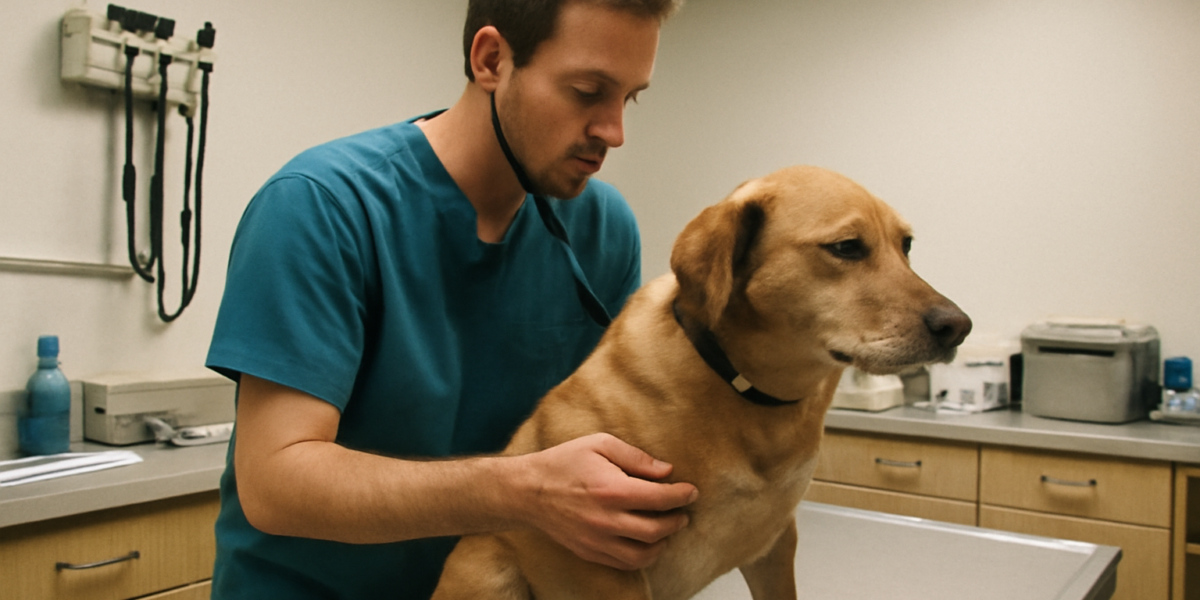
Your veterinarian will start with a thorough orthopedic exam, watching your dog walk and trot, palpating each joint, and looking for crepitus (a grating sensation), reduced range of motion, swelling, or pain on flexion. Many dogs have multiple affected joints, and the most painful one is not always the most obvious on observation.
Radiographs are the workhorse imaging tool. They show osteophytes, joint space narrowing, sclerosis of the bone beneath the cartilage, and any underlying conformational issues such as hip dysplasia. In some cases, advanced imaging like CT or MRI is helpful, particularly for elbow disease or spinal arthritis. Joint fluid analysis can rule out infection or immune-mediated arthritis when the picture is unclear.
Veterinarians sometimes describe arthritis as mild, moderate, or severe based on a combination of clinical signs and radiographic changes. Staging helps guide treatment intensity and gives a baseline for monitoring how the disease progresses or responds to therapy.
Multimodal Treatment
The cornerstone of arthritis care is a multimodal approach, meaning several treatments work together rather than relying on a single drug. Pain control with veterinary nonsteroidal anti-inflammatory drugs is the foundation for most dogs. Your veterinarian will choose a product designed for dogs (never share human ibuprofen or naproxen with your pet, as these can be toxic) and may add adjunctive medications for breakthrough pain.
Newer monoclonal antibody injections that target nerve growth factor have changed the landscape for many arthritic dogs. These are given as a monthly injection in the clinic and provide steady pain control without daily pills. Your veterinarian can advise whether your dog is a candidate based on overall health and concurrent medications.
Other commonly used treatments include gabapentin, amantadine, tramadol, and joint injections such as polysulfated glycosaminoglycans. Each has a role, and your vet will tailor the combination to your dog’s pain level, kidney and liver function, and response. Doses are always individualized, so do not adjust medications without veterinary guidance.
Weight, Exercise, and Physical Therapy
If your dog is even slightly overweight, weight loss is one of the single most effective interventions for arthritis. Extra pounds load every joint with added force on every step, and even a modest reduction in body weight can produce visible improvement in mobility within weeks. Your veterinarian can help calculate an ideal weight target and a measured feeding plan.
Exercise should be regular, low-impact, and consistent. Daily short walks on level ground are usually better than weekend warrior outings. Swimming and underwater treadmill sessions are excellent because they build muscle without joint impact. Avoid jumping, hard running on slick floors, and rough play with younger dogs that pushes joints beyond their tolerance.
Veterinary physical rehabilitation has grown enormously and is available in many cities. Certified rehab therapists use therapeutic exercise, laser therapy, therapeutic ultrasound, massage, and modalities like acupuncture to support arthritic joints. A formal rehab plan can help your dog regain strength and confidence on sore legs.
Joint Supplements and Nutrition
Joint supplements are widely used, though the evidence is mixed and product quality varies enormously. Omega-3 fatty acids from fish oil have the strongest evidence for reducing joint inflammation, and many veterinarians recommend a therapeutic dose for arthritic dogs. Glucosamine and chondroitin, green-lipped mussel extract, and undenatured type II collagen are also commonly used.
Prescription joint diets bundle several joint-supportive ingredients together with controlled calories. They can be a convenient way to deliver omega-3s, antioxidants, and connective-tissue support without juggling multiple bottles. Talk to your veterinarian about whether a therapeutic diet fits your dog’s overall plan.
Be cautious with supplements purchased without veterinary input. Some interact with medications, and others are simply underdosed or poorly absorbed. Stick with reputable brands that publish quality testing, and let your vet know everything your dog is taking.
Home Modifications That Help
Small changes around the house make daily life much easier for an arthritic dog. Non-slip rugs or yoga mats over slick floors prevent the painful spread-leg slip that worsens hip and shoulder pain. Orthopedic memory-foam beds support sore joints far better than thin pads. Ramps to the couch, bed, and car protect joints from the daily impact of jumping.
Raised food and water bowls reduce neck strain in dogs with cervical or shoulder arthritis. Keeping nails short helps your dog grip the floor with confidence and improves posture. A consistent warm spot for sleeping, away from drafts, can ease stiffness, especially overnight.
If you have stairs that your dog must navigate, consider whether they can be avoided in early morning hours when stiffness is at its worst. A simple harness with a handle, like a rear-support harness, lets you assist on stairs and into the car without lifting from under the chest.
Surgical Options for Advanced Disease
Most arthritic dogs do well with medical management, but surgery has a place. For specific underlying causes, surgery to address the source, such as TPLO for cruciate disease or femoral head ostectomy for severe hip dysplasia, can dramatically reduce arthritis pain. Total hip replacement is available for selected dogs and produces excellent outcomes in qualified candidates.
Arthroscopic debridement may help in some elbow cases. Joint replacement is also possible for elbows and knees in some surgical centers. These are specialized procedures performed by board-certified surgeons and require thoughtful patient selection.
Surgery is not a failure of medical management; it is a separate tool. If your dog’s quality of life is declining despite good medical care, ask for a referral consultation. Even just hearing the options often clarifies the path forward.
Quality of Life and Long-Term Outlook
Osteoarthritis is rarely a death sentence, but it is a chronic disease that needs lifelong attention. Many dogs live comfortably for years with the right combination of medication, weight management, exercise, and home support. The dogs that decline most quickly are usually those whose pain is undertreated or whose weight is not addressed.
A simple quality-of-life journal helps you track good days and bad days, willingness to walk, appetite, and any limp. Bring it to recheck visits so your veterinarian can fine-tune treatment. As dogs age, expect periodic adjustments rather than a single static plan.
If your dog has other chronic conditions, your veterinarian will coordinate care across them. For broader senior wellness reading, the dog care blog covers many topics that overlap with arthritis care, from nutrition to dental health.
Related Joint Conditions
Arthritis often follows another orthopedic problem, and understanding the underlying cause matters. Dogs with a torn cruciate develop arthritis in the affected stifle within weeks; small breeds with chronic patellar luxation develop knee arthritis over years; and large breeds with elbow disease or hip dysplasia carry arthritis as a near-certain consequence. Knowing the trigger helps tailor management and sometimes opens surgical options.
If you are considering adopting an older dog and you are wondering how to evaluate joint health, the adopt a dog hub has guidance on what to ask shelters about a dog’s history, gait, and any veterinary records. Many wonderful senior dogs end up needing rehoming, and arthritis is rarely a reason to pass them by; it just shapes the routine you build together.
Frequently Asked Questions
Can osteoarthritis in dogs be cured?
Osteoarthritis is not curable, but it is very manageable. With consistent treatment, weight control, and home support, most dogs live comfortably for years. The goal is to slow progression and keep your dog moving well, not to reverse changes that have already happened.
What is the best pain medication for arthritis in dogs?
There is no single best medication; the right choice depends on your dog’s overall health, kidney and liver function, and response. Veterinary NSAIDs are the most common foundation, often combined with adjunctive drugs such as gabapentin or a monthly anti-NGF injection. Your vet will tailor a plan and monitor for side effects.
Are joint supplements worth giving?
Omega-3 fatty acids from fish oil have the strongest evidence and are reasonable for most arthritic dogs. Glucosamine, chondroitin, and green-lipped mussel may help some dogs, though the evidence is less consistent. Always check with your veterinarian, especially if your dog is on prescription medication.
How can I tell if my dog is in pain from arthritis?
Watch for stiffness after rest, reluctance to jump or climb stairs, slower walks, weight shifting, and behavior changes such as irritability or withdrawal. Many arthritic dogs do not vocalize their pain, so subtle changes are the most important clues. A vet exam can confirm the source.
When should I consider surgery for my arthritic dog?
Surgery is most useful when there is a treatable underlying problem (such as a cruciate tear or severe hip dysplasia) or when medical management is no longer keeping your dog comfortable. A surgical referral does not commit you to surgery; it just gives you the full picture so you can decide.
When should I call my veterinarian?
Call if your dog suddenly becomes unwilling to bear weight, develops a new limp, stops eating, or has a noticeable decline in mobility. Routine rechecks every six to twelve months are also recommended for arthritic dogs so medications and weight can be adjusted as needed.


