
Last updated: May 23, 2026
In this article
Positive Reinforcement Dog Training: Complete Guide
Positive reinforcement training is not just a method. It is a philosophy of communication between species that has transformed how we live with dogs. Rooted in behavioral science and validated by decades of research, positive reinforcement training uses rewards to increase the likelihood of desired behaviors. When a dog sits and receives a treat, it learns that sitting pays off and becomes more likely to sit again. This simple principle, applied consistently across hundreds of daily interactions, produces well-behaved, confident, and happy dogs without the need for punishment, intimidation, or force.
The shift toward positive reinforcement training represents one of the most significant advances in our relationship with dogs. For centuries, dog training relied on dominance theory, leash corrections, and physical punishment. Modern behavioral science has thoroughly debunked these approaches, showing that they increase anxiety, damage trust, and often make behavior problems worse. Positive reinforcement, by contrast, builds a cooperative relationship where the dog wants to comply because compliance leads to good things.
Whether you are raising a puppy, rehabilitating a rescue dog, or refining the manners of a well-adjusted adult, positive reinforcement provides the tools to teach virtually any behavior. This guide covers the science behind the method, the practical techniques you need, and the real-world applications that make positive reinforcement the gold standard in modern dog training.
The Science Behind Positive Reinforcement
Positive reinforcement is one of four quadrants of operant conditioning, the branch of behavioral science that describes how consequences shape behavior. The word “positive” in this context means adding something, not a value judgment. “Reinforcement” means increasing the likelihood of a behavior. Together, positive reinforcement means adding something pleasant after a behavior to make that behavior more likely in the future.
When your dog sits and you give it a treat, you have positively reinforced the sit. The treat is the added pleasant thing. The sit is the behavior that becomes more likely. This relationship between behavior and consequence is the engine of all learning, and positive reinforcement harnesses it in the most constructive way possible.
Research consistently supports the effectiveness of positive reinforcement over punishment-based methods. A landmark 2004 study by Hiby, Rooney, and Bradshaw found that dogs trained with positive reinforcement were significantly more obedient and showed fewer problem behaviors than dogs trained with punishment. A 2009 study by Herron, Shofer, and Reisner found that confrontational training methods such as alpha rolls, leash corrections, and hitting or kicking were associated with aggressive responses in dogs. A 2020 study by Vieira de Castro and colleagues found that dogs trained with aversive methods showed more stress-related behaviors and had higher cortisol levels than dogs trained with rewards.
The neuroscience behind positive reinforcement explains why it works so well. When a dog receives a reward, dopamine is released in the brain, creating a feeling of pleasure and reinforcing the neural pathways associated with the behavior that preceded the reward. Over time, these pathways become stronger and the behavior becomes more automatic. Punishment, by contrast, triggers the stress response, releasing cortisol and adrenaline, which impair learning and create negative associations with the training context.
In practical terms, this means that a dog trained with positive reinforcement is in an optimal brain state for learning: relaxed, engaged, and receptive to new information. A dog trained with punishment is in a survival brain state: anxious, defensive, and focused on avoiding pain rather than on understanding what is being asked. The learning difference is profound and measurable.
Core Principles of Positive Reinforcement Training
Several core principles guide effective positive reinforcement training. Understanding these principles helps you apply the method consistently and troubleshoot problems when they arise.
Timing is the most critical principle. The reinforcement must occur within one to two seconds of the desired behavior for the dog to connect the behavior with the reward. This is why markers, whether a clicker or a verbal marker like “yes,” are so valuable. The marker bridges the gap between the behavior and the treat delivery, pinpointing the exact action that earned the reward.
Consistency means that the rules and expectations remain the same across all handlers and all situations. If sitting earns a treat from you but not from your partner, or if sitting is required before meals but not before walks, the dog receives mixed signals. Consistency across people, contexts, and time produces the fastest and most reliable learning.
Rate of reinforcement refers to how frequently rewards are delivered during training. In the early stages of learning a new behavior, the rate should be high, ideally reinforcing every correct response. As the behavior becomes established, you can transition to intermittent reinforcement, where rewards come unpredictably. This transition is important because intermittent reinforcement produces behaviors that are more resistant to extinction than those maintained by continuous reinforcement.
Criteria management means being clear about exactly what behavior you are reinforcing and increasing difficulty gradually. If you are teaching down, start by reinforcing any lowering of the body, then only a full down, then a down with duration, then a down with duration in a new environment. Each step increases the criteria slightly. Jumping from basic to advanced criteria frustrates the dog and stalls progress.
The Premack Principle states that a more desirable activity can reinforce a less desirable one. In practical terms, this means you can use life rewards, such as access to the outdoors, permission to greet a person, or freedom to sniff, as reinforcement for obedience behaviors. Asking your dog to sit before opening the door uses the door opening as the reinforcer for the sit. This principle dramatically expands your reinforcement options beyond food.
Types of Reinforcement Beyond Food
While food is the most commonly used reinforcer in positive training, it is far from the only one. Understanding the full range of available reinforcers makes your training more versatile and your dog’s compliance more robust.
Food rewards are the foundation of most training because they are universally motivating, easy to deliver, and allow for rapid repetition. Use small, soft, high-value treats during active training sessions. Vary the type of food to maintain interest, and save the best treats for the most challenging behaviors. A hierarchy of treat values allows you to pay more for harder work.
Toy rewards work well for dogs with high toy drive. A quick game of tug or a thrown ball can be more motivating than food for some dogs, particularly working breeds and terriers. The disadvantage of toy rewards is that they take longer to deliver and can over-excite some dogs, making it harder to continue training calmly.
Social rewards include praise, petting, and attention. While these are often less motivating than food or toys during active training, they are essential for maintaining behaviors in daily life. A dog that receives verbal praise and a pat for lying quietly on its bed is being reinforced without food, and this type of reinforcement sustains good behavior throughout the day.
Life rewards are the most powerful and most underutilized reinforcers. Opening the door is a reward for sitting. Permission to greet a friend is a reward for calm behavior. Starting a walk is a reward for standing politely while the leash is attached. Being released from a stay is a reward for holding the stay. Life rewards are free, always available, and directly connected to the dog’s daily desires. A training program that incorporates life rewards produces a dog that sees obedience as the pathway to everything it wants, which is the ultimate goal of positive reinforcement training.
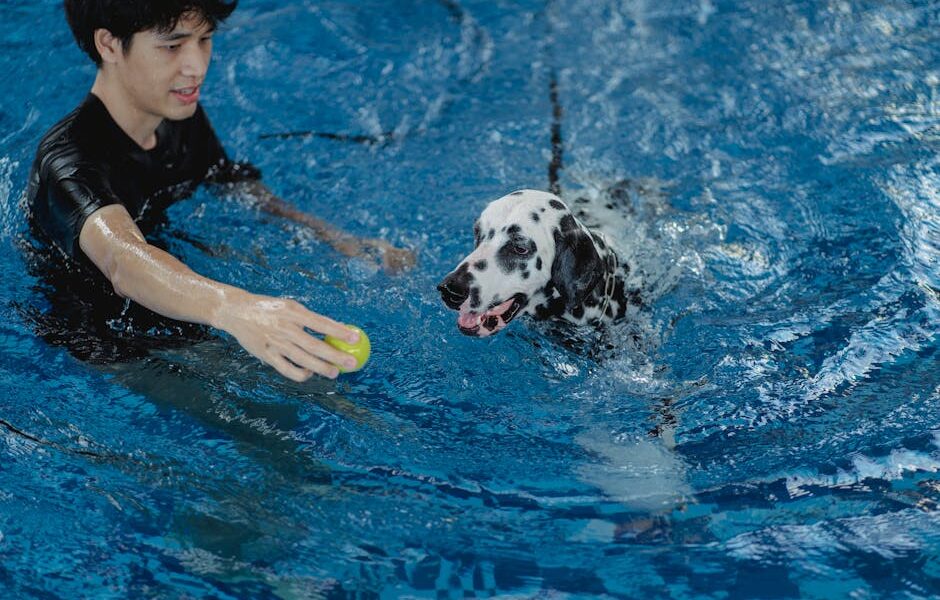
Environmental rewards include permission to sniff, access to new areas, swimming, running off-leash, and exploring novel terrain. For many dogs, the opportunity to investigate a new environment is more rewarding than any food treat. Using environmental access as a reward for obedience creates a self-sustaining cycle where good behavior leads to more freedom, which reinforces more good behavior.
Practical Applications in Daily Life
The power of positive reinforcement extends far beyond formal training sessions. Applying it consistently throughout daily life produces a dog that is well-mannered not because it has been drilled on commands, but because cooperation is woven into its daily experience.
Meal times become training opportunities when you ask for a sit or down before placing the food bowl. The meal itself is the reinforcer. Doorways become training opportunities when you ask for a sit before opening the door. Access to the outdoors is the reinforcer. Walk preparation becomes a training opportunity when you require calm behavior before attaching the leash. The walk itself is the reinforcer.
Guest arrivals can be managed by asking the dog to go to its mat and lie down before the door is opened. The guest’s attention, delivered calmly after the dog is settled, is the reinforcer. This approach replaces the frantic jumping and barking that many dogs exhibit when guests arrive with a calm, controlled greeting that everyone enjoys.
Vehicle behavior improves when you require a sit before opening the car door and a wait before allowing the dog to exit. The excitement of the car ride or the destination is the reinforcer. This approach also prevents the dangerous behavior of dogs bolting from the car into traffic.
Vet visits become less stressful when you bring high-value treats and reinforce calm behavior throughout the examination. Counter-conditioning, pairing the veterinary experience with positive reinforcement, can transform a fearful dog into one that actually looks forward to vet visits. This application alone justifies learning positive reinforcement methods.
For adopted rescue dogs, positive reinforcement is not just the best training approach; it is often the only ethical one. Many rescue dogs come with histories of punishment, neglect, or abuse. Using force-based methods with these dogs risks re-traumatizing them and destroying the trust you are trying to build. Positive reinforcement gives rescue dogs a new experience of human interaction, one based on cooperation and mutual benefit rather than conflict and fear.
Common Misconceptions About Positive Reinforcement
Despite its scientific support, positive reinforcement training is subject to several persistent misconceptions that can prevent owners from adopting it fully.
The most common misconception is that positive reinforcement means permissive. Critics argue that rewarding dogs without punishing them creates spoiled, undisciplined animals. This is false. Positive reinforcement trainers absolutely set boundaries and expectations. The difference is in how they respond when the dog makes a mistake. Instead of punishing the wrong behavior, they redirect to the right behavior and reinforce it. Instead of saying “no” and correcting, they say “this instead” and reward. The result is a dog that knows what to do, not just what not to do.
Another misconception is that the dog will only work for food. Properly implemented positive reinforcement transitions from continuous food rewards to intermittent reinforcement and life rewards. A well-trained dog sits before meals not because it expects a treat but because sitting opens the pathway to the meal. It walks politely on leash not for a cookie but because polite walking leads to continued access to the walk. Food is the teaching tool; life rewards maintain the behavior.
Some believe that positive reinforcement does not work for “tough” dogs or serious behavior problems. In reality, positive reinforcement methods, often combined with classical counter-conditioning, are the treatment of choice for aggression, fear, and reactivity. Punishment-based methods for these issues are not only less effective but can be dangerous, as punishing a fearful or aggressive dog often escalates the problem. Certified veterinary behaviorists, the highest credentialed experts in animal behavior, overwhelmingly recommend positive reinforcement-based protocols for serious behavior issues.
The belief that positive reinforcement is slower than punishment-based training is also a misconception. While the initial teaching phase may sometimes take slightly longer because the dog is learning through choice rather than avoidance, the behaviors learned through positive reinforcement are stronger, more reliable, and more resistant to extinction. The dog that sits because sitting feels good is more reliable than the dog that sits because it fears the consequence of not sitting.
Building a Positive Reinforcement Training Program
Creating a structured training program helps you apply positive reinforcement consistently and track your dog’s progress. A good program balances formal training sessions with daily life applications and addresses both obedience behaviors and real-world manners.
Start with foundation behaviors: sit, down, leave it, and a reliable recall. These four behaviors cover the majority of daily management needs. Teach them one at a time, dedicating one to two weeks to each behavior before adding the next. This focused approach produces stronger behaviors than attempting to teach everything simultaneously.
Schedule two to three formal training sessions per day, each lasting five to ten minutes. Short, frequent sessions produce better results than long, infrequent ones because they maintain the dog’s enthusiasm and prevent mental fatigue. End every session on a positive note, even if it means asking for an easy behavior and rewarding it.
Track your progress in a training journal. Note what you worked on, the rate of success, and any challenges. This record helps you identify patterns, celebrate milestones, and adjust your approach when something is not working. Many trainers find that keeping a journal accelerates progress because it forces them to be intentional and reflective about their training.
Incorporate daily life reinforcement from day one. Every interaction with your dog is a training opportunity. Rewarding good behavior as it occurs throughout the day, whether with food, praise, or life rewards, accumulates hundreds of reinforcement events that formal sessions alone cannot match. The dog that receives positive reinforcement throughout the day in natural contexts learns faster and more thoroughly than the dog that trains only during scheduled sessions.
Seek professional guidance when needed. Certified positive reinforcement trainers can help you refine your technique, troubleshoot specific problems, and design a program tailored to your dog’s individual needs. Look for credentials such as CPDT-KA, KPA-CTP, or IAABC certification, which indicate education in science-based, force-free methods.
Frequently Asked Questions
Is positive reinforcement training suitable for all dog breeds?
Yes. Positive reinforcement works for every breed, from the smallest Chihuahua to the largest Great Dane, and from the most eager-to-please Golden Retriever to the most independent Basenji. The specific reinforcers and training speed may vary by breed, but the principles are universal. Breeds that are commonly labeled as stubborn or difficult often respond better to positive reinforcement than to punishment-based methods because they are independent thinkers who resent being forced and respond enthusiastically to choice-based learning.
How do I handle unwanted behavior without punishment?
Positive reinforcement trainers address unwanted behavior through several strategies. Prevention means managing the environment to prevent the behavior from occurring. Redirecting means guiding the dog to a desirable alternative behavior and reinforcing it. Extinction means removing the reinforcement that maintains the unwanted behavior, such as ignoring a dog that jumps for attention. Teaching an incompatible behavior means reinforcing a behavior that physically prevents the unwanted one, such as teaching sit to replace jumping. These strategies address unwanted behavior effectively without the side effects of punishment.
Will my dog become dependent on treats forever?
No. Food treats are the primary reinforcer during the teaching phase when the dog is learning new behaviors. Once a behavior is established, you transition to intermittent food reinforcement, verbal praise, and life rewards. The dog continues to perform the behavior because it has been reinforced enough times to become habitual and because life rewards maintain it naturally. A dog that sits before every meal is reinforced by the meal itself. A dog that walks politely is reinforced by the walk continuing. The treats were the teacher; life rewards are the maintenance plan.
Can positive reinforcement fix aggression or fear?
Positive reinforcement, combined with classical counter-conditioning and desensitization, is the recommended approach for aggression and fear-based behavior problems. These protocols change the dog’s emotional response to triggers rather than suppressing the outward behavior. A dog that learns through counter-conditioning that the trigger predicts good things becomes genuinely less afraid or reactive, rather than simply hiding its fear to avoid punishment. For serious aggression or fear issues, consult a certified veterinary behaviorist or a certified applied animal behaviorist who uses evidence-based methods.
How is positive reinforcement different from bribery?
Bribery is showing the dog the reward before asking for the behavior: dangling a treat and then asking for sit. Reinforcement is delivering the reward after the behavior: asking for sit and then producing a treat when the dog complies. The distinction matters because bribery creates a dog that only works when it can see the reward, while reinforcement creates a dog that works in anticipation of a potential reward. Properly implemented positive reinforcement means the dog never sees the treat before performing the behavior. The reward is a consequence of the behavior, not a precondition for it.
At what age should I start positive reinforcement training?
Immediately. Puppies as young as eight weeks old can begin learning through positive reinforcement. In fact, the earlier you start, the better, because the puppy is forming associations and habits from the moment it enters your home. Early positive reinforcement training takes the form of rewarding good choices: settling on a bed, making eye contact, sitting instead of jumping, and exploring novel objects without fear. These early lessons shape the puppy’s view of the world and its relationship with you, creating a foundation that supports all future training.


