
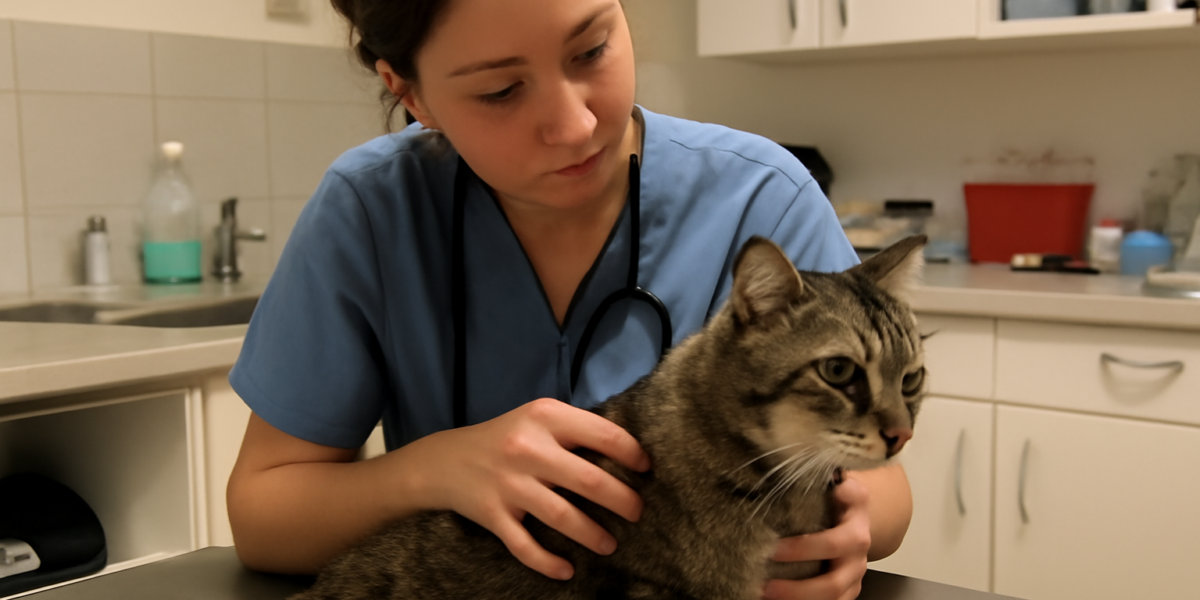
What Spay Recovery for Cats Looks Like
Spay recovery for cats is generally faster than for dogs because cats are smaller, the surgical site is smaller, and most cats naturally rest more after surgery. The standard recovery window is seven to ten days, though some vets advise a full fourteen days of restricted activity to be safe.
In this article
- What Spay Recovery for Cats Looks Like
- The First Twenty-Four Hours After Pickup
- The Cone Problem (and Solutions)
- Litter Box Adjustments
- Activity Restriction (Yes, for Cats Too)
- Pain Management for Cats
- Days 1 to 3: The Most Restricted Phase
- Days 4 to 7: Energy Returning
- Days 8 to 14: Gradual Return to Normal
- Warning Signs for the Vet
- Long-Term Considerations
- Frequently Asked Questions
The two big challenges are keeping the cat from licking the incision and preventing jumping during the healing window. Cats often hate the cone more than dogs do, and cats are world-class jumpers — both factors require thoughtful setup.
This guide covers the realistic spay recovery cats need, how to manage the cone problem, what is normal versus concerning, and how to tweak the home environment for a smooth ten-day recovery.
The First Twenty-Four Hours After Pickup
Pick your cat up in a carrier — never carry them loose, especially in the first hours when balance is still off from anesthesia. Once home, set up a small, quiet recovery space and let the cat exit the carrier on her own.
What you will likely see the first night:
- Wobbliness, dilated pupils, and disorientation as anesthesia clears
- Mild whining, growling, or hissing — anesthesia recovery makes some cats grumpy or scared
- Reduced or no interest in food (offer a small wet meal but do not force)
- Possibly hiding under furniture or in a closet
- The incision pink and clean, possibly with surgical glue or visible sutures
Provide water but skip dry food the first night if the cat seems nauseated. Wet food is gentler on a queasy stomach. Most cats are eating normally by the morning after surgery.
The Cone Problem (and Solutions)
Cats and cones are a difficult combination. Many cats freeze in place when first wearing one, refuse to eat, refuse to use the litter box, or repeatedly try to back out of it. This is normal for the first few hours and usually resolves within a day.
If the cat truly will not adapt, alternatives include:
- Soft fabric cone: easier to navigate, often better tolerated than the rigid plastic version
- Inflatable collar (donut): comfortable, but watch carefully — flexible cats can sometimes still reach an abdominal incision
- Surgical recovery suit / onesie: a snug bodysuit that covers the abdominal incision. Often the best option for cats. Brands like Suitical and Medical Pet Shirts make cat-sized versions.
- Neck pillow / Boomerang collar: a flexible padded collar that limits flexibility without blocking peripheral vision
Whichever you pick, the standard is twenty-four hours a day for the full recovery window. The most common dehiscence story starts with “I just took the cone off for a few minutes.” Confirm the chosen option blocks access to the incision by watching the cat try to reach it.
Litter Box Adjustments
Standard clay clumping litter sticks to surgical incisions and can introduce bacteria. Switch to a temporary litter for the first five to seven days post-op:
- Shredded plain newspaper or unscented paper-pellet litter (Yesterday’s News, Fresh News)
- Pine pellets without additives
- Plain unscented paper towels in a pinch
Avoid scented litters, crystal litters, and pine litters with strong oils — chemical irritation near the incision is a real concern. Return to your normal litter once the incision is fully closed and dry, usually around day seven to ten.
Place the litter box in the recovery room. Some cats with cones miss the box edge or struggle with covered boxes. Switch to a low-sided open box temporarily if the usual one is hard to navigate with the cone on.
Activity Restriction (Yes, for Cats Too)
The biggest challenge with cat spay recovery is preventing jumping. A cat who jumps from a six-foot bookshelf to the floor on day three risks tearing internal sutures.
Confine the cat to a single room or small section of the house. Block access to:
- Cat trees and high perches
- Counters, refrigerators, the top of the fridge
- Stairs (especially open or steep ones)
- Furniture if the cat tends to launch off the back of the couch
- Outdoor access (always for indoor cats; restricted even for indoor-outdoor cats during recovery)
A bathroom, spare bedroom, or large pen works well. Keep the cat there for the first five to seven days, then gradually expand access. Use baby gates or physical barriers to limit jumping zones once the cat is back in the larger home.
Pain Management for Cats
Cats are masters at hiding pain, and unlike dogs they cannot safely take many common pain medications. Always use only what the vet prescribed; never give acetaminophen (Tylenol), ibuprofen, naproxen, or aspirin — all are toxic or dangerous to cats at common doses.
Common cat-safe post-op options your vet may use:
- Buprenorphine (an opioid given orally or by injection — see our buprenorphine for cats guide)
- Onsior (robenacoxib) — a feline-labeled NSAID for short-term post-op use (more in our Onsior for cats guide)
- Gabapentin — not strictly a pain med but commonly used for sedation and to help with nerve pain (see our gabapentin for cats guide)
Signs your cat is in pain include: hiding more than expected, hunched posture, loss of appetite past day one, repeatedly looking at or licking the incision area, growling or hissing when picked up, dilated pupils, and rapid breathing. Call the vet rather than waiting it out.
Days 1 to 3: The Most Restricted Phase
The first three days demand the strictest setup. Expect:
- Reduced appetite, returning to normal by day two or three
- Sleeping more than usual
- Some drowsiness from pain meds
- Resistance to the cone or recovery suit, fading within a day
- The incision pink with mild swelling, no discharge
Keep visitors and other pets away. The cat needs quiet to recover. Even friendly housemates can stress a recovering cat or trigger a chase. Block other pets from the recovery room with a closed door.
Check the incision twice a day. A daily photo helps you track changes. Look for pink edges, no gaps, no oozing, and minimal swelling.
Days 4 to 7: Energy Returning
By day four, most cats feel substantially better. Appetite is back, they want to engage, and they may begin testing the boundaries of their recovery space — including trying to jump.
This is the hardest stretch for compliance. The cat feels fine. You feel guilty about confining them. You let them out for “just a bit” and they leap to a window perch and tear an internal suture.
Hold the line. Replace physical activity with mental engagement: food puzzles, slow feeders, lickable treats stuck to a wall, gentle play with a wand toy at floor level (no jumping), training sessions with treats. Most cats settle into a slower routine with structured enrichment.
Days 8 to 14: Gradual Return to Normal
By the end of the first week, most cats are physically healed enough to start expanding their territory. The incision should look closed, dry, and minimally pink. Sutures (if non-absorbable) come out at the vet recheck around day ten to fourteen.
Gradual reintroduction:
- Day 8-10: open the recovery room door, allow access to the larger home but block highest perches
- Day 10-14: vet recheck and clearance for full activity
- After clearance: return to normal cat tree access, indoor play, and routine
If the cat is indoor-outdoor, keep them inside until the vet clears the incision fully. Outdoor activities (hunting, climbing, chasing) put far more strain on the abdominal wall than indoor play.
Warning Signs for the Vet
Most cat spay recoveries are uneventful. Call the vet for:
- Any opening of the incision
- Redness that worsens after day three
- Yellow, green, or bloody discharge
- Swelling that grows or feels hot
- Persistent licking or chewing despite the cone
- Not eating beyond twenty-four hours post-op
- Vomiting more than once after the first twenty-four hours
- Lethargy beyond the first day
- Hiding to the point of not using the litter box
- Difficulty breathing, pale gums, or weakness
Do not wait to “see if it gets better” with cats. They hide illness, and small problems can escalate quickly.
Long-Term Considerations
Spaying does not change personality but can shift weight management. Spayed cats tend to put on weight more easily because metabolic rate drops slightly. Adjust food portions over the months after surgery and weigh your cat regularly.
Behavioral changes some owners notice after spaying:
- End of heat cycles (yowling, restlessness, urine spraying tied to heat)
- Reduced wandering desire (relevant for cats with outdoor access)
- Slightly calmer overall energy in some individuals
For more on the surgery-timing decision in kittens, see our when to spay or neuter kittens guide. Browse cats currently looking for homes on our adopt a cat hub.
Frequently Asked Questions
How long does it take a cat to recover from spay surgery?
Most cats are physically recovered in seven to ten days, with full internal healing over four to six weeks. Strict activity restriction applies for the first ten to fourteen days; jumping and rough play are off-limits during this window.
My cat refuses to wear the cone. What can I do?
Try a soft cone, inflatable collar, or surgical recovery suit. Many cats accept a fabric onesie when they refuse the cone. Confirm whatever option you choose actually blocks access to the incision by watching your cat attempt to reach it.
Why does my cat seem grumpy or hide after spaying?
Anesthesia recovery, the cone, and post-op soreness all stress cats. Hiding for a day or two is normal. Persistent hiding beyond three days, or hiding combined with not eating or using the litter box, warrants a vet call.
Can I let my cat outside during recovery?
No. Indoor cats stay inside. Indoor-outdoor cats stay inside until the vet clears the incision fully — typically ten to fourteen days. Outdoor activity strains the abdominal wall and exposes the incision to dirt and infection.
What if my cat keeps trying to jump on furniture?
Confine to a smaller space (bathroom, bedroom) where high perches are inaccessible. Use baby gates or close doors. Remove cushions from couches if the cat keeps jumping up. The first week of restriction protects the internal sutures.
Is it normal for the incision to look slightly bruised?
Yes, mild bruising and pinkness are common in the first few days and fade by the end of the first week. Spreading bruising, hot swelling, discharge, or any opening is not normal and needs a vet check.


