
Last updated: May 4, 2026
In this article
- The Two Are Not the Same Thing
- What Plaque Is
- What Tartar Is
- Why Brushing Removes One but Not the Other
- Why Tartar Below the Gum Line Is the Real Problem
- How to Slow Plaque and Prevent Tartar at Home
- What Owners Often Get Wrong
- When Professional Cleaning Becomes Necessary
- Why the Difference Matters for Your Daily Routine
- The Real Goal of Home Dental Care
- Frequently Asked Questions
The Two Are Not the Same Thing
The distinction between tartar vs plaque on teeth matters because each requires a different kind of intervention. Plaque is soft, sticky, and brushable. Tartar — also called calculus — is hard, mineralized, and bonded to the tooth in a way that no amount of home brushing can lift off. Confusing the two leads owners to either underestimate what brushing can do or overestimate it.
The simplest way to think about it: plaque is what brushing prevents and removes. Tartar is what professional cleaning under anesthesia removes. Both feed inflammation that drives gum disease, but the timeline of how each forms — and what it takes to deal with each — is fundamentally different.
Understanding this distinction is also why daily home care matters so much. Once plaque hardens into tartar, the brush is no longer enough.
What Plaque Is
Plaque is a soft bacterial biofilm that begins coating teeth within hours of cleaning. The mouth is full of bacteria — most of them harmless or even beneficial in small numbers — and they continuously colonize tooth surfaces, attaching to a thin protein layer (the pellicle) that forms naturally on enamel.
Within a few hours of a meal or a cleaning, that bacterial layer is detectable. Within twelve to twenty-four hours, plaque is established. The bacteria release acids and toxins that irritate the gum line, and the immune system’s response to that irritation is what we recognize as gingivitis.
Plaque is removable. A toothbrush, a dental wipe, or chewing on the right kind of textured surface mechanically disrupts the biofilm before it can do real damage. This is why brushing daily — not weekly, not monthly — is the standard recommendation. Plaque resets every day.
What Tartar Is
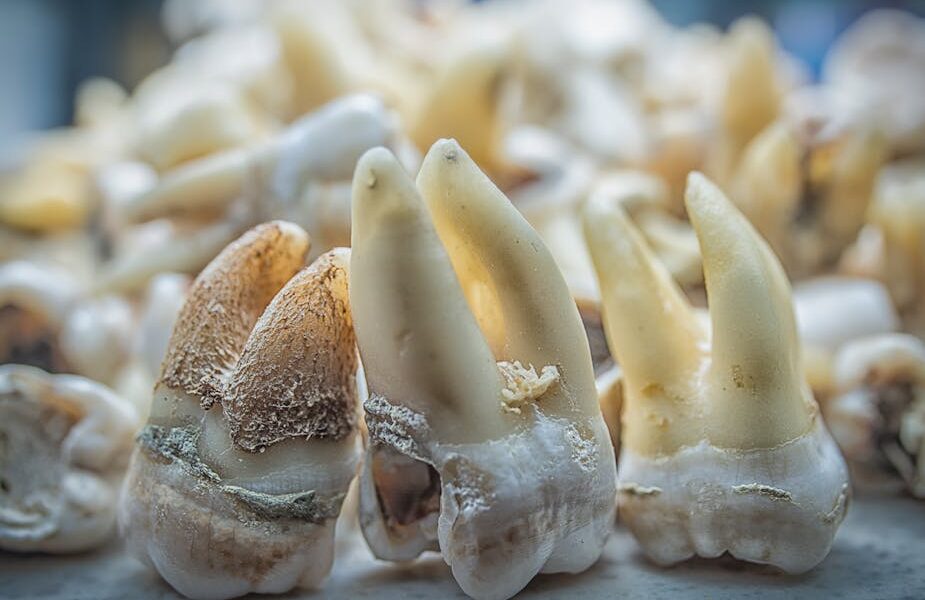
Tartar (calculus) is plaque that has mineralized. Calcium and phosphate from saliva precipitate into the bacterial biofilm and harden it into a porous, cement-like deposit bonded to the enamel. The yellow-brown crust that owners notice on their pet’s teeth is tartar.
Mineralization begins quickly. Plaque can start hardening within twenty-four to seventy-two hours of forming. This is why “I’ll brush once a week” is not effective — the plaque between brushings has already become tartar by the time the brush comes out.
Tartar is rough and porous, which provides an even better surface for new plaque to colonize. So tartar accelerates plaque accumulation, which mineralizes into more tartar, in a self-reinforcing cycle. Once tartar is established, the only way out is professional removal.
Why Brushing Removes One but Not the Other
A toothbrush exerts mechanical force that is more than enough to disrupt the soft, gel-like biofilm of plaque. The bristles physically push the bacteria off the tooth surface. Daily brushing is the most effective way to keep plaque from ever becoming tartar in the first place.
Tartar, by contrast, is bonded to the enamel through a mineral matrix. A toothbrush — and frankly anything short of a dental scaler in trained hands — cannot break that bond without damaging enamel. This is why “tartar-removing” home products that claim to dissolve calculus are largely overpromising. Some products may slow new tartar formation, but established calculus needs to be scaled off.
Professional dental cleanings under anesthesia use ultrasonic scalers and hand instruments to remove tartar from above and, critically, below the gum line. Removing only the visible tartar above the gum line — what some non-veterinary services do — leaves the disease where it actually matters.
Why Tartar Below the Gum Line Is the Real Problem
The tartar you can see on the visible part of the tooth is mostly cosmetic. The tartar that has crept below the gum line is the destructive part. Sub-gingival tartar harbors anaerobic bacteria that drive bone and ligament destruction, leading to attachment loss and the progression through the AVDC periodontal disease stages — see periodontal disease stages in dogs for the full grading scale.
This is why a pet whose teeth have been “cleaned” without anesthesia — meaning only the visible crown was scaled — can still have severe periodontal disease underneath. The mouth looks better, but the disease underneath continues. Our breakdown of the anesthesia-free dental cleaning debate covers why veterinary dental specialists oppose the practice.
Roughly 60 percent of canine and feline dental disease is invisible without dental X-rays — see dental X-rays for dogs for what the radiographs reveal. A flashlight exam, even by a skilled professional, cannot stage the disease.
How to Slow Plaque and Prevent Tartar at Home
Daily brushing with an enzymatic pet toothpaste is the most effective home strategy. The mechanical action disrupts plaque before it can mineralize. Building a sustainable daily dog tooth brushing routine is the single biggest thing an owner can do to prevent tartar.
For pets who refuse the brush, look for products carrying the Veterinary Oral Health Council seal — see VOHC-approved dental products. These have been tested to provide measurable plaque or tartar reduction. Categories include dental chews, water additives, wipes, oral gels, and prescription dental diets.
Dental wipes are a useful intermediate step for owners who can’t yet brush. They are less mechanically effective than a brush but still help — see dental wipes vs brushing for the comparison.
What Owners Often Get Wrong
The biggest misconception is that visible white teeth equal a healthy mouth. They don’t. A mouth with no visible tartar can still have significant gingival inflammation, and a mouth that has been cosmetically scaled can hide severe sub-gingival disease.
The second misconception is that hard kibble cleans teeth. The mechanical effect of standard kibble on teeth is minimal — most of it shatters before doing any meaningful scrubbing. Prescription dental diets are designed differently (with larger kibble that fractures slowly along specific lines), and these have measurable effect when chewed properly.
The third is that bones and antlers clean teeth. They may scrape some plaque, but they also fracture teeth — see broken tooth in dogs. The cost of a fractured tooth (root canal or extraction) is far higher than the dental benefit of the chew.
When Professional Cleaning Becomes Necessary
Once visible tartar is established, no amount of home brushing will remove it. A professional cleaning is needed to reset the mouth. After that, daily home care can keep the tartar from coming back. Ask your veterinarian to assess and stage the mouth at every annual exam, and follow their recommended cleaning interval rather than waiting for obvious signs of trouble.
Most adult dogs benefit from a professional cleaning every twelve to eighteen months, with shorter intervals for small breeds, brachycephalic breeds, and dogs with poor home care. The cost varies widely — see dental cleaning cost for what drives the price range. Cats follow similar timing, with adjustments for individual disease patterns and the higher prevalence of resorptive lesions in feline patients.
Skipping needed cleanings to “save money” usually costs more in the long run, when grade 2 or 3 disease has progressed to multi-tooth extractions and periodontal surgery. The decision is rarely whether to spend on dental care; it’s whether to spend less now on prevention or more later on treatment of advanced disease.
Why the Difference Matters for Your Daily Routine
Understanding plaque versus tartar reframes home dental care. The brush exists to manage plaque, not to remove tartar. Once you accept that the brush has a specific job — disrupting soft biofilm before it mineralizes — the daily routine makes more sense. Thirty seconds of brushing daily prevents the cascade that leads to professional intervention.
This also clarifies why missing days matters. If you brush on day one but skip days two and three, the plaque from day one has already started mineralizing by day three. The day-four brush still gets soft new plaque off, but the partially mineralized older deposits have begun their journey toward becoming tartar. Daily consistency keeps the mouth perpetually in the soft-plaque-only state where brushing has full effect.
For pets adopted from shelters, where dental care history is often unknown, an initial professional cleaning resets the mouth so home care has something to maintain rather than fight against. After that, sustainable daily habits keep new plaque from accumulating, and the cycle of soft removal stays manageable.
The Real Goal of Home Dental Care
The point of brushing isn’t to make teeth look white. It’s to disrupt the bacterial biofilm before it mineralizes into the calcified deposit that drives ongoing inflammation. A pet with thoroughly brushed teeth might still have some surface staining and that’s fine; what matters is that the gum line stays healthy and the bacteria don’t get the chance to set up shop below the gum margin.
Once you understand the underlying biology, the standard recommendations make intuitive sense. Daily brushing isn’t an arbitrary number — it reflects the actual timeline of plaque mineralization. Professional cleanings every twelve to eighteen months aren’t a marketing schedule — they reflect the rate at which subgingival tartar accumulates even with good home care.
Connecting the dots between what plaque is, how it becomes tartar, and what each form of intervention actually accomplishes gives owners the framework to make sensible decisions about home care, professional cleanings, and the various adjuncts on the market. Without that understanding, dental care becomes a confusing maze of products with no clear ranking; with it, the path forward is much simpler.
Frequently Asked Questions
How fast does plaque turn into tartar?
Mineralization can begin within twenty-four to seventy-two hours of plaque formation. This is why daily brushing — not weekly — is the standard recommendation.
Can I scrape tartar off my dog’s teeth at home?
No. Home scaling damages enamel, leaves rough surfaces that accumulate plaque faster, does nothing for sub-gingival disease, and risks injury to your dog and yourself. Tartar removal requires veterinary instruments under anesthesia.
Do “tartar control” toothpastes really work?
The mechanical action of brushing matters more than the toothpaste formulation. Enzymatic pet toothpastes provide some chemical assistance, and a few are VOHC-accepted. None will dissolve established tartar.
My dog’s teeth look white — does that mean no plaque?
Not necessarily. Plaque is mostly invisible. Visible white teeth just mean no significant tartar yet. The gum line still needs assessment for early gingivitis.
What about hard kibble — doesn’t it clean teeth?
Standard kibble has minimal mechanical effect on teeth. Prescription dental diets are designed differently and do reduce plaque and tartar when chewed. Regular kibble is not a substitute for brushing.
Are dental chews enough to prevent tartar?
VOHC-accepted chews can reduce plaque and tartar, but they are an adjunct, not a replacement for brushing. Use them in combination with daily mechanical cleaning for the best results.


