
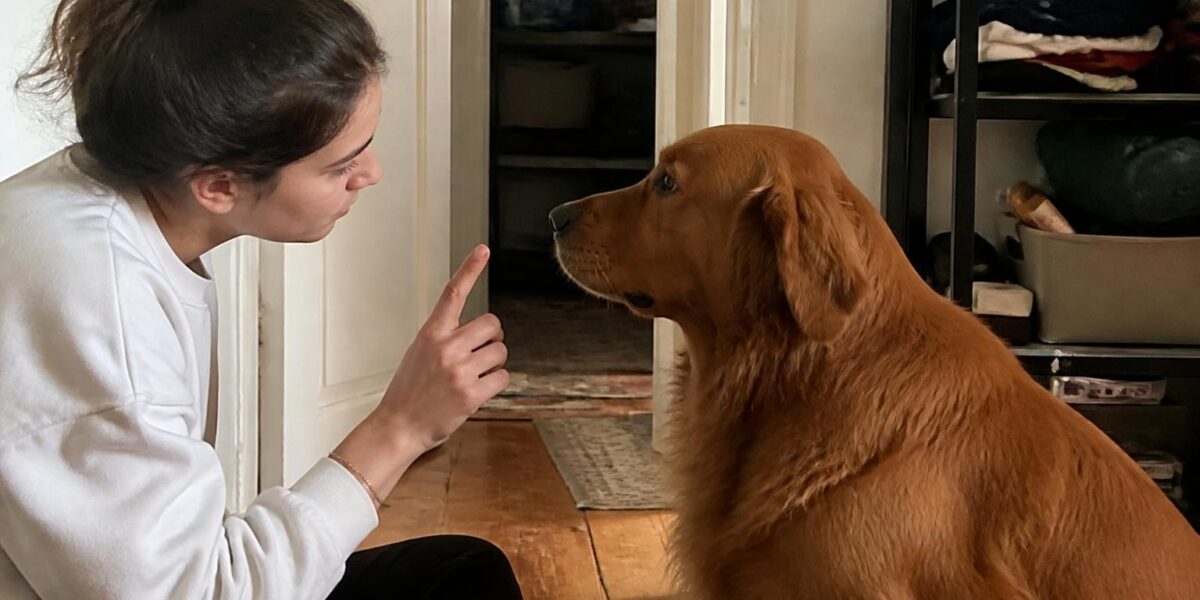
Why Training a Senior Dog New Tricks Matters
Training a senior dog new tricks is not a quaint exercise — it is one of the most evidence-supported activities for keeping aging dogs sharp, engaged, and bonded to their people. Cognitive stimulation in older dogs is linked to slower progression of canine cognitive dysfunction (the dog version of dementia), better sleep, more stable mood, and stronger handler-dog relationships in the final years of life.
In this article
- Why Training a Senior Dog New Tricks Matters
- Cognitive Benefits Are Real and Measurable
- Prerequisites: Vet Clearance and Pain Assessment
- Session Length and Frequency
- Choosing the Right Tricks: Joint-Friendly Options
- The Methodology: Lure, Mark, Reward, Fade
- Adapting for Vision Loss
- Adapting for Hearing Loss
- Common Stuck Points and Troubleshooting
- Beyond Tricks: Enrichment as Training
- Bonding Through Training
- When to Adjust Expectations and When to Call a Professional
- Realistic Timelines and Long-Term Quality of Life
- Frequently Asked Questions
The myth that “you can’t teach an old dog new tricks” is exactly that: a myth. Senior dogs learn through the same operant and classical conditioning mechanisms puppies and adults do. They may need shorter sessions, lower-impact physical tricks, and adjustments for arthritis, vision, or hearing decline, but cognitively they remain capable of learning new behaviors well into their final years. Many senior adopters find that their older dogs are unusually attentive students — fewer distractions, deeper handler focus, and a settled willingness to engage.
This guide assumes your senior dog has had a recent vet exam — pain often masquerades as behavior, and an old dog who “won’t” engage with training is often an old dog whose joints hurt. With pain controlled and a few smart adaptations, training is one of the best gifts you can give an older dog. If you have just adopted a senior, pair this with our senior dog care checklist for the broader settling-in arc.
Cognitive Benefits Are Real and Measurable
Brain aging in dogs parallels brain aging in humans in important ways. Dogs over the age of seven (small breeds) or six (large breeds) begin to show measurable cognitive changes in studies — slower learning of novel tasks, changes in sleep-wake cycles, and in some cases the early signs of canine cognitive dysfunction. Active mental engagement appears to slow this trajectory.
Training new tricks provides exactly the kind of structured cognitive challenge that supports brain health. It is not just stimulation; it is problem-solving, memory work, and reinforcement-driven attention. Owners of senior dogs in training programs often report improvements in alertness, daytime engagement, and nighttime sleep within weeks of starting consistent training sessions.
For dogs already showing cognitive decline, training adapts to ability. Even very simple new behaviors — touching a target, finding a hidden treat, holding eye contact — provide value. Our cognitive dysfunction in senior dogs guide covers the medical context, symptoms, and supportive care for dogs showing signs of canine dementia.
Prerequisites: Vet Clearance and Pain Assessment
Before starting any new training program with a senior dog, schedule a senior wellness exam. The vet should assess weight, joint mobility, dental pain, vision, hearing, and basic bloodwork. Many “training” issues with seniors are actually pain issues — a dog who used to sit on cue but now stands rigid often has hind-end arthritis, not “stubbornness.”
Pain management is foundational. A senior dog in chronic discomfort cannot enjoy training and may form negative associations with sessions. Work with your vet on a multimodal pain plan if needed — see our chronic pain management in senior dogs guide for the typical approach. With pain controlled, motivation and engagement return.
Assess sensory function. Vision and hearing decline in older dogs is gradual and often invisible at first. A dog who has stopped responding to verbal cues may be losing hearing. A dog who hesitates at thresholds may be losing vision. Adapt cues to whichever channel is still working — visual cues for hearing-impaired dogs, verbal and touch cues for vision-impaired dogs.
Session Length and Frequency
Senior dogs do best with short, frequent sessions. Where a young dog might tolerate ten to fifteen minutes of training, a senior usually peaks at three to five minutes per session, with breaks. Two or three sessions a day is plenty.
Schedule sessions when the dog is most alert. Many seniors have a morning peak after their first walk and an afternoon valley where energy is lowest. Train into the peaks, rest into the valleys. After meals is often a good window because the dog is alert but not hungry-jittery.
Stop while the dog is still engaged, not after they tune out. The session should end with a small win — a successful repetition of an easier known cue, a treat scatter, a brief gentle play. Ending on success cements the positive association with training time.
Choosing the Right Tricks: Joint-Friendly Options
Adapt tricks to physical capacity. Many traditional tricks involve jumping, twisting, or sudden weight shifts that are wear-and-tear hazards for arthritic seniors. Substitute tricks that are mentally engaging without putting load on aging joints.
Senior-friendly trick list. Touch (nose or paw to target stick or hand) — minimal joint stress, builds attention. Paw shake — engages cognition without weight bearing. Head tilt on cue (capture the natural head tilt and mark) — pure cognitive trick. Place your chin in my hand — gentle, easy, often used in vet handling prep. Hand target nose touch — versatile foundation cue. Watch me / eye contact — pure relationship-building behavior. Take it / give it (object exchange) — light cognitive lift.
Avoid or adapt: spin, twist, jump, weave, sit-pretty (raises front end with stress on hips and spine), high-five (if shoulders are arthritic), down-from-standing (if elbows or hips are sore — try lure into down from a seated position instead). When in doubt, ask your vet about specific motions.
The Methodology: Lure, Mark, Reward, Fade
Senior dog training uses the same positive-reinforcement protocol as any age. Pick a behavior. Lure with food (or capture the natural occurrence of the behavior). The instant the behavior happens, mark with a clicker or “yes!” and deliver a high-value treat. Repeat eight to ten times. Once reliable, fade the lure to a hand signal. Add a verbal cue once the hand signal is reliable.
Marker training is especially valuable for seniors because the precise mark cuts through any age-related slowness in food delivery. The dog hears “yes!” and knows the reward is coming — even if it takes you a beat longer to get the treat out of the pouch. See our marker training for dogs guide for foundation conditioning.
Use high-value, soft treats. Older dogs may have dental issues that make hard biscuits painful. Soft training treats, freeze-dried meat that breaks easily, or small pieces of plain boiled chicken work well. Smaller pieces let you reinforce more frequently without overfeeding.
Adapting for Vision Loss
If your senior dog has reduced vision, lean on scent and touch cues. Hand signals lose effectiveness as vision dims; tactile and scent-based cues become more reliable. Many senior dogs have age-related nuclear sclerosis (the lens becoming cloudy) which slightly reduces visual acuity but not function — full vision loss is less common but does occur.
Scent-based games are particularly good for vision-impaired seniors. Nose work — finding a hidden treat or scent target — uses a sense that often remains strong in older dogs. Set up easy “find it” games at home: scatter a few treats on a snuffle mat, hide a treat under a cup, build complexity gradually.
Verbal cues become more important. Pair every hand signal with a verbal cue from the start, so as vision changes, the verbal cue carries the behavior. Blind or vision-impaired dogs do remarkably well with consistent verbal cues, scent markers near important locations (food, bed, door), and predictable furniture placement.
Adapting for Hearing Loss
Hearing loss in seniors is common and gradual. Many older dogs lose the highest frequencies first, then mid-range, then lower. By the time owners notice, the dog often has substantial hearing loss already.
Layer in visual cues for every existing verbal cue. If the dog already knows “sit” by voice, add a hand signal — palm rising from waist to shoulder — and pair them. Over weeks, the dog learns the visual signal carries the same meaning. When the auditory cue becomes inaudible, the visual cue still functions.
For dogs with significant hearing loss, see our training deaf dog hand signals guide for the full hand-signal vocabulary. The protocol that works for congenitally deaf dogs works for senior-acquired deafness as well. Add a vibration collar — vibration-only, never shock — for long-distance attention-getting.
Common Stuck Points and Troubleshooting
The dog seems uninterested in training. Several possibilities. Pain is the most common — recheck with the vet. Treat value too low — try real meat for a session. Session too long — cut to two or three minutes. Time of day off — try training at the dog’s natural peak alertness window.
The dog learns a behavior in a session but seems to forget by the next day. Common in older dogs; consolidation may take more reps. Continue daily short sessions on the same behavior for one to two weeks before declaring it not working. Many senior dogs need slightly more repetitions to consolidate but reach the same end state.
The dog struggles to focus and seems distracted at home. Could be cognitive decline; could be environmental (noise, household activity, smells); could be physical discomfort. Try training in a quiet room first. If focus issues persist, discuss with the vet — early cognitive dysfunction may benefit from supplements like SAM-e or vet-prescribed selegiline (Anipryl). Our cognitive dysfunction in senior dogs guide covers the medical workup.
Beyond Tricks: Enrichment as Training
Tricks are one form of mental engagement. Enrichment is another — and the two overlap. Snuffle mats, puzzle feeders, scent work, hide-and-seek treats, and varied walk routes all provide cognitive stimulation that ages well. For comprehensive enrichment, see our dog mental enrichment protocols guide.
Puzzle feeders graduated to the dog’s cognitive level provide daily challenge without trainer time. Start with very easy puzzles (slow-feeder bowls, treat-in-towel rolls) and increase complexity slowly. Senior dogs often surprise their owners with persistence on a good puzzle.
Walking routes also matter. Varied environments — different neighborhoods, parks, paths — give a senior dog more to process and engage with. Sniffing is profoundly cognitive work for dogs; let sniff-heavy walks count as enrichment. Pacing exercise to your senior dog’s capacity — shorter, more frequent walks rather than long single outings — protects joints and supports stamina.
Bonding Through Training
One of the most valuable benefits of training a senior dog is the relational closeness it produces. Short daily sessions create predictable, positive shared time. The dog learns to look forward to training. The handler learns to read subtle body language. The bond deepens, often in ways that surprise long-term owners.
This matters especially for senior adoptees. A dog adopted at ten years old, with whatever prior history, can build a trust-rich relationship within months of consistent training and care. Many senior adopters describe the final years with a senior rescue as the most meaningful chapter of their dog-owning lives. The shorter timeline becomes a focus on quality over quantity.
Training also keeps the dog’s relationship with handling and the vet positive. A senior who has practiced touch, chin rest, and target on a daily basis is dramatically easier to medicate, examine, and groom. Cooperative care behaviors are real-world skills, not just tricks. Pair this with the Fear Free Certified Professional framework for vet visits.
When to Adjust Expectations and When to Call a Professional
Some sessions will not go well. A dog whose arthritis flared overnight will not want to sit and lay down. A dog with worsening cognitive decline may struggle to hold criteria. Adjust the session, end on a win even if smaller than planned, and try again tomorrow.
If a previously trained behavior suddenly disappears or the dog becomes confused, fearful, or restless in ways out of character, call the vet. New behavior changes in older dogs warrant medical workup. Cognitive dysfunction, vision loss, pain, hypothyroidism, and other senior conditions all can present as “training problems.”
For complex senior training projects — handling desensitization for medical care, anxiety management, persistent fear of new environments — work with a CPDT-KA trainer comfortable with senior dogs or an IAABC CDBC for behavior modification. Fear Free Certified Professionals are particularly skilled at the cooperative-care side. For severe cognitive dysfunction or anxiety that is interfering with quality of life, a DACVB veterinary behaviorist can evaluate whether medication (selegiline, fluoxetine, or others) is appropriate alongside training.
Realistic Timelines and Long-Term Quality of Life
Most senior dogs can learn a new trick to reliability within one to four weeks of short daily sessions. Complex tricks take longer; simple tricks can come in days. Pace expectations to the individual dog — chronological age matters less than physical and cognitive health.
Training a senior dog new tricks is not about racking up impressive behaviors; it is about quality of life. A senior dog who engages in daily mental work tends to sleep better, eat better, move more, and stay more connected to the household. The work pays compound returns across the dog’s remaining years.
If your senior dog is in their final chapter, training takes on a different meaning. Even a single new trick — a chin rest, a soft paw target — becomes a shared act of focus and affection. The training is the relationship, and the relationship is the point.
Frequently Asked Questions
Can a senior dog really learn new things?
Yes. The “old dog can’t learn new tricks” myth is debunked. Senior dogs learn through the same positive-reinforcement mechanisms as younger dogs. They may need shorter sessions and joint-friendly tricks, but cognitively they remain capable. Many senior dogs are unusually attentive students.
How long should training sessions be for a senior dog?
Three to five minutes per session, two or three sessions a day. Stop while the dog is still engaged. Frequent short sessions outperform single long sessions for any age, but especially for seniors who fatigue faster.
What tricks are appropriate for an arthritic senior dog?
Joint-friendly tricks: target touch, paw shake, chin rest, hand target, head tilt on cue, watch me eye contact, scent work games, take it / give it. Avoid or adapt jumping, spinning, sit-pretty, and high-five if the dog has shoulder, hip, or spine issues.
My senior dog seems suddenly unwilling to train. What changed?
Usually pain or sensory change. Schedule a vet exam — arthritis, dental pain, vision or hearing loss, or early cognitive dysfunction all can present as “won’t train.” Once the underlying issue is addressed, training motivation typically returns.
Should I bother training a senior dog who has only a few years left?
Absolutely. The cognitive engagement supports brain health, the bonding deepens the relationship, and the cooperative care skills make medical and grooming care easier. Training a senior dog new tricks is one of the highest-leverage investments in quality of life you can make for an older dog.


