
Why Trick Training Foundations for Dogs Matter
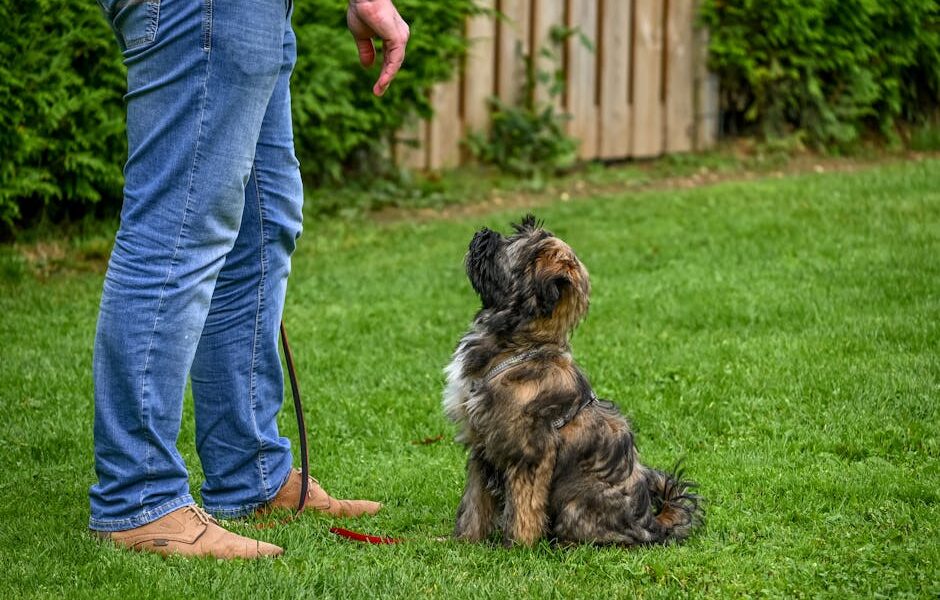
Trick training foundations for dogs are not separate from obedience training — they are the same skills under a different label. Sit, down, stay, and come are “obedience”; spin, paw shake, take a bow, and high five are “tricks.” The methodology is identical: marker conditioning, reward-based shaping, fading the lure, and cue introduction. Tricks are simply the playful end of the training spectrum, and they build the foundation skills that make every other training project work better.
In this article
- Why Trick Training Foundations for Dogs Matter
- Prerequisites: The Charged Marker
- Method 1: Luring
- Method 2: Free Behavior Capture
- Method 3: Shaping
- Method 4: Modeling and Targeting
- Choosing First Tricks for Your Dog
- Cue Introduction: When and How
- Fading Rewards Strategically
- Building a Trick Repertoire Through Trick of the Week
- Generalization: From Living Room to Park
- Competitive Trick Titling and Dog Sports
- Troubleshooting Common Stuck Points
- When to Bring in a Professional
- Frequently Asked Questions
Trick training pays compound returns. Each new behavior the dog learns builds the dog’s “learning to learn” skill — they get faster at acquiring new behaviors over time. Tricks also strengthen handler-dog focus, build impulse control, provide mental enrichment, and create a shared activity that deepens the relationship. Competitive trick titling (AKC Trick Dog) gives owners who want structure a progression path.
This guide covers the four core teaching methods — luring, capture, shaping, and modeling — plus how to introduce cues, fade rewards strategically, and build a working trick repertoire. The methods scale from puppies to seniors and apply to any breed or background. For broader training context see our marker training for dogs foundation guide.
Prerequisites: The Charged Marker
Before teaching any trick, the dog needs a charged marker. The marker — a clicker click or the verbal “yes!” — is the precise signal that says “what you just did is what earned the treat.” The marker is faster than treat delivery, which lets you communicate the exact moment of the right behavior.
Charging the marker: for two to three days, do ten to twenty short sessions of click-and-treat (or “yes” and treat). The dog does not need to do anything; you are pairing the sound with the food. Within 50 to 100 reps, the dog visibly anticipates food when they hear the marker. Now you have a tool that means “good — food is coming.”
From this point on, every correct behavior gets marked instantly and followed by the reward within one to two seconds. Timing matters. The marker must occur in the moment of the right behavior — too late and you reinforce whatever the dog did next instead.
Method 1: Luring
Luring is the most accessible teaching method. You use food held in your hand to guide the dog into the desired position, mark when they get there, and reward.
Example — teaching spin. Hold a treat at the dog’s nose. Slowly move the treat in a circle so the dog’s nose (and body) follow it. When the dog completes a full turn, mark and treat. Repeat six to ten times. The dog is now reliably spinning when lured.
Fade the lure quickly. After the dog is fluent at following the lure, perform the same hand motion with an empty hand. The dog still circles — they have learned the motion, not just the food. Mark and treat from your other hand or pouch. Over a few sessions, the empty-hand motion becomes the formal hand signal.
Luring is fast and gentle but has a hidden trap: handlers often keep the lure too long. If the food is always in your hand at the moment of cue, the behavior depends on the food being visible. Fade aggressively — by session three or four, the food should not be visible during the cue, only delivered after marking the correct behavior.
Method 2: Free Behavior Capture
Capture means marking and rewarding a behavior the dog offers spontaneously. The dog yawns; you mark and treat. The dog sneezes; you mark and treat. The dog tilts their head when you make a curious sound; you mark and treat. The dog learns that this naturally occurring behavior pays.
Capture is the only practical way to train some behaviors. Head tilts, sneezes, yawns, and certain body postures cannot be lured because no food motion produces them. Capture lets you teach the dog these behaviors by waiting for them to happen, marking them when they do, and gradually adding a cue.
Capture works best when the behavior occurs frequently. Yawning is common; sneezing on command is harder because dogs sneeze rarely. Pick behaviors the dog offers multiple times a day, mark each occurrence consistently, and within days the dog often increases the frequency — because they have figured out it pays.
Adding a cue to a captured behavior. Once the dog reliably offers the behavior, predict when it is about to happen and say the cue word right before. Mark and treat. Over many reps, the cue precedes and triggers the behavior. The dog learns “spin” or “head tilt” as a cue.
Method 3: Shaping
Shaping is the most powerful training method — you reward successive approximations of a complex behavior. You break down the end behavior into small steps and reinforce each step until the dog reliably offers it, then advance to the next step.
Example — teaching the dog to put a paw on a target. Step one: dog looks at the target. Mark and treat. Repeat until reliable. Step two: dog moves toward the target. Mark and treat. Step three: dog touches the target with their nose. Mark and treat (or you can decide nose isn’t the goal and only reward paw movement). Step four: dog lifts paw near target. Step five: dog touches paw to target. Each step builds on the previous.
Shaping requires precise timing. The marker must occur the moment the dog offers the desired step. Trainers practice shaping with a small handheld device that clicks; the rapid feedback teaches the dog to experiment with behaviors to figure out what earns the click. This experimentation, sometimes called “operant problem-solving,” is one of the most cognitively rich activities a dog can do.
Shaping is excellent for complex behaviors like retrieving specific objects, going to a place, weaving, jumping over an obstacle, and freestyle dance moves. It is the method underlying clicker-trained dogs that appear to “think” their way into novel behaviors. See clicker training for cats for the parallel approach in cats — shaping is the cross-species standard.
Method 4: Modeling and Targeting
Modeling — physically helping the dog into a position — is the least preferred method in modern training because it lacks the dog’s active participation and can become coercive if overused. Use sparingly. An exception: a small, gentle scoop of the rear end on the very first lure-into-down attempt for a confused puppy. But the rule is: dog figures out the behavior themselves through luring, capture, or shaping.
Targeting is a more useful tool. Teach the dog to touch their nose (or paw) to a target — a stick, the back of your hand, a small target disc. Targeting becomes a building block. You can then send the dog to touch a wall, a door (closing it), a light switch (turning it off), or a chosen object across the room. Each targeting application becomes a new trick.
Build hand-target first. Present an open hand close to the dog’s nose. When the dog touches your hand with their nose (out of curiosity), mark and treat. Repeat until the dog reliably touches when you present the hand. Add the cue “touch.” Over time, the hand-target becomes a hugely versatile cue you can use to direct the dog into positions or to redirect attention.
Choosing First Tricks for Your Dog
Pick first tricks based on what the dog does naturally and what is easy to teach. A dog who already paws at things will learn paw shake fast. A dog who already tilts their head at high-pitched sounds will learn head tilt fast. Look for natural offerings and capture them.
Beginner-friendly trick list. Paw shake (lure or capture). Spin (lure). Sit pretty / beg (lure — careful with hip-arthritic dogs). High five (build off paw shake). Touch / nose target (capture initial offering, build duration). Speak (capture barks on cue). Head tilt (capture). Take a bow (capture or lure from down). Roll over (lure — note that some dogs find roll-over vulnerable; check body language). Crawl (lure from down).
Avoid pushing tricks that are physically hard. High jumps, weave poles, and sit-pretty stress joints. For senior or arthritic dogs, choose joint-friendly tricks: target touch, paw shake, chin rest, hand target, head tilt, and watch me eye contact all build cognitive engagement without physical strain.
Cue Introduction: When and How
The most common mistake in trick training: introducing the cue too early. If you say “spin” while you are still luring, the dog learns “spin happens when food is in hand and moves in a circle,” not “spin means turn around.”
The rule: introduce the verbal cue only after the dog reliably offers the behavior. With luring, that means after you have faded the lure and the dog responds to the hand signal alone. With capture, that means after the dog reliably offers the behavior in the training context. With shaping, that means after the full behavior is reliable.
Cue introduction protocol. Start saying the cue word immediately before the dog offers the behavior. Mark and treat. Within 20 to 30 reps, the dog associates the cue word with the behavior. After 50 reps, the cue word alone (without your hand signal) can trigger the behavior. Test by saying the cue without the hand signal — if the dog responds, the cue is installed.
Fading Rewards Strategically
Tricks fluent enough to perform without food reinforcement are still rare for most dogs. The path to “reliable without treats” is gradual reward fade — not reward elimination.
Stage one (early learning): reward every successful repetition. Continuous reinforcement.
Stage two (acquisition): once the behavior is reliable, switch to variable reinforcement — reward most repetitions but occasionally only mark and praise without food. Variable reward maintains behavior more strongly than continuous reward.
Stage three (maintenance): occasional rewards interspersed with mark-only or praise-only feedback. Many dogs will work for praise plus the occasional jackpot for behaviors they have practiced for months.
Never fully eliminate reinforcement. Behaviors that are completely unrewarded eventually extinguish. Keep the occasional jackpot in the rotation, especially for tricks you want to maintain long-term. This is why competitive trick titling owners pay their dogs with food, play, or relationship reinforcement throughout the dog’s life.
Building a Trick Repertoire Through Trick of the Week
A weekly rhythm produces dramatic results. Pick one new trick per week. Train it for five minutes a day, six days a week. By Sunday, the dog has a working version of the new trick. The next week, you pick another trick. Over a year, the dog learns 30 to 50 new behaviors and has accumulated hundreds of focused training minutes.
Maintain old tricks in rotation. A simple practice: every training session, run through three or four previously learned tricks before introducing the new one. This keeps the old behaviors fluent and warms up the dog’s attention for the new behavior.
Pair trick of the week with general enrichment. See our dog mental enrichment protocols guide for the broader weekly structure. Tricks are one cognitive piece of a larger enrichment picture.
Generalization: From Living Room to Park
A trick learned in your kitchen is not yet a trick the dog can perform at the park. Dogs generalize poorly. Each environment is a new training context.
The protocol: once the trick is fluent at home, take it on the road. Start with low-distraction outdoor environments — your yard, a quiet sidewalk. Cue the trick. If the dog responds, mark and jackpot. If they do not, do not repeat the cue — go back a step, perhaps prompting with the old hand signal. Build reliability in each new environment before claiming the trick is “trained.”
This applies to performance environments too — a trick title test, a video shoot, a family gathering. Each high-distraction context needs its own short training session. Generalization is a slower process than initial acquisition for most behaviors.
Competitive Trick Titling and Dog Sports
If you enjoy trick training, organizations like AKC offer trick dog titles (Novice through Performer) that provide structured progression goals. The AKC Trick Dog program includes Novice (10 tricks), Intermediate (15), Advanced (5 from a list), and Performer (10 in a sequence). Many trick training enthusiasts work toward these titles over the dog’s life.
Beyond trick titles, rally obedience and freestyle dance are related dog sports that build off the same shaping and capture foundations. See rally obedience for dogs for the rally-specific progression. Many dogs who enjoy trick training transition naturally to rally or freestyle as the next challenge.
Trick training builds a dog who can think, focus, and offer behaviors creatively. These skills transfer to every other training project. Foundation cues learned in trick contexts — sit (teaching dog sit step by step), down (teaching dog down step by step) — become the building blocks of complex trick sequences.
Troubleshooting Common Stuck Points
The dog cannot figure out what you want during shaping. Break the steps into smaller pieces. If you are rewarding “paw lift” and the dog is not getting it, reward “weight shift toward paw lift” first. Smaller approximations are the answer to shaping confusion.
The dog only performs the trick when food is visible. The lure was faded too slowly. Go back to luring with an empty hand for several sessions, mark when the dog completes the behavior, and reward from your other hand or pouch. Reset the dog’s understanding that no visible food does not mean no reward.
The dog gets frustrated and walks away. Sessions are too long or criteria are too high. End sessions while the dog is still engaged and offer a known easy trick at the end (sit, paw shake) to end on success. If the dog is consistently checking out, the dog is telling you to shorten sessions or change tactics.
When to Bring in a Professional
Most trick training can be done at home with online resources and patience. Bring in a CPDT-KA or KPA-CTP positive-reinforcement trainer if you want help with specific behaviors, want to compete in trick titles, or are struggling with timing and marker conditioning. Trick training classes are widely available and are great socialization-plus-training for dogs and handlers.
For dogs who are not engaging with training at all — refusing food, avoiding sessions, showing fear in training contexts — assess whether something else is going on. Pain often masquerades as low motivation; a vet check is worth doing. Anxiety in training may need behavior modification work; an IAABC-certified CDBC can assess the underlying state. Modern science-based trainers do not use aversive equipment — if a trainer suggests prong collars, e-collars, or “pressure” methods for trick training, that is a sign to find a different professional.
Avoid trainers who frame methods as “for stubborn dogs” or who use “balanced training” framing. Modern trick training is fully positive — it does not need aversive tools. The methods described above are standard at every accredited positive-reinforcement training program.
Frequently Asked Questions
What’s the difference between trick training and obedience training?
Methodologically, none. Both use marker conditioning, reward-based shaping, lure fading, and cue introduction. The distinction is functional: “obedience” cues serve daily life (sit, stay, recall), “trick” cues are usually playful (spin, paw shake, take a bow). The trick training foundations for dogs in this guide are the same foundations that produce reliable obedience.
How long does it take to teach a basic trick?
Most simple tricks (paw shake, spin, touch) can be at a basic working level in 5 to 10 short sessions over a week. Full reliability with cue alone (no hand signal, no food in view) typically takes 3 to 6 weeks of consistent practice plus generalization to varied environments.
Should I use a clicker or a verbal marker?
Either works. Clickers offer sharper, more consistent timing and are favored for precise shaping. Verbal markers (“yes!”) are always with you and require no equipment. Many handlers use both — clicker for new shaping work, verbal for maintained behaviors and field training.
Can puppies start trick training?
Yes, from about eight weeks old. Use short sessions (1 to 3 minutes), simple tricks, and very high-value rewards. Puppies have shorter attention spans but are tremendous learners. Trick training is excellent puppy enrichment and starts building the lifelong learning habit.
What if my dog seems “stubborn” and doesn’t want to learn?
There are no stubborn dogs — there are dogs with insufficient reinforcement, unmet enrichment needs, or undiagnosed pain. Increase treat value, shorten sessions, check for medical issues, and ensure the dog’s baseline physical and enrichment needs are met. Most “stubborn” dogs are dogs whose engagement system has not yet been built; the methods in this guide build it.


