
What Vaccine Titer Testing Actually Measures
A vaccine titer is a blood test that quantifies the level of circulating antibodies a dog has against a specific pathogen — typically the core diseases covered by the DHPP combination (canine distemper virus, canine adenovirus type 1 or “hepatitis,” and canine parvovirus type 2). Vaccine titer testing for dogs gives owners and veterinarians a snapshot of immune memory rather than blindly assuming that one year, two years, or three years has passed and a booster is automatically due.
In this article
- What Vaccine Titer Testing Actually Measures
- Which Vaccines Have Useful Titers
- How AAHA Frames the Booster Decision
- The Practical Workflow at the Clinic
- Who Are the Best Candidates for Titer Testing
- Who Should Not Rely On Titers Alone
- Interpreting Borderline and Negative Results
- Cost-Benefit Reality and Insurance
- Working With Your Veterinarian
- Frequently Asked Questions
Titers do not measure cellular immunity, which matters because antibodies are only one arm of the immune response. A dog with low antibody titers may still mount a robust protective response on natural exposure thanks to memory T-cells. The American Animal Hospital Association (AAHA) and World Small Animal Veterinary Association (WSAVA) both note this caveat in their canine vaccination guidelines, and the practical takeaway is that titers are a useful tool, not a perfect oracle.
This guide assumes you already have a foundational understanding of the canine schedule. If you are still mapping the first year, see the dog vaccination schedule or the more detailed adult dog vaccination schedule. For puppies the conversation looks different — see puppy vaccination schedule first.
Which Vaccines Have Useful Titers
The vaccines with the best-studied titer correlates are the core viral pathogens: canine distemper virus, canine parvovirus, and canine adenovirus. For these three, peer-reviewed serology data show good correlation between measurable antibody and protective immunity, and AAHA accepts titer-based decisions for adult dog boosters. The diseases themselves are the reason these vaccines are core in the first place — see parvo in dogs and canine distemper for the clinical pictures titers are meant to track against.
Rabies is the major exception. Rabies titers exist (the RFFIT test is the standard), and they are widely used for international travel certification. State and country regulations on rabies booster intervals vary qualitatively from jurisdiction to jurisdiction, and a titer typically does not legally replace a booster certificate even when the antibody level is robust. Your veterinarian can explain the local rules where you live.
Non-core vaccines — leptospirosis, Bordetella, Lyme, canine influenza — generally do not have useful titer correlates for booster decision-making in pets. The immunity is shorter-lived, the antibody-protection relationship is less clean, and AAHA recommends boosting based on lifestyle risk rather than serology for these. If you are weighing those individual vaccines, see leptospirosis vaccine debate in dogs, Lyme vaccine decision in dogs, and canine influenza vaccine.
How AAHA Frames the Booster Decision
AAHA’s canine vaccination guidelines, refreshed periodically by a working group of board-certified specialists, position core vaccines as required for every dog and recommend boosters at intervals of three years or longer for adult dogs after the initial series. The guidelines explicitly accept titer testing as an alternative to automatic boosters for adult dogs, while emphasizing that the puppy series itself should not be replaced with titers.
The framing is sometimes summarized as “vaccinate as needed, not as scheduled” for adult dogs. In practice that means a healthy adult dog with a documented complete puppy series can be a candidate for titer testing at the three-year mark instead of an automatic DHPP booster. If titers are protective, the dog is not boosted. If titers are low or equivocal, the dog is boosted and re-checked.
This approach is not universally adopted at every clinic, and that is fine. Some practices stay on a three-year DHPP rotation and reserve titers for special situations. The right answer for your dog depends on your dog’s age, vaccine history, comorbidities, lifestyle risk, and — practically — what your veterinarian’s clinic offers and how your insurance handles either pathway.
The Practical Workflow at the Clinic
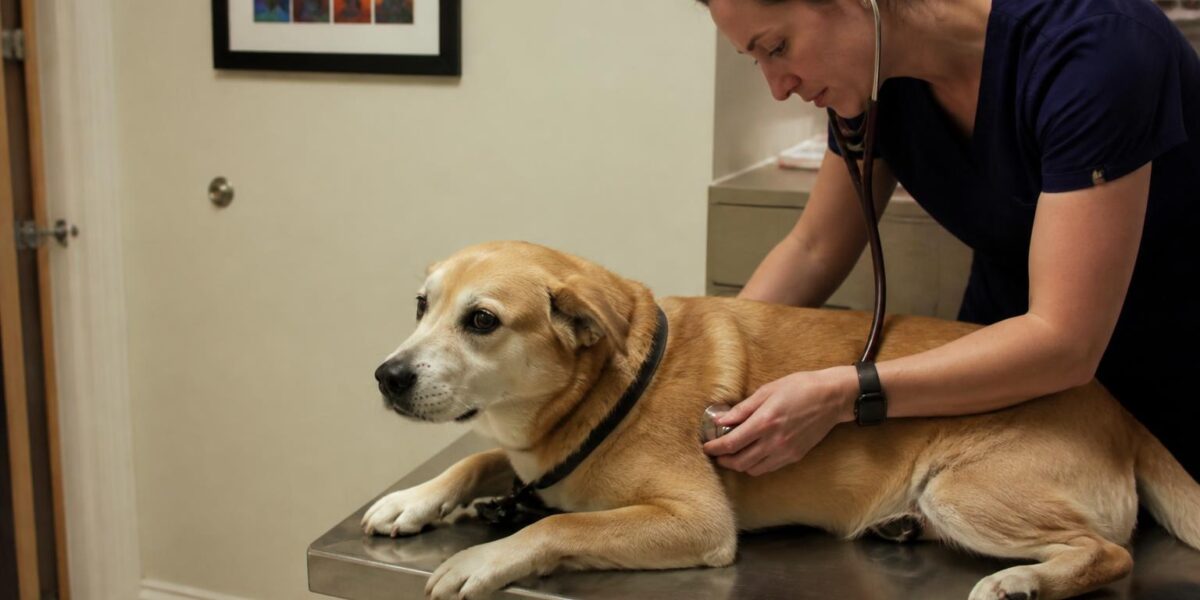
A typical titer appointment looks like a brief exam, a small blood draw (usually less than a teaspoon), and either an in-house point-of-care test or a send-out to a reference lab. In-house tests like VacciCheck or TiterCHEK return same-day or near-same-day results for distemper, parvo, and adenovirus. Send-out RFFIT rabies titers usually take one to several weeks.
Results are reported as either a numeric titer with a cutoff for “protective,” or a binary positive/negative result, depending on the assay. Your veterinarian interprets these in context: a strong positive supports skipping the booster; a borderline result usually prompts a booster anyway; a negative suggests the dog needs the vaccine.
Cost is the practical wedge that drives owner decisions. A titer typically costs more than a booster for a single antigen. Where titers shine economically is in older dogs with reaction history, dogs with autoimmune conditions where avoiding unnecessary immune stimulation is desired, and dogs with documented complete puppy series where the titer is likely to come back positive.
Who Are the Best Candidates for Titer Testing
Adult dogs with a complete, documented puppy and one-year booster history are the cleanest candidates. The probability of a protective titer at the three-year mark for distemper, parvo, and adenovirus is high in this group, which makes titer testing a reasonable financial decision and a way to avoid unnecessary vaccination.
Dogs with prior vaccine reactions are the next best candidates. If a previous DHPP caused hives, vomiting, or facial swelling, titering and skipping the booster when antibodies are already protective is one way to avoid a repeat reaction without leaving the dog unprotected. If you are in this situation, our puppy vaccine reactions guide covers the broader management approach.
Dogs with autoimmune disease, immune-mediated hemolytic anemia (IMHA), or immune-mediated thrombocytopenia (ITP) — see IMHA in dogs for context — are often managed with conservative vaccination strategies. Titers help these dogs avoid antigenic stimulation that could theoretically destabilize remission, while still confirming protective immunity is in place.
Who Should Not Rely On Titers Alone
Puppies during the initial vaccine series should not be titer-tested in lieu of completing the series. Maternal antibody interference is the central problem: titers can be falsely positive (from maternal antibody) or falsely negative (waning maternal antibody not yet replaced by vaccine-induced response), and the standard 8-12-16 week schedule with a one-year booster handles this far better than serial titering.
Dogs in high-exposure environments — boarding kennels, daycare, breeding programs, dog sports — where missed protection has severe consequences are sometimes better served by routine boosters even if titers would technically allow skipping. The risk-benefit calculus tips differently when exposure pressure is high.
Dogs traveling internationally or boarding at facilities with strict vaccination requirements are bound by what those documents demand. A protective rabies titer does not satisfy an import requirement that asks for a booster within the past 12 months. Always check the paperwork before titering as a replacement strategy.
Interpreting Borderline and Negative Results
A clearly positive titer with a strong vaccine history is straightforward — skip the booster, recheck in another year or three depending on protocol. A clearly negative titer also has a clear path: revaccinate. The grey zone is the borderline result, and that is where clinical judgment enters.
For borderline distemper or parvo titers, most veterinarians recommend boosting and rechecking. The booster is low-risk for an adult dog with no prior reaction history, and the alternative — leaving a dog at the threshold of protection during a peak exposure season — does not justify the savings. Your veterinarian’s interpretation will be informed by the lab they use, since cutoffs vary slightly between assays.
A truly negative titer in a dog with documented prior vaccination is unusual but happens. It can indicate immune system dysfunction, sample handling error, or simply waned immunity. Repeat the test, boost, and recheck three to four weeks after boosting. If the dog still does not seroconvert, an ACVIM internal medicine referral is reasonable to look for underlying immunodeficiency.
Cost-Benefit Reality and Insurance
Across most of the United States, a single canine titer panel costs more than a DHPP booster. The economics flip in dogs requiring multiple titers over multiple years and in dogs where avoiding a booster reaction has its own value. For a healthy adult dog with no reaction history, the booster is usually the cost-efficient path. For a small-breed senior with two prior reactions, titers may pay back quickly in avoided emergency visits.
Most pet insurance plans treat preventive care, including titers, as a wellness add-on rather than a covered illness expense. If you are weighing whether to add wellness coverage, our pet insurance decision for dogs walkthrough explains the math.
Titers also have non-financial value when an adopted adult dog arrives with no medical records. Rather than re-vaccinating blind on the assumption the dog has nothing, a titer panel can confirm prior vaccination quickly and avoid unnecessary stimulation. Talk to your veterinarian about whether this approach makes sense for a newly adopted dog in your household.
Working With Your Veterinarian
The titer-versus-booster conversation is exactly the kind of preventive medicine discussion that benefits from time, not from a 30-second tag-on at a vaccine appointment. Schedule a separate consult or a longer slot. Bring your dog’s full vaccine history, any prior reaction documentation, and any specialist correspondence relevant to autoimmune disease.
For dogs with complex histories, board-certified internal medicine (ACVIM) or preventive medicine (ACVPM) referral can help. ACVIM specialists are particularly useful when titers are being weighed against a backdrop of immune-mediated disease. The veterinary specialist cost breakdown explains what referral hospitals typically charge.
If you are coordinating titer decisions for a senior dog with multiple chronic conditions, our companion guide on senior pet multi-organ disease walks through the broader prioritization framework.
Frequently Asked Questions
How often should I titer my adult dog?
The practical cadence is every three years, aligning with the AAHA-recommended booster interval for core vaccines. Some owners titer annually for peace of mind, especially in older dogs or dogs with reaction history. Your veterinarian will tailor the cadence to your dog.
Does a positive titer mean my dog is fully protected?
It strongly suggests protection but does not guarantee it. Titers measure circulating antibodies, not cellular immunity. Most veterinarians treat a clearly positive titer as adequate evidence of protection for distemper, parvo, and adenovirus, while acknowledging the test is an indirect surrogate.
Will a rabies titer replace my dog’s rabies booster legally?
Generally no. Rabies booster requirements are set by state and local law, and a titer does not usually substitute for a current vaccination certificate. Rabies titers are most commonly used for international travel certification, where specific protocols apply. Always check local regulations.
Are in-house titers as reliable as send-out lab titers?
For distemper, parvovirus, and adenovirus, point-of-care tests like VacciCheck and TiterCHEK have good agreement with reference-laboratory results in published comparisons, and AAHA accepts them for booster decision-making. Send-out RFFIT testing is still the gold standard for rabies titers.
Can my new rescue dog’s titers replace the puppy series if his history is unknown?
For an adult rescue dog with no records, a titer panel can confirm prior immunity and spare unnecessary boosters. For a puppy under about six months, the standard puppy series is usually the safer path, since titer interpretation is complicated by maternal antibody interference and incomplete vaccine response.


