
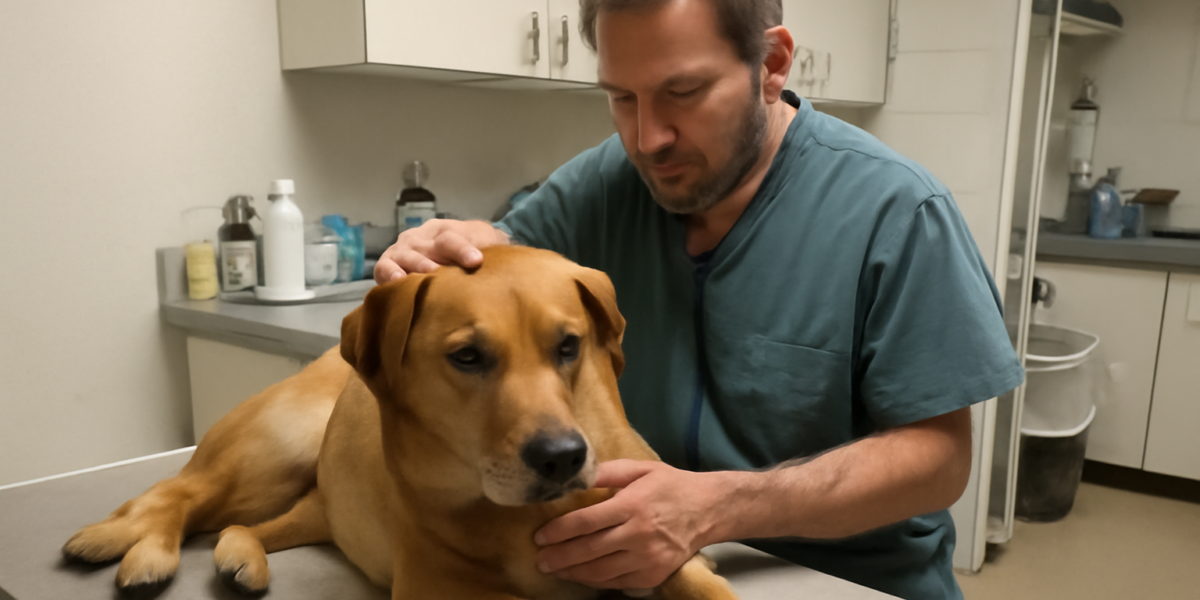
What Vetsulin Is and Why It Is the Standard for Many Diabetic Dogs
Vetsulin is a porcine-source insulin product specifically formulated and FDA-approved for use in diabetic dogs and cats in the United States. It is an intermediate-acting lente insulin, meaning it produces a relatively gradual onset, a moderate peak, and a duration that fits well with twice-daily dosing in most dogs. For dogs newly diagnosed with diabetes mellitus, Vetsulin is one of the most commonly prescribed first-line insulins and has a substantial track record in canine practice.
In this article
- What Vetsulin Is and Why It Is the Standard for Many Diabetic Dogs
- How Insulin Works in Diabetic Dogs
- The U-40 Syringe Issue — Critical to Get Right
- How to Give a Vetsulin Injection
- Storage and Handling
- Hypoglycemia — The Most Important Signs to Know
- Monitoring Diabetic Control
- Diet and Exercise for Diabetic Dogs
- When the Insulin Dose Needs Adjustment
- Frequently Asked Questions
Vetsulin for dogs is given by subcutaneous injection, typically twice daily, paired with consistent meal timing. The amount of insulin needed for any given dog is highly individual and is established through monitoring — blood glucose curves, fructosamine measurement, and clinical response. There is no formula that lets owners calculate the dose at home; the right dose is the one that produces good clinical control without hypoglycemia, and it can change over time.
The most important practical points for owners are these: use the correct U-40 syringes (not the U-100 syringes used for human insulins), gently invert the bottle rather than shaking it, store insulin properly, and learn the signs of hypoglycemia so you can respond before it becomes a crisis. We will walk through each.
How Insulin Works in Diabetic Dogs
Diabetes mellitus in dogs is almost always insulin-dependent (type 1) — the pancreas does not produce enough insulin to regulate blood glucose. Without treatment, blood glucose rises, the body cannot use glucose for energy, fat is broken down for fuel, ketones accumulate, and the dog becomes progressively ill. Untreated diabetes leads to diabetic ketoacidosis, a life-threatening emergency.
Insulin therapy replaces what the pancreas is not producing, allowing glucose to enter cells and be used for energy. Vetsulin, as a lente formulation, provides a moderate-duration insulin effect that complements meal timing — a meal at injection time provides glucose just as the insulin is becoming active, and the action tapers as the next meal-and-injection cycle approaches.
For broader context on canine diabetes, see our overview of dog care resources covering chronic conditions.
The U-40 Syringe Issue — Critical to Get Right
This deserves prominent attention because mistakes here cause serious harm. Vetsulin is concentrated at 40 units per milliliter (U-40). Most human insulins (Humulin, Novolin, Lantus, Levemir) are concentrated at 100 units per milliliter (U-100). The two require different syringes, and using the wrong syringe produces a wrong dose by a factor of 2.5.
- Use a U-40 syringe with U-40 insulin (Vetsulin) — the markings on the syringe match the concentration
- Use a U-100 syringe only with U-100 insulin (most human products and ProZinc)
- Never use a U-100 syringe with Vetsulin — you will give 2.5 times the intended dose, which can cause severe hypoglycemia
- Never use a U-40 syringe with U-100 insulin — you will give less than 0.5 times the intended dose, producing inadequate control
U-40 syringes are available through veterinary clinics and pharmacies. Some human pharmacies may need to order them; this is a routine request. Always double-check the syringe matches the insulin before drawing up a dose, and keep the two clearly separated if you have multiple insulin products in the household.
How to Give a Vetsulin Injection
Standard technique:
- Gently invert the bottle several times to mix — do not shake. Vigorous shaking damages the insulin.
- Wipe the bottle stopper with alcohol
- Draw up the prescribed dose with a U-40 syringe — pull back to the right marking
- Tap the syringe to release any air bubbles, then expel the air back into the bottle
- Lift a fold of skin on the dog’s side or neck; inject subcutaneously into the fold
- Discard the syringe in a proper sharps container
- Feed the dog at the planned time relative to the injection (your vet will specify whether feeding comes just before or with the injection)
Most dogs tolerate insulin injections well — the needles are very fine and the volume is small. If your dog struggles, talk to your veterinarian about positioning, distraction strategies, or whether a feeding-puzzle distraction at injection time might help.
Storage and Handling
Insulin is fragile. Proper storage is essential:
- Store unopened bottles in the refrigerator (do not freeze)
- Once opened, Vetsulin can typically be kept refrigerated for the duration specified on the label (commonly 42 days)
- Keep insulin away from direct sunlight and heat
- Do not use insulin that has changed color, has clumps that do not dissolve with gentle inversion, or is past its discard date
- Travel with insulin in a cool pack, not at extreme temperatures
- Always have a backup bottle on hand — running out is not an acceptable scenario
Damaged insulin may not produce the expected effect, and a dog whose insulin has degraded may appear poorly controlled. If you suspect the bottle, contact your veterinarian about replacing it.
Hypoglycemia — The Most Important Signs to Know
Hypoglycemia (low blood sugar) is the most acutely dangerous side effect of insulin therapy. Causes include too much insulin, missed meal after injection, exercise that consumed more glucose than usual, GI illness with vomiting, or a drop in insulin requirements as the dog’s diabetes changes. Signs of hypoglycemia include:
- Weakness, wobbliness, or trouble walking
- Tremors or muscle twitching
- Disorientation or confusion
- Excessive hunger
- Lethargy or collapse
- Seizures (severe hypoglycemia)
- Coma (very severe)
Every diabetic dog household should have karo syrup (or honey, or maple syrup) on hand specifically for hypoglycemia. If your dog shows signs:
- Rub a small amount of karo syrup onto the gums (do not pour into the mouth of an unconscious dog)
- Get the dog to your veterinarian or an emergency clinic immediately
- Bring the insulin bottle, syringe count, and meal log
Post-event, your veterinarian will likely want to adjust the insulin dose downward.
Monitoring Diabetic Control
Determining whether the insulin dose is right requires monitoring beyond just clinical impression. Standard monitoring includes:
- Blood glucose curves: Multiple glucose checks across a 12-hour period to map insulin action; can be done in clinic or at home
- Fructosamine measurement: A blood test that reflects average glucose over the past 1–2 weeks
- Clinical signs monitoring: Water intake, urine volume, appetite, weight, energy
- Continuous glucose monitors (CGMs): Newer technology where a small sensor records glucose continuously for up to two weeks; increasingly used in canine diabetes management
Owners often track water intake daily as a simple in-home indicator — a stable, normal water intake suggests reasonable control; an upward trend in water suggests under-dosed insulin or another issue.
Diet and Exercise for Diabetic Dogs
Insulin therapy is one leg of a three-legged stool. The others are diet and exercise consistency:
- Diet: Most diabetic dogs do well on a moderate-fiber, moderate-fat, consistent-formulation diet. Many veterinarians prescribe specific veterinary diabetic diets. Treats should be limited and consistent.
- Meal timing: Meals are given relative to insulin injections — typically twice daily, at the same times each day
- Consistency: Same food, same amounts, same timing. Variability in any of these creates glucose variability that makes insulin dosing harder.
- Exercise: Regular, consistent exercise is helpful. Sudden bouts of unusually heavy exercise can drop glucose unexpectedly and contribute to hypoglycemia.
Female diabetic dogs that are intact should be spayed because the hormonal changes of the heat cycle make glucose control essentially impossible.
When the Insulin Dose Needs Adjustment
Insulin requirements change over time. Dose adjustments are needed when:
- Clinical signs return — increased water, urination, appetite
- Glucose curves show inadequate control or hypoglycemia
- Fructosamine is too high (poor control) or too low (concerning for hypoglycemia)
- Body weight changes significantly
- New medications are added (some, like steroids, dramatically raise insulin needs)
- Concurrent illness develops (infection, pancreatitis, etc.)
- Seasonal activity changes (more or less exercise, particularly in working or sporting dogs)
Never adjust the dose yourself without veterinary guidance. Small changes can have large effects, and the right adjustment depends on what the monitoring data are showing. A common owner mistake is to nudge the dose up after one bad reading without curve data — this can produce overshoot and Somogyi rebound that looks like undertreatment, sending the owner upward again. Always work from data (curves, fructosamine, CGM trends) plus clinical signs, with veterinary direction guiding the adjustment.
Frequently Asked Questions
Why is shaking the Vetsulin bottle a problem?
Vigorous shaking creates foam and damages the insulin proteins, reducing potency. Gentle inversion mixes the suspension without damage. If you shake by accident, let the bottle settle for a few minutes before drawing up.
What if I miss a dose of Vetsulin?
For a missed dose within an hour or two of the scheduled time, you can usually give it and continue normal scheduling. For a longer delay, skip that dose and give the next dose at the normal time. Never double up. If unsure, call your vet — but do not over-dose insulin trying to make up for a miss.
How do I know if my dog is on the right Vetsulin dose?
Right is defined by good clinical control (normal water intake, urination, appetite, weight) and acceptable glucose curves and fructosamine. Your veterinarian will adjust the dose based on monitoring; do not adjust on your own.
Can I use leftover human insulin if I run out of Vetsulin?
No. Human insulins are different concentrations (U-100 vs Vetsulin’s U-40), have different action profiles, and require different syringes. Always have a backup Vetsulin bottle. If you find yourself out of insulin, call your vet — they can often arrange emergency dispensing.
What is a continuous glucose monitor (CGM)?
CGMs are small sensors placed on the dog’s skin that record glucose readings continuously, typically for up to two weeks. They can replace many of the home glucose pricks and provide much more detailed data on insulin action. Discuss with your vet whether a CGM might be useful for your dog.
Will my dog need Vetsulin for life?
Yes, in nearly all canine diabetes cases. Unlike some cats, dogs do not typically achieve diabetic remission. Lifelong insulin therapy with regular monitoring is the standard of care.
Vetsulin for dogs makes the difference between progressive illness and a long, comfortable life with diabetes — but only when paired with correct U-40 syringes, proper handling, consistent meal timing, and vigilant monitoring for hypoglycemia. Any change in clinical signs in a diabetic dog deserves a veterinary call. For more on chronic care, see our dog care library.


