
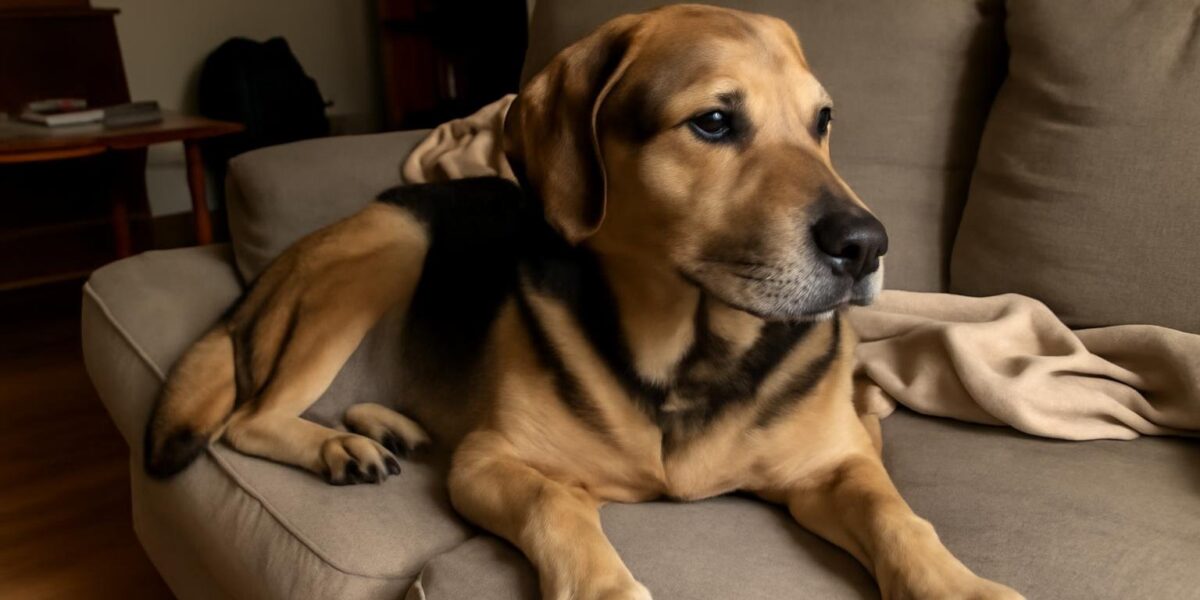
The Short Answer: It Is a Sign of Trust
If you have ever asked what does it mean when my dog sleeps with his back to me, you can relax. In the vast majority of cases, a dog who turns his back to you while sleeping is paying you a quiet compliment. He feels safe enough to face away, leave his vulnerable belly and flanks unguarded, and let you watch his back.
In this article
- The Short Answer: It Is a Sign of Trust
- Why Facing Away Means Comfort
- Common Reasons Behind the Back-to-You Sleep
- How to Read It Alongside Other Body Signals
- Does It Mean My Dog Loves Me Less?
- When Sleep Position Changes Suddenly
- Encouraging Restful, Trusting Sleep
- What Other Sleep Positions Tell You
- Helping a New or Nervous Dog Settle
- Frequently Asked Questions
In the wild and in the home, animals position themselves carefully when they rest. A dog who turns away is showing that he does not feel the need to keep an eye on you, because he trusts you completely. As always, the full meaning depends on context and the rest of his body language, but the back-to-you sleeper is usually the most relaxed dog in the room.
Why Facing Away Means Comfort
Sleeping is the most defenseless thing any animal does. A dog who chooses to face away is essentially saying he does not expect a threat from your direction, so he can point his senses elsewhere or simply switch off entirely.
There is often a practical bonding element too. By turning his back to you, your dog can press his spine, hips, or shoulders against your body to share warmth and stay in physical contact. It mirrors how dogs sleep with trusted members of their pack, back to back, each watching a different direction.
So when your dog flops down, sighs, and settles his back against you, read it as the highest form of canine flattery. You have made it onto his short list of beings he can let his guard down around.
This becomes especially meaningful when you consider how cautious many dogs are about sleep, particularly those who have had a rocky start in life. A dog who once had to stay alert to survive, or who is still adjusting to a new home, may take time before he is willing to turn away and rest deeply. When he finally does, facing away from you, it marks a real shift in how safe he feels. Few gestures say “I trust you” more clearly than a dog choosing to sleep with his back to the person he loves.
Common Reasons Behind the Back-to-You Sleep
While trust is the headline, a few overlapping motivations usually drive this position:
- Security: He feels safe enough not to monitor you while he rests.
- Bonding: Pressing his back into you keeps him connected to his favorite person.
- Temperature control: Sharing body heat in cool weather or angling away from a warm spot.
- Guarding instinct: Some dogs face outward to keep a soft watch on the room while you cover his back.
- Simple comfort: Sometimes a position is just the coziest way to lie down.
Most dogs cycle through several sleep positions in a night, so try not to read too much into any single one. The pattern over time tells you more than one snapshot.
How to Read It Alongside Other Body Signals
To confirm that the back-to-you position means relaxation, look at how the rest of your dog’s body looks while he settles in and sleeps.
- Posture: A loose, floppy body or a fully stretched-out side sleep signals deep comfort.
- Breathing: Slow, even breaths with the occasional dream twitch are great signs.
- Muscles: Relaxed, soft muscles rather than tense, ready-to-move stiffness.
- Face: A soft, slack expression with closed or half-closed eyes.
If instead your dog faces away but stays tense, keeps lifting his head, or startles easily, he may not feel as settled as the position suggests. Pairing posture with these other cues is what good dog body language reading is all about, and it keeps you from misjudging a single gesture.
Does It Mean My Dog Loves Me Less?
This is the worry that brings many owners to this question, and the answer is reassuring: facing away is not rejection. Some people assume a dog who faces them is more affectionate than one who turns away, but the opposite is often true.
A dog who faces you while sleeping may be keeping a little awareness on you, sometimes because he is slightly less settled or simply prefers that orientation. A dog who turns his back has decided you require no watching at all. Both can be deeply bonded dogs; the position is more about how relaxed he feels than how much he cares.
Dogs also have individual sleep preferences just like people. Where your dog chooses to rest, whether against you, near you, or in his own bed across the room, says far more about his personality than his love for you. Learning to interpret these preferences without overthinking them is part of reading your dog’s everyday signals.
When Sleep Position Changes Suddenly
A consistent sleep style is normal, but a sudden shift can occasionally be worth noting. Dogs sometimes change how they lie down because of physical discomfort rather than mood.
Pay attention if your dog suddenly:
- Struggles to get comfortable, circling or repositioning over and over
- Avoids lying on one side or yelps when settling down
- Seems stiff getting up, especially in the morning or after rest
- Pants, paces, or appears restless instead of sleeping deeply
These can hint at joint pain, arthritis, or other discomfort, particularly in older dogs. If the change is persistent or comes with other symptoms like reduced appetite or reluctance to move, a veterinary checkup is a sensible next step. For an ordinary, content dog, though, the back-to-you sleep needs nothing from you but appreciation.
Encouraging Restful, Trusting Sleep
You can support your dog’s sense of safety, which in turn supports relaxed sleep positions, with a few simple habits. Give your dog a predictable routine so he knows what to expect from his day. Provide a comfortable, supportive bed in a quiet spot, and let him choose whether to use it or curl up near you.
Avoid disturbing your dog when he is in a deep sleep, as being startled awake can make some dogs more guarded over time. Let sleeping dogs lie, especially newly adopted or sensitive ones who are still learning that home is safe.
Over time, a dog who feels secure will often relax further, and you may notice him turning his back to you more frequently. Take it as confirmation that your home has become his safe place.
You can also gently encourage relaxed sleep by keeping the area where your dog rests calm and consistent. Loud, sudden activity around a sleeping dog, or repeatedly moving him from his chosen spot, can make some dogs sleep more lightly and guardedly over time. Instead, let your dog settle where he feels comfortable, keep his bedding clean and supportive, and teach children to leave a sleeping dog undisturbed. These small habits add up to a dog who feels confident he can rest without interruption.
Finally, try not to read too much into any single night. Dogs shift positions, chase spots of sun and shade, and respond to small changes in temperature and noise, so the orientation he chooses can vary from one nap to the next. What matters is the overall pattern, and a dog who regularly relaxes into deep, exposed sleep near you, whether facing you or turned away, is clearly a dog who feels at home.
What Other Sleep Positions Tell You
The back-to-you sleep is just one entry in a rich vocabulary of canine sleep positions, and each tends to carry its own meaning. Learning a few of the common ones helps you appreciate how your dog feels when he settles down near you.
- Curled in a ball: A cozy, self-protective position that conserves heat. Common and normal, sometimes used when a dog is a touch cold or cautious.
- On the side, legs stretched out: A deeply relaxed, trusting position that shows your dog feels safe enough to fully let go.
- On the back, belly up: The ultimate sign of comfort and trust, leaving the most vulnerable areas completely exposed.
- The “superman” sprawl: Legs splayed out front and back, often seen in playful dogs ready to spring up at a moment’s notice.
- Pressed against you, back turned: The trusting, bonded position this article is all about.
Most dogs move through several of these in a single rest period, so look at the overall pattern rather than reading too much into one snapshot. A dog who regularly chooses relaxed, exposed positions near you is clearly a comfortable, secure dog.
Helping a New or Nervous Dog Settle
If you have recently adopted a dog, you may notice he is more guarded about sleep at first, perhaps facing you, sleeping lightly, or startling easily. This is completely normal as he learns whether his new home is truly safe, and patience usually wins him over.
Give your new dog a quiet, comfortable place to rest where he will not be disturbed by foot traffic or sudden noise. Keep a predictable routine so his days feel reassuringly familiar, and resist the urge to crowd or wake him while he sleeps. Let him choose how close he wants to be rather than placing him where you would like, much as you would if your dog were leaning against you for reassurance.
Over the following weeks, you will often see his sleep relax in stages: lighter sleep gives way to deeper rest, guarded positions soften into stretched-out sprawls, and eventually he may turn his back to you with total trust. Watching that transformation is one of the quiet joys of welcoming a rescue into your home, and the back-to-you sleep becomes a milestone worth celebrating.
Frequently Asked Questions
Does my dog facing away mean he is mad at me?
No. Dogs do not give the silent treatment the way people do. Facing away during sleep is about comfort and trust, not anger. If your dog seems off, look for stress or pain signals rather than reading his sleep direction as a grudge.
Why does my dog press his back into me when he sleeps?
He is sharing warmth and staying physically connected to you, much like dogs rest against trusted packmates. It is a cozy, affectionate behavior that also signals he feels secure leaving his back unguarded against you.
Is it better if my dog faces me or faces away?
Neither is better. Both positions are normal and can come from a happy, bonded dog. Sleep orientation is mostly about personal preference and how relaxed your dog feels in the moment, not a ranking of his affection.
Should I worry if my dog suddenly changes how he sleeps?
A sudden, lasting change paired with stiffness, difficulty settling, yelping, or other symptoms is worth a vet visit, since it can point to pain or joint issues. An occasional new position with no other signs is nothing to worry about.


