
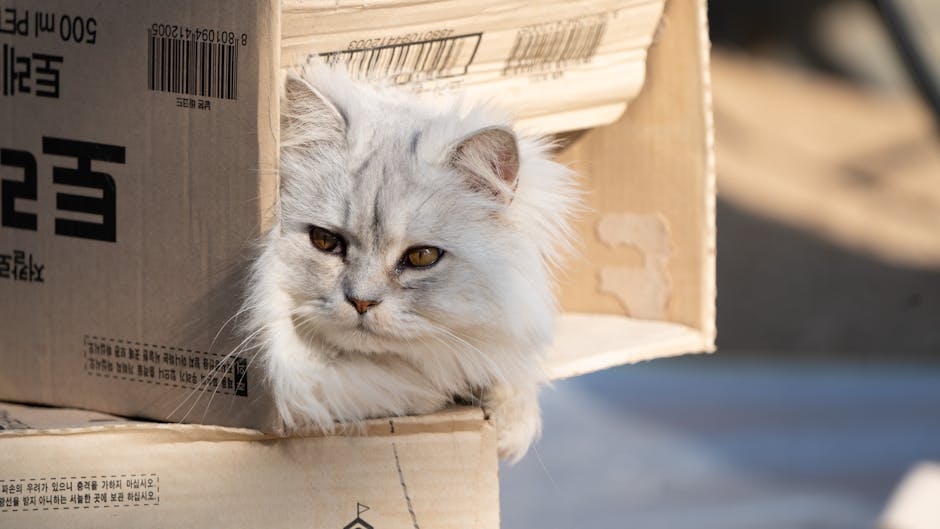
Why Do Cats Sit in Boxes?
The internet is filled with images of cats squeezing into boxes that are clearly too small, ignoring expensive cat trees in favor of the cardboard packaging they arrived in, and looking supremely content while wedged into a shoebox. This universal feline obsession with boxes is not just an endearing quirk. It is a behavior rooted in evolutionary biology, thermal regulation, and stress management that reveals important insights about how cats perceive and interact with their environment.
In this article
Whether your cat claims every delivery box that enters your home, forces themselves into a tissue box that barely contains their head, or parks themselves in a laundry basket the moment your back is turned, the motivations are consistent and well-documented. Understanding why cats love boxes can help you provide better enrichment for your cat and may even improve their overall well-being. As it turns out, a simple cardboard box is one of the most effective environmental enrichments you can offer a cat.
Security and Stress Reduction
The most significant reason cats seek out boxes is the sense of security that enclosed spaces provide. In the wild, small cats are both predators and prey. They face threats from larger predators including birds of prey, coyotes, and larger cats. An enclosed space with solid walls on multiple sides dramatically reduces the angles from which a threat can approach, allowing the cat to relax while needing to monitor only one direction, the opening.
This security benefit has been demonstrated in controlled studies. A 2014 study conducted at Utrecht University in the Netherlands examined newly arrived shelter cats and found that cats provided with hiding boxes showed significantly lower stress levels than cats without boxes. The cats with boxes adapted to their new environment faster, were more willing to interact with humans sooner, and displayed fewer stress-related behaviors such as hiding behind litter pans or pressing against cage walls.
The implications of this research extend well beyond shelter environments. Any time a cat experiences stress, whether from a new home, a new pet, visitors, household changes, or environmental disturbances, providing enclosed hiding spaces can help them cope. A cardboard box costs nothing and provides a stress-reduction tool that is as effective as anything a veterinary behaviorist could prescribe. If you have recently introduced a new cat to your household, offering multiple boxes throughout the home can ease the transition significantly.
The stress-reducing properties of boxes are so reliable that many veterinary clinics now provide box-like hiding spaces in their cat waiting areas and examination rooms. Cats that can retreat into an enclosed space during a veterinary visit display lower cortisol levels and are more cooperative during examination. This simple intervention has improved the veterinary experience for countless cats and reduced the stress-related aggression that makes veterinary visits difficult for both cats and staff.
Warmth and Thermal Comfort
Cardboard is an excellent insulator, and cats are heat-seeking creatures. The thermoneutral zone for cats, the temperature range at which they do not need to expend energy to maintain body temperature, is between 86 and 97 degrees Fahrenheit. Most human homes are kept well below this range, which means your cat is perpetually seeking supplemental heat sources. A cardboard box traps body heat, creating a warm microclimate that helps your cat maintain their preferred temperature with minimal energy expenditure.
The insulating properties of cardboard explain why cats often prefer tighter boxes over spacious ones. A box that closely conforms to the cat’s body traps heat more efficiently than a large box with excess air space. This is why your cat will squeeze into a box that seems absurdly small rather than settling into a larger, more comfortable-looking option. From a thermal perspective, the tight box is the superior choice.
This thermal preference also explains the seasonal variation in box-seeking behavior that many cat owners observe. Cats tend to use boxes more frequently in cooler months and may show less interest during summer when ambient temperatures are closer to their thermoneutral zone. In air-conditioned homes, however, the thermal benefit of boxes remains relevant year-round, as the conditioned air keeps the environment well below a cat’s preferred temperature range.
The warmth factor is compounded by the fact that cats spend an enormous amount of time sleeping, typically fourteen to sixteen hours per day. All those hours of rest are more energetically efficient in a warm, insulated space. By choosing a box for napping, your cat is making a thermodynamically sound decision that conserves energy and allows deeper, more restful sleep. The cardboard box is essentially a low-cost, self-warming cat bed.
The Ambush Hunting Instinct
Cats are ambush predators. Unlike dogs, which chase prey across open terrain, cats rely on stealth, concealment, and explosive short-distance attacks. They hide, wait for prey to come within striking distance, and then pounce with remarkable speed and precision. A box provides the perfect concealment for this ambush strategy, offering a hidden vantage point from which a cat can observe their surroundings while remaining invisible to potential prey.
Watch a cat in a box and you will often see them peeking over the edge, eyes wide and ears forward, tracking movement in the room. When a passing toy, foot, or unsuspecting housemate comes within range, the cat may launch from the box in a burst of predatory energy. This behavior is play, but it is play that mimics the hunting strategy that cats have evolved over millions of years. The box transforms from a simple container into a hunting blind.
Indoor cats, who lack natural hunting opportunities, may find boxes especially appealing because they provide an outlet for the ambush instinct that would otherwise go unfulfilled. A bored cat with nothing to stalk or pounce on may become destructive, anxious, or lethargic. A strategically placed box gives them a tool for engaging their predatory instincts in a harmless and entertaining way. Some behaviorists recommend placing boxes along paths between rooms to encourage ambush play between cats in multi-cat households.
The ambush function of boxes explains why cats often prefer boxes placed in high-traffic areas rather than tucked away in quiet corners. A box in the middle of the living room provides maximum opportunity for observing and ambushing passing targets. A box in a closet might offer better security but fewer hunting opportunities. Many cats compromise by choosing boxes that offer both a sense of enclosure and a view of household activity.
Curiosity and Novelty
Cats are neophilic when it comes to new objects in their environment, meaning they are drawn to investigate unfamiliar things. A new box appearing in the home represents a novel stimulus that demands exploration. The cat’s investigative process involves sniffing the box, rubbing against it to deposit scent marks, climbing inside to assess the interior dimensions, and ultimately claiming it as their own. This exploration sequence satisfies the cat’s natural curiosity and adds variety to their environment.
The novelty factor explains why cats often show intense initial interest in a new box that gradually wanes over days or weeks. As the box becomes familiar and absorbed into the regular environment, it loses its investigative appeal. However, the comfort and thermal benefits remain, so many cats continue using familiar boxes even after the novelty has worn off. Rotating boxes periodically, introducing different sizes and shapes, keeps the novelty factor alive and maintains your cat’s interest.
This attraction to novelty is also why cats are drawn to other container-like objects beyond cardboard boxes. Paper bags, laundry baskets, suitcases, sinks, and even taped squares on the floor trigger the same investigative and claiming behaviors. The common thread is an enclosed or delineated space that the cat can enter, explore, and claim. The specific material or shape matters less than the fundamental property of being a defined space that the cat can occupy.
Online experiments where cat owners place tape squares on the floor and observe their cats sitting inside them demonstrate how powerful this attraction to defined spaces is. Even a two-dimensional suggestion of an enclosure can trigger the sitting behavior, suggesting that the response is partly optical. The cat perceives the boundaries of the taped square as defining a space, and their instinct to occupy defined spaces compels them to sit inside it, even though it offers none of the thermal or security benefits of an actual box.
Social Avoidance and Coping
Cats are not social problem-solvers in the way that dogs or humans are. When faced with conflict, stress, or unwanted social interaction, cats tend to withdraw and avoid rather than confront. Boxes provide a readily available escape route from social situations that a cat finds uncomfortable, making them particularly important in multi-cat households where social dynamics can be complex and sometimes tense.
In multi-cat environments, access to boxes and hiding spaces can significantly reduce inter-cat aggression. When a lower-ranking cat can retreat to an enclosed space during a conflict, the tension de-escalates because the physical separation resolves the immediate confrontation. Without adequate hiding spaces, cats in conflict may engage in prolonged standoffs, chasing, or fighting because neither cat has an exit strategy that feels safe.
Behaviorists recommend providing at least one more hiding space than the number of cats in the household. For a home with three cats, four or more boxes, tunnels, or enclosed perches should be available throughout the living space. This ensures that every cat always has access to a retreat without having to pass through another cat’s claimed territory. The investment in cardboard boxes can dramatically reduce stress and improve the quality of life for all cats in the household.
Cats that dislike certain household activities like vacuuming, bathing, or nail trimming may use boxes as coping tools during and after these stressful events. Providing a box in a quiet room where your cat can retreat after a stressful experience allows them to process their stress in a secure environment. Forcing a cat out of their hiding box after a stressful event is counterproductive and can prolong the stress response.
Frequently Asked Questions
Why does my cat prefer a small box over a large one?
Cats prefer boxes that closely conform to their body size because tighter spaces provide better thermal insulation and a stronger sense of security. A box that touches the cat on multiple sides mimics the sensation of being in a den or burrow, triggering feelings of safety and comfort. A large box with too much open space does not provide the same physical feedback and may actually feel less secure because there is room for a perceived threat to enter alongside the cat.
Is it healthy for my cat to spend a lot of time in a box?
Occasional box use is completely normal and healthy. It provides stress relief, thermal comfort, and mental enrichment. However, a cat that hides in a box constantly and refuses to come out for meals, play, or social interaction may be experiencing excessive stress, illness, or depression. If your cat’s box use increases dramatically or they become reluctant to leave their hiding spot, consult your veterinarian to rule out medical issues and assess their environmental well-being.
Should I put a blanket or bedding in the box?
Adding a soft blanket or towel to a box enhances its comfort and thermal properties. The fabric provides additional insulation and cushioning that most cats appreciate. Choose a material that your cat already favors. An old t-shirt that carries your scent can be particularly appealing because it combines the security of the box with the familiar, comforting smell of their favorite human. Wash the bedding periodically but not so frequently that the familiar scent is constantly removed.
Why does my cat sit in the box but hang over the edges?
Cats sometimes choose boxes that are too small because the attraction to the box is so strong that they will squeeze into it regardless of fit. The cat may prefer the location of the small box, or the box may have become a claimed territory that the cat is reluctant to abandon even as they have outgrown it. The sight of a cat overflowing a tiny box is comical to humans, but the cat is likely still deriving some security and comfort benefit from the partial enclosure, even if the fit is far from ideal.
Can boxes be used as enrichment for indoor cats?
Absolutely. Boxes are one of the simplest and most effective forms of environmental enrichment for indoor cats. Create a box fort with multiple connected boxes, cut holes between them for tunnels, and scatter treats inside to encourage exploration. Rotate boxes regularly to maintain novelty. Place boxes at different heights by putting them on shelves or tables. Adding crinkly paper inside a box creates auditory stimulation that many cats find irresistible. The possibilities are limited only by your creativity and your recycling habits.
My cat chews and eats cardboard from boxes. Is this dangerous?
Small amounts of cardboard chewing are generally harmless, though the behavior can indicate boredom, nutritional deficiency, or pica, a condition where cats compulsively eat non-food items. If your cat regularly ingests cardboard, remove the boxes and provide alternative enrichment like interactive toys and puzzle feeders. Consult your veterinarian if the behavior persists, as pica can lead to intestinal blockages and may indicate an underlying health issue that needs attention.


