
Why Does My Cat Stare at Me?
In this article
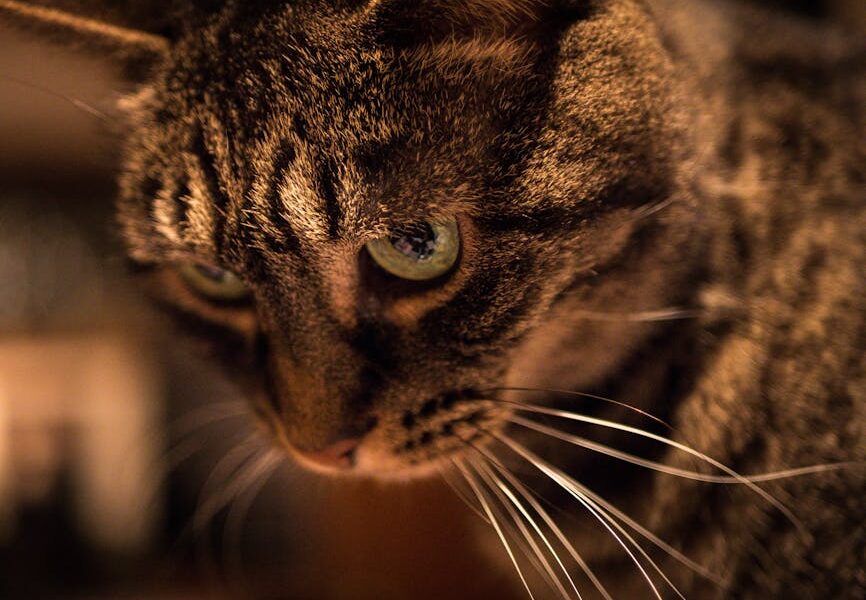
You are sitting on the couch watching television, and you get that feeling. Someone is watching you. You look over, and there is your cat, sitting perfectly still, staring at you with those big, unblinking eyes. No meow, no movement, just an intense, unwavering gaze that seems to look straight into your soul.
If this scenario sounds familiar, welcome to the club. Cat owners everywhere have experienced the slightly unnerving, slightly flattering phenomenon of being stared down by their feline companion. But what does it actually mean? Is your cat plotting world domination? Judging your life choices? Or is something else entirely going on behind those mesmerizing eyes?
The truth is that cat staring can mean many different things depending on the context, your cat’s body language, and the situation. Let’s decode this mysterious behavior and help you understand what your cat is really communicating.
They Want Something From You
Let’s start with the most practical explanation: your cat is staring at you because they want something. Cats are masters of nonverbal communication, and a steady, focused stare is one of their most effective tools for getting your attention.
The most common “I want” stare happens around mealtimes. If your cat is staring at you from the kitchen, sitting near their food bowl, or alternating their gaze between you and the cabinet where you keep the treats, the message is crystal clear. They are hungry, and they are using their eyes to remind you that your primary job in this household is to provide food on demand.
But food is not the only motivation. Your cat might stare at you because they want to be let into a room, because they want you to move so they can have your spot on the couch, because they want to play, or because their litter box needs attention. Pay attention to the context and your cat’s position in the room to decode what they are asking for.
Many cats develop a staring routine that their owners learn to read over time. You start to recognize the “feed me” stare versus the “play with me” stare versus the “open this door immediately” stare. It becomes a language between you, and it is one of the fascinating ways that cats and humans learn to communicate with each other.
The Slow Blink: A Sign of Love
If your cat is staring at you with relaxed eyes and occasionally gives you a long, slow blink, congratulations. You have just received the feline equivalent of a kiss. The slow blink is one of the most well-documented expressions of affection in cats, and it is a behavior that scientists have actually studied and confirmed.
Research published in the journal Scientific Reports found that cats are more likely to slow-blink at their owners than at strangers, and that cats respond positively when humans slow-blink back at them. The slow blink essentially communicates trust and comfort. In the cat world, closing your eyes in the presence of another being means you feel safe enough to be vulnerable, even if just for a moment.
You can actually strengthen your bond with your cat by slow-blinking back at them. When you catch your cat giving you that soft, sleepy gaze, try closing your eyes slowly and opening them again. Many cats will respond with their own slow blink, creating a sweet back-and-forth exchange of trust and affection.
This is one of the ways that cats and humans have developed a unique interspecies communication system. If you are thinking about welcoming a cat into your home, you will quickly discover just how rewarding these subtle exchanges can be. Check out our adoptable cats and start building these connections.
Curiosity and Observation
Cats are incredibly observant creatures. They spend a significant portion of their waking hours watching, processing, and analyzing their environment. And you, as the largest and most active inhabitant of their territory, are a constant source of fascination.
Your cat might stare at you simply because you are doing something interesting. Cooking, typing, exercising, folding laundry, or even just fidgeting on the couch can capture a cat’s attention and hold their gaze. They are studying your movements, trying to understand what you are doing and whether it might be relevant to them.
This observational staring is often accompanied by alert body language: ears forward, head slightly tilted, body relaxed but attentive. Your cat is in data-collection mode, absorbing information about your behavior and storing it for future reference. Cats are surprisingly good at learning human patterns and routines through this kind of observation.
Your cat probably knows your daily schedule better than you do. They know what time you wake up, when you eat, when you tend to play with them, and when you usually head to bed. They have learned all of this by watching you, and staring is simply the most active form of this ongoing observation.
Different breeds have different levels of curiosity and observational intensity. Some breeds are known for being particularly watchful and engaged with their humans. You can learn about these traits in our cat breeds directory.
Fear, Anxiety, or Feeling Threatened
Not all staring is positive. In the feline world, a direct, unblinking stare can be a sign of tension, fear, or a perceived threat. If your cat is staring at you with wide, dilated pupils, a stiff body, flattened ears, and a puffed-up tail, that is not a look of love. That is a cat who feels threatened or frightened.
This type of stare is more common in situations where a cat feels cornered or confronted. It might happen if you approach a cat too quickly, try to pick them up when they do not want to be held, or if there has been a loud noise or disruption that has put them on edge. The stare is essentially a warning that says, “I am watching you, and I am ready to react if I need to.”
If you notice this type of staring, the best response is to give your cat space. Avoid direct eye contact (which can feel confrontational to a stressed cat), speak softly, and allow them to retreat to a safe space. Never try to force interaction with a cat who is showing signs of fear or anxiety.
In multi-cat households, you might see cats staring at each other as part of establishing dominance or managing territory. This inter-cat staring can be a precursor to conflict, so if you notice two cats locked in a stare-down, it is wise to calmly redirect their attention before things escalate.
Medical Reasons for Excessive Staring
While most staring behavior is completely normal, sudden changes in your cat’s staring patterns can sometimes indicate a health issue. It is important to know when staring might warrant a veterinary visit.
Hypertension, or high blood pressure, is relatively common in older cats and can affect their vision. Cats with hypertension may stare blankly or seem to look through you rather than at you. Their pupils may be persistently dilated, and they might seem disoriented or confused.
Cognitive dysfunction syndrome, the feline equivalent of dementia, can cause behavioral changes in senior cats, including increased staring, confusion, and disorientation. If your older cat has started staring at walls, into space, or at you in ways that seem different from their normal behavior, this is worth discussing with your vet.
Seizure disorders can also involve staring episodes. If your cat seems to “zone out” and stare fixedly without responding to stimuli, they may be experiencing a mild seizure. These episodes are usually brief but should be reported to your veterinarian.
Pain can also change a cat’s behavior and gaze. A cat in pain might stare at you with wide eyes and a tense body, essentially communicating discomfort. If the staring is accompanied by other changes like decreased appetite, hiding, vocalization, or changes in grooming habits, a vet visit is in order.
Cats Staring at Night: The Midnight Vigil
There is something especially eerie about waking up in the middle of the night to find your cat sitting on your chest, staring at your face in the darkness. But before you assume your cat is plotting something sinister, there is a perfectly reasonable explanation.
Cats are crepuscular, meaning they are most active during dawn and dusk. This means they are often wide awake during the hours when you are sleeping. And since you are the most important being in their environment, they naturally gravitate toward you. The nighttime staring is often a combination of boredom, hunger (hoping you will wake up and feed them), and simply checking on you.
Some cats also exhibit this behavior because they have learned that staring at your face eventually wakes you up, which gets them what they want, whether that is food, attention, or for you to lift the blanket so they can snuggle underneath. Once again, your cat has trained you, and the staring is their tool of choice.
If the nighttime staring is disrupting your sleep, try establishing a consistent feeding schedule, providing interactive toys for nighttime entertainment, and playing with your cat vigorously before bedtime to tire them out. A puzzle feeder with a small amount of food can also keep them occupied during the early morning hours.
Reading the Full Picture: Body Language Context
The key to understanding your cat’s stare is to look at their entire body, not just their eyes. A stare combined with relaxed body language, slow blinking, and purring is vastly different from a stare combined with a tense body, twitching tail, and flattened ears.
A content cat who is staring affectionately will typically have soft, slightly squinted eyes, ears in a natural forward position, a relaxed body posture, and a still or gently waving tail. They might be purring or kneading, and their overall demeanor is calm and approachable.
An anxious or fearful cat who is staring will have wide, fully dilated pupils, ears rotated back or flattened, a tense or crouched body, and a puffed-up or twitching tail. They might be hissing, growling, or holding very still in a way that signals they are ready to flee or fight.
A curious cat who is watching something interesting will have alert, forward-facing ears, slightly widened eyes, and might be leaning forward or tilting their head. Their body is relaxed but engaged, and they might chirp, trill, or make other interested vocalizations.
Learning to read these context clues will transform your relationship with your cat because you will start understanding their emotional state in real time, not just guessing.
Frequently Asked Questions
Is it normal for my cat to stare at me while I sleep?
Yes, this is completely normal behavior. Cats are most active during dawn and dusk, which means they are often awake while you are sleeping. They may stare at you because they are waiting for you to wake up (usually because they want food), because they are checking on you, or simply because you are the most interesting thing in the room. While it can feel creepy, it is usually just a sign of your cat’s attachment to you and their naturally different sleep schedule.
Why does my cat stare at me and then meow?
When your cat stares and then meows, they are actively trying to communicate with you. The stare gets your attention, and the meow adds emphasis to their request. Interestingly, adult cats rarely meow at other cats. Meowing is a behavior that cats have developed specifically for communicating with humans. So the stare-and-meow combination is your cat’s most direct way of telling you they need something, whether it is food, play, or access to a closed room.
Should I stare back at my cat?
It depends on the context. If your cat is relaxed and giving you soft, affectionate looks, you can absolutely look back and try a slow blink, which communicates trust and love. However, if your cat is tense, fearful, or agitated, a direct stare can be perceived as a challenge or threat. In those situations, it is better to look away and give your cat space. As a general rule, soft eye contact with slow blinks is positive, while hard, unblinking staring can be confrontational in cat language.
Why does my cat stare at the wall or at nothing?
Cats have much sharper hearing and vision than humans, especially when it comes to detecting movement. When your cat stares at a seemingly empty wall, they may be hearing sounds inside the wall (like pipes or, yes, possibly mice), seeing tiny insects or dust particles that are invisible to you, or noticing subtle shadows and light changes. In rare cases, prolonged staring at nothing in senior cats can be a sign of cognitive dysfunction, so mention it to your vet if it seems excessive or is accompanied by other behavioral changes.
Does my cat stare at me because they are angry?
Cats do not really experience anger the way humans do, but they can feel frustration, irritation, and displeasure. If your cat is staring at you with a tense body, twitching tail, and flattened ears, they may be communicating that they are not happy about something. This could be because they want food and you are not providing it fast enough, because you moved them from their favorite spot, or because you are doing something that annoys them. The best response is to assess what might be bothering them and adjust accordingly.
Why does my newly adopted cat stare at me constantly?
A newly adopted cat is still learning about you and their new environment. Staring is their way of gathering information and assessing whether you are trustworthy. This is completely normal and actually a good sign, because it means your cat is paying attention to you rather than hiding. Over time, as your cat settles in and builds trust, the staring will likely become less intense and more affectionate. Be patient, move slowly, and let your cat set the pace for building your relationship. You can learn more about helping a new cat adjust at our adoption resources page.
Your cat’s stare is one of their most powerful communication tools. Whether they are telling you they love you, demanding dinner, observing your fascinating human behavior, or simply enjoying the view, that gaze is always saying something. The more you learn to read the context clues that accompany the stare, the deeper your understanding of your cat will become, and the stronger your bond will grow. So the next time you catch those eyes locked on you, take a moment to consider what your cat might be telling you. The answer is usually simpler and sweeter than you think.


