
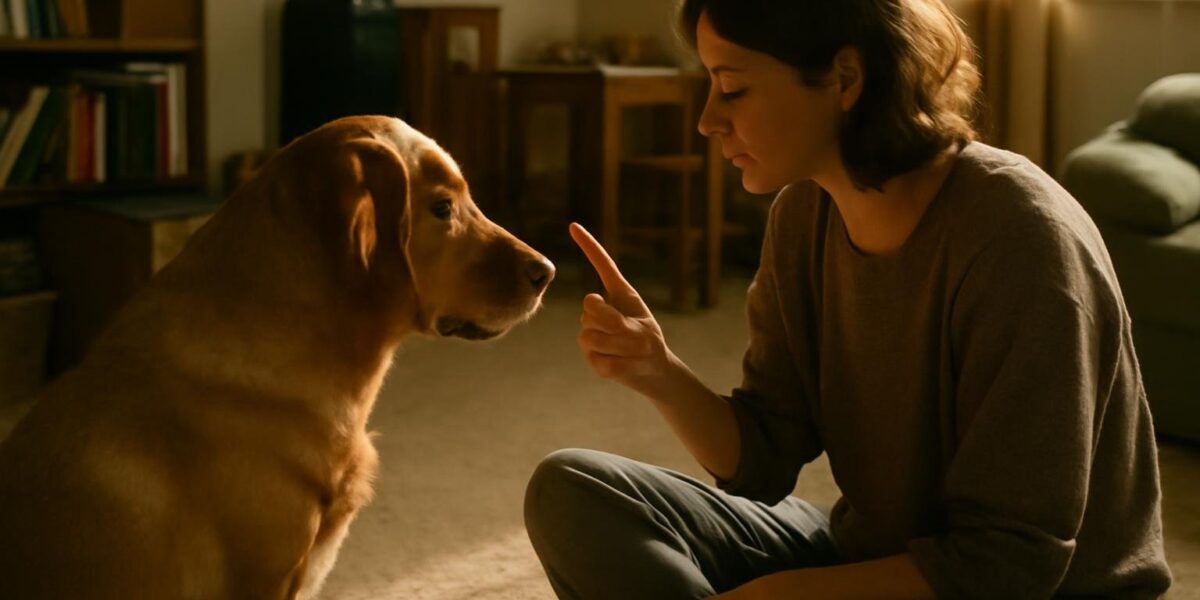
What That Fixed Gaze Usually Means
If you have ever looked up to find your bunny sitting perfectly still and watching you, you may have wondered “why does my rabbit stare at me.” Most of the time the answer is wonderfully reassuring: your rabbit is paying attention to you. Staring can mean curiosity, a request for something, or simply that you are the most interesting thing in the room. Rabbits are alert, intelligent animals, and watching their favorite person is a very normal pastime.
In this article
Context, as always, shapes the meaning. A relaxed rabbit who stares while loafing comfortably is curious or content. A tense rabbit who stares while frozen and wide-eyed may be uneasy about something in the environment. Reading the rest of the body, rather than fixating on the eyes alone, tells you which kind of stare you are seeing.
It also helps to know that rabbits experience the world very differently than we do. Their eyes sit on the sides of the head, giving them a wide field of view to spot danger, but a small blind spot directly in front of their nose. So when your rabbit fixes their gaze on you, they may be using their excellent peripheral vision to keep tabs on you while staying ready for anything, which is simply good prey-animal sense.
The Most Common Reasons Rabbits Stare
Rabbits stare for a handful of everyday reasons, and once you know them the behavior becomes easy to interpret.
- Curiosity and attention. You moved, you spoke, or you opened the fridge. Your rabbit is simply monitoring the situation with interest.
- Anticipation. If staring happens near mealtime or treat time, your rabbit has learned that watching you sometimes produces food.
- Asking for something. A stare paired with a nudge or a hop closer often means “pet me,” “feed me,” or “let me out of the pen.”
- Vigilance. As prey animals, rabbits keep an eye on anything large that moves. Staring is part of staying safe in a world full of potential threats.
- Resting with eyes open. Rabbits can doze with their eyes open, so a “stare” may just be a relaxed bunny half asleep and not really focused on you at all.
None of these are cause for concern on their own. The real skill is telling a comfortable, attentive stare apart from a worried or unwell one, and that comes down to body language.
Happy Stare Versus Worried Stare
A content, curious rabbit who is staring will have a loose, soft body. They may be loafed with feet tucked, lying with a relaxed back, or sitting up with ears in a neutral, gently swiveling position. Their breathing is slow and even, and their nose may twitch at an unhurried pace. This is your rabbit calmly keeping tabs on you, and it is a lovely sign of comfort.
A worried stare looks much tighter. The eyes are wide, sometimes showing more white than usual, the body is tense and coiled to bolt, the ears may be pinned back or rigidly forward, and the nose may twitch rapidly. This rabbit is on high alert, possibly because of a loud noise, an unfamiliar smell, a new person in the room, or even something they can sense that you cannot.
There is also the medical-watch stare, which is the one to take most seriously. A rabbit who sits hunched, presses against a corner, stares blankly into space, and shows little interest in food or surroundings is a different picture entirely. That combination is not curiosity, and it deserves a closer look.
How to Respond to a Staring Rabbit
For a relaxed, attentive stare, you can simply enjoy it. Blink slowly, talk softly, and offer a gentle head rub if your rabbit enjoys contact. Many bunnies will close their eyes and lean in, which is a beautiful sign of trust and one of the quiet rewards of living with a rabbit.
If the stare seems like a request, look for context. Is it dinnertime? Is the litter box dirty? Is your rabbit standing by the pen door hoping for exercise? Meeting a reasonable need reinforces healthy communication between you. Just be careful not to reward demanding staring with a treat every single time, or you may end up with a very persistent little supervisor who stares you down whenever you walk past the kitchen.
For a tense, vigilant stare, your job is to lower the stimulation. Reduce noise, move slowly, and give your rabbit room to relax and decide for themselves that the coast is clear. If you need to interact while your rabbit is watchful, approach calmly and from the side. Our guide to handling and picking up rabbits safely covers the kind of low, unhurried movements that put a watchful bunny at ease.
Staring and the Human-Rabbit Bond
A rabbit who watches you, follows you with their eyes, and seeks out your presence is usually a well-bonded rabbit. Staring is one of the quieter ways they say “I notice you, and I feel safe enough to keep you in view.” Over time, many owners learn to read their rabbit’s stares the way they might read a cat’s slow blink or a dog’s relaxed tail.
Bonding deepens when your rabbit’s needs are met and their environment is rich and predictable. A rabbit who feels secure in their space is more likely to watch you with calm curiosity than with anxious vigilance. If you want to strengthen that connection, our overview of rabbit social bonding in pairs and trios explains how companionship and trust develop, both with you and with other rabbits.
Spending unhurried floor time near your rabbit, without always reaching for them, is one of the best ways to encourage the relaxed kind of staring. Let your rabbit approach and investigate on their own terms, and reward that bravery with calm attention. If you are new to living with a house rabbit and want to understand their world more broadly, our guide to adopting a house rabbit is a helpful companion read for decoding everyday behaviors like this one.
What Your Rabbit’s Whole Body Adds to the Stare
Because a stare is only one piece of the puzzle, the rest of your rabbit’s body language is what gives it meaning. Learning to read the full picture turns a confusing gaze into a clear message you can act on with confidence.
Start with the ears, which are among a rabbit’s most expressive features. Ears that are relaxed and slightly back or gently swiveling usually pair with a content, curious stare. Ears that are pinned flat against the body or rigidly pointed forward suggest tension or alarm behind the gaze. The nose tells a similar story: a slow, lazy twitch signals calm, while rapid twitching often means heightened alertness.
Posture matters just as much. A rabbit who is loafed, flopped, or sitting in a soft, settled position while staring is relaxed and simply watching you. A rabbit who is crouched low, tense, and coiled with weight on the back feet is ready to flee and is staring out of vigilance rather than affection. Some rabbits will also stare while doing a slow, deliberate stretch toward you, which is often an invitation to interact.
Once you start reading the ears, nose, and posture together, you will rarely be confused by a stare again. The eyes draw your attention, but the body delivers the actual message, and a relaxed body almost always means a happy, watchful rabbit who simply enjoys having you in view.
When Staring Might Signal a Health Problem
On its own, staring is almost never a medical emergency. But because rabbits hide illness so well, a stare that comes bundled with other changes can be an early clue worth heeding. The behavior is most meaningful when you read it as part of a bigger picture rather than in isolation.
Pay attention if the staring is accompanied by any of the following:
- A hunched, pressed-down posture or general reluctance to move
- Reduced appetite or fewer, smaller droppings than usual
- A blank, glassy look rather than alert, engaged curiosity
- Head tilt, loss of balance, unusual eye position, or eyes flicking back and forth
- Lethargy, hiding, or a general sense that your rabbit is “not themselves”
A fixed stare combined with a head tilt or balance trouble in particular warrants prompt attention, as it can point to neurological or inner-ear issues that need treatment. If you notice that pattern, contact an exotics vet quickly. Our guide to finding an exotics vet for rabbits can help you locate the right care before an emergency. When a behavior change comes alongside appetite or droppings changes, it is always safer to call than to wait and see.
It is also worth keeping a simple mental baseline of how your rabbit normally behaves, because that baseline is what lets you spot meaningful change. A rabbit who has always been a calm watcher and continues to watch you calmly is doing nothing unusual. A rabbit who used to hop over for attention but now sits and stares blankly from a distance is showing you a shift worth noting. The behavior itself, staring, is the same; the difference is the context around it.
Keeping a loose eye on appetite, droppings, energy, and demeanor day to day means that if a worrying stare ever does appear, you will catch it early. Early action is everything with rabbits, who can hide problems until they are quite advanced, so a watchful owner who knows their rabbit’s normal patterns is the best protection a bunny can have.
Frequently Asked Questions
Is my rabbit staring because it loves me?
Often, yes. A relaxed rabbit who watches you, follows you with their eyes, and seeks your company is showing attention and trust. Pair that stare with a loose body and slow breathing, and you are looking at a content, well-bonded bunny enjoying your presence.
Why does my rabbit stare and then nudge me?
That combination is usually a request. Your rabbit may want food, attention, or to be let out of their pen for exercise. The stare gets your notice, and the nudge delivers the actual message that they want something from you.
My rabbit stares without blinking. Is that normal?
Yes. Rabbits blink far less than humans and can even rest comfortably with their eyes open, so an unblinking gaze is completely normal. Judge their mood by overall posture and breathing rather than by blinking alone.
When should a staring rabbit see a vet?
See an exotics vet if the staring comes with a hunched posture, appetite loss, fewer droppings, head tilt, balance problems, or general lethargy. Those signs suggest the stare is one symptom of an underlying issue rather than simple curiosity.


