
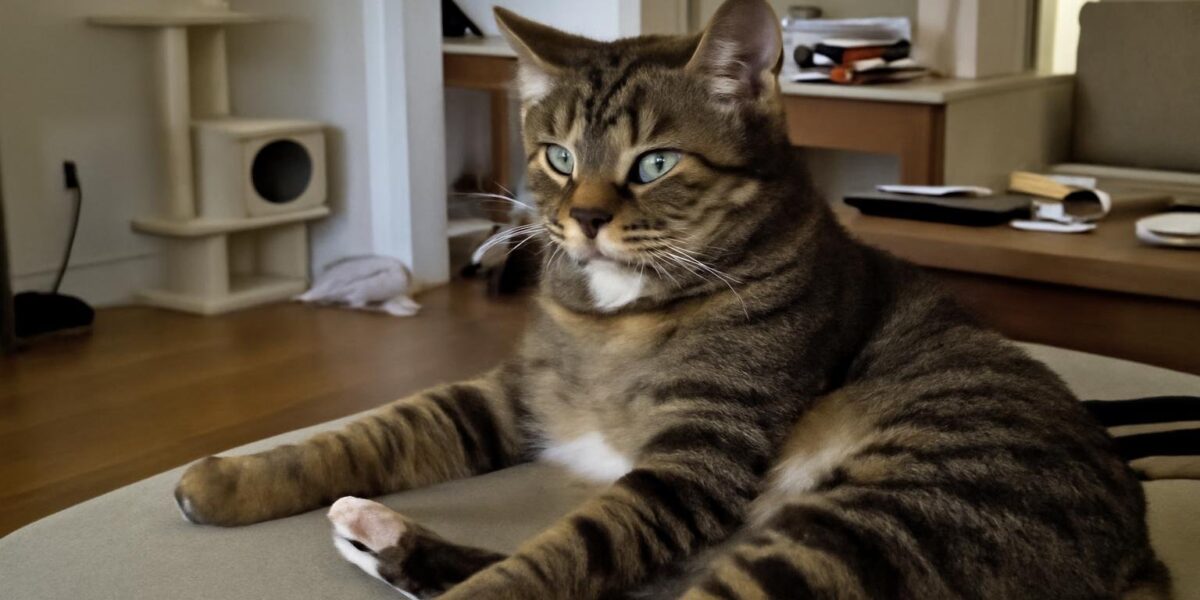
If you are asking why is my cat belly so big, the answer ranges from completely harmless to a sign that needs a vet. In many cats, a rounded lower belly is simply normal — including the loose flap of skin called the primordial pouch that swings as they walk, or extra weight from overfeeding. But a belly that grows suddenly, feels hard or tight, or comes with other symptoms like weight loss, breathing changes, or low energy can point to fluid buildup, organ enlargement, or other illness. When the change is sudden or paired with other signs, see a vet.
In this article
Below you’ll find the common reasons a cat’s belly looks big, how to tell the harmless causes from the worrying ones, and when to seek care.
Harmless Reasons for a Big Belly
Plenty of round-bellied cats are perfectly healthy:
- The primordial pouch — a normal flap of loose skin and fat along the lower belly that all cats have. It is more obvious in some cats and sways when they move. This is completely normal.
- Being overweight — a slow, gradual increase in belly size, often with a broader body overall, usually means extra weight from too many calories or too little activity.
- A full meal — a temporarily rounder belly right after eating is normal and settles on its own.
- Pregnancy — in an unspayed female, a growing belly may simply mean kittens are on the way.
These causes develop slowly or come and go, and your cat otherwise feels well, eats normally, and stays active.
Medical Causes That Need Attention
A big belly is more concerning when it appears quickly or comes with other symptoms. Possible medical causes include:
- Fluid buildup (ascites) — fluid in the abdomen can come from heart, liver, or other diseases, including feline infectious peritonitis (FIP), and makes the belly look swollen and tight.
- Organ enlargement — an enlarged liver, spleen, or kidneys, or a mass, can distend the belly.
- Constipation or intestinal blockage — backed-up stool or an obstruction can swell and harden the belly and cause discomfort.
- Parasites — heavy worm burdens, especially in kittens, can cause a pot-bellied look.
- Hormonal conditions — some diseases cause both belly distension and other body changes.
Because you cannot tell fat from fluid or a mass just by looking, a vet exam — often with imaging or bloodwork — is the only reliable way to know what is causing the swelling.
When to See a Vet or Treat It as Urgent
Schedule a veterinary visit if you notice any of these alongside a bigger belly:
- A sudden or rapidly growing belly
- A hard, tight, or painful abdomen
- Weight loss elsewhere while the belly grows
- Reduced appetite, vomiting, or lethargy
- Difficulty breathing or breathing faster than usual
- Straining to pass stool or no stool for more than a day or two
Treat it as an emergency — seek care immediately — if your cat has a hard, distended belly with labored breathing, repeated retching, collapse, or obvious pain. These can signal a blockage or serious internal problem. Keeping a home pet first-aid and emergency station ready helps you act quickly when something looks wrong.
What You Can Do at Home
While you arrange care or monitor a healthy cat’s weight, these steps help:
- Feel gently. Note whether the belly is soft and squishy (often fat) or hard and tight (more concerning), but stop if your cat shows pain.
- Track the change. Photos over days or weeks help you and your vet judge whether it is slow weight gain or rapid swelling.
- Watch the whole cat. Appetite, energy, litter box habits, and breathing all add important context.
- Don’t crash-diet. If weight is the issue, ask your vet for a safe plan — rapid weight loss is dangerous for cats.
- Stay current on deworming. Especially for kittens and outdoor cats.
If your cat seems uncomfortable or withdrawn, subtle posture changes can be telling. Our cat body language guide helps you read when a cat is quietly unwell rather than just relaxed.
Reading Your Cat’s Body Condition
You can learn a lot by assessing your cat’s overall body condition, not just the belly. Veterinarians use a simple hands-on check that you can do at home between visits. The point is to separate “rounded but healthy” from “this needs a look.”
Run your hands gently over these areas:
- Ribs: you should be able to feel them with light pressure, like feeling the back of your hand. If you cannot find them under a thick layer, your cat is likely carrying extra weight.
- Waist: looking down from above, a healthy cat has a slight inward tuck behind the ribs. A straight or bulging outline suggests weight gain or distension.
- Belly tuck: from the side, the belly should rise slightly toward the hind legs. A belly that hangs low and even can be fat or the normal primordial pouch.
- Spine and hips: these should be palpable but not sharply prominent.
If the ribs are buried and the waist is gone, the likely answer to why the belly is big is gradual weight gain — manageable with your vet’s help. If the body looks lean elsewhere while the belly alone is swollen and tight, that mismatch is a red flag for fluid or organ enlargement and needs prompt evaluation. A big belly sometimes accompanies digestive upset too; if your cat is also having loose stools, our guide to cat diarrhea causes and treatment can help you gauge whether the two together warrant a faster vet visit.
Keeping Your Cat at a Healthy Weight
If the cause turns out to be extra weight, you are not alone — feline obesity is very common and very manageable. Work with your vet on portion control, measured meals instead of free-feeding, and more play and movement. Even modest weight loss reduces the risk of diabetes, joint strain, and other health problems.
For belly changes caused by illness, treatment depends entirely on the diagnosis, which is why a timely vet visit matters. Catching fluid buildup, an enlarged organ, or a mass early gives your cat the best chance at effective care.
Making weight management sustainable is mostly about small, consistent habits. Measure meals with an actual measuring cup or a kitchen scale rather than eyeballing, since even a little extra at each meal adds up over a year. Swap some free-fed dry food for measured portions, use puzzle feeders to slow eating and add activity, and schedule short daily play sessions with a wand toy to get your cat moving. Treats count toward daily calories, so trim them or use part of her regular ration as rewards.
Throughout, weigh your cat regularly — a home scale works, or you can use vet visits — so you can track the trend rather than guessing. Aim for slow, steady loss under your vet’s guidance, never a crash diet, because cats who lose weight too fast can develop a dangerous liver condition. With patience and a clear plan, most overweight cats can reach a healthier size, and a slimmer, more active cat tends to be a happier, longer-lived companion.
The most important takeaway is to trust sudden change as a signal. A belly that has been gently round for years, with your cat eating, playing, and feeling well, is usually just her shape. A belly that swells over days or weeks, especially with a hard feel, weight loss elsewhere, low energy, or any breathing difficulty, is a different story and should not wait. You cannot tell fat from fluid or a mass by looking, so when something feels off, a vet exam with hands-on assessment and, if needed, imaging or bloodwork is the only way to get a real answer — and getting that answer early gives your cat the best possible outcome.
Frequently Asked Questions
Is the saggy belly on my cat normal?
Often, yes. The low, swinging flap of skin is the primordial pouch, a normal feature all cats have. It is harmless on its own, though a separate, sudden, or hard swelling should be checked by a vet.
How can I tell if my cat is fat or has fluid in her belly?
Fat usually feels soft and develops slowly, while fluid or a mass often feels tighter and appears more suddenly. You cannot be sure at home, so a vet exam and possibly imaging are needed to know.
Can worms make my cat’s belly big?
Yes, a heavy worm burden can cause a pot-bellied look, especially in kittens. Regular deworming as advised by your vet helps prevent this.
My cat’s belly got big very fast — should I worry?
A sudden increase in belly size deserves prompt veterinary attention, especially with a hard belly, breathing trouble, vomiting, or low energy. Rapid swelling can signal fluid, a blockage, or organ problems.
Could my unspayed cat be pregnant?
If she is unspayed and had access to a male, a growing belly may mean pregnancy. A vet can confirm and advise you on care, and spaying after the litter helps prevent future surprises.


