
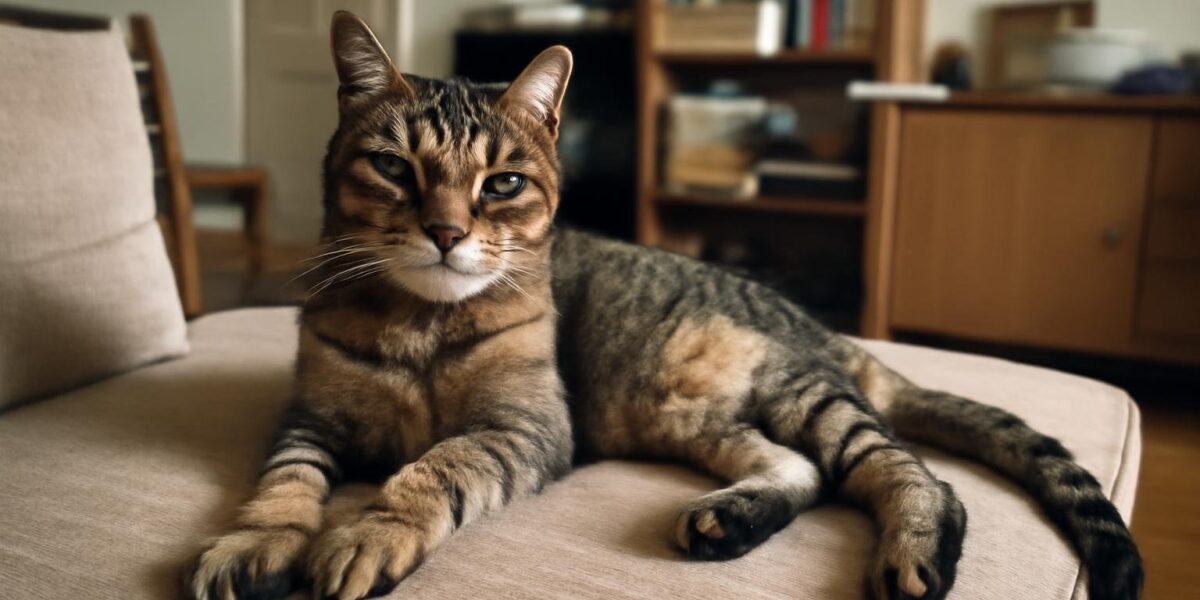
If you are wondering why is my cat snoring, the reassuring answer is that snoring is often completely harmless. Many cats snore during deep, relaxed sleep simply because of how they are lying, and flat-faced breeds like Persians and Himalayans snore more because of their short noses. That said, snoring that is brand new, getting louder, or paired with breathing changes, discharge, or other symptoms can signal a problem worth a vet’s attention. And one thing to be clear about: snoring happens while a cat sleeps — labored or open-mouth breathing while awake is a different, urgent issue that needs emergency care.
In this article
Below you’ll find the common reasons cats snore, how to tell relaxed snoring from a warning sign, and when to call your vet.
Why Many Cats Snore Normally
Plenty of healthy cats snore, and it usually comes down to anatomy and sleeping position:
- Sleep position — when a cat curls or stretches so the airway bends, soft tissues vibrate and create that gentle snore. It often stops when she shifts.
- Flat-faced (brachycephalic) breeds — Persians, Himalayans, and Exotics have shortened nasal passages, so snoring is common and often normal for them.
- Deep relaxation — a fully relaxed cat in deep sleep has loose throat muscles, which can produce soft snoring.
- Extra weight — overweight cats may snore more because of tissue around the airway.
If your cat has always snored a little, is comfortable, eats well, and breathes normally when awake, this kind of snoring is usually nothing to worry about.
When Snoring Points to a Problem
Snoring deserves a closer look when it is new, louder, or comes with other signs. Possible causes include:
- Upper respiratory infection — a cat cold can cause congestion, sneezing, nasal discharge, and snoring while the nose is stuffy.
- Nasal congestion or allergies — irritants, dust, or allergies can swell the nasal passages.
- Foreign object or polyp — a grass blade, polyp, or growth in the nose or throat can block airflow and cause noisy breathing.
- Obesity — significant excess weight narrows the airway and increases snoring.
- Dental or throat problems — issues in the mouth or throat can change breathing sounds.
Because some of these need treatment, a sudden change in your cat’s snoring, or snoring with discharge or congestion, is worth mentioning to your vet.
When to See a Vet or Treat It as Urgent
Book a veterinary visit if you notice any of these along with the snoring:
- Snoring that is new or has become noticeably louder
- Sneezing, runny nose, or eye discharge
- Reduced appetite, low energy, or weight loss
- Noisy breathing while awake, not just asleep
- A change in voice, swallowing, or facial swelling
Treat it as an emergency — seek care immediately — if your cat is breathing with her mouth open, panting, breathing fast or with effort while at rest, has blue or pale gums, or seems to be struggling for air. That is not snoring and is a respiratory emergency. A ready home pet first-aid and emergency station helps you respond fast if breathing ever looks distressed.
What You Can Do at Home
For ordinary snoring, a few simple steps can help, and they also let you monitor for changes:
- Note the pattern. Record when the snoring started, whether it is constant or only in certain positions, and any other symptoms.
- Keep the air clean. Reduce dust, smoke, and strong scents that can irritate nasal passages.
- Support a healthy weight. If your cat is overweight, ask your vet for a safe plan, since trimming down can reduce snoring.
- Offer a humid space. If she is congested from a cold, a steamy bathroom for a few minutes can ease a stuffy nose, but check with your vet too.
- Watch awake breathing. Make sure her breathing is quiet and effortless when she is up and about.
Knowing your cat’s normal resting breathing helps you spot trouble early. Counting breaths while she sleeps and noting her usual rate gives you a baseline, and our cat body language guide helps you read overall comfort and stress.
Snoring vs. Other Breathing Sounds
Cats make a surprising range of breathing noises, and telling them apart helps you know when to relax and when to act. True snoring is a soft, rhythmic, rattling sound that happens only during sleep and stops when your cat wakes or shifts position. It comes from vibrating soft tissue in a relaxed airway and is usually nothing to worry about on its own.
Other sounds carry more weight:
- Wheezing or whistling while awake can signal asthma or airway narrowing and deserves a vet visit.
- Congested, snuffly breathing with a runny nose suggests an upper respiratory infection.
- Open-mouth breathing or panting at rest is abnormal in cats and is an emergency.
- Rapid, shallow, or effortful breathing with heaving sides needs immediate care.
A simple home check is to count your cat’s resting or sleeping breaths. Watch her chest rise and fall for 30 seconds and double it. A relaxed, healthy cat usually breathes fewer than about 30 breaths per minute at rest. A consistently higher rate, or visible effort, is a reason to call your vet even if the sound seems like “just snoring.” Because some cats with breathing changes also seem to pant, our guide to cat panting causes explains when open-mouth breathing crosses from normal-after-play into emergency territory.
Keeping Your Cat Breathing Easy
For most cats, snoring needs no treatment beyond awareness. Maintaining a healthy weight, keeping the home free of irritants, and staying current on the vaccines and parasite care your vet recommends all support clear, comfortable breathing.
Flat-faced breeds will likely always snore somewhat, and that is okay — just stay alert to any change in their breathing, since they are more prone to airway issues. Any new noise, congestion, or daytime breathing effort is your cue to check in with your vet.
A little record-keeping makes a big difference if you ever do need a vet’s help. Note when the snoring started, whether it is constant or position-dependent, and whether it has changed in volume or character. If you can, capture a short video of the breathing — both the snoring at rest and any awake breathing that worries you. Vets find these clips genuinely useful, because breathing sounds can be hard to describe in words and may not be present in the exam room.
For flat-faced cats especially, supporting comfortable breathing is part of everyday care. Keep them cool, since heat makes their breathing harder, avoid pressure on the neck by using a harness rather than a collar for any leash work, and maintain a healthy weight to take strain off the airway. With these small steps and a watchful eye for any change, most snoring stays in the harmless, even endearing, category — and you will know exactly when a sound has crossed the line into something that needs professional attention.
The single most reassuring habit you can build is knowing your cat’s normal. Once you have watched her sleep and counted her resting breaths a few times, you will instantly notice if the rate climbs, the effort increases, or the snore turns into something harsher. That baseline is what separates an owner who panics over every snuffle from one who can calmly tell the difference between a contented snore and a real warning sign. When in doubt, a short call or video sent to your vet usually settles the question quickly, and that small step keeps both you and your cat breathing easy.
Frequently Asked Questions
Is it normal for cats to snore?
Yes, many healthy cats snore, especially in certain sleep positions or if they are flat-faced breeds. Snoring is usually harmless when it is longstanding and your cat breathes normally while awake.
Why do flat-faced cats snore more?
Breeds like Persians and Himalayans have shortened nasal passages, which makes air pass more noisily. Snoring is common and often normal for them, though they are also more prone to airway problems, so monitor any changes.
When should I worry about my cat’s snoring?
Be cautious if the snoring is new or louder, or comes with sneezing, nasal discharge, appetite loss, or weight loss. See your vet, and seek emergency care if your cat struggles to breathe or breathes with an open mouth while awake.
Can being overweight make my cat snore?
Yes. Extra weight adds tissue around the airway and can increase snoring. A safe, vet-guided weight loss plan often helps both the snoring and your cat’s overall health.
Is snoring the same as labored breathing?
No. Snoring happens during sleep and sounds soft and rhythmic. Labored, fast, or open-mouth breathing while awake is an emergency and needs immediate veterinary attention. To check, watch her chest rise and fall while she rests, count the breaths for 30 seconds, and double it — a relaxed, healthy cat is usually under about 30 breaths per minute, so a consistently higher rate or visible effort is a reason to call your vet.


