
Last updated: April 9, 2026
In this article
Quick Answer: Yes, daffodils are toxic to cats. Every part of the daffodil plant — flowers, stems, leaves, and sap — contains compounds that can cause serious illness in cats, and the bulb is the most dangerous part of all. If your cat has eaten any part of a daffodil, contact your veterinarian or an animal poison hotline immediately.
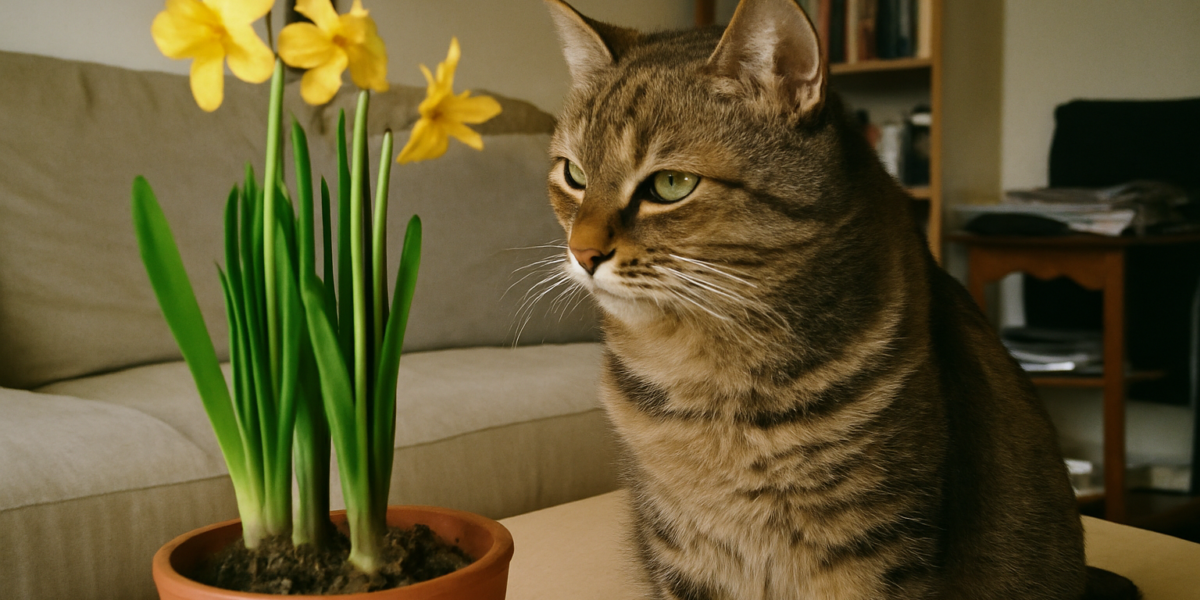
Few flowers signal the arrival of spring quite like the daffodil. Their bright yellow blooms appear in gardens, window boxes, and fresh-cut arrangements throughout the season — but for households that include cats, daffodils carry a genuine danger. Daffodils are toxic to cats, and exposure happens more often than most owners expect. A curious cat may chew on a stem left in a vase, bat a flower off a countertop, or investigate a pot of bulbs near a windowsill. Knowing the science behind the toxicity, the symptoms to watch for, and the correct steps to take can protect your cat from a potentially serious poisoning event. This guide covers everything you need to know.
Why Are Daffodils Toxic to Cats?
Daffodils belong to the genus Narcissus and contain two primary toxic compounds: lycorine and calcium oxalate crystals. Lycorine is an alkaloid found throughout the entire plant, including the petals, leaves, stems, and especially the bulb. When ingested, lycorine triggers severe vomiting by stimulating the vomiting center in the brain and irritating the gastrointestinal lining. Calcium oxalate crystals are needle-like structures concentrated in the bulb and sap that cause immediate mechanical irritation to the mouth, throat, and digestive tract on contact. Together, these compounds make daffodils toxic to cats at almost every level of exposure. The bulb holds the highest concentration of both toxins, making it the most dangerous part of the plant. Even the water in a vase containing cut daffodils can become contaminated with lycorine and cause illness if a cat drinks from it.
Symptoms of Daffodil Poisoning in Cats
Symptoms can begin within minutes of ingestion, particularly if the cat chewed or swallowed bulb material. Because daffodils are toxic to cats through more than one mechanism, the clinical signs span several body systems.
- Excessive drooling — one of the earliest signs, caused by calcium oxalate crystals irritating the mouth and throat
- Vomiting — often persistent and may begin very rapidly due to lycorine’s direct effect on the vomiting center
- Diarrhea — may accompany vomiting and can lead to rapid fluid loss
- Lethargy and weakness — the cat may become unusually still, unresponsive, or reluctant to move
- Loss of appetite — refusal to eat or drink following exposure
- Abdominal pain — the cat may hunch over, guard its belly, or vocalize when touched
- Tremors or muscle weakness — more common with significant ingestion, especially of the bulb
- Low blood pressure and irregular heart rate — serious systemic effects seen in severe cases
- Collapse — rare but possible with large exposures, particularly involving the bulb
Even mild exposure can cause distressing symptoms. Do not wait for signs to worsen before contacting a veterinarian — early treatment consistently produces better outcomes.
What to Do If Your Cat Ate a Daffodil
Stay calm and act without delay. The actions you take in the first hour matter significantly.
- Remove your cat from the plant. Prevent any further contact or ingestion immediately.
- Identify what was consumed. Note which part of the plant — petal, leaf, stem, bulb, or vase water — and estimate how much. Take a photograph of the plant if possible.
- Call your veterinarian right away. If your regular clinic is unavailable, contact an emergency animal hospital. You can also reach the ASPCA Animal Poison Control Center at (888) 426-4435 (a consultation fee may apply) or the Pet Poison Helpline at (855) 764-7661.
- Do not induce vomiting at home unless a veterinary professional explicitly instructs you to do so. Inducing vomiting incorrectly can cause additional harm or aspiration.
- Bring the plant or a clear photo to your appointment. Accurate identification helps your veterinarian determine the safest and most effective treatment without delay.
Because daffodils are toxic to cats in ways that can escalate quickly — particularly if bulb material was involved — a professional assessment is always the right call, even if your cat appears fine at first. For more general guidance on keeping cats healthy and safe, visit our cat care blog.
Treatment for Daffodil Poisoning in Cats
There is no specific antidote for daffodil toxicity, but prompt veterinary care is highly effective. If ingestion was recent and the cat is stable, your veterinarian may induce vomiting to limit further absorption of lycorine. Activated charcoal can be given to bind remaining toxins in the digestive tract. Intravenous fluids are commonly administered to correct dehydration, maintain blood pressure, and support kidney function. Anti-nausea medications and gastrointestinal protectants help manage persistent vomiting and abdominal irritation. In severe cases involving cardiovascular effects, additional monitoring and supportive care may be needed. Most cats that receive prompt treatment recover fully within 24 to 48 hours, though significant bulb ingestion may require a longer hospital stay.
How to Keep Cats Safe from Daffodils
The most effective strategy is prevention. Because daffodils are toxic to cats from root to petal, the safest approach is to eliminate any access your cat has to the plant.
- Avoid bringing cut daffodils indoors. Even a vase of cut stems poses a risk — cats may chew on them or drink the contaminated vase water. If you receive daffodils as a gift, keep them in a room your cat cannot enter and dispose of them promptly.
- Do not plant daffodil bulbs in garden beds accessible to cats. Cats are attracted to freshly turned soil and may dig up and chew on bulbs. Use raised beds with covers, fencing, or physical barriers if daffodils are part of your outdoor planting.
- Store bulbs in sealed containers. Unused bulbs kept in garages, sheds, or storage areas should be secured so that no pet can access them.
- Educate everyone in the household. Family members, guests, and anyone who might bring flowers into the home should know that daffodils are toxic to cats so they can make safer choices.
- Check new plants before bringing them home. Any time a new plant or arrangement enters your home, verify its safety for cats using the ASPCA’s free toxic plant database before placing it within your cat’s reach.
Cat-Safe Spring Flower Alternatives
You do not need to give up seasonal flowers to keep your cat safe. Many beautiful spring blooms are non-toxic to cats and make excellent substitutes for daffodils in both indoor arrangements and outdoor gardens.
- Roses — classic, widely available, and non-toxic to cats (remove thorns to prevent physical injury)
- Snapdragons — colorful, spring-appropriate, and completely cat-safe
- Gerbera daisies — bright, cheerful, and non-toxic; a natural visual substitute for daffodils
- Orchids — elegant and long-lasting; phalaenopsis orchids are non-toxic and widely available
- Freesias — fragrant and cat-safe, available in vivid yellows and oranges that echo the look of daffodils
- Sunflowers — bold, seasonal, and safe for cats in both indoor and outdoor settings
- Lisianthus — a ruffled, long-lasting cut flower that is non-toxic and visually striking
When in doubt, cross-reference any plant with the ASPCA’s toxic and non-toxic plant list, or ask your florist to build a cat-safe arrangement. For more tips on creating a cat-friendly home environment, explore our cat care blog.
Frequently Asked Questions
Are daffodils toxic to cats if a cat only sniffs the flower?
Simply sniffing a daffodil is unlikely to cause serious poisoning, but it is not entirely without risk. The sap of a daffodil can cause skin and mucous membrane irritation on direct contact, and cats that rub their faces against the flowers may transfer pollen or sap to their paws and then ingest it during grooming. The primary danger comes from chewing or swallowing any part of the plant. Because daffodils are toxic to cats through direct ingestion, the safest approach is to keep the plant out of reach entirely.
Which part of the daffodil is most dangerous to cats?
The bulb is the most toxic part of the daffodil because it contains the highest concentration of lycorine and calcium oxalate crystals. However, the flowers, leaves, stems, and even the water in a vase containing cut daffodils all carry enough lycorine to cause illness. There is no part of the plant that is safe for cats to ingest. Any confirmed or suspected ingestion — regardless of which part was involved — warrants immediate veterinary contact.
How quickly do symptoms appear after a cat eats a daffodil?
Symptoms can begin within minutes of ingestion, particularly the oral irritation caused by calcium oxalate crystals. Vomiting often follows rapidly due to lycorine’s direct action on the brain’s vomiting center. In some cases, gastrointestinal symptoms may take up to a few hours to fully develop. Do not wait for symptoms to appear before calling your vet — daffodils are toxic to cats in a way that can progress quickly, and early intervention is always more effective than reactive treatment.
Can daffodil poisoning in cats be fatal?
While fatalities from daffodil ingestion are uncommon, they are possible in severe cases — particularly if a cat ingests a significant quantity of bulb material and does not receive timely veterinary care. The cardiovascular and neurological effects associated with large exposures can become life-threatening without treatment. Most cats that are treated promptly recover fully. The key is to act immediately rather than waiting to see how serious the symptoms become. If you suspect your cat has eaten any part of a daffodil, call a veterinarian or poison control hotline without delay.


