
Last updated: April 9, 2026
In this article
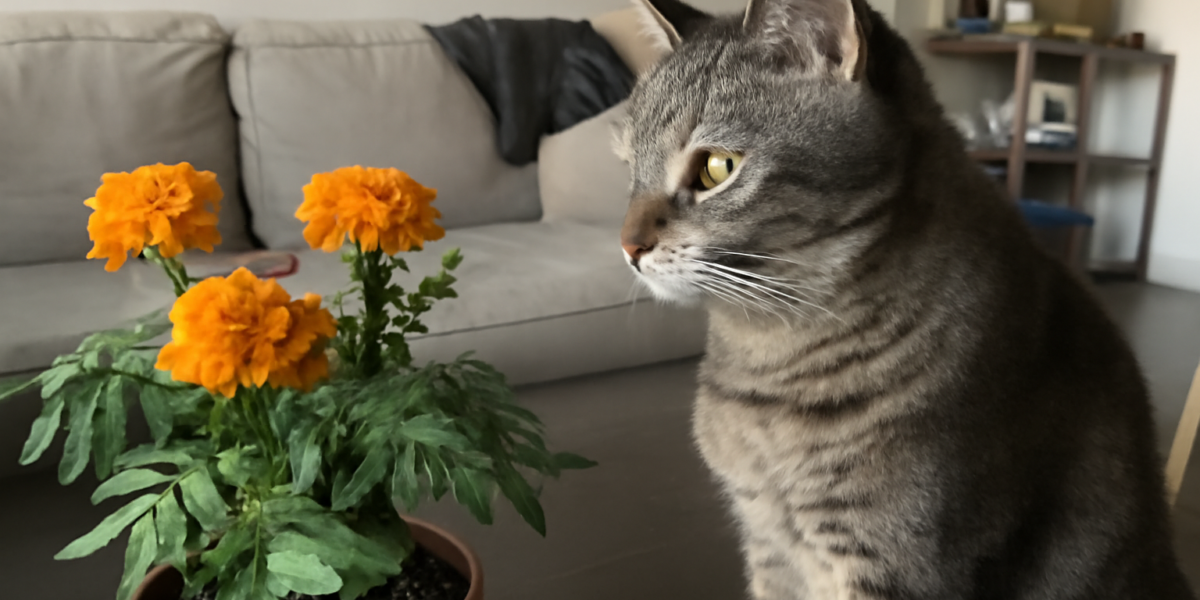
Quick Answer: Yes, marigolds are mildly toxic to cats. Marigolds (Tagetes species) contain irritating compounds that can cause gastrointestinal upset — including vomiting and drooling — as well as skin irritation on contact. While marigold toxicity is generally considered mild and is unlikely to cause lasting organ damage, any cat that has chewed or ingested marigold plant material should be assessed by a veterinarian promptly.
Marigolds are one of the most popular garden flowers in North America. Their bright orange and yellow blooms line flowerbeds, border vegetable gardens, and fill window boxes from late spring through autumn. Gardeners prize them for their color and reputation as natural pest deterrents. But for households with cats, that cheerful border plant carries a real — if modest — risk. Are marigolds toxic to cats? Yes, and understanding the specifics of that toxicity helps you protect your pet before any problem develops.
Are Marigolds Toxic to Cats?
Yes, marigolds are toxic to cats, though the level of toxicity is classified as mild. The plants most commonly encountered in home gardens and floral arrangements belong to the genus Tagetes — this includes French marigolds (Tagetes patula), African marigolds (Tagetes erecta), and signet marigolds (Tagetes tenuifolia). All Tagetes species share the same class of irritating compounds and should be treated with equal caution around cats.
The primary irritants in marigolds are thiophenes and other volatile oils found throughout the plant, including in the leaves, stems, flowers, and roots. These compounds are responsible for the distinctive sharp, musky scent that marigolds produce — a smell that many cats find naturally off-putting. However, some cats will still chew or nibble on the plant out of curiosity, especially young or indoor cats introduced to garden environments. It is also worth noting that some marigold-derived products contain pyrethrins, the same insecticidal compounds found in chrysanthemums, which are particularly harmful to cats. While pyrethrin levels in garden marigolds are generally low, they contribute to the plant’s overall toxicity profile. The ASPCA lists Tagetes species as toxic to cats, and that classification should guide how you manage these plants in any space your cat can access.
Symptoms of Marigold Toxicity in Cats
If your cat has chewed, eaten, or had prolonged skin contact with a marigold plant, symptoms typically appear within one to two hours of exposure. Because marigolds are mildly toxic to cats rather than severely toxic, most cases do not progress to life-threatening illness — but they can still cause significant discomfort and, if left unaddressed, complications from dehydration.
Gastrointestinal signs are the most common result of ingestion. These include vomiting, diarrhea, hypersalivation (excessive drooling), and reduced appetite. Your cat may also paw at its mouth, show reluctance to eat or drink, or appear generally subdued and uncomfortable in the hours following exposure.
Skin and eye irritation can develop when a cat rubs against the foliage or flowers. The volatile oils in marigold plants transfer easily to fur and skin on contact. You may notice redness, localized swelling, or persistent scratching at the face and neck. If the oils reach the eyes — either directly or during grooming — you may see watery eyes, squinting, or pawing at the face.
Coat and skin irritation from grooming is a secondary concern that is easy to overlook. Because cats groom themselves constantly, any plant material or residue that transfers to the coat will eventually be ingested. This means that even a cat that only brushed against a marigold may later develop gastrointestinal symptoms as it grooms the irritants from its fur.
Neurological signs are not a primary feature of marigold toxicity but may appear with unusually large ingestions. If your cat shows any muscle tremors, loss of coordination, or unusual weakness after contact with marigolds, treat it as a veterinary emergency.
What to Do If Your Cat Ate Marigolds
Acting quickly and calmly is the best approach. Even mild plant toxicity can escalate, and early veterinary guidance leads to better outcomes than a wait-and-see approach.
- Remove your cat from the plant immediately. Prevent any further chewing or contact. If marigold pollen, sap, or plant material is visible on your cat’s coat, gently wipe the affected areas with a damp cloth to reduce the amount your cat will ingest during grooming.
- Assess the exposure. Note which parts of the plant your cat contacted — flowers, leaves, or stems — and try to estimate the quantity. Take a photograph of the plant for reference when you speak to your veterinarian.
- Call your veterinarian right away. Do not wait for symptoms to appear or worsen. If your regular clinic is unavailable, contact an emergency animal hospital. You can also reach the ASPCA Animal Poison Control Center at (888) 426-4435 (a consultation fee may apply) or the Pet Poison Helpline at (855) 764-7661, both available 24 hours a day, seven days a week.
- Do not induce vomiting at home unless a veterinary professional explicitly instructs you to do so. Inducing vomiting incorrectly can cause additional harm to your cat.
- Bring the plant or a photo to the clinic. Accurate identification allows your veterinarian to make faster, more confident treatment decisions.
Veterinary treatment for mild marigold toxicity typically involves supportive care: anti-nausea medication, gastrointestinal protectants, and fluids to address any dehydration from vomiting or diarrhea. Most cats recover fully within 24 hours with appropriate care. For more guidance on cat safety at home, visit our cat care blog.
How to Keep Cats Safe Around Marigolds
Because marigolds are toxic to cats, the most reliable protection is to prevent access entirely. Fortunately, there are several practical steps that make this straightforward for most households.
- Move potted marigolds out of reach. If you grow marigolds in containers on a patio or balcony, place them in locations your cat cannot reach — elevated shelves, hanging planters, or fenced-off areas work well.
- Use garden barriers. If marigolds border your vegetable garden or flowerbeds, low decorative fencing or raised planters can keep cats from reaching the plants.
- Check cut flower arrangements. Marigolds occasionally appear in mixed bouquets. Examine any new floral arrangement and remove marigolds, or keep the arrangement in a cat-free room.
- Train household members. Make sure everyone in the home knows that marigolds are toxic to cats so that no one inadvertently brings them inside or plants them in an accessible area.
- Verify plants before buying. Use the ASPCA’s toxic and non-toxic plant database at aspca.org before introducing any new plant to your home or garden.
Cat-Safe Garden Alternatives
You do not have to sacrifice color or visual interest in your garden to keep your cat safe. Several popular flowering plants produce similarly vibrant blooms and are considered non-toxic to cats by the ASPCA.
- Zinnias — bright, long-blooming annuals in a wide range of warm colors; non-toxic to cats and easy to grow from seed
- Snapdragons (Antirrhinum) — tall, showy, and safe for cats; excellent for borders and cutting gardens
- Celosia (cockscomb) — bold, textural blooms in orange, red, and gold; non-toxic to cats and very low maintenance
- Gerbera daisies — cheerful and cat-safe; available in the same warm tones as marigolds
- Sunflowers (Helianthus annuus) — non-toxic to cats and a natural visual substitute for the yellow and orange palette marigolds provide
- Impatiens — shade-tolerant, non-toxic to cats, and available in vivid warm shades
When planning a garden you share with a cat, a full swap to cat-safe species is the safest long-term approach. For more tips on building a cat-friendly home and garden, explore our cat care blog.
Frequently Asked Questions
Are marigolds toxic to cats if they only sniff the flowers?
Brief sniffing is unlikely to cause illness on its own. The primary risk with marigolds comes from ingestion — chewing leaves, stems, or flowers — and from skin or coat contact that leads to grooming-related ingestion. The pollen and volatile oils from marigolds can transfer to your cat’s coat during close contact, and a cat that has been near the plant will groom those residues off its fur. For this reason, even casual contact warrants monitoring, and the safest approach is to keep cats away from the plants entirely rather than relying on the plant’s naturally off-putting scent to deter them.
Are all types of marigolds toxic to cats, or only certain varieties?
All commonly grown garden marigolds belong to the genus Tagetes — including French marigolds, African marigolds, and signet marigolds — and all are considered toxic to cats by the ASPCA. There is no variety of Tagetes marigold that is safe for cats to chew or ingest. Note that pot marigold (Calendula officinalis), a different plant species sometimes called by the same common name, is not classified in the same toxic category, though it can still cause mild GI upset and should not be freely accessible to cats. When in doubt, check the ASPCA’s plant database using the plant’s scientific name rather than its common name.
How serious is marigold toxicity compared to other toxic plants?
Marigolds are toxic to cats at a mild level, which places them in a significantly less dangerous category than plants like true lilies (Lilium and Hemerocallis species), which cause fatal kidney failure even in small amounts. Most cats that ingest marigolds experience temporary gastrointestinal upset — vomiting, diarrhea, drooling — that resolves with basic veterinary supportive care within 24 to 48 hours. Serious or lasting organ damage from marigold exposure alone is uncommon. That said, “mild” does not mean no action is required. Any cat that has eaten part of a marigold should still be evaluated by a veterinarian rather than monitored at home without guidance.
Do marigolds repel cats, or are some cats still attracted to them?
Marigolds are commonly recommended as a natural cat deterrent in gardens because the strong, pungent scent produced by their volatile oils is off-putting to many cats. There is anecdotal support for this use, and some gardeners plant marigolds deliberately to discourage cats from digging in beds. However, the deterrent effect is not universal. Some cats — particularly curious young cats or those with limited outdoor experience — will investigate and chew marigold plants despite the scent. Because marigolds are toxic to cats regardless of the typical deterrent effect, you should not rely on the plant’s smell alone to keep your cat safe. Physical barriers and supervised access remain the most reliable protective measures.


