
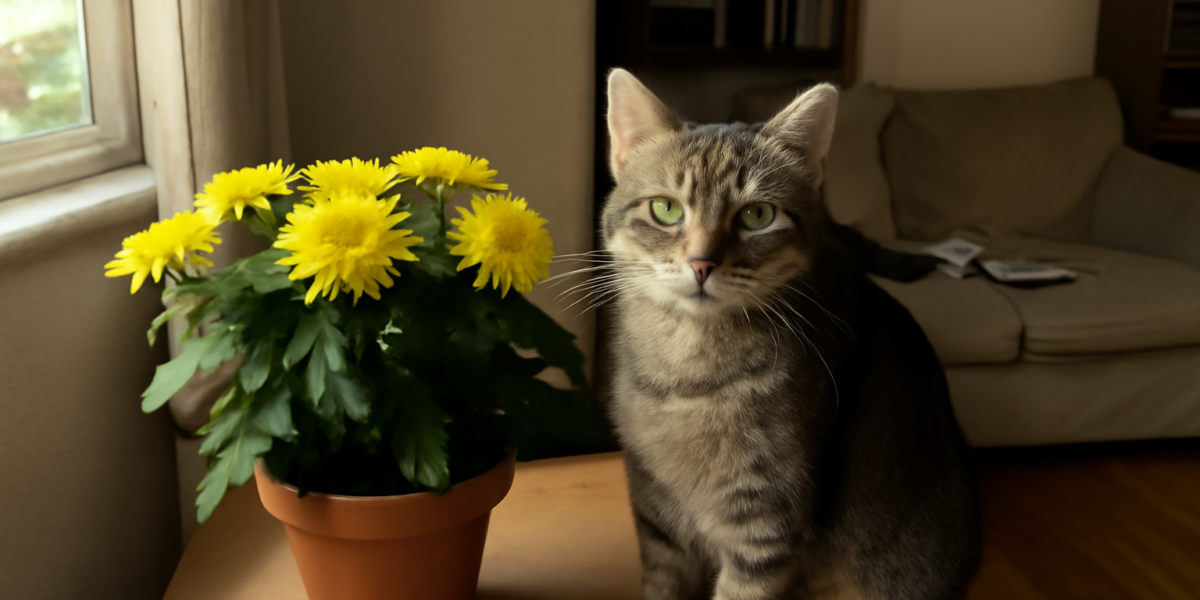
Last updated: April 10, 2026
In this article
- Why Are Chrysanthemums Toxic to Cats?
- Pyrethrins: The Key Toxic Compound in Chrysanthemums
- Which Parts of the Chrysanthemum Are Toxic to Cats?
- Symptoms of Chrysanthemum Poisoning in Cats
- Treatment for Chrysanthemum Poisoning in Cats
- Are Dried Chrysanthemums Toxic to Cats?
- Cat-Safe Flower Alternatives to Chrysanthemums
- How to Prevent Chrysanthemum Exposure in Cats
- Frequently Asked Questions
Quick Answer: Yes, chrysanthemums are toxic to cats. Every part of the chrysanthemum plant — flowers, leaves, stems, and pollen — contains pyrethrins and other irritating compounds that can cause vomiting, drooling, diarrhea, and skin irritation in cats. While chrysanthemum poisoning is rarely fatal, it can make your cat very uncomfortable and may require veterinary care. If your cat has eaten any part of a chrysanthemum, contact your veterinarian right away.
Chrysanthemums, commonly called mums, are one of the most recognizable flowers of the fall season. Their bold, layered blooms come in shades of gold, burgundy, orange, white, and lavender, and they appear everywhere from garden beds and porch planters to grocery store bouquets and Thanksgiving centerpieces. For cat owners, however, this beloved flower carries a hidden risk. Chrysanthemums are toxic to cats, and because mums are so widely available and frequently displayed both indoors and outdoors during their peak season, the chance of an unsuspecting cat encountering one is surprisingly high.
This guide explains exactly why chrysanthemums are dangerous for cats, which specific compounds cause harm, what symptoms to look for, how poisoning is treated, and what safer alternatives you can enjoy instead. Whether you are a long-time cat owner or considering adopting a new feline companion, knowing which plants to avoid is an essential part of responsible pet care.
Why Are Chrysanthemums Toxic to Cats?
Chrysanthemums belong to the genus Chrysanthemum within the daisy family (Asteraceae). The reason chrysanthemums are toxic to cats comes down to the specific chemical compounds found naturally throughout the plant. These compounds evolved as a defense mechanism to deter insects and other herbivores, but they also affect mammals — and cats are particularly sensitive.
The primary toxins in chrysanthemums include pyrethrins, sesquiterpene lactones, and other naturally occurring irritants. The combination of these substances is what makes the entire plant hazardous to felines, from the tips of the petals down to the roots. Both the ASPCA and the Pet Poison Helpline classify chrysanthemums as toxic to cats, and veterinary toxicologists consistently advise keeping all varieties of mums away from households with cats.
Pyrethrins: The Key Toxic Compound in Chrysanthemums
Pyrethrins are the most significant toxic compound in chrysanthemums when it comes to cats. These are natural insecticidal chemicals produced by the plant, and they are so effective at killing insects that they have been extracted and used commercially in flea treatments, insect sprays, and agricultural pest control products for decades. In fact, the synthetic versions of pyrethrins — called pyrethroids — are among the most widely used insecticides in the world.
While pyrethrins are considered relatively low-toxicity for humans and dogs, cats are a different story. Cats lack certain liver enzymes (specifically glucuronyl transferase) that other mammals use to metabolize and break down pyrethrins efficiently. This means that when a cat ingests pyrethrins from a chrysanthemum — or absorbs them through the skin — the compound stays active in the cat’s body for much longer, amplifying its toxic effects. This metabolic vulnerability is the reason cats are disproportionately affected by chrysanthemum exposure compared to other household pets.
In addition to pyrethrins, chrysanthemums contain sesquiterpene lactones, which are potent contact irritants. These compounds cause inflammation of the skin, mouth, and gastrointestinal tract on contact, contributing to the drooling, oral discomfort, and skin rashes commonly seen after exposure. Together, pyrethrins and sesquiterpene lactones make chrysanthemums a dual threat — causing both systemic toxicity and direct tissue irritation.
Which Parts of the Chrysanthemum Are Toxic to Cats?
All parts of the chrysanthemum plant are toxic to cats. There is no portion of a mum that is considered safe for feline contact or ingestion. However, the concentration of toxic compounds does vary somewhat between different parts of the plant.
- Flower heads — The blooms contain the highest concentration of pyrethrins. The ray florets (the petal-like structures) and the central disc florets both carry significant levels of the toxin. This is especially relevant because the flower head is the part most commonly displayed in arrangements and the most likely to attract a curious cat.
- Leaves — Chrysanthemum leaves contain pyrethrins and sesquiterpene lactones, though at somewhat lower concentrations than the flower heads. Cats that chew on leaves can still develop symptoms of poisoning.
- Stems — The stems carry lower concentrations of toxins compared to the flowers and leaves but are still considered hazardous. A cat that chews on a chrysanthemum stem can experience oral irritation and gastrointestinal distress.
- Pollen — Chrysanthemum pollen can cause irritation if a cat inhales it or transfers it to their mouth through grooming. While a brief sniff is unlikely to cause serious poisoning, a cat that rubs its face against a bloom and then grooms the pollen off its fur is ingesting the toxin.
- Roots — Though less commonly encountered, the root system also contains the plant’s characteristic toxic compounds.
The takeaway is straightforward: no part of a chrysanthemum should be considered safe around cats. Even dried chrysanthemum material retains enough toxicity to cause problems, which is an important point we will cover in more detail below.
Symptoms of Chrysanthemum Poisoning in Cats
If your cat has chewed on, eaten, or had significant skin contact with a chrysanthemum, symptoms can develop within minutes to a few hours. The severity depends on how much plant material was ingested, which part of the plant was involved, and the individual cat’s size and overall health. Here are the most common symptoms of chrysanthemum poisoning in cats:
- Vomiting — often the first sign noticed by owners, may begin within 30 minutes of ingestion
- Excessive drooling (hypersalivation) — caused by direct irritation of the mouth and esophagus from sesquiterpene lactones
- Diarrhea — frequently accompanies vomiting, which together can lead to dehydration
- Loss of appetite — the cat may refuse food or water due to nausea or oral discomfort
- Lethargy and depression — the cat seems unusually tired, withdrawn, or unresponsive
- Skin irritation or rash — redness, itching, or inflammation on the face, paws, or any skin that contacted the plant (a reaction to sesquiterpene lactones)
- Incoordination (ataxia) — wobbly walking or loss of balance, indicating neurological effects from pyrethrins
- Tremors or muscle twitching — seen in more severe cases, particularly with significant pyrethrin ingestion
- Difficulty breathing — rare, but possible with heavy exposure or in cats with pre-existing respiratory conditions
Most cases of chrysanthemum poisoning in cats are classified as mild to moderate. Fatalities are uncommon but not impossible, especially in kittens, elderly cats, or cats with compromised liver function. Regardless of apparent severity, any cat that has ingested chrysanthemum material should be evaluated by a veterinarian. Do not wait for symptoms to escalate before seeking help.
Treatment for Chrysanthemum Poisoning in Cats
There is no specific antidote for chrysanthemum or pyrethrin poisoning in cats, but veterinary supportive care is highly effective and most cats recover fully with prompt treatment.
When you arrive at the veterinary clinic, the vet will begin by assessing your cat’s vital signs and overall condition. Be prepared to share what part of the plant your cat ate, how much was consumed, and when the exposure occurred. Bringing a photo of the plant or a sample can help with identification.
Treatment typically includes one or more of the following approaches:
- Decontamination. If ingestion was recent (within the last one to two hours) and the cat is not already vomiting, the veterinarian may induce vomiting to remove remaining plant material from the stomach. Activated charcoal may be administered to bind residual toxins in the digestive tract and reduce further absorption.
- Intravenous (IV) fluids. Fluid therapy is a cornerstone of treatment. IV fluids help maintain hydration, support kidney function, stabilize blood pressure, and speed the clearance of toxins from the body.
- Anti-nausea medication. Drugs such as maropitant (Cerenia) may be given to control vomiting and reduce nausea, making the cat more comfortable and preventing further fluid loss.
- Muscle relaxants or anti-tremor medication. If the cat is experiencing tremors, twitching, or seizure-like activity from pyrethrin toxicity, the vet may administer methocarbamol or other appropriate medications to control neuromuscular symptoms.
- Bathing for dermal exposure. If the cat’s skin has been in prolonged contact with chrysanthemum sap or pollen, a gentle bath with mild dish soap can help remove residual irritants from the coat and skin.
- Monitoring. Cats with moderate to severe symptoms may be kept under observation for 12 to 24 hours to ensure their vital signs remain stable and that symptoms are resolving.
With appropriate care, most cats recover from chrysanthemum poisoning within 24 to 48 hours. Cats that experienced only mild drooling or a single episode of vomiting after chewing a small piece of a leaf may improve quickly with minimal intervention, but a veterinary consultation is still the safest course of action.
Are Dried Chrysanthemums Toxic to Cats?
Yes, dried chrysanthemums are still toxic to cats. Drying the plant does not eliminate or significantly reduce the concentration of pyrethrins or sesquiterpene lactones. In fact, some sources suggest that dried chrysanthemum flowers may contain a slightly higher concentration of pyrethrins per gram than fresh flowers, because the water content has evaporated while the chemical compounds remain intact.
This is an important consideration for several reasons. Dried chrysanthemum arrangements and wreaths are popular fall and winter decorations. Chrysanthemum flowers are also used in certain herbal teas (chrysanthemum tea is a common beverage in East Asian cultures). Potpourri blends frequently include dried chrysanthemum petals for color and fragrance. Any of these dried products can be just as dangerous to a curious cat as a fresh bouquet of mums.
If you keep dried flower arrangements, wreaths, or potpourri that contain chrysanthemums, store them well out of your cat’s reach or, better yet, replace them with cat-safe alternatives. If you drink chrysanthemum tea, keep the dry flowers and brewed tea in sealed containers your cat cannot access. Discarded tea leaves and spent flower material should be disposed of in a cat-proof waste bin.
Cat-Safe Flower Alternatives to Chrysanthemums
The good news is that you do not have to sacrifice color and beauty in your home or garden to keep your cat safe. Many gorgeous flowers and plants are non-toxic to cats and can fill the same decorative role as chrysanthemums, especially during the fall season.
- Roses — available year-round, non-toxic to cats, and come in every color imaginable (remove thorns to prevent scratches)
- Sunflowers — bold, cheerful, and completely safe for cats; an excellent autumn substitute for mums
- Gerbera daisies — bright and low-maintenance with a daisy-like shape similar to chrysanthemums, but non-toxic
- Zinnias — vibrant fall-colored blooms that are safe for cats and easy to grow
- Snapdragons — colorful, non-toxic, and available in many of the same warm tones as chrysanthemums
- Orchids (Phalaenopsis) — elegant, long-lasting, and considered non-toxic to cats
- African violets — a compact, colorful houseplant that is safe for cats and blooms reliably indoors
- Marigolds (Tagetes species) — while a different genus than chrysanthemums despite a similar appearance, common garden marigolds are generally considered non-toxic to cats, though they may cause mild stomach upset if eaten in quantity
- Spider plants and Boston ferns — for greenery, both are non-toxic and add life to any room
When shopping for flowers or plants, always verify safety before bringing anything new into a home with cats. If you are unsure about a specific variety, check the ASPCA’s toxic and non-toxic plant database. Many florists are willing to create custom arrangements using only pet-safe flowers if you let them know about your needs. To explore more about different cat breeds and their unique sensitivities, visit our breed directory.
How to Prevent Chrysanthemum Exposure in Cats
Prevention is always better than treatment. Because chrysanthemums are toxic to cats in every form — fresh, dried, or as pollen — the most reliable strategy is to keep them completely out of your cat’s environment.
- Do not bring chrysanthemums indoors. If you receive mums as a gift or pick them up at the store, display them in a room your cat absolutely cannot access — or choose a safer flower instead.
- Check outdoor garden beds. If you plant mums in your yard, make sure they are in an area your cat cannot reach. Indoor-outdoor cats can encounter chrysanthemums in neighbors’ gardens as well, which is harder to control.
- Inspect fall decorations. Seasonal wreaths, dried arrangements, and potpourri may contain chrysanthemum material. Read labels and ingredient lists carefully before decorating.
- Educate your household. Make sure everyone in your home — family members, roommates, visitors — understands that chrysanthemums are not safe around cats.
- Act quickly if exposure occurs. If you see your cat chewing on or near a chrysanthemum, remove the cat from the plant immediately, check for any plant material in the mouth, and call your veterinarian.
If you are thinking about adopting a cat, now is a great time to audit your home and garden for toxic plants before your new companion arrives. A little preparation goes a long way toward preventing an emergency.
Frequently Asked Questions
Are chrysanthemums toxic to cats if they only sniff them?
A brief sniff of a chrysanthemum is unlikely to cause serious poisoning. However, cats that rub their faces against the blooms can transfer pollen to their fur and then ingest it while grooming. Chrysanthemum pollen contains pyrethrins and can cause irritation of the mouth and stomach if ingested in this way. To be safe, keep chrysanthemums out of any area your cat can access, even if you believe the cat will only sniff and not chew.
Can chrysanthemum poisoning be fatal in cats?
Fatalities from chrysanthemum poisoning are rare but not impossible. Most cases are classified as mild to moderate and resolve with veterinary care within one to two days. However, kittens, senior cats, and cats with pre-existing liver or kidney conditions are at higher risk for complications. Large ingestions — particularly of the flower heads, which contain the highest concentration of pyrethrins — can cause more severe neurological symptoms. Prompt veterinary treatment dramatically improves outcomes in all cases.
Are chrysanthemums also toxic to dogs?
Yes, chrysanthemums are toxic to dogs as well as cats. Dogs can experience similar symptoms including vomiting, diarrhea, drooling, and skin irritation after ingesting or contacting chrysanthemums. However, cats are generally more sensitive to pyrethrins than dogs due to their lack of certain liver enzymes needed to metabolize the compound efficiently. If you have both cats and dogs, it is safest to keep chrysanthemums out of the home entirely.
Is chrysanthemum tea safe to have around cats?
Chrysanthemum tea is made from dried chrysanthemum flowers, which retain their toxic pyrethrins and sesquiterpene lactones. If a cat drinks brewed chrysanthemum tea or chews on dried chrysanthemum flowers used for tea, it could experience the same symptoms as eating a fresh plant. Keep dried chrysanthemum tea flowers in sealed, cat-proof containers, and never leave a cup of chrysanthemum tea unattended where a cat could drink from it.
What is the difference between pyrethrins and pyrethroids when it comes to cat safety?
Pyrethrins are the natural insecticidal compounds found in chrysanthemum flowers. Pyrethroids are synthetic chemicals designed to mimic pyrethrins and are used in many commercial insecticides and some flea treatments. Both are highly toxic to cats for the same reason — cats cannot metabolize them efficiently. Never use pyrethroid-based flea products labeled for dogs on a cat, and keep chrysanthemums (the natural source of pyrethrins) away from cats entirely. If you are unsure whether a household product contains pyrethroids, check the label or ask your veterinarian.
How quickly do symptoms appear after a cat eats a chrysanthemum?
Symptoms of chrysanthemum poisoning typically begin within 30 minutes to a few hours of ingestion. Drooling and vomiting are usually the first signs. Skin irritation from direct contact can appear even more quickly. If you suspect your cat has eaten any part of a chrysanthemum, do not wait for symptoms to appear — contact your veterinarian immediately. Early intervention leads to faster recovery and better outcomes.


