
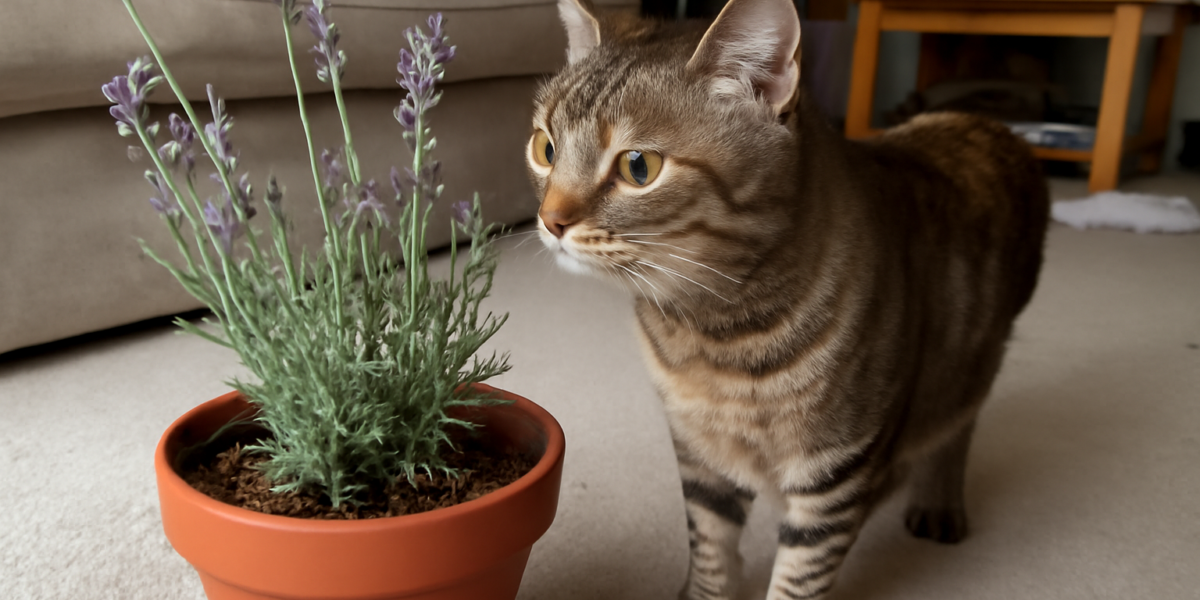
Lavender Is Toxic to Cats
Yes, lavender (Lavandula species) is toxic to cats. The plant contains two primary toxic compounds, linalool and linalyl acetate, which are present in the leaves, stems, and flowers. These compounds are concentrated in the essential oils of the plant, making lavender essential oil significantly more dangerous than the fresh plant itself. The ASPCA lists lavender as toxic to cats, and veterinary toxicologists classify the risk as mild to moderate for plant material and potentially severe for essential oil exposure.
In this article
Cats are uniquely vulnerable to lavender because they lack a key liver enzyme, glucuronyl transferase, that other species use to metabolize many plant compounds. This enzymatic deficiency means that substances other animals process and excrete efficiently can accumulate to toxic levels in a cat’s body.
The Dangerous Compounds: Linalool and Linalyl Acetate
Linalool is a naturally occurring terpene alcohol found in many aromatic plants, but it is particularly concentrated in lavender. In cats, linalool is absorbed rapidly through the skin and gastrointestinal tract, but it is metabolized very slowly due to the missing glucuronyl transferase enzyme.
Linalyl acetate is an ester of linalool and acetic acid. It shares similar absorption and toxicity characteristics. Together, these two compounds make up 25 to 45 percent of lavender essential oil, which is why the concentrated oil form is far more dangerous than chewing on a lavender leaf.
The toxicity mechanism involves direct irritation of mucous membranes and the gastrointestinal tract, as well as potential hepatotoxicity (liver damage) when absorbed in significant quantities. The liver effects are of particular concern with essential oil exposure, where concentrated doses bypass the dilution that occurs when a cat nibbles a small amount of plant material.
Symptoms of Lavender Toxicity in Cats
The severity of symptoms depends on whether the cat was exposed to the fresh plant, dried lavender, or the essential oil. Symptoms from plant ingestion are generally milder than those from essential oil exposure.
Symptoms From Plant Ingestion
- Nausea and vomiting
- Loss of appetite
- Drooling
- Mild lethargy
- Diarrhea
Symptoms From Essential Oil Exposure
- All of the above symptoms, often more severe
- Difficulty breathing or labored respiration
- Muscle tremors
- Wobbling or uncoordinated movement (ataxia)
- Drooling excessively
- Pawing at the mouth or face
- Redness or chemical burns on the skin (if direct contact with undiluted oil)
- Liver damage in severe or prolonged exposure cases
Essential oil exposure can occur through ingestion, skin absorption, or inhalation. Even diffusing lavender essential oil in a room with a cat can cause respiratory irritation and mild toxicity over time. Cats exposed to diffused essential oils may cough, sneeze, have watery eyes, or develop nasal discharge.
First Aid for Lavender Exposure
Your response should be calibrated to the type of exposure. For each scenario, act promptly and contact your veterinarian.
If your cat ate lavender plant material: Remove the plant from access. Offer water to help rinse the mouth. Monitor for vomiting, diarrhea, and lethargy. Call your vet for guidance on whether an in-person visit is needed.
If your cat has lavender essential oil on its skin: Wash the area immediately with warm water and a gentle, pet-safe dish soap (like Dawn). Wear gloves to avoid absorbing oil through your own skin. Do not use other essential oils or solvents to remove the lavender oil. Cats groom themselves constantly, so skin contamination quickly becomes oral exposure if not addressed.
If your cat ingested lavender essential oil: This is the most urgent scenario. Do not induce vomiting, as the oil can cause aspiration pneumonia if inhaled into the lungs during vomiting. Transport your cat to the veterinarian immediately. Bring the oil bottle so your vet can identify the product and concentration.
If your cat has been exposed to diffused lavender oil: Move your cat to a well-ventilated area with fresh air immediately. Turn off the diffuser and open windows. If symptoms are mild (sneezing, watery eyes), fresh air may be sufficient. If symptoms include labored breathing or lethargy, seek veterinary care.
Veterinary Treatment for Lavender Poisoning
For mild plant ingestion, your vet may recommend monitoring at home with instructions to return if symptoms worsen. Anti-nausea medication and gastric protectants may be prescribed to manage vomiting and stomach irritation.
Essential oil poisoning typically requires more intensive treatment. Your vet may perform blood work to check liver enzyme levels, administer IV fluids to support hydration and help flush the compounds from the body, and provide medications to control nausea, tremors, or respiratory symptoms.
In cases of skin exposure, thorough decontamination bathing at the clinic may be necessary. Cats with respiratory symptoms from inhalation may need supplemental oxygen and monitoring until breathing normalizes.
Liver damage from significant essential oil exposure may require several days of hospitalization and supportive care. Follow-up blood work ensures liver values return to normal. The prognosis is generally good with prompt treatment, but delayed treatment of essential oil toxicity can lead to more serious outcomes.
Keeping Your Cat Safe From Lavender
The safest approach is to avoid having lavender plants, dried lavender, and lavender essential oils in a home with cats. This includes lavender-scented products like potpourri, room sprays, and scented candles that may contain actual lavender oil.
Specific precautions include:
- Never apply lavender essential oil directly to your cat’s fur or skin, even diluted
- Do not use lavender essential oil in a diffuser in rooms your cat occupies
- Store all essential oils in closed cabinets that your cat cannot access
- If you grow lavender in an outdoor garden, discourage your cat from rolling in or chewing on the plants
- Avoid cat products marketed with lavender scent unless they specify the formula is cat-safe
Cat-safe aromatic alternatives for your home include valerian root (which most cats actually enjoy), silver vine, and cat-safe herbal blends. For plants that look similar to lavender, Russian sage and catmint offer comparable purple flower spikes, though catmint (Nepeta) should be checked for your cat’s specific tolerance. For more guidance on toxic plants, see our articles on lily toxicity and pothos dangers for cats.
Lavender and Multi-Pet Households
Dogs are less sensitive to lavender than cats because they possess the liver enzymes needed to metabolize linalool and linalyl acetate more efficiently. However, lavender essential oil can still cause gastrointestinal upset in dogs if ingested, and skin irritation from concentrated oil is possible in any species.
If you have both cats and dogs, default to the stricter cat safety guidelines for your entire household. A diffuser running in a room your dog uses may be fine for the dog but could harm the cat who wanders in later.
Birds, rabbits, and other small pets are also sensitive to essential oils, often more so than cats. Any household with small animals should exercise extreme caution with aromatherapy products. Check our cat care library for comprehensive safety guides, and browse adoptable cats if you are preparing your home for a new feline family member.
Frequently Asked Questions
Can lavender kill a cat?
Ingestion of the fresh plant is unlikely to be fatal in small amounts, though severe gastrointestinal upset and dehydration are possible. Lavender essential oil is significantly more dangerous and, in sufficient quantities, can cause liver failure, which can be life-threatening without treatment. Keep all forms of concentrated lavender away from cats.
Is it safe to diffuse lavender around cats?
No. Diffusing lavender essential oil disperses volatile compounds into the air that cats inhale and absorb through their respiratory system. Even in a large, well-ventilated room, chronic exposure can irritate the airways and potentially affect the liver over time. Use cat-safe scenting alternatives instead.
Can I use lavender flea treatments on my cat?
Do not use lavender-based flea treatments or any essential oil-based pest control products on cats unless the product has been specifically formulated and tested for feline safety and is recommended by your veterinarian. Many “natural” flea remedies marketed for pets are unsafe for cats.
My cat sniffed a lavender bush outdoors. Should I be concerned?
A brief sniff of outdoor lavender is unlikely to cause problems. The concern arises from ingestion, prolonged skin contact, or exposure to concentrated essential oil. If your cat only sniffed and walked away, monitor for any symptoms but do not panic. Problems typically occur from repeated or significant exposure rather than fleeting contact.


