
Last updated: May 4, 2026
In this article
Are Lavender Plants Toxic to Cats? A Complete Safety Guide
Lavender is everywhere. It is in our gardens, our cleaning products, our candles, and our essential oil diffusers. Its calming fragrance has made it one of the most popular plants in households around the world. But for cat owners, lavender comes with a serious caveat: it is toxic to cats. While the level of danger varies depending on the form of lavender and the amount of exposure, understanding this risk is essential for keeping your feline companion safe.
This guide covers everything you need to know about lavender and cats, including which forms are most dangerous, what symptoms to watch for, and how to enjoy lavender’s benefits without putting your cat at risk.
Why Lavender Is Toxic to Cats
Lavender (Lavandula spp.) contains two primary compounds that are harmful to cats: linalool and linalyl acetate. These naturally occurring terpenes are responsible for lavender’s distinctive aroma and are found in all parts of the plant, including the flowers, leaves, and stems. While these compounds are generally well-tolerated by humans and even some other animals, cats lack specific liver enzymes, particularly glucuronyl transferase, that are necessary to effectively metabolize and eliminate these substances from their bodies.
Because cats cannot properly process linalool and linalyl acetate, these compounds can accumulate in their system and cause toxic effects. This is a common vulnerability in cats that extends beyond lavender to many other plants, essential oils, and chemical compounds. It is one of the reasons why cats are so much more sensitive to plant toxicity than dogs or humans.
The ASPCA lists lavender as toxic to cats, and this classification applies to all common lavender species, including English lavender (Lavandula angustifolia), French lavender (Lavandula dentata), and Spanish lavender (Lavandula stoechas). There is no “safe” variety of lavender for cats, though the concentration of toxic compounds can vary between species and even between individual plants depending on growing conditions.
For a deeper look at how lavender specifically affects cats, including dosage thresholds and treatment options, our detailed guide on lavender toxicity in cats provides extensive information backed by veterinary research.
Forms of Lavender and Their Risk Levels
Not all forms of lavender pose the same level of danger to cats. Understanding the spectrum of risk will help you make informed decisions about which lavender products to keep in your home and which to avoid entirely.
Lavender essential oil is by far the most dangerous form of lavender for cats. Essential oils are highly concentrated extracts that contain far higher levels of linalool and linalyl acetate than the fresh plant. Even small amounts of lavender essential oil can cause serious toxicity in cats, whether through ingestion, skin absorption, or inhalation. Cats are at risk from direct application, from walking through spilled oil, from grooming oil off their fur, and even from breathing in diffused oil over extended periods.
For a comprehensive overview of which essential oils are harmful to cats and why, our guide on essential oils toxic to cats is an essential read for any cat-owning household that uses aromatherapy products.
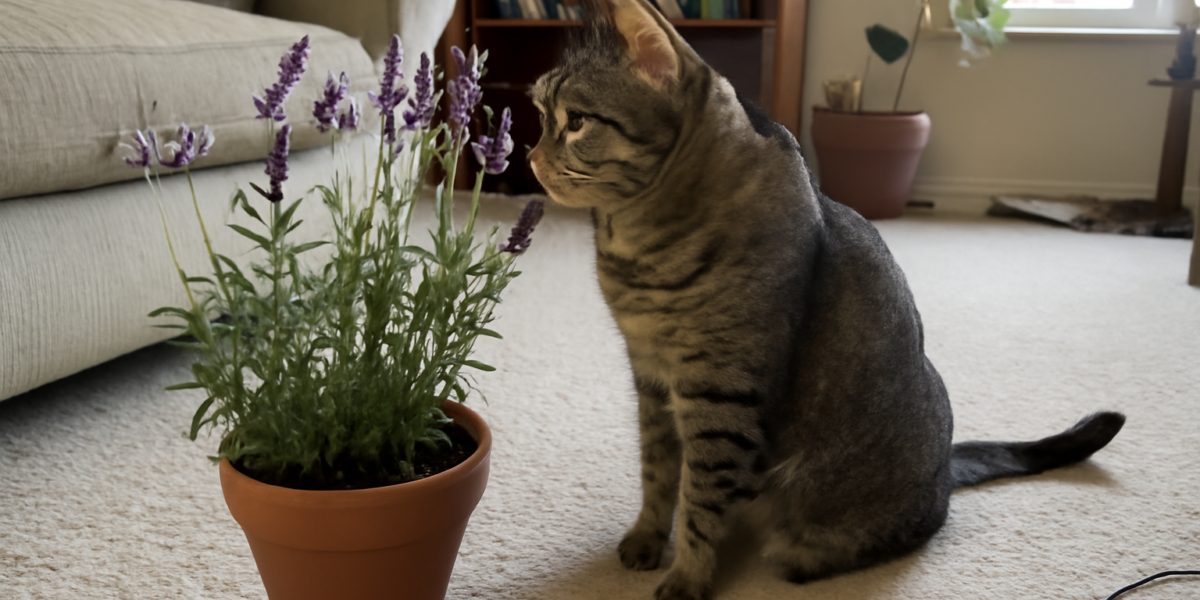
Fresh lavender plants represent a moderate risk. The concentration of toxic compounds in a living plant is much lower than in essential oil, so a cat would need to ingest a more significant amount to experience serious effects. However, cats that chew on lavender plants regularly or consume large quantities of leaves and flowers can still develop toxic symptoms. The plant’s strong scent is a natural deterrent for many cats, but not all felines will be put off by the aroma.
Dried lavender falls into a similar risk category as fresh lavender. Dried lavender sachets, potpourri, and decorative bundles still contain linalool and linalyl acetate, and the drying process does not eliminate these compounds. Dried lavender can actually be more of a practical hazard because it is often placed in accessible locations like drawers, shelves, and linen closets where cats may encounter it.
Lavender-scented products such as candles, air fresheners, cleaning sprays, and laundry detergents vary widely in their risk level. Products that contain actual lavender extract or essential oil pose a greater risk than those that use synthetic fragrance compounds. However, even synthetic fragrances can cause respiratory irritation in cats with sensitivities. When in doubt, opt for unscented products or those specifically labeled as pet-safe.
Symptoms of Lavender Toxicity in Cats
The symptoms of lavender poisoning in cats can range from mild to severe depending on the form of lavender involved, the amount of exposure, and the individual cat’s size and health status. Being able to recognize these symptoms early is critical for getting your cat the help they need.
Mild symptoms typically appear after minor exposure, such as a few nibbles on a lavender plant or brief proximity to a diffuser. These include nausea, drooling, and decreased appetite. Your cat may also seem mildly lethargic or less interested in play than usual.
Moderate symptoms can develop with more significant exposure and include vomiting, diarrhea, and noticeable lethargy. Your cat may appear unsteady on their feet or reluctant to move. You might also observe changes in breathing patterns, such as faster or more labored respiration.
Severe symptoms are most commonly associated with essential oil exposure and can include difficulty breathing, tremors, seizures, and liver failure. Cats that have ingested lavender essential oil or have had concentrated oil applied to their skin require immediate emergency veterinary care. Without treatment, severe lavender toxicity can be fatal.
If you notice any of these symptoms and suspect lavender exposure, remove your cat from the area immediately, provide fresh air, and contact your veterinarian or an emergency animal hospital right away. Do not attempt to induce vomiting or administer any home remedies without professional guidance.
How to Enjoy Lavender Safely as a Cat Owner
Giving up lavender entirely is not the only option for cat owners. With some careful adjustments, you can still incorporate lavender into your life while keeping your cat safe.
Grow lavender outdoors only. If you love growing lavender, keep it in outdoor garden beds, borders, or containers that your indoor cat cannot access. Outdoor-only cats may still encounter lavender, but the open-air environment significantly reduces the risk of concentrated exposure, and most cats will naturally avoid eating strongly scented plants when other options are available.
Avoid diffusing lavender essential oil. If you use an essential oil diffuser, replace lavender oil with cat-safe alternatives. Frankincense, cedarwood, and chamomile (Roman) are sometimes cited as safer options, but the safest approach is to consult your veterinarian before diffusing any essential oil in a home with cats. If you do use a diffuser, ensure your cat can always leave the room and that the space is well-ventilated.
Store lavender products securely. Keep essential oils, dried lavender, and lavender-scented products in closed cabinets or containers that your cat cannot open. Cats are remarkably resourceful when it comes to accessing things that interest them, so choose storage solutions with secure latches or place items in rooms your cat does not enter.
Choose synthetic over natural. When it comes to lavender-scented household products, those made with synthetic fragrance compounds are generally less dangerous than products containing real lavender extract. While synthetic fragrances are not completely risk-free, they typically do not contain the specific terpenes that cause toxicity in cats.
Wash your hands. If you have been handling lavender plants, essential oils, or strongly scented lavender products, wash your hands thoroughly before petting your cat. Cats groom themselves constantly, and any residue transferred from your hands to their fur will eventually be ingested.
Cat-Safe Alternatives to Lavender
If you love lavender for its beauty, fragrance, or calming properties, there are several cat-safe alternatives that can fill the same role in your home and garden.
Catmint (Nepeta) looks remarkably similar to lavender with its spiky purple-blue flower clusters and silvery-green foliage. It is completely non-toxic to cats, and many cats actually enjoy being around it since it is related to catnip. It is drought-tolerant, deer-resistant, and attracts pollinators, making it an excellent garden plant.
Russian sage (Perovskia atriplicifolia) offers a similar visual effect to lavender with its airy purple flower spikes and aromatic foliage. It is considered non-toxic to cats and thrives in the same sunny, well-drained conditions that lavender prefers.
Spider plants are non-toxic to cats and are excellent for indoor spaces where you might otherwise place a potted lavender plant. They are easy to care for and help purify indoor air.
Boston ferns are another cat-safe indoor option that adds lush greenery to your home. They are non-toxic and thrive in the humid, indirect-light conditions found in many bathrooms and kitchens.
For a complete list of houseplants that are safe for your feline friends, check out our guide to cat-safe houseplants for dozens of options that will brighten your home without any risk to your cat.
What Veterinarians Say About Lavender and Cats
Veterinary professionals are increasingly vocal about the risks that lavender and other essential oils pose to cats. The growing popularity of aromatherapy and natural wellness products has led to a corresponding increase in essential oil poisoning cases in veterinary emergency rooms.
Most veterinarians recommend a precautionary approach: if you have cats, avoid using lavender essential oil entirely, keep lavender plants out of indoor spaces, and be mindful of lavender-containing products in your home. This advice is not alarmist. It reflects the genuine metabolic vulnerability that cats have to the specific compounds found in lavender.
Veterinary toxicologists also emphasize that the effects of lavender exposure can be cumulative. A cat that is regularly exposed to low levels of lavender, such as from a frequently used diffuser, may develop liver stress over time even without showing obvious acute symptoms. This is why chronic low-level exposure can be just as concerning as a single large exposure.
If your cat has any pre-existing liver conditions, respiratory issues, or is very young or very old, they may be even more sensitive to lavender toxicity. These cats should be kept in completely lavender-free environments whenever possible.
Frequently Asked Questions
Is the smell of lavender alone enough to harm my cat?
The scent of a lavender plant in a well-ventilated outdoor space is very unlikely to cause harm to your cat. However, concentrated lavender fragrance from essential oil diffusers, heated wax products, or sprays can cause respiratory irritation, especially in enclosed spaces with poor ventilation. Cats with asthma or other respiratory conditions are particularly sensitive. If you notice your cat sneezing, coughing, or breathing heavily in a room with lavender fragrance, remove them from the area immediately and provide fresh air.
My cat brushed against a lavender plant outside. Is that dangerous?
Brief contact with a lavender plant is unlikely to cause serious harm. The main risk would be if your cat grooms the area that touched the plant and ingests plant material or sap residue. Monitor your cat for any signs of drooling, nausea, or vomiting over the next few hours. If they seem perfectly normal, there is likely no cause for concern. You can also wipe the area of contact with a damp cloth to remove any residue before your cat has a chance to groom it.
Can I use lavender-scented cat litter?
Lavender-scented cat litter is a topic of debate among veterinarians and cat behaviorists. Most commercial lavender-scented litters use synthetic fragrance rather than actual lavender extract, which reduces the toxicity risk. However, many cats dislike strongly scented litter and may avoid the litter box altogether, leading to inappropriate elimination problems. Additionally, the fragrance can irritate sensitive respiratory tracts. Most veterinary professionals recommend unscented, dust-free litter as the safest and most cat-friendly option.
What should I do if my cat ingests lavender essential oil?
Lavender essential oil ingestion is a veterinary emergency. Do not wait for symptoms to develop. Contact your veterinarian, an emergency animal hospital, or the ASPCA Animal Poison Control Center (888-426-4435) immediately. Do not induce vomiting unless specifically instructed to do so by a veterinary professional, as essential oils can cause additional damage to the esophagus if vomited. If the oil is on your cat’s skin or fur, wash the area gently with mild dish soap and warm water to prevent further absorption while you arrange veterinary care.


