
Last updated: April 8, 2026
In this article
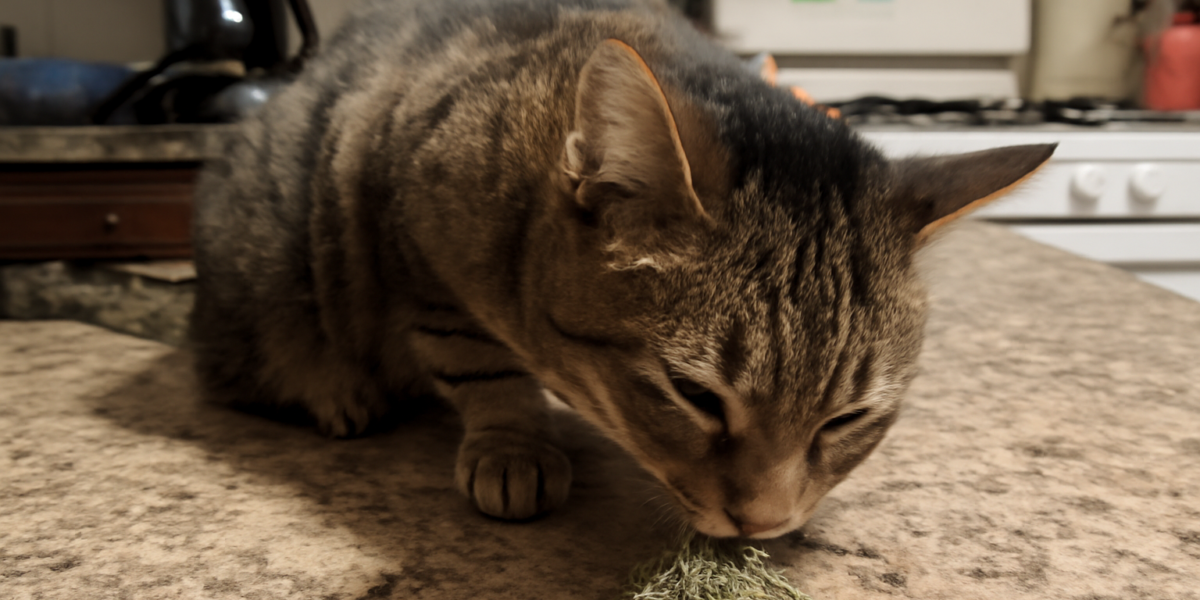
Catnip is one of the most fascinating substances in the feline world. If you have ever sprinkled a pinch of dried catnip near your cat and watched the ensuing display of rolling, rubbing, purring, and general ecstasy, you understand its remarkable power over the feline psyche. But amid all the rolling and chin rubbing, many cats also eat catnip — sometimes deliberately munching on the dried leaves or chewing on fresh plants. This raises a natural question for concerned cat owners: is it safe for cats to actually eat catnip? The reassuring answer is yes, eating catnip is safe for cats, and it may even provide some mild digestive benefits.
Quick Answer: Yes, cats can safely eat catnip. Catnip (Nepeta cataria) is non-toxic to cats when ingested. While sniffing catnip produces the well-known euphoric response, eating it tends to have a mild sedative effect. Overconsumption may cause temporary digestive upset, but catnip is completely safe in normal amounts.
What Is Catnip and How Does It Work?
Catnip (Nepeta cataria) is a perennial herb in the mint family (Lamiaceae) native to Europe and Asia. It grows readily in temperate climates and has naturalized across North America, where it can be found growing wild along roadsides and in gardens. The plant produces small white to purple flowers and has characteristic heart-shaped, scalloped-edge leaves covered in fine hairs.
The active compound responsible for the feline response to catnip is nepetalactone, a volatile oil found primarily in the microscopic bulbs on the leaves and stems of the plant. When these bulbs are broken — by rubbing, crushing, or chewing the plant — nepetalactone is released into the air. When a cat sniffs nepetalactone, the compound binds to sensory receptors in the nasal tissue, which stimulates sensory neurons that project to the olfactory bulb in the brain. From there, the signal travels to areas of the brain that regulate emotional responses, including the amygdala and the hypothalamus.
The result is a behavioral response that researchers believe mimics a pheromone-mediated reaction. Cats exposed to catnip typically exhibit a predictable sequence of behaviors: sniffing, licking, chin rubbing, head shaking, body rolling, and sometimes vocalizing. The response also frequently includes purring, drooling, and a general state of apparent euphoria. Some cats become more playful and energetic, while others become mellow and zonked out. The behavioral response typically lasts 5 to 15 minutes, after which the cat becomes temporarily immune to catnip’s effects for roughly 30 minutes to two hours while the olfactory receptors reset.
Importantly, only about 50 to 70 percent of cats respond to catnip. The sensitivity appears to be genetic — inherited as an autosomal dominant trait. Kittens under six months of age typically do not respond to catnip, and the response does not fully develop until sexual maturity. Senior cats may show a diminished response. Cats that do not respond to catnip are perfectly normal and healthy — they simply lack the genetic predisposition to react to nepetalactone.
What Happens When Cats Eat Catnip
The distinction between sniffing catnip and eating catnip is important because the two routes of exposure produce different effects. While sniffing catnip produces the well-known excitatory response, eating catnip tends to have the opposite effect — it acts as a mild sedative.
When a cat eats catnip, the nepetalactone enters the digestive system rather than the olfactory system. The compound interacts differently when processed through the gastrointestinal tract, producing a calming rather than stimulating effect. Cats that eat catnip often become drowsy, relaxed, and mellow. This sedative effect is generally mild and short-lived, typically lasting 15 to 30 minutes.
Catnip also contains compounds that may provide mild digestive benefits when ingested. As a member of the mint family, catnip shares some of the carminative (gas-reducing) properties associated with other mint family herbs. Some holistic veterinarians suggest that cats instinctively eat catnip to soothe mild stomach discomfort, though this has not been rigorously studied. The plant does contain vitamins and minerals — including vitamins C and E, magnesium, and flavonoids — though the amounts consumed by cats are too small to have significant nutritional impact.
The safety profile of ingested catnip is well-established. There are no documented cases of catnip toxicity in cats at any dose that a cat would voluntarily consume. Catnip has been used alongside cats for centuries, and extensive veterinary experience confirms its safety. The plant is not addictive — cats cannot become dependent on catnip, and withdrawal symptoms do not occur when catnip is removed from their environment. The ASPCA lists catnip as non-toxic to cats.
That said, eating a large amount of catnip at once can cause temporary gastrointestinal upset. The plant material itself — fiber, essential oils, and other compounds — can irritate the stomach lining in large quantities. Symptoms of overconsumption include vomiting, diarrhea, and drooling. These symptoms are self-limiting and resolve quickly without treatment. Most cats self-regulate their intake and do not eat enough to cause problems, but if you have a particularly enthusiastic catnip eater, it is wise to limit access.
Different Forms of Catnip and Their Safety
Catnip is available in several forms, each with slightly different considerations for safety and use.
Fresh catnip. Growing fresh catnip in your garden or in indoor pots provides the most natural form of the herb. Fresh catnip is perfectly safe for cats to chew on, and many cats enjoy nibbling on the leaves directly from the plant. The potency of fresh catnip varies depending on the plant’s maturity, growing conditions, and the specific cultivar. Fresh catnip is generally milder than dried catnip because the nepetalactone is still contained within the intact bulbs on the leaf surface. The main consideration with fresh catnip plants is ensuring they have not been treated with pesticides, fertilizers, or other chemicals that could be harmful to cats.
Dried catnip. Dried catnip is the most common commercial form and is what most people think of when they hear the word catnip. The drying process ruptures many of the nepetalactone-containing bulbs, making dried catnip more potent than fresh. Dried catnip is safe for cats to eat in reasonable amounts. Purchase food-grade catnip from reputable pet product suppliers to ensure it has not been treated with preservatives or mixed with other herbs. Store dried catnip in an airtight container away from light and heat to preserve potency — nepetalactone is volatile and degrades over time with exposure to air and light.
Catnip sprays. Catnip sprays are liquid extracts of nepetalactone in a water or alcohol base. These sprays are designed to be applied to toys, scratching posts, or bedding to attract cats, not for ingestion. While a small amount inadvertently licked from a sprayed surface is unlikely to cause harm, the alcohol or carrier solvents in some sprays may cause mild stomach irritation. Do not spray catnip spray directly into a cat’s mouth or onto food.
Catnip toys. Toys stuffed with dried catnip are extremely popular and generally safe. The main concern is the toy itself rather than the catnip — make sure the toy is well-constructed and does not have small parts, buttons, or strings that could be swallowed. If a cat tears open a catnip toy and eats the catnip inside, the catnip itself is safe. However, monitor for ingestion of toy fabric or filling material, which could cause an intestinal obstruction.
Catnip-infused treats. Many commercial cat treats contain catnip as an ingredient. These are specifically formulated for feline consumption and are perfectly safe when fed according to package directions. They offer a convenient way to give your cat the catnip experience in a controlled, measured dose. For information about other foods cats can enjoy, read about whether cats can eat lettuce.
Benefits of Catnip for Cats
Beyond the obvious entertainment value, catnip offers several practical benefits that make it a useful tool in any cat owner’s repertoire.
Exercise and enrichment. The stimulating response to sniffed catnip encourages physical activity — rolling, pouncing, running, and playing. For indoor cats who may not get enough exercise, catnip-stimulated play sessions provide valuable physical activity that supports weight management, cardiovascular health, and muscle tone. The mental stimulation is equally valuable, as catnip engages the brain’s reward pathways and provides a novel sensory experience that combats the boredom and monotony that can affect indoor cats.
Stress reduction. The mildly sedative effect of eaten catnip, combined with the euphoric response to sniffed catnip, can help reduce stress and anxiety in cats. Some owners use catnip strategically before potentially stressful events — such as veterinary visits, travel, or the introduction of a new household member — to help their cat relax. A small amount of catnip in the carrier before a vet visit, for example, can help associate the carrier with positive feelings.
Training aid. Catnip can be used to encourage desired behaviors. Sprinkling catnip on a new scratching post makes it more attractive, potentially diverting your cat from scratching furniture. Placing catnip in a new cat bed helps the cat associate the bed with positive feelings. Catnip-enhanced toys can be used to reward good behavior during training sessions.
Bonding. Shared playtime during catnip sessions strengthens the bond between cat and owner. The playful, affectionate behavior many cats display under catnip’s influence creates positive interactive experiences that build trust and strengthen the human-feline relationship.
Appetite stimulation. Some cats who are reluctant eaters show increased interest in food after exposure to catnip. Sprinkling a tiny pinch of dried catnip over food can sometimes encourage a finicky cat to eat. This can be particularly useful for cats recovering from illness or adjusting to a new food.
How Much Catnip Is Appropriate
While catnip is safe, moderation is still the best approach to ensure your cat gets the benefits without any digestive downsides.
For sniffing and playing, a pinch to a half teaspoon of dried catnip is sufficient for most cats. This amount scattered on the floor, rubbed on a toy, or placed on a scratching post provides enough nepetalactone for a full behavioral response without creating an overwhelming mess. There is no need to use large amounts — cats are highly sensitive to nepetalactone, and more catnip does not necessarily produce a stronger response.
For eating, allow your cat to self-regulate and do not actively encourage consumption of large amounts. If your cat nibbles on fresh catnip plants or eats a bit of dried catnip during play, this is perfectly fine. If your cat seems to be eating large quantities of dried catnip — more than about a tablespoon in a sitting — consider reducing the amount available to prevent stomach upset.
In terms of frequency, two to three catnip sessions per week is a good starting guideline. While there is no established limit, very frequent exposure (daily or multiple times per day) may lead to habituation, where the cat becomes less responsive to catnip over time. Spacing sessions allows the olfactory receptors to fully reset and maintains the novelty that makes catnip so appealing.
For kittens, wait until they are at least six months old before introducing catnip, as younger kittens typically do not respond and the mint family oils may be more likely to cause stomach irritation in very young cats. For senior cats, catnip remains safe but the response may be less pronounced. Adjust the amount and frequency based on your individual cat’s reaction and preferences. For more information about appropriate feline foods, check out our guide to carrots for cats.
Catnip Alternatives for Non-Responsive Cats
Since roughly 30 to 50 percent of cats do not respond to catnip, it is worth knowing about alternatives that may elicit similar behavioral responses in catnip-immune cats.
Silver vine (Actinidia polygama). Silver vine is an Asian plant that contains two cat-attracting compounds: actinidine and dihydroactinidiolide. Studies published in BMC Veterinary Research found that silver vine elicited a response in nearly 80 percent of cats, including many that did not respond to catnip. The behavioral response is similar to catnip — rolling, rubbing, drooling — and is considered equally safe. Silver vine is available as dried fruit galls, powder, and infused in toys.
Tatarian honeysuckle (Lonicera tatarica). The wood of Tatarian honeysuckle contains compounds that attract cats in a manner similar to catnip. Roughly 50 percent of cats respond to honeysuckle wood, and some cats that ignore catnip respond strongly to honeysuckle. Honeysuckle wood toys and shavings are available from pet supply retailers. Note that only Tatarian honeysuckle is safe — other honeysuckle species may have different chemical profiles, and honeysuckle berries are toxic to cats.
Valerian root (Valeriana officinalis). Valerian contains actinidine, the same compound found in silver vine, and can attract some cats that do not respond to catnip. The smell of valerian is much less pleasant to humans than catnip (it has been described as smelling like dirty socks), which limits its appeal for use in the home. Valerian is safe for cats in small amounts, though the strong odor means most owners prefer to use it in toy form rather than loose.
Frequently Asked Questions
Can cats overdose on catnip?
A true overdose in the medical sense — meaning a life-threatening toxic reaction — is not possible with catnip at any amount a cat would voluntarily consume. However, eating a very large amount of catnip can cause temporary gastrointestinal upset, including vomiting and diarrhea. These symptoms resolve on their own and do not require veterinary treatment unless they are severe or persistent. If your cat vomits after eating a large amount of catnip, simply remove the remaining catnip, ensure fresh water is available, and monitor for resolution. The body processes and eliminates the plant material quickly.
Is catnip addictive for cats?
No, catnip is not addictive. Cats do not develop physical dependence on catnip, and there are no withdrawal symptoms when catnip is removed from their environment. A cat that has been receiving regular catnip may seem disappointed when it is not offered, but this is preference, not addiction. The cat’s brain does not undergo the chemical changes associated with true substance dependence. Some cats may become habituated to catnip if exposed too frequently — meaning their response diminishes over time — but this is resolved by simply taking a break from catnip for a week or two, after which the full response typically returns.
Can I give catnip to my cat every day?
While daily catnip is not harmful, it is not the optimal approach. Frequent exposure — daily or multiple times per day — can lead to habituation, where the cat becomes progressively less responsive to nepetalactone. This is not a health concern but reduces the enrichment value that makes catnip useful. Most veterinary behaviorists recommend offering catnip two to three times per week to maintain its novelty and effectiveness. If you use catnip primarily for enrichment or stress reduction, spacing sessions ensures that each one provides the full positive experience.
Is catnip safe for pregnant cats?
The safety of catnip for pregnant cats has not been extensively studied, and caution is warranted. In traditional human herbal medicine, catnip has been used as a uterine stimulant, which raises theoretical concerns about its use in pregnant cats. While there is no documented evidence of catnip causing problems in pregnant cats, most veterinarians recommend erring on the side of caution and avoiding catnip during pregnancy. The potential risk, however small, is not worth taking when the benefit is simply recreational. Resume catnip after the kittens are weaned.
Can I grow catnip indoors for my cat?
Absolutely. Catnip is relatively easy to grow indoors in a sunny window. Use a pot with good drainage and standard potting soil. Catnip prefers full sun but tolerates partial shade. Water when the top inch of soil is dry. The plant grows vigorously and may need regular pruning to stay manageable. The main challenge of growing catnip indoors is protecting it from your cat — an enthusiastic cat can destroy a small catnip plant in minutes. Consider using a protective cage or placing the plant in an area your cat cannot access, harvesting leaves periodically to offer your cat rather than allowing unrestricted access to the living plant.
Does catnip have any effect on dogs?
Catnip does not produce the same euphoric behavioral response in dogs that it does in cats. However, catnip is not harmful to dogs and is sometimes used as a mild sedative or calming agent for anxious dogs. Catnip tea (made by steeping catnip in hot water and then cooling) is occasionally recommended by holistic veterinarians as a natural calming remedy for dogs with mild anxiety. The effects on dogs are much more subtle than on cats — typically a mild calming rather than any dramatic behavioral change. If you are interested in using catnip for a dog, consult your veterinarian for appropriate dosing guidance.


