
Last updated: June 13, 2026
In this article
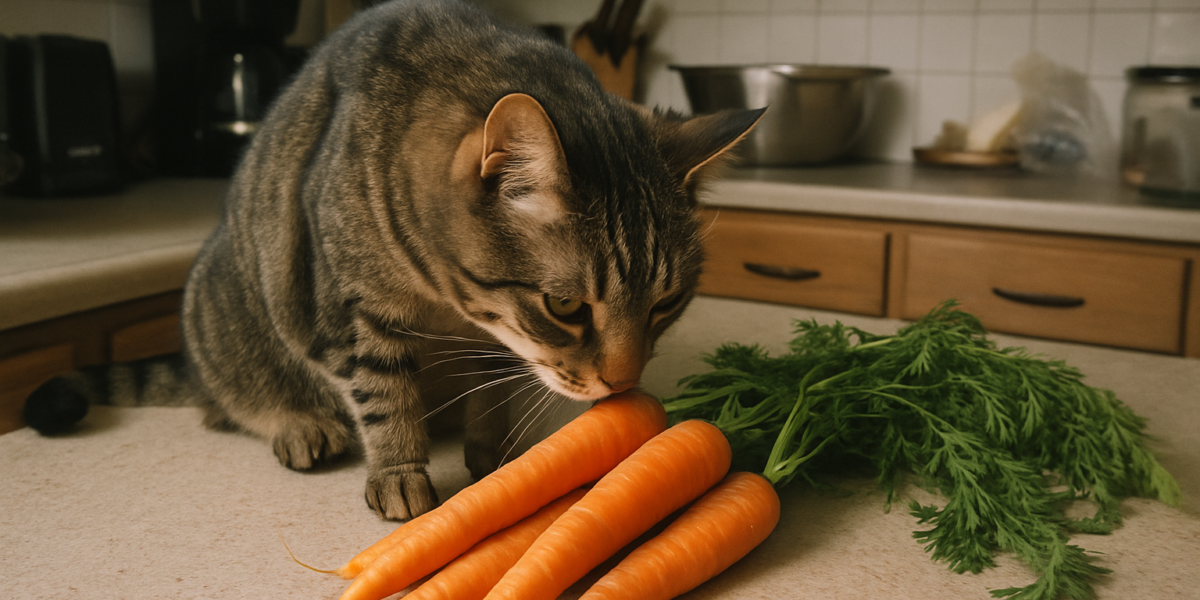
Carrots are one of the most universally recognized healthy foods for humans — crunchy, vibrant, and packed with vitamins. If you are snacking on carrot sticks and your cat shows interest, you may wonder whether this colorful vegetable is safe to share. The good news is that carrots are not toxic to cats, but the way you prepare them matters significantly, and the role they play in feline nutrition is quite different from their role in human diets.
Quick Answer: Yes, cats can eat cooked carrots in small amounts. Carrots are not toxic to cats and provide some beta-carotene and fiber. However, carrots must be cooked until soft and cut into small pieces to prevent choking. Raw carrots are too hard for cats to chew safely. Keep portions small, as cats derive minimal nutritional benefit from vegetables.
Are Carrots Safe for Cats?
Carrots are safe for cats when properly prepared. They do not contain any compounds that are toxic to felines, and they appear on most veterinary lists of cat-safe vegetables. However, the key distinction that must be understood is that while carrots are safe, they are not nutritionally necessary. Cats are obligate carnivores, meaning their bodies are designed to derive the vast majority of their nutrition from animal-based protein and fat. Their digestive systems are shorter and more acidic than those of omnivores, optimized for processing meat rather than plant matter.
This does not mean vegetables have no place in a cat’s life — small amounts of certain vegetables can provide supplemental fiber, hydration, and micronutrients. But it does mean that carrots and other vegetables should be viewed as occasional treats rather than dietary components, and they should never displace the meat-based nutrition that cats require.
The primary safety concern with carrots is their physical form. Raw carrots are extremely hard and dense, and they pose a significant choking hazard for cats. Cats do not have the flat molars that humans and omnivores use to grind hard foods — their teeth are designed for tearing and cutting meat. A chunk of raw carrot can easily lodge in a cat’s throat or be swallowed whole, creating an obstruction risk in the esophagus or intestines. For this reason, carrots should always be cooked until soft before being offered to cats.
Cooked carrots — steamed, boiled, or roasted without any oil, butter, salt, or seasoning — are soft enough for cats to manage safely. The cooking process also breaks down the cell walls of the carrot, making the nutrients more bioavailable and the fiber easier to digest. Once cooked, carrots should be cut into very small pieces appropriate for your cat’s size. For more information about feline dietary needs, explore our cat breeds directory.
Nutritional Profile of Carrots
Carrots are nutritionally dense by human standards, but their value to cats must be understood through the lens of feline biology.
A medium-sized raw carrot (about 61 grams) contains approximately 25 calories, 5.8 grams of carbohydrates (including 2.9 grams of sugar), 1.7 grams of fiber, 0.6 grams of protein, and 0.1 grams of fat. The calorie count is low, which makes carrots one of the less calorically impactful treats available.
The most notable nutrient in carrots is beta-carotene, the pigment responsible for their orange color. Beta-carotene is a precursor to vitamin A — the body converts it into active vitamin A as needed. In humans, this is an efficient process, and carrots are considered an excellent vitamin A source. In cats, however, the conversion is significantly less efficient. Cats lack the enzyme (beta-carotene 15,15-dioxygenase) in sufficient quantities to convert beta-carotene to vitamin A effectively, which means they rely on preformed vitamin A from animal sources like liver. The beta-carotene in carrots still provides antioxidant benefits, but cats cannot depend on carrots for their vitamin A needs.
Carrots also contain vitamin K, which supports blood clotting; potassium, which supports heart and muscle function; biotin, which supports metabolism and coat health; and various B vitamins that support energy metabolism. The fiber content — both soluble and insoluble — can support digestive regularity when consumed in appropriate amounts.
The antioxidant profile of carrots extends beyond beta-carotene. Carrots contain lutein and zeaxanthin (which support eye health), polyacetylenes (which have been studied for anti-inflammatory properties), and various phenolic compounds that help neutralize free radicals. While these compounds have been studied primarily in humans, their general antioxidant mechanisms are relevant to all mammals, including cats.
Benefits of Carrots for Cats
The benefits of carrots for cats are more modest than for humans, but they do exist.
Fiber supplementation. The fiber in cooked carrots can support digestive health in cats, particularly those who occasionally experience constipation or hairball issues. The insoluble fiber adds bulk to stool and promotes regular bowel movements, while the soluble fiber supports beneficial gut bacteria. For cats who struggle with hairballs, small amounts of fiber from carrots may help move hair through the digestive tract more efficiently.
Low-calorie treat option. For overweight cats — and feline obesity affects an estimated 60 percent of pet cats — finding low-calorie treat alternatives is valuable. A small piece of cooked carrot contains only a few calories, making it a much better option than high-calorie commercial treats for cats on weight management programs. The key is ensuring your cat actually finds carrot appealing, which is not guaranteed.
Antioxidant support. The beta-carotene and other antioxidant compounds in carrots help neutralize free radicals and may support cellular health. For senior cats or those with chronic health conditions, antioxidant-rich foods can provide modest supportive benefits alongside veterinary treatment. While cats cannot convert beta-carotene to vitamin A as efficiently as omnivores, the compound still functions as an antioxidant in its own right.
Dental stimulation. While raw carrots are too hard for cats to chew safely, lightly steamed carrots that retain some firmness can provide gentle dental stimulation as cats chew them. This is a minor benefit compared to proper dental care, but any chewing activity that is safe helps maintain gum health and can slow plaque accumulation.
Enrichment. Novel foods provide sensory enrichment for cats, engaging their curiosity and providing variety in their routine. The texture and mild flavor of cooked carrot is different from anything in a typical cat food diet, and some cats find this novelty genuinely engaging. Enrichment contributes to overall wellbeing, particularly for indoor cats with limited environmental stimulation.
Risks and Side Effects of Carrots for Cats
While carrots are among the safer vegetable options for cats, they are not entirely without risk.
Choking hazard from raw carrots. This is the most significant and immediate risk. Raw carrots are hard, dense, and can break into irregularly shaped pieces that lodge in a cat’s throat or esophagus. Cats who attempt to swallow raw carrot chunks can choke, and the pieces are large enough to cause airway obstruction in smaller cats. Never feed raw carrot to cats. Always cook until soft. For other safe vegetable options, read our lettuce for cats guide.
Digestive upset. Cats’ digestive systems are not designed for significant plant matter processing. Eating too much carrot — even cooked — can cause gas, bloating, diarrhea, or vomiting. The fiber and carbohydrate content that is beneficial in small amounts becomes problematic in larger quantities. Start with a very small piece and do not exceed a tablespoon of cooked carrot as a treat.
Sugar content. While the sugar in carrots is modest compared to most fruits, it is not negligible — about 2.9 grams per medium carrot. For cats, who have no nutritional need for dietary sugar and limited carbohydrate metabolism, even moderate sugar intake is unnecessary. Diabetic cats should avoid carrots unless their veterinarian specifically approves them, as the sugars can affect blood glucose management.
Displacement of essential nutrition. If a cat fills up on carrots and eats less of their nutritionally complete commercial food, they may miss essential nutrients — particularly taurine, arachidonic acid, and preformed vitamin A — that they can only obtain from animal sources. This is unlikely to be a problem with small treat portions but becomes a concern if carrots make up a meaningful percentage of daily intake.
Seasoning dangers. Carrots prepared for human consumption often include butter, oil, garlic, onion, salt, or other seasonings. Garlic and onion are toxic to cats. Butter and oil add unnecessary fat. Salt adds unnecessary sodium. Always use plain, unseasoned cooked carrots for your cat.
How to Feed Carrots to Your Cat Safely
Proper preparation is essential for making carrots a safe treat for cats.
Cook thoroughly. Steam, boil, or bake carrots until they are soft enough to be easily mashed with a fork. This eliminates the choking hazard of raw carrots and makes the nutrients more accessible. Steaming is the best method, as it preserves more nutrients than boiling while achieving adequate softness. Do not use any oil, butter, salt, or seasonings.
Cut into tiny pieces. After cooking, cut or mash carrots into pieces no larger than a small pea. For smaller cats, even smaller is better. The pieces should be soft enough that they could be swallowed without chewing if your cat chooses to gulp them.
Start with a single piece. If your cat has never eaten carrot before, offer one small piece and observe for 24 hours. Watch for any digestive upset, loss of appetite, or signs of allergic reaction. Many cats will simply sniff the carrot and walk away — respect this response and do not force the issue.
Keep portions minimal. One to two small pieces of cooked carrot two to three times per week is plenty for most cats. This provides the potential benefits without introducing problematic amounts of carbohydrate or displacing meat-based nutrition. Treats of all kinds should represent no more than 10 percent of a cat’s daily caloric intake.
Try different preparations. Some cats prefer very soft, almost mushy carrots, while others show more interest in carrots that have been steamed to a firm-but-soft consistency. You can also try pureeing cooked carrot and mixing a tiny amount into your cat’s wet food — this is a good approach for cats who might benefit from the fiber but are not interested in eating carrot pieces on their own. Check our melon safety guide for another safe treat option.
Signs of Problems After Eating Carrots
Adverse reactions to properly prepared carrots are uncommon, but monitoring your cat is always wise.
Choking. If your cat is eating raw carrot (which should be avoided) or a piece of cooked carrot that was too large, signs of choking include gagging, pawing at the mouth, difficulty breathing, drooling, and distressed vocalizations. If your cat is choking and cannot clear the obstruction, seek emergency veterinary care immediately.
Digestive upset. Mild vomiting, loose stool, gas, or decreased appetite in the hours following carrot consumption typically indicate that the portion was too large or that your cat’s system is sensitive to the vegetable matter. These symptoms usually resolve within 12 to 24 hours. Reduce the amount or discontinue if they recur.
Allergic reaction. While extremely rare, carrot allergies can occur. Signs include itching, facial swelling, hives, difficulty breathing, or severe vomiting. If you observe these symptoms, stop feeding carrots and contact your veterinarian.
Changes in stool color. Carrots can tint stool a slightly orange color, which is normal and not a cause for concern. However, if stool becomes very loose, watery, or contains blood or mucus, contact your veterinarian.
Frequently Asked Questions
Can cats eat raw carrots?
Raw carrots are not recommended for cats. They are too hard for cats to chew safely, posing a significant choking hazard. Cats’ teeth are designed for tearing meat, not grinding hard vegetables, and chunks of raw carrot can lodge in the throat or be swallowed whole, potentially causing esophageal or intestinal obstruction. Additionally, the nutrients in raw carrots are less bioavailable than in cooked carrots, as the cell walls have not been broken down by heat. Always cook carrots until soft before offering them to your cat.
Are carrots good for cats’ eyes?
The connection between carrots and eye health is based on beta-carotene’s role as a vitamin A precursor. However, cats cannot efficiently convert beta-carotene to vitamin A — they need preformed vitamin A from animal sources like liver. While the beta-carotene and other carotenoids in carrots (lutein and zeaxanthin) may provide antioxidant protection for eye cells, carrots are not a meaningful source of the vitamin A that cats need for vision health. A nutritionally complete cat food provides adequate vitamin A in the preformed state that cats can utilize.
How much carrot can I give my cat?
One to two small pieces of cooked carrot (each about the size of a pea) two to three times per week is an appropriate amount for most adult cats. This provides the potential fiber and antioxidant benefits without introducing excessive carbohydrates or calories. Start with even less — a single tiny piece — if your cat has never eaten carrot before, and increase only if they tolerate it well. Remember that treats should not exceed 10 percent of your cat’s daily caloric intake, and the foundation of their diet should always be a complete and balanced cat food.
Can kittens eat carrots?
Kittens over 8 weeks old who are eating solid food can have a very tiny amount of thoroughly cooked, mashed carrot — about the size of a small pea. However, kittens have rapidly developing bodies with specific nutritional demands that are best met by kitten-formulated food. Filling up on vegetables can displace the protein, fat, and essential nutrients that kittens need for healthy growth. If you offer carrot to a kitten, make it a very rare and extremely small treat. Most veterinary nutritionists would recommend waiting until a cat is fully grown before introducing vegetable treats.
Can cats eat baby carrots?
Baby carrots are the same vegetable as regular carrots — just cut and shaped differently — so the same rules apply. They must be cooked until soft before being offered to cats. Do not give raw baby carrots to cats; despite being smaller than regular carrots, they are still hard enough to pose a choking hazard. Cook them by steaming or boiling until they can be easily mashed with a fork, then cut into tiny pieces before serving.
My cat does not seem interested in carrots — is that normal?
Absolutely. Most cats have little to no interest in vegetables, and this is completely normal. As obligate carnivores, cats are biologically driven to seek out meat-based foods. Their taste receptors and olfactory preferences are tuned to protein and fat, not plant matter. If your cat sniffs a piece of carrot and walks away, do not take it personally and do not try to force the issue. There is no nutritional reason a cat must eat carrots, and their nutritional needs are fully met by a complete and balanced commercial cat food. Some cats are simply more adventurous eaters than others.
For the full picture, see our complete guide to the human foods cats can eat safely.
Not sure what to keep away from your cat? See our complete list of foods toxic to cats.


