The Short Answer
Can cats eat turkey bacon? It is best avoided. Turkey bacon may sound like a leaner, healthier option than pork bacon, but it is still a heavily processed meat that is high in salt, fat, and preservatives. The seasoning and curing are the real problems. At most, a cat might have a rare, tiny crumb, but turkey bacon is not a sensible treat. Plain cooked turkey is a much better and safer choice.
In this article
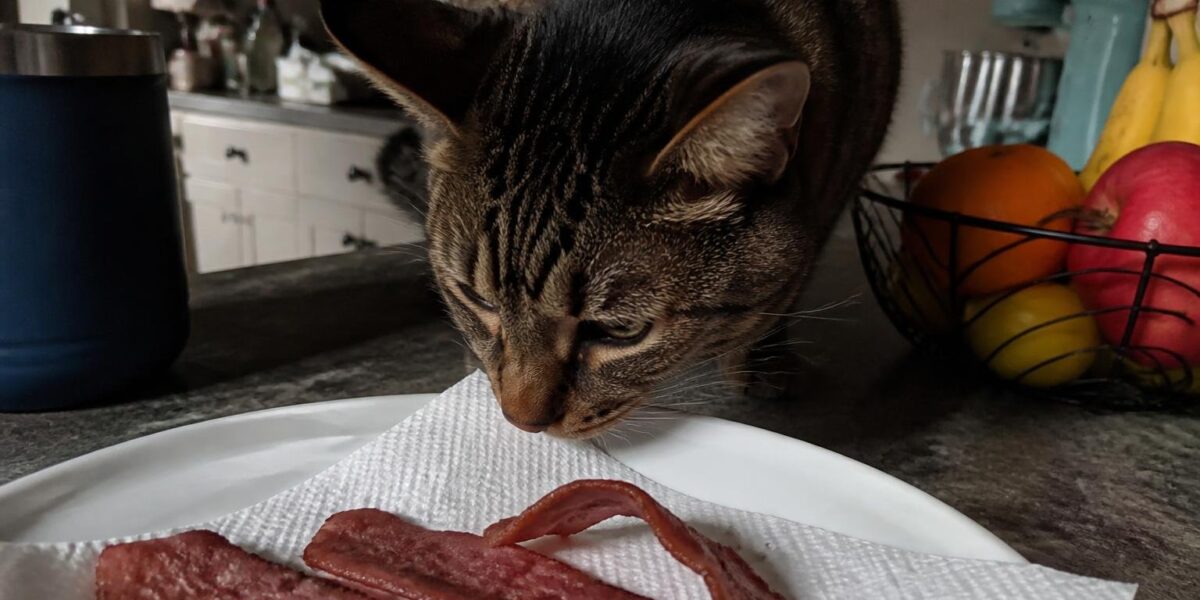
The smoky, salty smell of turkey bacon can be very tempting to cats, so it helps to keep it out of reach and offer a safer alternative instead. Many cats come running at the sound of breakfast cooking, but the bacon, whether pork or turkey, is exactly the part they should not have.
Why Turkey Bacon Is a Problem for Cats
Turkey itself is an excellent protein for cats, but bacon-style processing changes everything. Turkey bacon typically contains:
- High salt: Curing and flavoring add a lot of sodium, which can cause excessive thirst, vomiting, and salt toxicity in large amounts.
- Added fat: To mimic pork bacon’s texture, turkey bacon often has significant fat, which can upset the stomach or contribute to pancreatitis.
- Preservatives and nitrates: These additives keep the product shelf-stable but are not ideal for cats.
- Smoke flavor and seasonings: Some products include spices or flavorings that can irritate a cat’s stomach.
So while turkey bacon is leaner than pork bacon, it is still a processed, salty food that does not suit a cat’s diet. The label may suggest a healthier choice for people, but for a small carnivore the salt and additives outweigh any benefit.
It also helps to understand how turkey bacon is actually made, because it is quite different from a simple slice of turkey. Most turkey bacon is produced from chopped or ground turkey that is mixed with salt, fat, flavorings, and curing agents, then pressed and formed into bacon-shaped strips. This means the product is engineered to mimic pork bacon’s taste and texture, and that engineering is exactly what loads it with sodium and additives. The turkey at the base may be lean, but by the time it becomes bacon, it has been transformed into a heavily seasoned processed meat that bears little resemblance to a plain cooked turkey breast.
The Salt and Fat Concerns
Salt is the leading worry. A cat’s small body needs only a tiny amount of sodium, and processed meats like turkey bacon contain far more. Too much salt can lead to increased thirst and urination, vomiting, diarrhea, lethargy, and in severe cases tremors or seizures. A cat that eats salty food will usually become very thirsty, so fresh water should always be available.
Fat is the second concern. Even though turkey is lean, manufactured turkey bacon adds fat for flavor and texture. A sudden load of fat can cause digestive upset or pancreatitis, especially in cats who are overweight or have a sensitive stomach. The combination of salt and fat in a single salty strip is exactly what makes turkey bacon a poor treat.
There is also the matter of habit. Cats are quick to learn where tasty smells come from, and a cat that gets a strip of turkey bacon once will often start begging at every breakfast. Beyond the immediate salt and fat, regularly sharing processed meat can encourage pestering behavior and nudge a cat toward weight gain over time. Keeping treats limited to plain, healthy options helps your cat stay both well-behaved at mealtime and at a healthy weight.
If Your Cat Eats Turkey Bacon
A single tiny piece of turkey bacon is unlikely to cause an emergency, but keep an eye on your cat afterward. Make sure fresh water is always available, since they may be thirsty. Watch for:
- Excessive drinking and urination
- Vomiting or diarrhea
- Lethargy or restlessness
- Tremors or unsteadiness
- Loss of appetite for regular food
If your cat ate several pieces, or if you see tremors, weakness, or seizures, contact your veterinarian or an emergency clinic. For a small crumb, simple monitoring is usually enough. When you call your vet, mention how much your cat ate and whether the product was flavored or smoked.
One detail worth checking is whether the turkey bacon was flavored with anything containing onion or garlic, which some seasoned or maple-and-spice varieties include. If so, the concern shifts beyond salt and fat to the alliums, which damage a cat’s red blood cells and can cause anemia that takes a day or more to appear. In that case, even if your cat seems fine the same evening, keep watching for pale gums, weakness, and dark urine over the following days, and err on the side of calling your vet. Reading the ingredient panel after an incident can tell you quickly whether alliums are part of the picture.
Is Turkey Bacon Really Healthier Than Pork Bacon?
For people, turkey bacon is often marketed as a leaner alternative to pork bacon, with somewhat less fat. For cats, that distinction barely matters. Both products are cured, salted, and processed, and both deliver more sodium and additives than a cat should ever have.
The takeaway is that the word bacon, regardless of the meat it comes from, signals a processed food best kept off your cat’s menu. If you want your cat to enjoy turkey, the answer is plain cooked turkey, not turkey bacon. The unprocessed version gives your cat the protein they love without the salt and preservatives.
Reading Labels on Processed Meats
Turkey bacon is a useful example of why label-reading matters when deciding what to share with your cat. The front of a package may use words like lean, natural, or low-fat, which sound reassuring, but the ingredient list and nutrition panel tell the real story. Processed meats almost always list salt or sodium near the top, along with preservatives such as sodium nitrite and various flavorings.
For a cat, the numbers that matter most are sodium and fat, both of which are typically high in any bacon-style product. You may also spot sugar, smoke flavoring, or spice blends that can include onion or garlic powder, all of which are reasons to keep the food away from your cat. If you see a long list of additives and a high sodium figure, that is a clear signal the food is not suitable.
Getting into the habit of checking labels protects your cat from many processed human foods, not just turkey bacon. When a product is heavily salted, sweetened, or seasoned, the safest choice is to skip it and offer plain cooked meat instead.
A useful rule of thumb is that the shorter and more recognizable the ingredient list, the better suited a food generally is for a cat. Plain cooked turkey has one ingredient: turkey. Turkey bacon, by contrast, often lists a dozen or more, including several forms of sodium, sugars, and flavor enhancers. That contrast alone tells you most of what you need to know. You do not have to memorize every additive; you simply need to recognize that a long, salty, sweetened ingredient list signals a processed food best left off your cat’s plate.
Safer Turkey Treats for Cats
The good news is that your cat can enjoy turkey in a much healthier form. Plain cooked turkey, with no salt or seasoning, is a lean, protein-rich treat that cats love and tolerate well. It gives them the meaty reward they crave without the salt and preservatives.
For variety, lean cooked chicken is another reliable option, and a richer treat like duck breast works in moderation. To understand why cured pork bacon is also a poor choice, see our guidance on bacon, which carries the same salt and fat concerns.
Hoping to add a feline friend to your family? Visit our adopt a cat hub to meet rescue cats waiting for a loving home.
Frequently Asked Questions
Is turkey bacon healthier than pork bacon for cats?
It is slightly leaner, but both are heavily processed, salty, and high in fat. Neither is a good treat for cats. Plain cooked turkey is the healthier choice.
Can cats eat a small piece of turkey bacon?
A tiny crumb is unlikely to harm a healthy cat, but the salt and fat make it best avoided. Offer plain cooked turkey instead for a safer reward.
My cat ate several strips of turkey bacon. What should I do?
Provide fresh water and watch for excessive thirst, vomiting, and lethargy. If you notice tremors, weakness, or seizures, contact your veterinarian right away.
Why is processed turkey bacon worse than plain turkey?
Processing adds salt, fat, and preservatives. Plain cooked turkey provides the same protein your cat enjoys without those added risks.
Can kittens have turkey bacon?
No. Kittens are especially sensitive to salt and fat. They should stick to balanced kitten food and vet-approved treats rather than any processed meat.
Is uncured or nitrate-free turkey bacon safe for cats?
It is marginally better in that it skips synthetic nitrates, but uncured products are still cured with natural sources of salt such as celery powder and remain high in sodium and fat. The label change does not make it a suitable cat treat, so plain cooked turkey is still the right choice.
My cat seems to love the smell of cooking turkey bacon. What can I offer instead?
Cook a small piece of plain turkey breast with no salt or seasoning and offer that during breakfast. It satisfies the same craving for warm, meaty food while giving your cat the lean protein they actually benefit from, without the salt and additives of the bacon.