The Short Answer
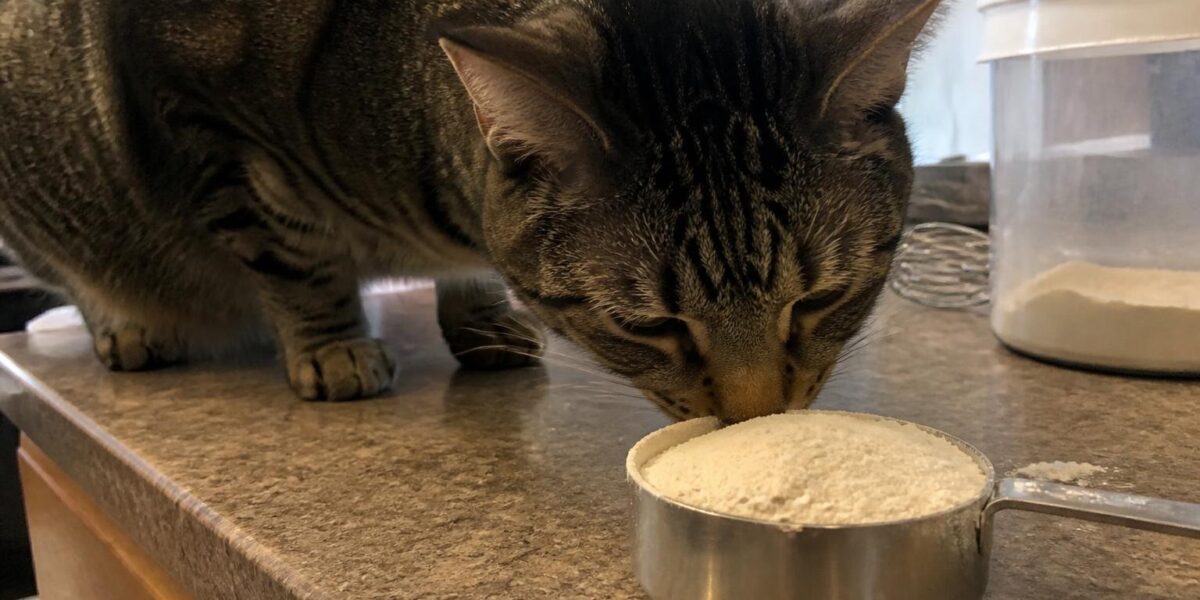
Can cats eat coconut flour? A tiny amount is safe, but it offers no real benefit. Coconut flour is not toxic to cats, so a small taste will not harm a healthy cat. However, cats are obligate carnivores who get all their nutrition from meat, and a plant-based flour provides nothing their bodies need. The fiber and fat in coconut flour can also cause digestive upset if your cat eats too much. In short, it is harmless in small amounts but pointless as a treat.
In this article
If coconut flour shows up in homemade cat treats, a trace amount is fine, but it should never be a meaningful part of your cat’s diet. There is simply no nutritional reason to feed it on purpose.
Is Coconut Flour Safe for Cats?
Coconut flour is made from dried, ground coconut meat after the oil has been pressed out. It is non-toxic, which means a small accidental nibble is not dangerous. Some pet treat recipes use it as a grain-free binding ingredient in small quantities, and in that role a trace amount is generally harmless.
The concern is not toxicity but suitability. Coconut flour is high in fiber and contains fat, both of which a carnivore’s digestive system is not designed to process in large amounts. Too much can lead to gas, loose stools, or an upset stomach. A cat’s gut is short and built for digesting animal protein quickly, not for breaking down dense plant fiber.
Coconut products also contain medium-chain triglycerides and natural oils. While not poisonous, these fats can contribute to digestive upset and add unnecessary calories to a cat’s diet. For a small animal, even modest amounts of extra fat and carbohydrate can add up over time.
Although coconut flour is defatted compared with whole coconut, it still retains some of these oils, and it is unusually high in fiber, often containing far more than wheat flour. That high fiber is the main practical reason a larger amount can upset a cat’s stomach. Fiber draws water and ferments in the gut, and a carnivore’s short, efficient digestive tract is not built to handle a big dose of it. The result, if a cat eats more than a trace, is typically gas and a soft or loose stool rather than anything dangerous, but it is a reminder that even a non-toxic plant ingredient can cause discomfort.
Why Coconut Flour Offers No Benefit
For humans, coconut flour can be a useful grain-free baking option. For cats, the picture is very different because their nutritional needs are met almost entirely by meat:
- No animal protein: Cats need protein from meat, not plants.
- Unnecessary fiber: A balanced cat food already provides the right amount of fiber.
- Empty calories: The carbohydrates and fat add calories without meeting a cat’s nutritional needs.
- No taurine: Cats require taurine, an amino acid found only in animal tissue.
Because a cat gains nothing nutritionally from coconut flour, there is no reason to add it to their diet on purpose. Anything coconut flour could offer is already supplied, in the right form and amount, by a complete cat food. Feeding it simply takes up room your cat would be better off filling with proper nutrition.
Possible Risks of Too Much Coconut Flour
While small amounts are harmless, larger quantities can cause:
- Gas and bloating
- Loose stools or diarrhea
- Vomiting
- Reduced appetite for proper food if filled up on flour
- Unwanted weight gain from extra calories over time
If your cat eats a significant amount of coconut flour and develops persistent vomiting or diarrhea, contact your veterinarian. For most cats, a small taste will pass without issue, but ongoing digestive symptoms always warrant a call to the vet. Dry flour can also be a bit messy and may cause coughing if a cat inhales it, so keep the bag sealed and stored away.
It is also worth being mindful of what the coconut flour is mixed into. On its own it is fairly bland, but in baked goods it is usually combined with sugar, chocolate, raisins, or other ingredients that can be genuinely harmful to cats. If your cat raids a coconut-flour muffin or cookie, the flour is rarely the real concern. Check what else was in the recipe, since ingredients like chocolate or raisins are far more dangerous and may warrant an immediate call to your veterinarian.
What About Coconut Itself?
Coconut flour is just one of several coconut products, and they are not all the same when it comes to cats. Plain coconut meat, coconut oil, and coconut milk each carry their own considerations, mostly related to fat content rather than toxicity. None of them are necessary for a cat, and all are best limited to tiny amounts if offered at all.
If your cat seems curious about coconut, a very small taste of plain coconut meat is the most natural form to try, but even that should be rare. The high fat in coconut products is the main reason to keep portions tiny, since excess fat can upset a cat’s stomach.
Why Cats Do Not Need Carbohydrates
Coconut flour, like all flours, is mainly a source of carbohydrate and fiber, and this is a good moment to talk about why that matters so little for cats. Unlike people and dogs, cats have a very limited ability to use carbohydrates for energy. Their metabolism is geared toward turning protein and fat into the fuel they need, a reflection of their evolution as hunters of small prey.
This is why a high-quality cat food leans heavily on animal protein and fat rather than grains or flours. While a small amount of carbohydrate is not harmful, cats have no dietary requirement for it, and filling up on carb-heavy foods can crowd out the protein they actually depend on. A flour-based treat simply does not serve a cat’s nutritional needs.
That is the core reason coconut flour, despite being safe and trendy in human kitchens, is a non-starter for cats. It is not dangerous in a tiny taste, but it offers a carbohydrate that your cat is not built to use and cannot benefit from. Meat-based treats will always be the better fit for a true carnivore.
Coconut Flour in Homemade Pet Treats
Coconut flour has become popular in homemade and grain-free pet treat recipes, where it is used in small amounts as a binder that holds the mixture together. In that role, a trace of coconut flour blended into a meat-based treat is generally harmless for a cat. The key is that it should be a minor binding ingredient, not the bulk of the recipe, and the treat should still be built around animal protein, which is what a cat actually needs.
The caution comes when coconut flour is the star of a recipe, as it is in many human baked goods. A coconut-flour cookie or muffin made for people is mostly carbohydrate and fiber, often with added sugar, butter, and sometimes chocolate or dried fruit. None of that suits a cat, and the more dangerous add-ins like chocolate and raisins are the real hazard if a cat raids such a baked good. The flour itself is rarely the worst part of the recipe.
If you enjoy baking treats for your cat, the better approach is to center recipes on cooked meat, egg, or a small amount of cat-safe ingredients, using coconut flour only sparingly if at all. Always check that no harmful ingredients have crept in, and remember that even a well-made homemade treat should stay within the roughly ten percent of daily calories that treats of any kind should occupy.
Better Treats for a Carnivore
Since cats are built for meat, protein treats are far more appealing and appropriate than flour. Plain cooked chicken and turkey give your cat something they actually crave and can use.
If your cat is curious about coconut itself, learn how a small amount of plain coconut can be offered as a novelty. And for a gentle, fiber-friendly treat that suits cats better than flour, a tiny bit of plain pumpkin is a good choice that can even help with digestion.
Looking to bring a new cat into your life? Visit our adopt a cat hub to meet rescue felines searching for a loving family.
Frequently Asked Questions
Is coconut flour toxic to cats?
No, coconut flour is not toxic. A small taste is harmless, but it provides no nutritional benefit and can cause digestive upset in larger amounts.
Can I use coconut flour in homemade cat treats?
A trace amount as a binder is generally fine, but it should be minimal. Cats need meat-based treats, so coconut flour should never be a main ingredient.
My cat ate some coconut flour. Should I worry?
A small amount is unlikely to cause problems beyond mild gas. Watch for vomiting or diarrhea, and call your vet if digestive symptoms persist.
Does coconut flour have any nutrients cats need?
No. Coconut flour lacks animal protein and taurine, which cats require. A complete cat food provides everything they need, making coconut flour unnecessary.
Is coconut flour better than wheat flour for cats?
Neither flour is beneficial for cats. Both are plant-based and add empty calories. Meat-based treats are always the better choice for a carnivore.
Is coconut flour grain-free, and does that make it safe for cats?
Coconut flour is grain-free, which is why it appears in many grain-free recipes, but grain-free does not mean nutritionally useful for a cat. It is still a plant-based carbohydrate that a carnivore cannot benefit from, so being grain-free does not turn it into a worthwhile treat.
Can coconut flour help my overweight cat feel full?
It is not a good weight-management tool. While fiber can promote fullness, filling a cat up on plant fiber risks digestive upset and displaces the protein they need. For weight concerns, talk to your veterinarian about a proper portion-controlled or therapeutic diet instead.