
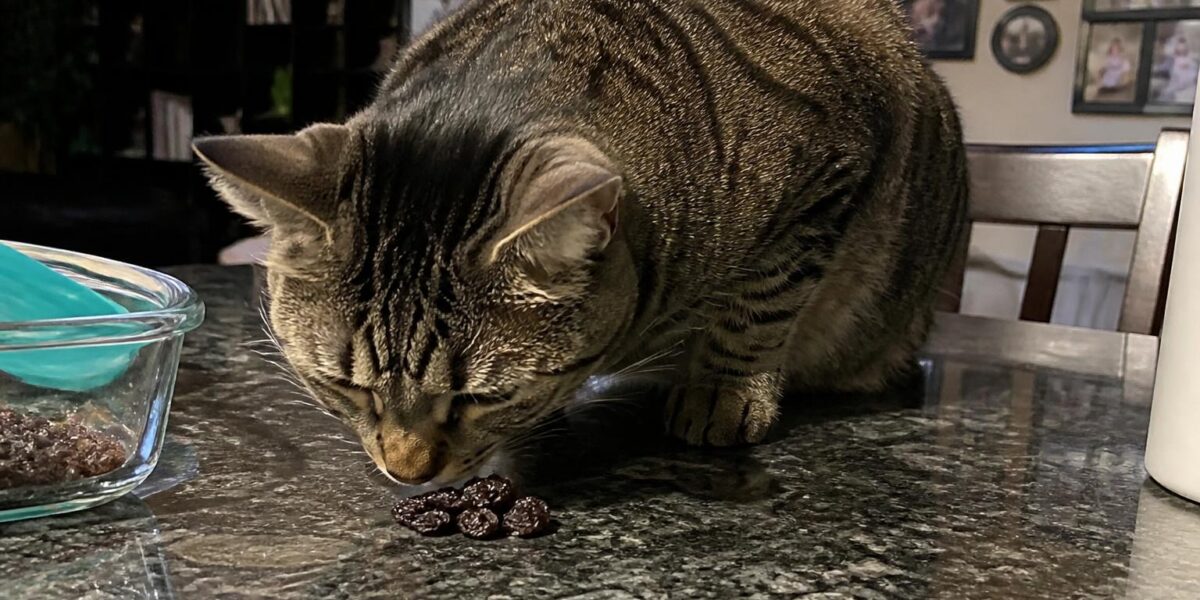
The Short Answer on Raisins for Cats
Can cats eat raisins? No, you should avoid giving raisins to your cat. Grape and raisin toxicity is well documented in dogs, where even small amounts can cause kidney failure, and the prudent veterinary stance is to avoid them in cats too. Cats rarely seek out raisins, but err firmly on the side of caution and keep them off the menu.
In this article
Raisins are simply dried grapes, so the same concerns apply. While the exact toxic mechanism is still not fully understood and feline cases are less reported than canine ones, no responsible owner should risk it when there is no benefit to offering raisins in the first place.
If your cat happens to eat a raisin, do not panic, but do contact your veterinarian for advice. Below, we explain the risks, what to watch for, and the safe treats you can offer instead.
Raisins turn up in more places than you might expect, tucked into cereals, baked goods, trail mix, oatmeal cookies, and snack bars. A cat is most likely to encounter one by batting a dropped raisin across the floor or nibbling a crumb of something you were eating. Because cats cannot taste sweetness, they rarely eat raisins with enthusiasm, but curiosity and play can still lead to a swallowed piece, which is reason enough to keep these foods secured.
Why Raisins Are Risky for Cats
The concern with raisins centers on their connection to grape toxicity and a few related hazards.
Grape and raisin toxicity. In dogs, grapes and raisins can cause sudden kidney failure, and the toxic dose varies unpredictably from one animal to the next. Because the responsible approach is to assume the same risk applies to cats, raisins are treated as a food to avoid.
Concentrated form. Raisins are dried, so the same potentially harmful compounds in grapes are concentrated into a smaller package, meaning a small raisin could carry more risk than its size suggests.
Sugar content. Raisins are very high in sugar, which is unsuitable for obligate carnivores and especially risky for diabetic or overweight cats.
Choking and additives. Raisins in baked goods may come alongside other unsafe ingredients, and small dried fruits can be a choking hazard for a curious cat.
Are There Any Benefits?
It is reasonable to wonder whether the fiber or antioxidants in raisins might help a cat. They do not. Cats are obligate carnivores whose bodies are designed to run on animal protein, and they gain no meaningful benefit from dried fruit.
Any nutrients raisins contain are easily and far more safely provided by a complete, balanced cat food. There is no vitamin or mineral in a raisin that your cat needs from that source, so the potential risk vastly outweighs any imagined upside.
The takeaway is simple: raisins are a human snack with zero nutritional value for cats and a real possibility of harm. Keep them as a people-only food.
This is a good moment to mention currants and sultanas as well, since they are simply other forms of dried grapes and carry the very same concern. Recipes and snack mixes sometimes use these names interchangeably or in combination, so a label that does not say raisins may still contain dried grapes under another name. Treat all dried grape products, whatever they are called, as foods to keep away from your cat. The underlying ingredient is the same, and so is the caution it deserves.
What to Do If Your Cat Eats Raisins
If your cat eats a raisin or two, contact your veterinarian or an animal poison control line for guidance rather than waiting to see what happens. Because the toxic dose is unpredictable, early action is the safest course.
Watch for these symptoms, which can appear within hours:
- Vomiting or diarrhea
- Lethargy or weakness
- Loss of appetite
- Increased or decreased urination, or no urination at all
- Excessive thirst
Changes in urination are especially concerning because they can signal kidney trouble. If your cat shows any of these signs, treat it as an emergency and get to a vet quickly. Bring information about how many raisins were eaten and when, so the veterinary team can act fast. Prompt treatment makes a real difference in outcomes.
Safer Treats for Cats
Cats thrive on animal-based treats, not dried fruit. Instead of raisins, offer small amounts of snacks that match your cat’s carnivore nature.
- Small pieces of plain cooked chicken or lean beef
- A little plain cooked salmon
- A bite of plain scrambled egg
- Commercial treats made specifically for cats
Keep all treats to no more than about 10 percent of your cat’s daily calories, with the rest coming from a balanced cat food. Introduce any new treat slowly and watch for digestive upset.
Cats are usually far more enthusiastic about these meat-based options than they ever would be about fruit, which works in your favor. Because cats cannot taste sweetness, the appeal of raisins and other sweet foods is lost on them entirely, so you are not denying your cat a treat they would truly crave. A few flakes of cooked fish or a sliver of plain chicken will light up your cat’s interest in a way no dried fruit ever could, giving you a safe and genuinely rewarding way to spoil them.
If you bake with raisins or keep them in trail mix or cereal, store these items where your cat cannot reach them and clean up dropped pieces promptly. Your veterinarian can always recommend safe treat options tailored to your cat.
Other Foods to Keep Away From Cats
Raisins are one of several human foods that cats should never have. Knowing the common dangers helps you keep your home safe.
Other foods to keep well away from cats include fresh grapes, chocolate, and onions, along with garlic, all of which are toxic or dangerous to cats. Like raisins, these belong firmly on the do-not-feed list.
The safest habit is to feed your cat a proper diet and treat human snacks as off-limits unless you have confirmed they are safe. Whenever you are unsure about a food, your veterinarian is the best and fastest resource.
Why the Precautionary Approach Makes Sense
Some owners wonder why the advice on raisins for cats is so cautious when feline cases are not as widely reported as canine ones. The answer lies in how veterinary medicine handles uncertainty around potential poisons. When a food is known to cause severe, unpredictable harm in one species, and the toxic dose cannot be reliably predicted, the responsible default is caution rather than experimentation.
Grape and raisin toxicity is a striking example of unpredictability. In dogs, some individuals eat grapes with no apparent effect while others develop life-threatening kidney failure from a relatively small amount, and researchers have only recently zeroed in on the likely culprit. With that much uncertainty even in the better-studied species, it would be reckless to assume cats are safe simply because fewer cases have been documented.
There is also a simple risk-benefit calculation at work. Raisins offer a cat absolutely nothing of value, since cats are obligate carnivores who gain no benefit from dried fruit. When a food provides zero upside and carries even a possibility of serious harm, the decision is easy. There is no trade-off to weigh, only a risk to avoid.
This is the same logic that keeps responsible owners from offering chocolate, onions, or other questionable foods to their cats. You do not need certainty of harm to justify avoiding a food. The mere combination of real potential danger and no benefit is enough. Treating raisins as off-limits is simply good, common-sense feline care.
Frequently Asked Questions
Are raisins toxic to cats like they are to dogs?
Grape and raisin toxicity is well documented in dogs, and the prudent veterinary stance is to assume the same risk for cats. Because the toxic dose is unpredictable, raisins should always be avoided for cats.
My cat ate one raisin. What should I do?
Contact your veterinarian or a pet poison control line for advice right away rather than waiting. Watch for vomiting, lethargy, or changes in urination, and seek care promptly if any appear.
Do cats even like raisins?
Most cats are not drawn to sweet foods because they cannot taste sweetness well, so they rarely seek out raisins. Still, keep raisins out of reach in case your cat investigates out of curiosity.
What symptoms suggest raisin poisoning in cats?
Watch for vomiting, diarrhea, lethargy, loss of appetite, and especially changes in urination, which can signal kidney trouble. Any of these after eating raisins warrants an urgent call to your vet.


