
Last updated: June 13, 2026
In this article
Can Cats Eat Pumpkin? Benefits and Safety Guide for Cat Owners
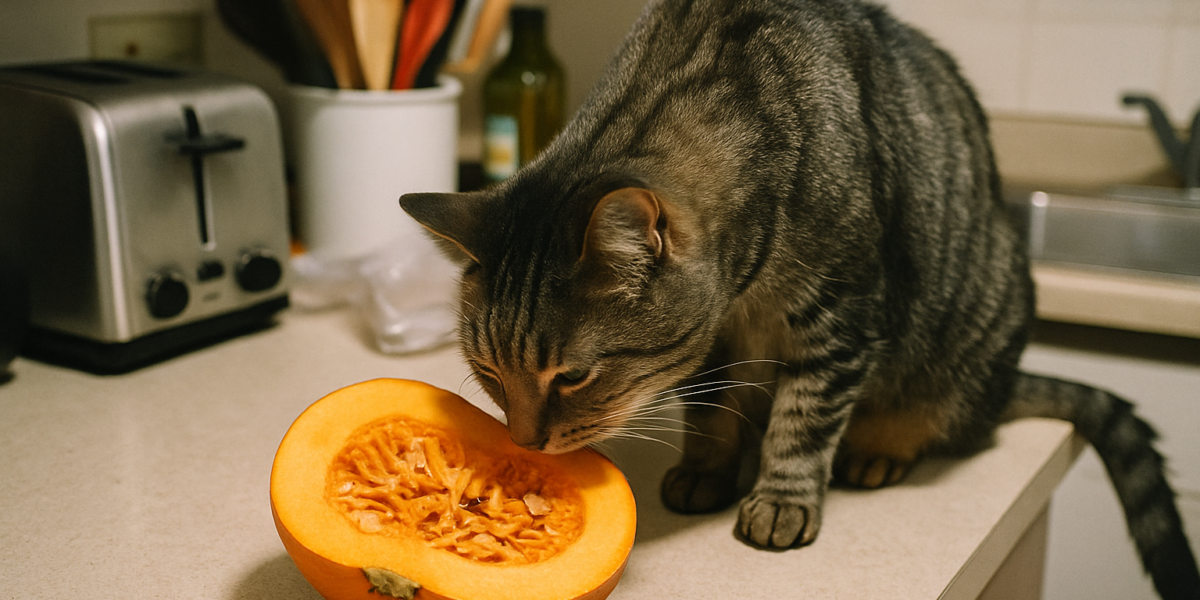
Plain, cooked pumpkin is one of the most cat-friendly human foods you can offer. It is high in fiber, low in calories, and can support healthy digestion. Many veterinarians actually recommend pumpkin as a natural remedy for mild constipation and diarrhea in cats. The key is to use only plain pumpkin, never pumpkin pie filling or spiced varieties.
Pumpkin is one of those rare human foods that earns genuine enthusiasm from veterinarians when it comes to feeding cats. While many foods from our kitchens fall into the gray area of technically safe but not particularly useful for felines, pumpkin stands out as something that can actually provide real digestive benefits for your cat. If you have been wondering whether you can share a bit of pumpkin with your furry companion, you are in luck.
Here at Walk Me Home Rescue, we know that caring for a cat means paying attention to every detail of their diet. Whether your cat is dealing with a sensitive stomach, battling hairballs, or you simply want to offer a healthy treat, understanding how to use pumpkin safely is valuable knowledge for any cat owner.
Is Pumpkin Safe for Cats? The Quick Answer
Plain, cooked pumpkin is completely safe for cats and is often actively recommended by veterinary professionals. It is not toxic, it does not contain any compounds harmful to felines, and when served correctly, it can support your cat’s digestive health in meaningful ways.
The critical distinction is between plain pumpkin and pumpkin pie filling. These are not the same product, and confusing the two could cause problems for your cat. Plain canned pumpkin contains nothing but cooked, pureed pumpkin. Pumpkin pie filling, on the other hand, is loaded with sugar, spices like nutmeg and cinnamon, and sometimes preservatives. Nutmeg in particular is toxic to cats, so pumpkin pie filling should never be offered under any circumstances.
Fresh pumpkin that you cook at home is also safe, as long as it is plain and thoroughly cooked. Raw pumpkin is harder for cats to digest and less palatable. The seeds, stem, and skin should be removed before serving, as these parts can pose choking hazards or cause digestive irritation.
Among the many human foods that cat owners ask about, pumpkin is genuinely one of the best options. Its combination of high fiber, low calories, and digestive benefits makes it a standout in the world of cat-safe foods.
Nutritional Profile of Pumpkin for Cats
Pumpkin is not just safe for cats; it actually brings some nutritional value to the table. Here is what pumpkin offers and how it relates to your cat’s health.
Dietary fiber. This is the star of the show when it comes to pumpkin for cats. Pumpkin is rich in both soluble and insoluble fiber, which plays a crucial role in digestive health. Soluble fiber absorbs water in the digestive tract, which can help firm up loose stools in cats with diarrhea. Insoluble fiber adds bulk to the stool and stimulates intestinal movement, which can help relieve constipation. This dual action is what makes pumpkin such a versatile digestive aid.
Moisture content. Pumpkin is about 90 percent water, which makes it an excellent source of additional hydration for cats. Many cats, especially those on a dry kibble diet, do not drink enough water. The moisture in pumpkin can contribute to overall hydration, which supports kidney health and urinary tract function.
Vitamins. Pumpkin contains notable amounts of vitamin A in the form of beta-carotene, which supports eye health, immune function, and skin integrity. It also provides vitamin C, vitamin E, and several B vitamins. While cats can synthesize their own vitamin C, the other vitamins in pumpkin complement the nutrition they receive from their regular food.
Minerals. Potassium, iron, and manganese are present in pumpkin in modest amounts. Potassium supports heart and muscle function, iron is essential for oxygen transport in the blood, and manganese plays a role in bone development and metabolism.
Low calorie density. One tablespoon of plain pumpkin contains only about 5 calories. For a cat that needs 200 to 300 calories per day, this makes pumpkin one of the lowest-calorie treat options available. This is particularly valuable for overweight cats or those on calorie-restricted diets who could benefit from a satisfying treat that does not significantly impact their daily caloric budget.
It is important to remember that cats are obligate carnivores and cannot be sustained on plant-based foods alone. Pumpkin should always be used as a supplement or treat, never as a meal replacement. Your cat’s primary nutrition should come from a complete, balanced cat food formulated for their life stage.
Benefits and Risks of Pumpkin for Cats
The benefits of pumpkin for cats go beyond basic nutrition. Let us look at both the advantages and the potential concerns.
Digestive support. This is the primary reason veterinarians recommend pumpkin for cats. The fiber content helps regulate bowel movements in both directions. If your cat is constipated, the insoluble fiber in pumpkin adds bulk and moisture to the stool, making it easier to pass. If your cat has mild diarrhea, the soluble fiber absorbs excess water and helps firm things up. This makes pumpkin a gentle, natural first line of defense for minor digestive irregularities.
Hairball management. The fiber in pumpkin can help move hair through the digestive tract more efficiently, potentially reducing the frequency of hairballs. While pumpkin is not a cure for chronic hairball problems, many cat owners find that regular small amounts of pumpkin in their cat’s diet help keep things moving smoothly. Long-haired breeds in particular may benefit from this. Check our cat breeds directory for breed-specific grooming and dietary considerations.
Weight management. Because pumpkin is low in calories but high in fiber, it can help cats feel fuller without adding significant calories. Some veterinarians suggest mixing a small amount of pumpkin into a dieting cat’s food to increase satiety and make the transition to reduced portions less stressful for the cat.
Hydration boost. The high water content of pumpkin supports hydration, which is especially valuable for cats that primarily eat dry food. Adequate hydration helps prevent urinary tract issues and supports overall kidney function.
Now for the potential risks, which are relatively few but worth knowing about.
Pumpkin pie filling. This bears repeating because it is the single most important safety concern. Pumpkin pie filling contains sugar, spices, and additives that are inappropriate or dangerous for cats. Nutmeg can cause neurological symptoms in cats including disorientation, increased heart rate, and seizures. Always use plain pumpkin only.
Too much fiber. While fiber is beneficial in appropriate amounts, too much can cause the opposite of what you are trying to achieve. Excessive pumpkin can lead to diarrhea, gas, bloating, and cramping. Stick to the recommended serving sizes and increase gradually.
Vitamin A excess. Pumpkin is high in beta-carotene, which the body converts to vitamin A. While vitamin A is essential, excessive supplementation over time can lead to vitamin A toxicity in cats, a condition called hypervitaminosis A. This is unlikely from small amounts of pumpkin as an occasional treat, but it is a reason to keep portions moderate.
Seeds and skin. Raw pumpkin seeds are tough and can be difficult for cats to digest. The skin and stem are also problematic. Always remove these parts and serve only the soft, cooked flesh.
How to Feed Pumpkin to Your Cat Safely
Getting pumpkin into your cat’s diet is straightforward, but following best practices ensures the best outcome.
Choose the right product. Plain canned pumpkin is the easiest option for most cat owners. Check the label carefully. The only ingredient should be pumpkin. No sugar, no spices, no preservatives. Popular brands often sell both plain pumpkin and pumpkin pie filling in very similar-looking cans, so read the label every time you purchase.
Alternatively, cook fresh pumpkin. If you prefer to use fresh pumpkin, cut it in half, remove the seeds and stringy pulp, and bake it at 350 degrees Fahrenheit until the flesh is soft and easily scoopable, typically 45 minutes to an hour. Let it cool completely, then scoop out the flesh and mash it smooth. Avoid adding any seasoning, oil, or butter.
Start with a small amount. Begin with about half a teaspoon mixed into your cat’s regular food. This allows you to gauge your cat’s interest and observe how their digestive system responds. If all goes well after a day or two, you can gradually increase to one to two teaspoons per meal.
Recommended serving size. For most adult cats, one to two teaspoons of plain pumpkin per day is appropriate. This can be split between meals or offered once daily. Kittens should receive smaller portions, about half a teaspoon. Do not exceed two tablespoons per day for any cat, as too much fiber can cause digestive discomfort.
Mix it into food. Most cats prefer pumpkin mixed into their regular wet food rather than served on its own. The combination of textures and flavors is usually more appealing. If your cat eats dry food, you can mix the pumpkin with a small amount of water to create a thinner consistency that coats the kibble.
Storage tips. Once you open a can of pumpkin, transfer the unused portion to an airtight container and refrigerate it. Canned pumpkin typically stays fresh in the refrigerator for about five to seven days. You can also freeze pumpkin in ice cube trays for longer storage. Pop out a cube and thaw it as needed, which eliminates waste and ensures you always have pumpkin on hand.
If you have just adopted a new cat and they are experiencing digestive issues related to the stress of transition, a small amount of plain pumpkin mixed into their food can help ease their stomach while they settle in.
Signs of Problems: When Pumpkin Causes Issues
Pumpkin is one of the safest foods you can offer a cat, but no food is completely without risk, and individual reactions vary. Here is what to watch for.
Diarrhea. If you give your cat too much pumpkin at once, the excess fiber can actually cause diarrhea rather than prevent it. This is the most common issue and is easily resolved by reducing the amount. If diarrhea persists after you cut back on the pumpkin, stop offering it and consult your veterinarian.
Vomiting. Some cats may vomit after eating pumpkin, especially if they have never had it before and receive too much too quickly. Introduce pumpkin gradually to give your cat’s digestive system time to adjust.
Gas and bloating. The fiber in pumpkin can produce gas as it is fermented by bacteria in the gut. If your cat seems uncomfortable, gassy, or has a distended abdomen after eating pumpkin, reduce the amount or frequency.
Refusal to eat. Not all cats enjoy pumpkin. If your cat consistently refuses food that has pumpkin mixed in, do not force the issue. There are other fiber sources and digestive aids available.
Signs of pumpkin pie filling ingestion. If your cat accidentally consumed pumpkin pie filling rather than plain pumpkin, watch for vomiting, diarrhea, restlessness, rapid heart rate, and neurological symptoms like disorientation or trembling. These could indicate a reaction to nutmeg or other spices. Contact your veterinarian immediately if you notice any of these signs.
For most cats, pumpkin is wonderfully well-tolerated and side effects are rare when serving sizes are appropriate. The key is to start small, increase gradually, and pay attention to your individual cat’s response.
Alternatives to Pumpkin for Cats
While pumpkin is an excellent choice, there are other safe foods that offer similar benefits if your cat is not a fan or you want to rotate treats.
Cooked sweet potato is another fiber-rich option that some cats enjoy. Like pumpkin, it should be plain and mashed with no added seasoning, butter, or sugar. The fiber content is comparable and it provides similar digestive benefits.
Plain cooked spinach offers fiber and additional nutrients, though it should be used sparingly in cats prone to urinary crystals due to its oxalate content.
For protein-based treats, cooked plain turkey and shrimp are both excellent options that align with a cat’s natural dietary needs. These do not provide the same fiber benefits as pumpkin but are highly palatable and nutritionally appropriate.
Small amounts of blueberries or strawberries can serve as low-calorie fruit treats, though the fiber content per serving is lower than pumpkin.
If your primary goal is digestive support, cat-specific fiber supplements and probiotics are available from veterinary suppliers. These products are formulated specifically for feline digestive systems and provide consistent, measurable doses. Your veterinarian can recommend the best option for your cat’s specific needs.
Frequently Asked Questions
Can cats eat pumpkin seeds?
Raw pumpkin seeds are hard and difficult for cats to digest, so they are best avoided. However, some cat owners offer roasted, unsalted pumpkin seeds that have been ground into a powder and sprinkled over food in very small amounts. Ground pumpkin seeds have been traditionally used as a natural deworming aid, though scientific evidence for this is limited. If you want to try pumpkin seeds, grind them finely, keep the amount to a pinch, and consult your veterinarian about their appropriateness for your cat.
How much pumpkin should I give my cat for constipation?
For mild constipation, start with one teaspoon of plain canned pumpkin mixed into your cat’s food once or twice daily. The fiber and moisture content should help soften the stool and promote bowel movement within 24 to 48 hours. If your cat’s constipation does not improve within two days or if they appear to be in pain, straining excessively, or have not had a bowel movement in more than three days, stop the home treatment and contact your veterinarian. Severe constipation can indicate underlying health issues that require professional intervention.
Is canned pumpkin the same as pumpkin pie filling?
No, and this is a critically important distinction. Canned plain pumpkin contains only cooked, pureed pumpkin with no other ingredients. Pumpkin pie filling contains added sugar, spices like nutmeg, cinnamon, and cloves, and sometimes preservatives. Nutmeg is toxic to cats and can cause serious neurological symptoms. Always read the label carefully and ensure you are purchasing 100 percent pure pumpkin with no additives. The cans often look very similar on store shelves, so take the extra moment to verify.
Can I give my cat pumpkin every day?
Yes, small daily amounts of plain pumpkin are generally safe for most cats. One to two teaspoons per day is an appropriate amount for an adult cat. Daily pumpkin can be particularly helpful for cats that struggle with chronic hairballs, mild digestive irregularity, or weight management. However, if your cat is on a prescription diet or has any medical conditions, check with your veterinarian before making pumpkin a daily addition. Too much pumpkin over extended periods could contribute to excess vitamin A intake.
Will pumpkin help my cat with diarrhea?
Pumpkin can help with mild diarrhea thanks to its soluble fiber content, which absorbs excess water in the digestive tract and helps firm up loose stools. Start with one teaspoon mixed into your cat’s food and monitor their response. Many cats show improvement within a day or two. However, pumpkin is not appropriate for all causes of diarrhea. If diarrhea is caused by an infection, parasite, food allergy, or other medical condition, pumpkin alone will not resolve it. Persistent diarrhea lasting more than 48 hours, diarrhea with blood, or diarrhea accompanied by vomiting, lethargy, or loss of appetite requires veterinary attention.
Can kittens eat pumpkin?
Yes, kittens can eat small amounts of plain pumpkin. Start with about half a teaspoon mixed into their food and observe how they respond. Pumpkin can be especially helpful for kittens experiencing digestive adjustment when transitioning between foods. However, a kitten’s primary nutrition should always come from kitten-formulated food that meets their specific growth requirements. Use pumpkin as an occasional supplement, not a regular dietary component, unless your veterinarian specifically recommends otherwise.
For the full picture, see our complete guide to the human foods cats can eat safely.
Not sure what to keep away from your cat? See our complete list of foods toxic to cats.


