
Last updated: April 9, 2026
In this article
Can Cats Eat Strawberries? A Fruit Safety Guide for Cat Owners
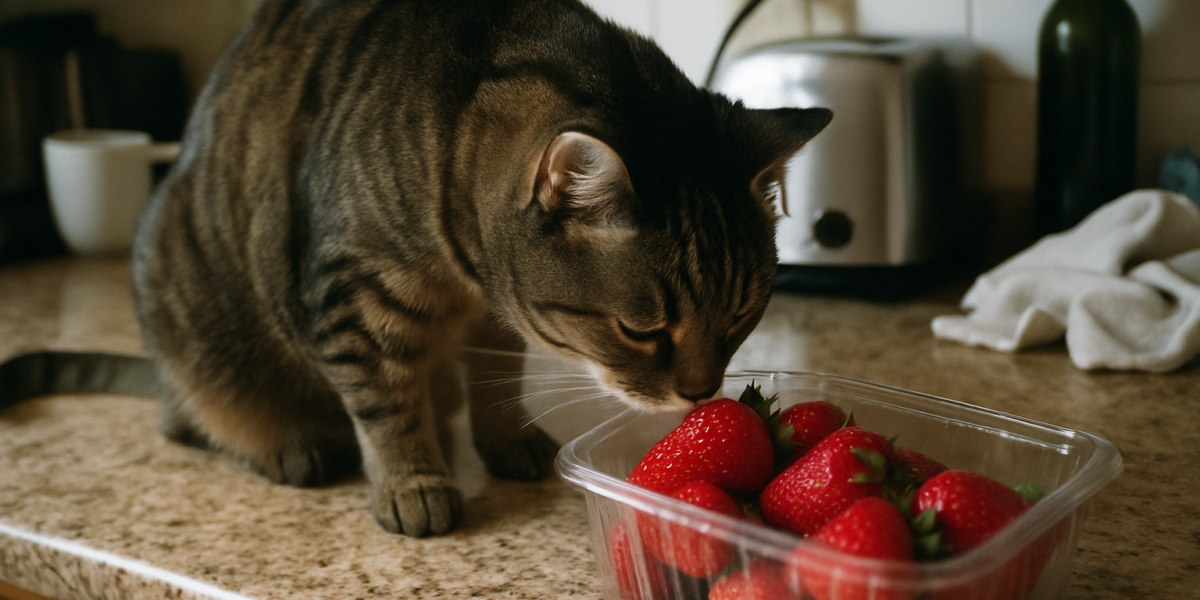
Fresh strawberries are non-toxic to cats and can be offered as an occasional treat. They contain antioxidants, fiber, and vitamin C. However, strawberries also contain natural sugars that cats do not need, so portions should be small and infrequent. Remove the stem and leaves, and cut the berry into small pieces before serving.
Strawberries are a beloved fruit that make a regular appearance in kitchens around the world, and their bright color and sweet aroma can sometimes attract feline attention. If your cat has taken an interest in the strawberries on your counter or you are looking for new safe treat options, you will be pleased to know that strawberries are on the list of cat-safe fruits.
That said, just because something is safe does not mean it should become a regular part of your cat’s diet. At Walk Me Home Rescue, we help cat owners navigate the sometimes confusing world of feline nutrition with clear, practical advice. Here is everything you need to know about sharing strawberries with your cat.
Are Strawberries Safe for Cats? The Quick Facts
Strawberries are completely non-toxic to cats. The flesh, seeds on the outside, and juice of strawberries do not contain any compounds that are harmful to felines. Eating a small amount of fresh strawberry will not cause poisoning, organ damage, or any acute health emergency.
This safety extends to the fruit itself, not to strawberry-flavored products. Strawberry ice cream, strawberry yogurt, strawberry jam, and strawberry-flavored candy all contain added sugars, dairy, artificial flavors, or other ingredients that are inappropriate or potentially harmful for cats. When we say strawberries are safe for cats, we mean the actual fresh fruit and nothing else.
An interesting detail about cats and strawberries is that cats cannot taste sweetness. They lack the TAS1R2 gene that codes for the sweet taste receptor, which means the primary appeal of strawberries for humans is completely lost on cats. If your cat shows interest in strawberries, it is likely due to the aroma, the interesting texture, or the novelty of the food rather than the sweet flavor.
Because of their carnivorous biology, cats derive no essential nutritional benefit from strawberries that they cannot get from a balanced cat food. Strawberries are a fun treat, not a health food, from your cat’s perspective. This is an important distinction that should guide how and how often you offer them.
Nutritional Profile of Strawberries for Cats
Strawberries contain a variety of nutrients that are valuable for humans but have varying relevance for cats.
Vitamin C. Strawberries are an excellent source of vitamin C for humans, but cats synthesize their own vitamin C in their liver and do not need supplementary sources. The vitamin C in strawberries is not harmful to cats but provides no meaningful nutritional benefit either. In very large amounts, excess vitamin C could theoretically contribute to the formation of calcium oxalate crystals in the urinary tract, but the amount in a few strawberry pieces is far too small to be a concern.
Antioxidants. Strawberries contain anthocyanins, ellagic acid, and other antioxidant compounds that help combat oxidative stress. These antioxidants have well-documented health benefits in humans and may offer minor protective benefits to cats as well, though research specific to feline antioxidant supplementation from fruit sources is limited.
Fiber. One medium strawberry contains about 0.3 grams of fiber. This is a modest amount, but it can contribute to digestive regularity. For cats needing more substantial fiber support, pumpkin is a much better option.
Manganese. Strawberries are a good source of manganese, a trace mineral that supports bone health and metabolism. Cats need only small amounts of manganese, and their regular food provides adequate levels.
Folate. Also known as vitamin B9, folate supports cell division and is present in strawberries in meaningful amounts for human nutrition. The relevance for cats is minimal since their dietary folate needs are met by balanced cat food.
Natural sugars. One medium strawberry contains about 0.7 grams of sugar. While this is low compared to many fruits, cats do not have a biological need for dietary sugar. Their bodies metabolize protein and fat as primary energy sources, and excess sugar, even from natural sources, can contribute to weight gain and other health issues over time.
Water content. Strawberries are approximately 91 percent water, which means they can contribute to hydration. This is a minor but genuine benefit, especially for cats that could use extra moisture in their diet.
Calories. A single medium strawberry contains about 4 calories, making strawberries one of the lowest-calorie treat options for cats. Even several pieces represent a negligible caloric contribution to a cat’s daily intake.
Benefits and Risks of Feeding Strawberries to Cats
With a clear understanding of what strawberries contain, let us evaluate the practical advantages and disadvantages of offering them to your cat.
Benefits:
The low calorie content is perhaps the most practical benefit of strawberries as a cat treat. For cats on weight management programs, strawberry pieces offer a treat experience without meaningfully impacting the daily caloric budget. This is especially valuable for cats that expect treats during certain routines or interactions.
The antioxidant content of strawberries may offer minor health benefits, particularly for older cats where oxidative stress plays a larger role in age-related decline. While the evidence for this in cats specifically is limited, antioxidants are generally regarded as positive dietary components across species.
The hydration contribution of strawberries, while modest, is a nice bonus for cats that tend to under-hydrate. Every bit of additional moisture supports kidney and urinary tract health.
Strawberries can provide environmental enrichment for cats. The unusual texture, the seeds on the surface, and the different scent profile compared to their regular food can stimulate curiosity and provide a novel sensory experience.
Risks:
Sugar content. Although strawberries are relatively low in sugar compared to many fruits, the sugar they contain is still unnecessary for cats. Regular consumption of sugary foods, even natural ones, can contribute to weight gain and may increase the risk of diabetes in predisposed cats. This is the most commonly cited reason to keep strawberry portions small and infrequent.
Digestive upset. Some cats may experience soft stools, diarrhea, or vomiting after eating strawberries. The combination of natural sugars, fiber, and acids in strawberries can be too much for sensitive feline digestive systems. Introducing strawberries gradually and in small amounts minimizes this risk.
Stems and leaves. Strawberry stems and leaves contain small amounts of compounds that can cause mild gastrointestinal irritation if consumed. While not seriously toxic, they should be removed before offering strawberries to your cat. The rough texture of the stem and leaves can also be difficult to chew and swallow.
Choking hazard. Whole strawberries are too large for cats and could pose a choking risk, especially for smaller cats or those that tend to gulp food. Always cut strawberries into small, manageable pieces.
Pesticide residue. Strawberries consistently rank among the fruits with the highest pesticide residue levels. Wash strawberries thoroughly before offering any to your cat, and consider organic options if available. A cat’s smaller body weight makes them more susceptible to the effects of chemical residues.
Allergic reactions. While very rare, some cats may have sensitivity to strawberries. Watch for itching, skin irritation, swelling, or gastrointestinal symptoms after the first introduction.
How to Feed Strawberries to Your Cat Safely
These guidelines will help you offer strawberries to your cat with minimal risk and maximum enjoyment.
Wash thoroughly. Always rinse strawberries under clean running water to remove dirt, bacteria, and pesticide residue. This step is non-negotiable regardless of whether the berries are conventional or organic.
Remove the stem and leaves. Pull off or cut away the green stem and leaf cap at the top of the strawberry. These parts offer no benefit and can cause mild digestive irritation.
Cut into small pieces. Slice the strawberry into thin pieces or small cubes that are easy for your cat to chew and swallow. For very small cats, pieces about the size of a pea are appropriate. Larger cats can handle slightly bigger pieces, but err on the side of smaller to reduce choking risk.
Offer one or two pieces first. The first time your cat tries strawberries, limit the offering to one or two small pieces. Many cats will sniff the strawberry and walk away uninterested, which is completely normal. If your cat does eat it, observe them for the next 24 hours for any signs of digestive upset before offering more.
Appropriate serving size. One to three small strawberry pieces, roughly equivalent to half a medium strawberry, is an appropriate treat serving for an adult cat. This can be offered once or twice per week at most. Stay within the 10 percent treat guideline for your cat’s daily caloric intake.
Fresh or frozen, not processed. Fresh and frozen plain strawberries are both safe for cats. Frozen strawberries can be offered slightly thawed as a refreshing treat. Avoid strawberries canned in syrup, dried strawberries with added sugar, strawberry jam, strawberry sauce, and all strawberry-flavored products. These processed versions contain sugars, preservatives, and other additives that are inappropriate for cats.
Mashed or pureed options. If you want to add strawberry to your cat’s food, mashing a small piece and mixing it into wet food is an effective approach. This can add interest to mealtime for picky eaters and makes it easier to control the exact amount your cat consumes.
For newly adopted cats still settling into their new home, wait until they are comfortable with their regular feeding routine before introducing novel treats like strawberries.
Signs of Problems After Your Cat Eats Strawberries
Strawberries are well-tolerated by most cats when served in appropriate amounts, but here is what to monitor just in case.
Diarrhea or soft stools. This is the most common adverse reaction, usually caused by too much strawberry at once or a sensitive digestive system. The natural sugars and acids in strawberries can have a laxative effect when consumed in excess. Mild digestive upset should resolve within a day. If diarrhea persists, stop offering strawberries and consult your veterinarian.
Vomiting. Some cats may vomit after eating strawberries, particularly if they ate too quickly or consumed more than their stomach was prepared for. A single episode is generally not concerning, but repeated vomiting needs veterinary evaluation.
Loss of interest in regular food. If your cat becomes so focused on getting strawberries that they refuse their balanced cat food, you are offering treats too frequently. Cut back and ensure that the majority of your cat’s nutrition comes from appropriate cat food.
Mouth irritation. The acids in strawberries can occasionally cause mild irritation around the mouth in sensitive cats. If you notice your cat pawing at their face, drooling excessively, or avoiding food after eating strawberries, the acidity may not agree with them.
Allergic reactions. Extremely rare but possible. Signs include swelling of the face, lips, or tongue, hives, excessive itching, or difficulty breathing. Seek immediate veterinary care if you observe any of these symptoms.
Alternatives to Strawberries for Cats
If your cat does not care for strawberries or you want to offer a variety of safe treats, there are plenty of other options.
Blueberries are another safe fruit with a strong antioxidant profile. Their small size makes them convenient to serve, and their rolling motion can provide play enrichment for some cats.
Cantaloupe is one of the most popular fruits among cats, possibly because its amino acid profile produces an aroma similar to meat. Many cats that are indifferent to other fruits go wild for cantaloupe.
For treats that better align with a cat’s carnivorous nature, plain cooked turkey and shrimp are outstanding options. They provide high-quality animal protein, taurine, and other nutrients that cats’ bodies are designed to use efficiently.
Pumpkin is the top choice for cats that benefit from fiber supplementation. It offers superior digestive support compared to any fruit and is one of the most universally recommended human foods for cats.
High-quality commercial cat treats remain a reliable staple. Look for products with real meat as the first ingredient, minimal fillers, and no artificial colors or preservatives. Your vet or the team at your local rescue organization can recommend trusted brands.
Frequently Asked Questions
Can cats eat strawberry leaves or stems?
Strawberry leaves and stems should be removed before offering the fruit to your cat. While not severely toxic, they contain small amounts of compounds that can cause mild gastrointestinal irritation. The tough, fibrous texture of stems and leaves can also be difficult for cats to chew and may cause choking or digestive discomfort. Always serve only the fleshy part of the strawberry, cut into small pieces.
Can kittens eat strawberries?
Kittens can safely eat a tiny piece of strawberry, but it is generally best to wait until they are fully weaned and established on a kitten food diet before introducing any human foods. Kittens have specific nutritional requirements for growth that cannot be met by fruit, and their sensitive digestive systems may react more strongly to new foods. If you want to offer a kitten a taste, keep it to a single small piece and consult your veterinarian first.
Why does my cat not like strawberries?
It is completely normal for cats to show no interest in strawberries. Cats cannot taste sweetness due to a genetic difference in their taste receptors, so the primary appeal of strawberries for humans is invisible to them. Many cats are simply indifferent to fruit because it does not trigger the same food-interest response as protein-rich foods. Do not force the issue if your cat declines strawberries. They do not need fruit in their diet, and there are many other safe treats to explore.
Can cats eat strawberry jam or preserves?
No, strawberry jam, preserves, and similar products are not safe for cats. These processed foods contain very high levels of added sugar, and some recipes include pectin, citric acid, or other additives that are inappropriate for felines. Some low-sugar or diet versions may contain xylitol, an artificial sweetener that is toxic to cats. Stick to fresh or frozen plain strawberries only, and avoid all processed strawberry products.
How often can I give my cat strawberries?
Strawberries should be an occasional treat, offered no more than once or twice per week. Each serving should consist of one to three small pieces, roughly equivalent to half a medium strawberry. All treats combined should not exceed 10 percent of your cat’s daily caloric intake. While strawberries are low in calories, the natural sugar content is reason enough to keep them as a periodic treat rather than a daily addition to your cat’s diet.
Are organic strawberries better for cats?
Organic strawberries are grown without synthetic pesticides, which can make them a preferable choice for offering to your cat. Strawberries are one of the fruits most likely to carry pesticide residue, and cats are more sensitive to these chemicals due to their smaller size. If organic strawberries are available and within your budget, they are the safer option. If you use conventional strawberries, wash them thoroughly under running water before serving any to your cat.


