
Last updated: May 6, 2026
In this article
Can Cats Eat Yogurt? A Safe Dairy Guide for Cat Owners
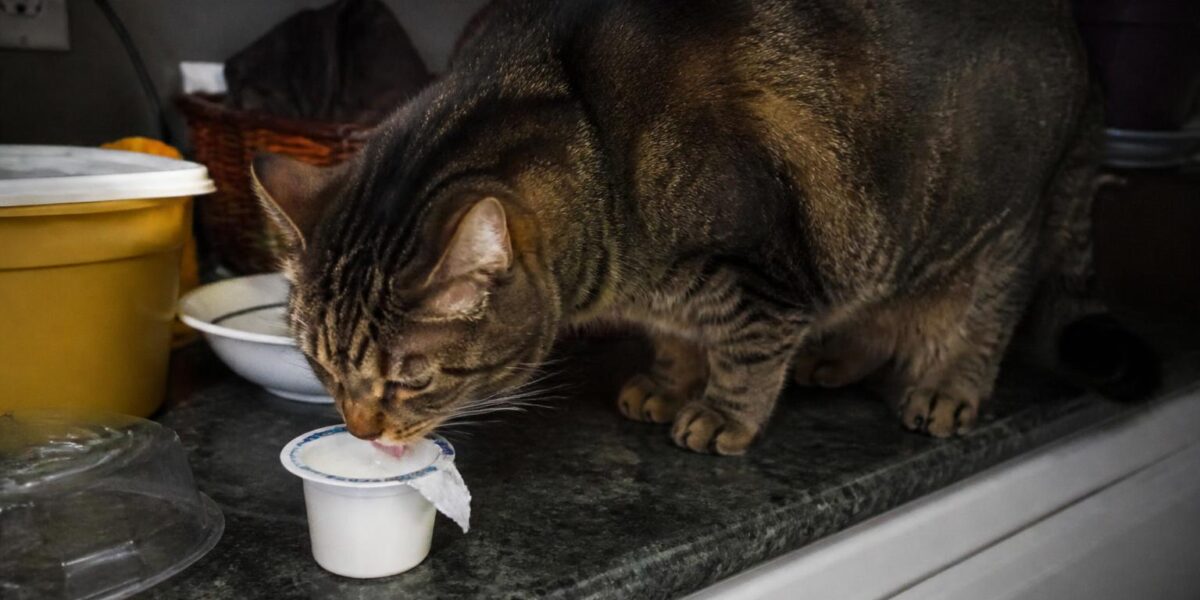
Because yogurt is fermented, live bacterial cultures break down a portion of the lactose during production, making it lower in lactose than regular milk. A small lick of plain, unsweetened yogurt is unlikely to harm most healthy adult cats. However, flavored yogurts, those with added sugar, and anything containing xylitol should be avoided entirely.
If you have ever caught your cat staring at your breakfast yogurt with that unmistakable look of feline longing, you have probably wondered whether it is safe to share. Yogurt is one of those foods that sits in a gray area for cat owners. It is not outright toxic like chocolate or onions, but it is not exactly a natural part of a cat’s diet either. The real answer to whether cats can eat yogurt depends on the type of yogurt, the amount you offer, and your individual cat’s ability to handle dairy.
As dedicated advocates for feline welfare here at Walk Me Home Rescue, we want to help you make smart decisions about what goes into your cat’s food bowl. Whether you have just adopted a new cat or have been sharing your home with a furry friend for years, this guide will give you everything you need to know about yogurt and cats.
Is Yogurt Safe for Cats? The Basics
Plain yogurt is not toxic to cats. Unlike foods such as grapes, garlic, or onions that contain compounds dangerous to felines, yogurt does not trigger an acute poisoning response. In that narrow sense, yes, cats can eat yogurt without immediate danger to their health.
However, safety and suitability are not the same thing. Cats are obligate carnivores, meaning their bodies evolved to derive nutrition almost exclusively from animal protein. Their digestive systems were never designed to process dairy products, and most adult cats produce only minimal amounts of lactase, the enzyme necessary to break down the lactose sugar found in milk and dairy.
Here is where yogurt gets interesting. During the fermentation process, live bacterial cultures consume a significant portion of the lactose in the milk. This means yogurt typically contains less lactose than a comparable amount of regular milk or cream. It is this reduced lactose content that puts yogurt in a somewhat better position than other dairy products when it comes to feeding cats.
That said, yogurt still contains lactose. It has not been eliminated, just reduced. For cats with particularly low lactase production or sensitive stomachs, even the reduced amount can cause digestive trouble. The only way to find out how your cat handles yogurt is to introduce a tiny amount and watch for any adverse reactions.
Nutritional Value of Yogurt for Cats
Understanding what is actually in yogurt helps explain why some cat owners consider it a worthwhile occasional treat and why others prefer to skip it entirely.
Protein. Yogurt contains a moderate amount of protein, which is the single most important macronutrient for cats. Greek yogurt in particular offers a higher protein concentration because the straining process removes excess liquid whey. However, the protein in yogurt comes from dairy rather than meat, making it less biologically ideal for cats than the protein found in chicken, turkey, or fish. A cat eating a complete commercial diet is already getting all the protein it needs.
Probiotics. This is the most commonly discussed benefit of yogurt for cats. The live and active cultures found in yogurt, including species like Lactobacillus acidophilus and Bifidobacterium, are beneficial bacteria that can support gut health. Some veterinarians recommend small amounts of plain yogurt for cats recovering from mild digestive upsets or after a course of antibiotics that may have disrupted their gut flora. Whether the concentration of probiotics in a small serving of yogurt is enough to make a meaningful clinical difference is debatable, but the principle is sound.
Calcium and phosphorus. These minerals support bone health and are present in yogurt in reasonable quantities. Your cat should already be getting adequate calcium and phosphorus from their regular food, so yogurt is not needed as a supplement. In fact, supplementing minerals without veterinary guidance can sometimes do more harm than good, especially for cats with urinary tract concerns where mineral balance matters.
B vitamins. Yogurt provides several B vitamins, including B12 and riboflavin, which play roles in energy metabolism and nervous system function. Again, a complete cat food already covers these needs.
Calories. One tablespoon of plain yogurt contains roughly 8 to 12 calories depending on fat content. That may sound trivial, but the average indoor cat only needs about 200 to 300 calories per day. Two tablespoons of yogurt could represent 5 to 10 percent of their daily intake, which is significant when you consider the treat guideline that suggests no more than 10 percent of daily calories should come from treats.
Benefits and Risks of Feeding Yogurt to Cats
Now that we know what yogurt contains, let us weigh the potential upsides against the downsides to help you make an informed decision.
Potential benefits:
The probiotic content in yogurt may offer mild digestive support for some cats. If your cat has been dealing with occasional soft stools or is recovering from an illness that disrupted their gut bacteria, a small amount of plain yogurt might help. Some cat owners also find yogurt useful as a vehicle for hiding medication, since many cats enjoy the taste and creamy texture.
Yogurt can also contribute to hydration since it contains a fair amount of water. For cats that are reluctant drinkers, the moisture content of yogurt is a small but positive factor. Additionally, the taste and novelty of yogurt can serve as enrichment, giving your cat something different to enjoy and stimulating their interest in food, which can be helpful for picky eaters.
Risks to consider:
Lactose intolerance is the elephant in the room. Even with reduced lactose levels, yogurt can cause bloating, gas, diarrhea, and abdominal discomfort in cats whose systems cannot handle dairy. This is the most common issue cat owners encounter.
Flavored and sweetened yogurts introduce a whole set of additional dangers. Added sugar provides zero nutritional benefit to cats and contributes to weight gain and dental problems. Fruit-flavored yogurts often contain artificial flavors and colors that serve no purpose in a cat’s diet. Most critically, some sugar-free yogurts contain xylitol, an artificial sweetener that is toxic to cats and can cause dangerous drops in blood sugar and liver damage.
High-fat yogurt varieties can be problematic for cats prone to weight gain or those with a history of pancreatitis. Full-fat yogurt packs more calories per serving and contributes unnecessary dietary fat that a cat on a balanced diet simply does not need.
Dairy allergies, while less common than lactose intolerance, can also be a concern. Some cats are allergic to the casein or whey proteins in dairy products, and this allergy is distinct from lactose intolerance. Symptoms can include itching, skin irritation, vomiting, and diarrhea.
How to Feed Yogurt to Your Cat Safely
If you have decided to let your cat try yogurt, following these guidelines will minimize risk and maximize enjoyment for your feline friend.
Choose the right yogurt. Plain, unsweetened yogurt is the only acceptable type for cats. Greek yogurt is often the best choice because it is strained to remove excess whey, resulting in lower lactose content and higher protein concentration. Always read the ingredient list before offering any yogurt to your cat. The ingredients should be milk and live cultures, nothing more. If you see sugar, fruit, artificial sweeteners, flavoring agents, or any ingredient you cannot pronounce, put it back on the shelf.
Start small. The first time your cat tries yogurt, offer no more than half a teaspoon. Place it on a small plate or let them lick it from a spoon. Watch your cat over the next 12 to 24 hours for any signs of digestive upset including loose stools, vomiting, gas, or loss of appetite.
Keep portions modest. If your cat tolerates yogurt well, you can gradually increase to about one tablespoon per serving. Most veterinary nutritionists recommend offering yogurt no more than once or twice per week. Remember the 10 percent rule: all treats combined should not exceed 10 percent of your cat’s daily caloric intake.
Serve at room temperature. Cold food straight from the refrigerator can sometimes cause stomach discomfort. Let the yogurt sit for a few minutes before offering it. This also makes it more aromatic and appealing to your cat.
Use it creatively. Yogurt can work well as a food topper mixed into your cat’s regular meal, making kibble or wet food more appealing. It can also be used to disguise the taste of medication. Some cat owners freeze small dollops of yogurt for a cooling summer treat, though be cautious with frozen treats as some cats may eat them too quickly.
If you have recently brought home a new cat through adoption, give them time to settle into their regular diet before introducing any new foods or treats like yogurt. A stable routine helps newly adopted cats feel secure during the transition period.
Signs of Problems After Your Cat Eats Yogurt
Knowing what to watch for after your cat eats yogurt allows you to respond quickly if something goes wrong. Here are the most common signs that yogurt is not agreeing with your cat.
Diarrhea is the most frequent sign of lactose intolerance in cats. If your cat develops loose or watery stools within a few hours to a day after eating yogurt, their system is having trouble processing the lactose. A single mild episode is usually not an emergency, but you should stop offering yogurt and monitor your cat. If diarrhea persists for more than 24 hours or is severe, contact your veterinarian.
Vomiting can occur if the yogurt upsets your cat’s stomach. Like diarrhea, an isolated episode is usually manageable at home, but repeated vomiting or vomiting accompanied by lethargy or refusal to eat warrants a vet visit.
Gas and bloating are subtler signs of digestive distress. Your cat may seem uncomfortable, restless, or reluctant to lie down. You might notice their abdomen appears fuller than usual or that they are passing gas more frequently. These symptoms typically resolve on their own once the offending food has cleared their system.
Loss of appetite following yogurt consumption suggests your cat is not feeling well. Cats that feel nauseous or have abdominal discomfort often refuse food. If your cat skips more than one meal, check in with your veterinarian.
Allergic reactions are less common but more serious. If your cat develops itching, skin redness, facial swelling, hives, or difficulty breathing after eating yogurt, seek veterinary care immediately. These could indicate a true dairy protein allergy rather than simple lactose intolerance.
For breed-specific sensitivities that might affect how your cat handles certain foods, our cat breeds directory is a helpful resource for understanding your cat’s unique needs.
Healthy Alternatives to Yogurt for Cats
If yogurt does not agree with your cat, or if you would rather avoid dairy altogether, there are plenty of safe and nutritious alternatives your cat may enjoy.
Cooked, plain meat is the most biologically appropriate treat for cats. Small pieces of boiled or baked chicken, turkey, or fish provide high-quality protein without the lactose concern. Just make sure the meat is unseasoned and boneless.
Plain pumpkin puree is an excellent option for cats that need digestive support. It is high in fiber, gentle on the stomach, and can help with both constipation and mild diarrhea. Use only plain pumpkin, not pumpkin pie filling, which contains added sugars and spices.
Some cats enjoy small amounts of fruit as an occasional treat. Blueberries and strawberries are both safe in moderation, though cats lack sweetness receptors and may show little interest. Cantaloupe is another fruit that some cats find surprisingly appealing.
If you are specifically interested in the probiotic benefits of yogurt, cat-specific probiotic supplements are a more reliable option. These supplements deliver targeted bacterial strains in appropriate doses without any of the lactose concerns. Your veterinarian can recommend a product suited to your cat’s needs.
Commercial cat treats made with high-quality ingredients are always a safe fallback. Look for options with real meat as the first ingredient and minimal artificial additives.
Frequently Asked Questions
Is Greek yogurt better for cats than regular yogurt?
Yes, Greek yogurt is generally a better option for cats. The straining process removes a significant portion of the whey along with much of the residual lactose, making it easier for cats to digest. Greek yogurt also has a higher protein concentration, which better aligns with a cat’s nutritional needs. Always choose plain, unsweetened Greek yogurt with no added flavors or sweeteners. Even with the reduced lactose, some cats may still experience digestive issues, so start with a very small amount.
Can kittens eat yogurt safely?
Kittens produce more lactase than adult cats because they are still nursing, so they can technically digest dairy more efficiently. However, kittens have developing digestive systems that are sensitive to dietary changes. Their diet should consist primarily of kitten-formulated food or their mother’s milk. If you want to offer a kitten a taste of plain yogurt, wait until they are fully weaned and keep the amount extremely small. Always consult your veterinarian before introducing human foods to a kitten’s diet.
How often can I safely give my cat yogurt?
Most veterinary professionals recommend limiting yogurt to no more than once or twice per week, with each serving being about one tablespoon or less. All treats, yogurt included, should represent no more than 10 percent of your cat’s total daily caloric intake. If your cat is overweight, diabetic, or managing any chronic health condition, check with your vet before adding yogurt or any other treat to their routine.
What should I do if my cat ate flavored yogurt?
First, check the ingredient list for xylitol or other artificial sweeteners. Xylitol is toxic to cats and requires immediate veterinary attention. If the yogurt contains xylitol, call your veterinarian or an emergency animal poison control hotline right away. If the flavored yogurt only contains sugar and natural fruit flavoring, your cat will likely be fine but may experience mild digestive upset. Monitor for vomiting, diarrhea, or lethargy over the next 24 hours and contact your vet if symptoms become severe or persistent.
Can yogurt help cats with digestive problems?
The probiotics in yogurt may offer mild support for digestive health by promoting beneficial gut bacteria. Some veterinarians suggest small amounts of plain yogurt for cats with occasional soft stools or after antibiotic treatment. However, yogurt is not a treatment for serious digestive conditions. If your cat is experiencing chronic diarrhea, vomiting, or other persistent digestive problems, consult your veterinarian rather than relying on yogurt as a remedy. A cat-specific probiotic supplement will provide a more consistent and appropriate dose of beneficial bacteria.
Is lactose-free yogurt a safer option for cats?
Lactose-free yogurt eliminates the primary digestive concern associated with dairy, making it easier on a cat’s stomach. It can be a reasonable option for cats that enjoy yogurt but show signs of lactose intolerance with regular varieties. Still, you need to choose plain, unsweetened lactose-free yogurt and offer it in the same small portions. Lactose-free does not mean calorie-free or risk-free, so the same moderation guidelines apply.


