
Last updated: May 16, 2026
In this article
Are Spider Plants Toxic to Dogs?
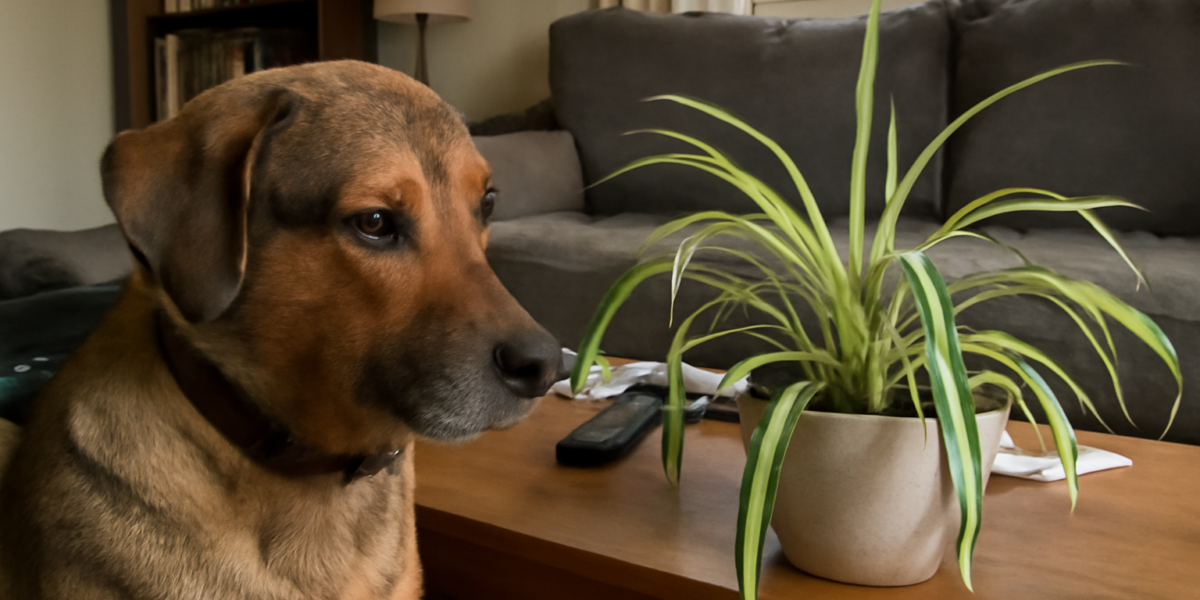
Spider plants (Chlorophytum comosum) are not toxic to dogs. The ASPCA classifies spider plants as non-toxic to dogs, cats, and horses. However, spider plants contain compounds that can cause mild gastrointestinal upset if your dog eats a significant amount, so while the plant is not dangerous, it is not entirely consequence-free either.
Spider plants are among the most common houseplants worldwide, prized for their arching green and white striped leaves and prolific baby plantlets that dangle from the mother plant like spiders on threads. Their easy care and rapid growth make them a staple in homes, offices, and classrooms.
Dogs are frequently attracted to spider plants, particularly the dangling plantlets that swing with air movement. Understanding why your dog targets this plant and what mild effects might occur will help you manage the situation confidently.
Why Spider Plants Cause Mild Effects
Although spider plants are classified as non-toxic, they contain chemical compounds related to opium that can produce mild hallucinogenic effects in cats and, to a lesser extent, in dogs. These compounds are present in very low concentrations and are not harmful, but they may explain why some pets seem particularly attracted to spider plants.
The more common issue is simple digestive irritation from plant fiber. Dogs are primarily carnivores, and their gastrointestinal systems are not optimized for processing plant material. Eating spider plant leaves can cause:
- Mild vomiting, often with visible plant material
- Drooling or lip-smacking
- Soft stools or mild diarrhea
- Temporary loss of appetite
These effects are self-limiting and typically resolve within a few hours. They are caused by the physical properties of the plant fiber rather than any toxic mechanism. Think of it as the equivalent of a person eating something that does not agree with them rather than actual poisoning.
Some dogs may also react to substances in the potting soil, including fertilizers, perlite, or pest control treatments. If your dog digs into the pot and consumes soil along with the plant, the soil additives may cause more digestive upset than the spider plant itself.
Symptoms to Monitor After Ingestion
After your dog eats spider plant material, observe them calmly for the next few hours. In the vast majority of cases, symptoms are mild and need no treatment. Here is what to watch for and what is normal versus concerning:
Normal and expected:
- One or two episodes of vomiting within the first hour
- Drooling that resolves within 30 minutes
- Brief disinterest in food followed by normal eating
- One episode of soft stool
Potentially concerning (contact your vet):
- Repeated vomiting lasting more than a few hours
- Diarrhea persisting beyond 24 hours
- Complete refusal to eat or drink for more than 12 hours
- Lethargy, weakness, or unusual behavior
- Signs of abdominal pain such as whining or a hunched posture
If your dog shows concerning symptoms, call your veterinarian. While spider plants alone are very unlikely to cause serious illness, persistent symptoms could indicate that your dog ate something else in addition to the plant, or that an unrelated health issue is developing.
Why Dogs Are Attracted to Spider Plants
Spider plants seem to have a special appeal to many dogs and cats alike. Several factors contribute to this attraction:
Movement: The dangling plantlets sway with air currents, ceiling fans, and the vibrations of people walking by. This movement mimics the kind of stimuli that trigger a dog’s prey drive, making the plantlets irresistible targets for pawing and biting.
Accessibility: Spider plants are commonly placed in hanging baskets, but the long stolons and plantlets often dangle within reach of a standing or jumping dog. What looks safely out of reach may not be.
Taste and texture: The mild, grassy flavor and tender leaf texture may appeal to dogs who enjoy chewing on grass. Dogs who frequently eat grass outdoors are often the same dogs who target spider plants indoors.
Boredom: A bored dog will find ways to entertain themselves, and a swinging spider plant is far more interesting than an empty room. Increasing your dog’s physical exercise and mental stimulation can reduce destructive plant-targeting behavior. For activity ideas, see our guide on how often to walk your dog.
How to Keep Spider Plants Away From Dogs
Since spider plants are not toxic, the main goal of keeping them away from your dog is to protect the plant and prevent the mild digestive upset that comes with ingestion. Try these strategies:
- Raise the hanging basket. Shorten the hanger or mount it higher so that the plantlets do not dangle within your dog’s reach. Trim long stolons regularly.
- Move to a restricted area. Place your spider plant in a room your dog does not access, such as a home office, laundry room, or guest bathroom.
- Use a plant stand with a wide base. If hanging is not an option, a tall, stable plant stand can elevate the plant above jumping height.
- Apply bitter deterrent. A pet-safe bitter spray on the leaves and plantlets discourages chewing. Reapply after watering.
- Provide grass alternatives. If your dog craves plant material, offer a tray of pet-safe wheatgrass. This gives them an appropriate outlet and may reduce their interest in your houseplants.
Consistent training is also valuable. Practice the “leave it” command using high-value treats as rewards. Over time, your dog will learn that ignoring the spider plant earns them something far better than chewing on it.
Spider Plants Compared to Other Common Houseplants
To put spider plant safety in perspective, here is how they compare to other popular houseplants on the toxicity spectrum:
Safe (non-toxic): Spider plant, Boston fern, prayer plant, peperomia, parlor palm, African violet, and cast iron plant. These can coexist with dogs without toxicity risk.
Mildly toxic: Pothos, philodendron, peace lily, ZZ plant, and rubber plant. These contain calcium oxalate crystals or other compounds that cause oral irritation and digestive upset. Usually not life-threatening but require monitoring.
Highly toxic: Sago palm, oleander, lily of the valley, and autumn crocus. These can cause organ failure and death and should never be in a home with pets.
Spider plants fall firmly in the safest category. If you are building a pet-friendly plant collection, they are an excellent starting point. For more comparisons, read our articles on Boston fern safety for dogs and peace lily toxicity in dogs.
When to Contact Your Veterinarian
For a straightforward spider plant nibble, a vet visit is usually unnecessary. Contact your veterinarian or the ASPCA Animal Poison Control Center (888-426-4435) if:
- You are not certain the plant your dog chewed on was a spider plant. Several plants have similar arching foliage, and misidentification could mean a toxic exposure.
- Your dog ingested a large amount of plant material and is vomiting repeatedly.
- Symptoms persist beyond 24 hours or worsen rather than improve.
- Your dog also ate potting soil containing fertilizer or pesticide.
- Your dog is very young, very old, or has pre-existing health conditions.
When calling, have the plant name and a photo ready. Describe how much your dog ate and when symptoms started. This helps your vet provide the most accurate guidance quickly. For general pet health resources, explore our dog care blog.
Frequently Asked Questions
Can spider plants make my dog hallucinate?
Spider plants contain trace compounds related to opium, but the concentrations are extremely low. While cats occasionally show mild behavioral changes after eating spider plants, significant hallucinogenic effects in dogs have not been documented. Any behavior changes are typically very mild and short-lived.
Is it safe to let my dog eat spider plant babies?
The plantlets are non-toxic like the rest of the plant, but it is still best to discourage eating them. Repeated ingestion of plant material can cause ongoing digestive upset, and allowing the habit makes it harder to train your dog to leave all plants alone, including potentially toxic ones.
Do spider plants purify air for dogs?
Spider plants are recognized for their ability to remove certain airborne pollutants like formaldehyde and xylene. While this benefits everyone in the household, including your dog, the air-purifying effect of a single houseplant is modest. Good ventilation and air filtration are more impactful for indoor air quality.
Are variegated spider plants equally safe?
Yes. All cultivars of Chlorophytum comosum, including the popular ‘Vittatum’ (green with white center stripe), ‘Variegatum’ (white-edged), and solid green varieties, are equally non-toxic to dogs.
My dog threw up after eating a spider plant. Should I go to the vet?
A single episode of vomiting after eating spider plant is normal and expected. Offer water and monitor your dog. If vomiting continues, your dog cannot keep water down, or additional symptoms develop, then contact your veterinarian for guidance.


