
Last updated: April 10, 2026
In this article
- Are Cast Iron Plants Toxic to Cats?
- Why Cast Iron Plants Are Safe for Cats
- What Happens If Your Cat Eats Cast Iron Plant
- Why Cats Chew on Houseplants
- Growing Cast Iron Plants in Cat-Friendly Homes
- Other Cat-Safe Plants to Pair With Cast Iron Plant
- Plants Commonly Confused With Cast Iron Plant
- Frequently Asked Questions
Are Cast Iron Plants Toxic to Cats?
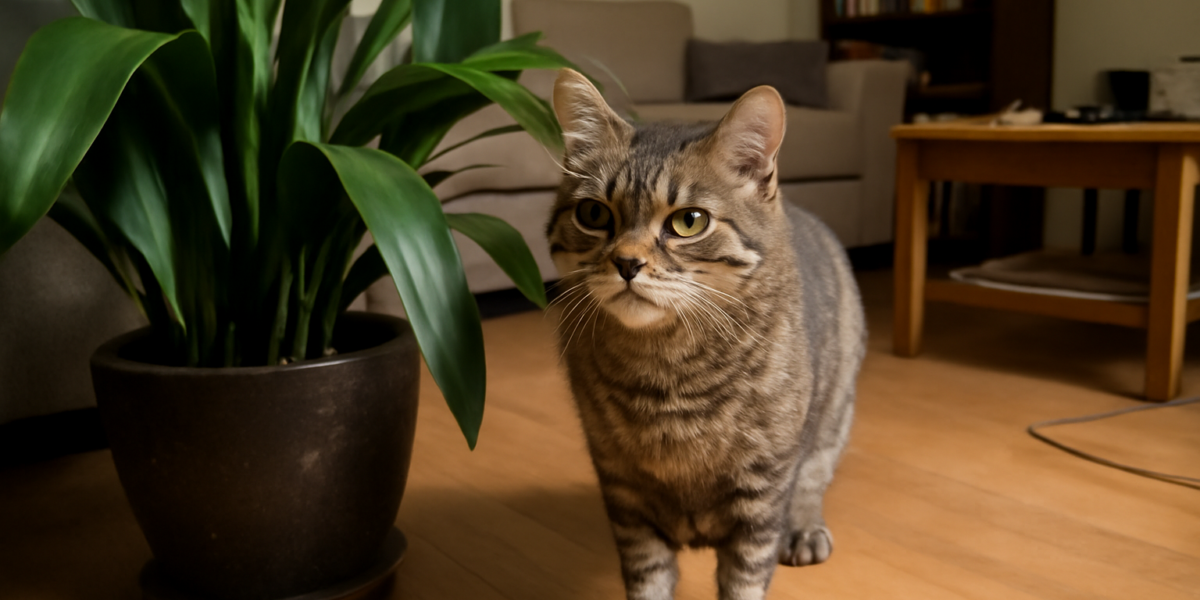
Cast iron plants (Aspidistra elatior) are not toxic to cats. The ASPCA confirms that Aspidistra is non-toxic to cats, dogs, and horses, making it one of the safest houseplants available for pet-owning households. If your cat chews on a cast iron plant leaf, there is no risk of poisoning from the plant’s compounds.
The cast iron plant earns its common name from its remarkable durability. It tolerates low light, drought, temperature fluctuations, and general neglect that would kill most other houseplants. Originally from the forest floors of Japan and Taiwan, this plant has been a popular indoor choice since the Victorian era.
For cat owners, the cast iron plant offers a rare combination: a beautiful, virtually indestructible houseplant that poses no health risk to their feline companions. Its dark green, lance-shaped leaves add a lush, tropical feel to any room while being completely safe to share space with curious cats.
Why Cast Iron Plants Are Safe for Cats
Cast iron plants belong to the Asparagaceae family. Unlike many houseplants that contain calcium oxalate crystals, saponins, or alkaloids, Aspidistra elatior does not produce any compounds known to be toxic to cats or other domestic animals.
The leaves, stems, and roots are all free from irritating sap, harmful crystals, and poisonous chemicals. The plant tissue is tough and fibrous rather than sappy or milky, which means even if a cat chews on it, there is no irritating fluid released. This lack of toxic compounds is what earns the cast iron plant its consistent listing as a pet-safe houseplant across veterinary resources.
Some cast iron plant varieties feature variegated leaves with white or yellow stripes or spots. These variegated cultivars, including ‘Variegata,’ ‘Milky Way,’ and ‘Okame,’ are equally safe for cats. The variegation is a cosmetic trait that does not alter the plant’s chemical composition.
What Happens If Your Cat Eats Cast Iron Plant
While the cast iron plant is not toxic, cats are obligate carnivores whose digestive systems are designed for meat, not plant fiber. A cat who munches on cast iron plant leaves may experience mild digestive effects simply from the roughage:
- Mild vomiting, especially if a large piece of leaf was swallowed
- Brief episode of gagging or retching
- Temporary loss of interest in food
- Occasional soft stool
These symptoms are minor and typically resolve on their own within a few hours. They are caused by the physical properties of the tough, fibrous leaf rather than any chemical toxicity. Cast iron plant leaves are thicker and tougher than many other houseplants, so your cat is unlikely to eat a significant amount.
In most cases, a cat who bites into a cast iron plant leaf will find the texture unappealing and lose interest quickly. The leathery, fibrous nature of the leaves does not have the tender, grass-like quality that attracts cats to softer plants like spider plants or cat grass.
Why Cats Chew on Houseplants
Even though cast iron plants are safe, understanding why your cat targets houseplants can help you manage the behavior and ensure your cat’s needs are being met:
Dietary fiber needs. Cats in the wild occasionally consume small amounts of plant material, possibly to aid digestion or help pass hairballs. Indoor cats may seek out houseplants as a substitute. Offering dedicated cat grass (wheatgrass or oat grass) gives your cat a safe, appropriate option.
Boredom and understimulation. Cats who lack adequate mental and physical enrichment may turn to houseplants out of sheer boredom. A cat who spends hours staring at or batting at a plant may need more interactive playtime, puzzle feeders, or window perches. Our indoor cat enrichment guide offers practical solutions.
Texture exploration. Some cats enjoy the sensory experience of biting and chewing different textures. This is particularly common in kittens and young cats who are still exploring their environment.
Attention-seeking. If chewing on a plant consistently gets a reaction from you, some cats learn to do it deliberately. The solution is to remove the plant from reach rather than inadvertently reinforcing the behavior with attention.
Growing Cast Iron Plants in Cat-Friendly Homes
Cast iron plants are remarkably easy to grow, and a few simple strategies will keep both your plant and your cat happy:
Placement: Cast iron plants thrive in low to moderate indirect light, so you can place them in corners, hallways, or rooms that do not get much natural light. Choose a sturdy, heavy pot that your cat cannot easily knock over.
Soil protection: Cats are sometimes more interested in the soil than the plant itself, especially if it is soft and diggable. Cover the soil surface with decorative stones, pine cones, or a layer of pebbles to deter digging and prevent your cat from using the pot as a litter box.
Leaf cleaning: Cast iron plant leaves collect dust due to their broad, flat surface. Wipe them with a damp cloth periodically. Avoid using leaf shine products that contain chemicals your cat might ingest if they lick the leaves.
Watering: Cast iron plants prefer to dry out between waterings and are susceptible to root rot from overwatering. Water thoroughly when the top two inches of soil feel dry. This low-water requirement means less standing water that might attract a thirsty cat.
Other Cat-Safe Plants to Pair With Cast Iron Plant
Building a collection of non-toxic houseplants means you never have to worry when your cat investigates your greenery. These plants pair beautifully with cast iron plants and are all safe for cats:
- Boston fern (Nephrolepis exaltata): Feathery, cascading fronds that add softness and movement to contrast the cast iron plant’s rigid leaves.
- Calathea varieties: Colorful, patterned foliage in the same low-light conditions. Non-toxic and visually stunning.
- Spider plant (Chlorophytum comosum): Arching, variegated leaves with dangling plantlets. Non-toxic but irresistible to many cats.
- Parlor palm (Chamaedorea elegans): A graceful, slow-growing palm that adds tropical flair. Completely cat-safe.
- Haworthia: Small, succulent rosettes that are non-toxic and nearly as tough as the cast iron plant itself.
Avoid placing toxic plants near your safe collection, as a cat attracted to one plant may sample neighboring ones. For more guidance on plant safety around cats, read our article on succulent safety for cats and our guide on whether calatheas are safe for cats.
Plants Commonly Confused With Cast Iron Plant
Several plants share the cast iron plant’s long, dark green leaves, but not all are pet-safe. Be careful with these similar-looking species:
Peace lily (Spathiphyllum): While the leaf shape differs, both plants thrive in low light and are often displayed together. Peace lilies are mildly toxic to cats due to calcium oxalate crystals.
Snake plant (Sansevieria/Dracaena trifasciata): Tall, upright, dark green leaves that can resemble cast iron plant at first glance. Snake plants contain saponins and are mildly toxic to cats, causing nausea, vomiting, and diarrhea.
ZZ plant (Zamioculcas zamiifolia): Glossy, dark green leaflets on arching stems. Attractive and low-maintenance but toxic to cats due to calcium oxalate crystals. Read more in our article about ZZ plants and cats.
Always verify the botanical name before purchasing. If a plant is labeled simply “low light plant” or “easy care plant” without a species name, identify it before placing it in your cat’s environment.
Frequently Asked Questions
Can cast iron plants cause allergies in cats?
Allergic reactions to cast iron plants in cats are not documented in veterinary literature. The plant does not produce significant pollen indoors and does not contain allergenic compounds. Individual sensitivities are theoretically possible but extremely rare.
Is the cast iron plant safe for kittens?
Yes. Cast iron plants are non-toxic to cats of all ages, including kittens. However, kittens are more prone to chewing and playing with plants, so you may want to keep the plant elevated to protect it from enthusiastic kitten attention.
Do cast iron plants attract cats?
Cast iron plants are generally less attractive to cats than softer, grassier plants like spider plants or palm fronds. Their tough, leathery leaves are not as satisfying to chew, and the plant does not have dangling parts that trigger play behavior.
Can I put a cast iron plant in my cat’s favorite room?
Absolutely. Since the plant is non-toxic, you can place it anywhere your cat has access. If your cat occasionally nibbles on it, the only risk is cosmetic damage to the plant itself.
Are cast iron plants safe for dogs too?
Yes. The ASPCA lists cast iron plants as non-toxic to dogs, cats, and horses. They are one of the safest houseplant choices for any pet-owning household.


